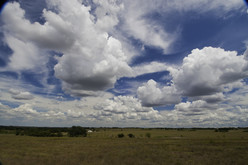
FSA’s hardworking employees across the state continue to deliver assistance to producers affected by widespread drought conditions. I want to remind livestock producers of additional drought assistance available through the Emergency Assistance for Livestock, Honey Bees, and Farm-Raised Fish Program (ELAP). ELAP offers assistance to eligible producers to cover transportation of water to livestock, above normal costs of mileage for transporting feed to livestock, and above normal costs of transporting livestock to forage or grazing acres.
It is important that livestock producers are aware that within 30 calendar days of a loss being apparent, they must file a notice of loss for ELAP with their local FSA office. Producers can find additional information on ELAP and other drought recovery resources online at farmers.gov/protection-recovery/drought.
Earlier in July, we announced that more than 246,000 acres in Texas had been accepted through this year’s Grassland CRP Signup. Grassland CRP plays a vital role in helping grasslands sequester an incredible amount of carbon, while also providing good wildlife habitat and grazing opportunities for producers and landowners. Producers and landowners are encouraged to consider the Continuous CRP signup, which is currently open.
An important deadline approaching is for FSA county committee nominations. FSA county committee members are local agricultural producers who help ensure fair and equitable administration of FSA farm programs in their county or multi-county jurisdiction. Individuals may nominate themselves or others as a candidate. Additionally, organizations representing minority and women agricultural producers may nominate candidates. FSA-669A nomination forms, or FSA-669A-3 for urban county committees, must be postmarked or received in your local FSA office by Aug. 1, 2022. To find out if your area is holding an election this year, contact your local FSA office.
Sincerely,
Kelly Adkins
State Executive Director
Farm Service Agency - Texas
|
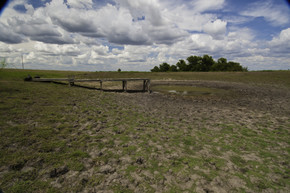
The Water Grows Initiative hosted a Field to Fork event on June 2, 2022, in Wharton, Texas to further engage with guest outside of agriculture. More than 60 people were in attendance. These events offer firsthand opportunities for farmers and consumers to share their stories and connect. Field to Fork is designed to connect people with the farmers that grow the delicious, quality food they enjoy every day. The event highlights Texas crops, Texas products, and connects attendees with the farmers who make it all possible. With easy accessibility from Houston, Field to Fork offers a true farm experience for those eager to learn their food’s story. The farm tour included a climate smart conservation practice discussion and concluded with a three-course meal made with Texas-grown ingredients prepared by renowned Chef Brandon Silva. The food influencers each developed blogs, videos and social media posts based on their experiences at the event. Their combined audiences have the potential to reach over 8.1M people. The field to fork event was made possible through Water Grows, an initiative by the Texas Corn Producers and NRCS, as well as the generous support of volunteers from Common Ground, NRCS field staff and the Texas Department of Agriculture’s Go Texan program. Read more: https://watergrows.org/an-insider-look-field-to-fork/
As the summer heat continues, farmers and ranchers are faced with another challenge – large populations of grasshoppers. Many producers have outbreaks of grasshoppers destroying their cultivated crops, grasslands, pastureland, gardens, trees, and shrubs. According to Texas A&M AgriLife Extension, producers should monitor populations early in the season and begin planning control measures. These outbreaks are usually preceded by years of hot, dry summers.
On July 8, Texas Governor Greg Abbott issued a drought disaster declaration for 164 counties with significantly low rainfall and the prolonged dry conditions that increase the threat of wildfires across portions of the state. The declaration states the drought conditions pose an imminent threat of widespread or severe damage, injury, or loss of life or property. NRCS can assist farmers and ranchers with expert planning advice through the technical and financial services for minimizing the effects of drought on land uses, including irrigated cropland, pastureland, and rangeland. The U.S. Drought Monitor provides a weekly drought assessment and plays an important role in USDA programs that help farmers and ranchers recover from drought.
The good news is when it does rain in Texas, 83% of it falls on farms, ranches, and forests. These rural working lands are crucial to protecting and preserving water resources in Texas. NRCS works hand in hand with the agriculture producers to protect and maintain our natural resources.
Newsroom:
-
Urban Agriculture Grant Application Now Open NRCS is working in partnership with Prairie View A&M University for the first Urban Farmer Grant Program (UFGP) to fund 20 cooperative agreements in Texas, available for a vegetable garden, aquaponic-hydroponics system, fruit trees and high tunnel. The application period is July 1 through August 1, 2022.
-
USDA Seeks Proposals for Joint Chiefs’ Landscape Restoration Partnership NRCS and the U.S. Forest Service are seeking fiscal year proposals from partners by August 5, 2022, to improve forest health on public and private Project plans will build on fiscal year 2022 investment of more than $48 million to mitigate wildfire risk, protect water quality, improve wildlife habitat, restore forest ecosystems, and contribute to USDA’s efforts to combat climate change.
-
USDA, Army Corps of Engineers Renew Partnership on Infrastructure, Natural Resource Planning The United States Army Corps of Engineers (USACE) and NRCS provide efforts to combat ongoing threats to our natural resources and promotes inter-agency strategic planning — coordinating mission-driven assistance that best serves local resource concerns and communities. Renewing the partnership solidifies a legacy of watershed conservation.
-
Farm Service Agency’s Conservation Reserve Program (CRP) Plans were written for accepted CRP offers on an estimated 450,000 acres in Texas by NRCS and their conservation partners. NRCS provides technical assistance to participants in addressing natural resource concerns in an environmentally beneficial and cost-effective manner by planning and implementing approved CRP practices. CRP reduces soil erosion, protects the nation's ability to produce food and fiber, establishes wildlife habitat and restores wetland resources.
Please contact your local NRCS office for more information or to request assistance and/or apply for conservation programs.
Upcoming events:
NRCS is partnering with Texas Agricultural Land Trust (TALT) to present a special series of workshops in July and August that you don’t want to miss! Learn the latest conservation tools and resources, including information on the NRCS Agricultural Conservation Easement Program (ACEP). Workshops Connect Texas Landowners to Conservation Tools and Resources
August 3, 2022 Conservation Easement Program, San Angelo
August 10, 2022 Conservation Easement Program, Lubbock
August 17, 2022 Conservation Easement Program, San Antonio
August 23, 2022 Conservation Easement Program, Nacogdoches
More events:
August 1–3, 2022
Texas A&M Beef Cattle Short Course, College Station
August 7–9, 2022
2022 Southern Family Farmers & Food Systems Conference, San Marcos
August 10-11, 2022
Texas Agriculture Manure Management Issues Conference, Fort Worth
August 11, 2022
Sustainable Forestry & African American Land Retention Workshop (virtual)
August 17, 2022
Faces of Agriculture – USDA Speaker Series
August 18, 2022
Understanding Carbon, Carbon offsets, and Carbon Markets (virtual)
August 30–31, 2022
Sustainable Forestry & African American Land Retention Conference (virtual)
Sincerely,
Kristy Oates
State Conservationist
Natural Resources Conservation Service - Texas
|
USDA’s Farm Service Agency (FSA) reminds drought-impacted producers that they may be eligible for financial assistance through the Emergency Assistance for Livestock, Honey Bees, and Farm-Raised Fish Program (ELAP) to cover above normal expenses for hauling water or feed to livestock or hauling livestock to forage or grazing acres.
For eligible producers in qualifying counties, ELAP provides financial assistance for:
- the transportation of water to livestock;
- the above normal cost of mileage for transporting feed to livestock,
- the above normal cost of transporting livestock to forage/grazing acres.*
*Hauling livestock one-way, one haul per animal reimbursement and no payment for “empty miles.”
Eligible livestock include cattle, bison, goats and sheep, among others, that are maintained for commercial use and located in a county where qualifying drought conditions occur. A county must have had D2 severe drought intensity on the U.S. Drought Monitor for eight consecutive weeks during the normal grazing period, or D3 or D4 drought intensity at any time during the normal grazing period. Producers must have risk in both eligible livestock and eligible grazing land in an eligible county to qualify for ELAP assistance.
Transporting Water
For ELAP water transportation assistance, producers must be transporting water to eligible livestock on eligible grazing land where adequate livestock watering systems or facilities were in place before the drought occurred and where water transportation is not normally required. ELAP covers costs associated with personal labor, equipment, hired labor, and contracted water transportation fees. Cost of the water itself is not covered. The ELAP payment formula uses a national average price per gallon.
Transporting Feed
ELAP provides financial assistance to livestock producers who incur above normal expenses for transporting feed to livestock during drought. The payment formula excludes the first 25 miles and any mileage over 1,000 miles. The reimbursement rate is 60% of the costs above what would normally have been incurred during the same time period in a normal (non-drought) year.
Transporting Livestock
ELAP provides financial assistance to livestock producers who are hauling livestock to a new location for feed resources due to insufficient feed or grazing in drought-impacted areas. As with transporting feed, the payment formula for transporting livestock excludes the first 25 miles and any mileage over 1,000 miles. The reimbursement rate is 60% of the costs above what would normally have been incurred during the same time period in a normal (non-drought) year.
An online tool is now available to help ranchers document and estimate payments to cover feed and livestock transportation costs caused by drought. Download the tool and view the demonstration video.
Reporting Losses
For calendar year 2022 forward, producers must submit a notice of loss to their local FSA office within 30 calendar days of when the loss is apparent. Producers should contact FSA as soon as the loss of water or feed resources are known.
For ELAP eligibility, documentation of expenses is critical. Producers should maintain records and receipts associated with the costs of transporting water to eligible livestock, the costs of transporting feed to eligible livestock, and the costs of transporting eligible livestock to forage or other grazing acres.
Additional Drought Assistance
ELAP assistance is also available to producers impacted by wildfire. Contact the local FSA office for more information on ELAP resources for wildfire losses. Additionally, beekeepers can benefit from ELAP provisions and should contact their county FSA office within 15 calendar days of when a loss occurs or is apparent.
FSA is now accepting applications for the Livestock Forage Disaster Program (LFP) to provide financial assistance to eligible producers for 2022 grazing losses due to a qualifying drought or fire. The deadline to apply for 2022 LFP assistance is Jan. 30, 2023.
More than 200 Texas counties have met the drought severity levels that trigger LFP eligibility for the 2022 program year. For LFP, qualifying drought triggers are determined using the U.S. Drought Monitor. A list of LFP eligible counties and grazing crops can be found on the FSA Texas webpage.
More Information
Additional disaster assistance information can be found on farmers.gov, including the Farmers.gov Drought Webpage, Disaster Assistance Discovery Tool, Disaster-at-a-Glance fact sheet, and Farm Loan Discovery Tool.
Farmers and ranchers have until Aug. 1, 2022, to nominate candidates to serve on their local County Farm Service Agency (FSA) Committee. Elections will occur in certain Local Administrative Areas (LAA) for members. LAAs are elective areas for FSA committees in a single county or multi-county jurisdiction. This may include LAAs that are focused on an urban or suburban area.
County committee members make important decisions about how Federal farm programs are administered locally. All nomination forms for the 2022 election must be postmarked or received in the local FSA office by Aug. 1, 2022.
Agricultural producers who participate or cooperate in a USDA program and reside in the LAA that is up for election this year, may be nominated for candidacy for the county committee. A cooperating producer is someone who has provided information about their farming or ranching operation to FSA, even if they have not applied or received program benefits. Individuals may nominate themselves or others and qualifying organizations may also nominate candidates. USDA encourages minority producers, women, and beginning farmers or ranchers to nominate, vote and hold office.
Nationwide, more than 7,700 dedicated members of the agricultural community serve on FSA county committees. The committees are made up of three to 11 members who serve three-year terms. Producers serving on FSA county committees play a critical role in the day-to-day operations of the agency. Committee members are vital to how FSA carries out disaster programs, as well as conservation, commodity and price support programs, county office employment and other agricultural issues.
Urban and Suburban County Committees
The 2018 Farm Bill directed USDA to form urban county committees as well as make other advancements related to urban agriculture, including the establishment of the Office of Urban Agriculture and Innovative Production. FSA established county committees specifically focused on urban agriculture. The urban county committees will work to encourage and promote urban, indoor and other emerging agricultural production practices. Additionally, the new county committees may address areas such as food access, community engagement, support of local activities to promote and encourage community compost and food waste reduction.
Urban committee members are nominated and elected to serve by local urban producers in the same jurisdiction. Urban county committee members will provide outreach to ensure urban producers understand USDA programs and serve as the voice of other urban producers and assist in program implementation that support the needs of the growing urban community.
The following urban and suburban county committees will hold elections this year Phoenix, Atlanta, New Orleans, Minneapolis-St. Paul, St. Louis, Albuquerque, N.M., Cleveland, Portland, Ore., Philadelphia, Dallas and Richmond, Va.
USDA recently announced six new urban county committees in Chicago, Detroit, Grand Rapids, Los Angeles, Brooklyn, and Oakland. Elections will be held for these locations at a later date.
Learn more at farmers.gov/urban.
More Information
Producers should contact their local FSA office today to register and find out how to get involved in their county’s election, including if their LAA is up for election this year. To be considered, a producer must be registered and sign an FSA-669A nomination form. Urban farmers should use an FSA-669-A-3 for urban county committees. The form and other information about FSA county committee elections are available at fsa.usda.gov/elections.
Election ballots will be mailed to eligible voters beginning Nov. 7, 2022. Producers can find their local USDA Service Center at farmers.gov/service-locator.
The U.S. Department of Agriculture (USDA) is accepting offers for more than 3.1 million acres from agricultural producers and private landowners through this year’s Conservation Reserve Program (CRP) Grassland Signup, the highest in history. The signup’s results include more than 246,000 acres in Texas. This program allows producers and landowners to continue grazing and haying practices while protecting grasslands and promoting plant and animal biodiversity and conservation, and it’s part of the Biden-Harris administration’s broader effort to address climate change and to conserve natural resources.
Nationwide, this year’s Grassland CRP signup surpassed last year’s 2.5 million acres by 22%. So far this year, producers have enrolled 2 million acres through the General Signup and more than 464,000 acres have been submitted through the Continuous CRP Signup. This means about 5.6 million acres are entering CRP in 2023, surpassing the 3.9 million acres expiring this year.
Other highlights include:
- Top states included Colorado (642,000 acres), South Dakota (nearly 425,000 acres) and Nebraska (nearly 422,000 acres).
- States with the highest increase in acres compared with last year include Arizona (141% increase), California (129% increase), and Utah (122% increase).
Because Grassland CRP supports not only grazing operations but also biodiversity and conserving environmentally sensitive land such as that prone to wind erosion, USDA’s Farm Service Agency (FSA) created two National Priority Zones in 2021: the Greater Yellowstone Migration Corridor and Dust Bowl Zone. For this year’s signup, FSA expanded the Greater Yellowstone Wildlife Migration Corridor Priority Zone to include seven additional counties across Montana, Wyoming, and Utah, to help protect the big-game animal migration corridor associated with Wyoming elk, mule deer and antelope. FSA accepted offers on more than 1.4 million acres in these two zones.
Grasslands enrolled in CRP help sequester carbon in vegetation and soil, while enhancing resilience to drought and wildfire. Meanwhile, producers can still conduct common grazing practices, such as haying, mowing, or harvesting seed from the enrolled land, which supports ag production.
Broadening Reach of Program
As part of the Agency’s Justice40 efforts, producers and landowners who are historically underserved, including beginning farmers and military veterans, will receive 10 additional ranking points to enhance their offers. From more than 5,000 underserved producers, USDA accepted offers of more than 1.9 million acres, about 87% of those who submitted applications.
Additionally, USDA is working to broaden the scope and reach of Grassland CRP by leveraging the Conservation Reserve Enhancement Program (CREP) to engage historically underserved communities. CREP is a partnership program that enables states, Tribal governments, and non-profit entities to partner with FSA to implement CRP practices and address high priority conservation and environmental objectives. Interested entities are encouraged to contact FSA.
Producers can still make an offer to participate in CRP through the Continuous CRP Signup, which is ongoing, by contacting the FSA at their local USDA Service Center.
The Farm Service Agency (FSA) administers two programs that have specific safety net benefits for producers of honeybees and honey. The Noninsured Crop Disaster Assistance Program (NAP) and the Emergency Assistance for Livestock, Honeybees and Farm-Raised Fish Program (ELAP) assist producers when disasters impact honey production or damage or destroy colonies, hives or honeybee feed.
NAP is designed to reduce financial losses when natural disasters result in lower yields or crop losses, including honey. NAP coverage is equivalent to catastrophic insurance, meaning it covers up to 50 percent of a producer’s normal yield (must have at least a 50 percent loss) at 55 percent of the average market price. The 2018 Farm Bill reinstates higher levels of coverage, from 50 to 65 percent of expected production in 5 percent increments, at 100 percent of the average market price. Producers of organics and crops marketed directly to consumers also may exercise the “buy-up” option to obtain NAP coverage of 100 percent of the average market price at the coverage levels of between 50 and 65 percent of expected production.
The NAP service fee is the lesser of $325 per crop or $825 per producer per administrative county, not to exceed a total of $1,950 for a producer with farming interests in multiple counties.
You must apply for NAP coverage by Dec. 1 prior to the year for which you’re seeking coverage.
ELAP covers colony losses, honeybee hive losses (the physical structure) and honeybee feed losses in instances where the colony, hive or feed has been destroyed by a natural disaster or, in the case of colony losses, because of Colony Collapse Disorder. Colony losses must be in excess of normal mortality.
Both the NAP and ELAP programs require you to report the number of colonies you have in production to FSA by Jan. 2. You must notify FSA within 30 calendar days of changes in the total number of colonies or when honeybees are moved to another county.
For both programs, you must notify FSA within 15 calendar days of when a loss occurs or from when the loss is apparent.
To learn more about programs for honey and honeybee producers, contact your local USDA Service Centeror visit fsa.usda.gov.
Using the correct signature when doing business with FSA can save time and prevent a delay in program benefits.
The following are FSA signature guidelines:
- A married woman must sign her given name: Mrs. Mary Doe, not Mrs. John Doe
- For a minor, FSA requires the minor's signature and one from the minor’s parent
Note, by signing a document with a minor, the parent is liable for actions of the minor and may be liable for refunds, liquidated damages, etc.
When signing on one’s behalf the signature must agree with the name typed or printed on the form or be a variation that does not cause the name and signature to be in disagreement. Example - John W. Smith is on the form. The signature may be John W. Smith or J.W. Smith or J. Smith. Or Mary J. Smith may be signed as Mrs. Mary Joe Smith, M.J. Smith, Mary Smith, etc.
FAXED signatures will be accepted for certain forms and other documents provided the acceptable program forms are approved for FAXED signatures. Producers are responsible for the successful transmission and receipt of FAXED information.
Spouses may sign documents on behalf of each other for FSA and CCC programs in which either has an interest, unless written notification denying a spouse this authority has been provided to the county office.
Spouses cannot sign on behalf of each other as an authorized signatory for partnerships, joint ventures, corporations or other similar entities. Likewise, a spouse cannot sign a document on behalf of the other in order to affirm the eligibility of oneself.
Any member of a general partnership can sign on behalf of the general partnership and bind all members unless the Articles of Partnership are more restrictive. Spouses may sign on behalf of each other’s individual interest in a partnership, unless notification denying a spouse that authority is provided to the county office. Acceptable signatures for general partnerships, joint ventures, corporations, estates, and trusts must consist of an indicator “by” or “for” the individual’s name, individual’s name and capacity, or individual’s name, capacity, and name of entity.
For additional clarification on proper signatures contact your local FSA office.
In order to claim a Farm Service Agency (FSA) payment on behalf of a deceased producer, all program conditions for the payment must have been met before the applicable producer’s date of death.
If a producer earned a FSA payment prior to his or her death, the following is the order of precedence for the representatives of the producer:
- administrator or executor of the estate
- the surviving spouse
- surviving sons and daughters, including adopted children
- surviving father and mother
- surviving brothers and sisters
- heirs of the deceased person who would be entitled to payment according to the State law
For FSA to release the payment, the legal representative of the deceased producer must file a form FSA-325 to claim the payment for themselves or an estate. The county office will verify that the application, contract, loan agreement, or other similar form requesting payment issuance, was signed by the applicable deadline by the deceased or a person legally authorized to act on their behalf at that time of application.
If the application, contract or loan agreement form was signed by someone other than the deceased participant, FSA will determine whether the person submitting the form has the legal authority to submit the form.
Payments will be issued to the respective representative’s name using the deceased program participant’s tax identification number. Payments made to representatives are subject to offset regulations for debts owed by the deceased.
FSA is not responsible for advising persons in obtaining legal advice on how to obtain program benefits that may be due to a participant who has died, disappeared or who has been declared incompetent.
Farmers and ranchers can use the Farm Loan Discovery Tool on farmers.gov to find information on USDA farm loans that may best fit their operations.
USDA’s Farm Service Agency (FSA) offers a variety of loan options to help farmers finance their operations. From buying land to financing the purchase of equipment, FSA loans can help.
USDA conducted field research in eight states, gathering input from farmers and FSA farm loan staff to better understand their needs and challenges.
How the Tool Works
Farmers who are looking for financing options to operate a farm or buy land can answer a few simple questions about what they are looking to fund and how much money they need to borrow. After submitting their answers, farmers will receive information on farm loans that best fit their specific needs. The loan application and additional resources also will be provided.
Farmers can download application quick guides that outline what to expect from preparing an application to receiving a loan decision. There are four guides that cover loans to individuals, entities, and youth, as well as information on microloans. The guides include general eligibility requirements and a list of required forms and documentation for each type of loan. These guides can help farmers prepare before their first USDA service center visit with a loan officer.
Farmers can access the Farm Loan Discovery Tool by visiting farmers.gov/fund and clicking the “Start” button. Follow the prompts and answer five simple questions to receive loan information that is applicable to your agricultural operation. The tool is built to run on any modern browser like Chrome, Edge, Firefox, or the Safari browser, and is fully functional on mobile devices. It does not work in Internet Explorer.
About Farmers.gov
In 2018, USDA unveiled farmers.gov, a dynamic, mobile-friendly public website combined with an authenticated portal where farmers will be able to apply for programs, process transactions, and manage accounts.
The Farm Loan Discovery Tool is one of many resources on farmers.gov to help connect farmers to information that can help their operations. Earlier this year, USDA launched the My Financial Information feature, which enables farmers to view their loan information, history, payments, and alerts by logging into the website.
USDA is building farmers.gov for farmers, by farmers. In addition to the interactive farm loan features, the site also offers a Disaster Assistance Discovery Tool. Farmers can visit farmers.gov/recover/disaster-assistance-tool#step-1 to find disaster assistance programs that can help their operation recover from natural disasters.
For more information, contact your local USDA Service Center or visit farmers.gov.
There are options for Farm Service Agency (FSA) loan customers during financial stress. If you are a borrower who is unable to make payments on a loan, contact your local FSA Farm Loan Manager to learn about your options.
This is likely no surprise to you, but drought persists across the western U.S. and is intensifying in some areas. No geographic area is immune to the potential of drought at any given time. The U.S. Drought Monitor provides a weekly drought assessment, and it plays an important role in USDA programs that help farmers and ranchers recover from drought.
Fact #1 - Numerous agencies use the Drought Monitor to inform drought-related decisions.
The map identifies areas of drought and labels them by intensity on a weekly basis. It categorizes the entire country as being in one of six levels of drought. The first two, None and Abnormally Dry (D0), are not considered to be drought. The next four describe increasing levels of drought: Moderate (D1), Severe (D2), Extreme (D3) and Exceptional (D4).
While many entities consult the Drought Monitor for drought information, drought declarations are made by federal, state and local agencies that may or may not use the Drought Monitor to inform their decisions. Some of the ways USDA uses it to determine a producer’s eligibility for certain drought assistance programs, like the Livestock Forage Disaster Program and Emergency Haying or Grazing on Conservation Reserve Program acres and to “fast-track” Secretarial drought disaster designations.
Fact #2 - U.S. Drought Monitor is made with more than precipitation data.
When you think about drought, you probably think about water, or the lack of it. Precipitation plays a major role in the creation of the Drought Monitor, but the map’s author considers numerous indicators, including drought impacts and local insight from over 450 expert observers around the country. Authors use several dozen indicators to assess drought, including precipitation, streamflow, reservoir levels, temperature and evaporative demand, soil moisture and vegetation health. Because the drought monitor depicts both short and long‐term drought conditions, the authors must look at data for multiple timeframes. The final map produced each week represents a summary of the story being told by all the pieces of data. To help tell that story, authors don’t just look at data. They converse over the course of the map-making week with experts across the country and draw information about drought impacts from media reports and private citizens.
Fact #3 - A real person, using real data, updates the map.
Each week’s map author, not a computer, processes and analyzes data to update the drought monitor. The map authors are trained climatologists or meteorologists from the National Drought Mitigation Center at the University of Nebraska-Lincoln (the academic partner and website host of the Drought Monitor), the National Oceanic and Atmospheric Administration and USDA. The author’s job is to do what a computer can’t – use their expertise to reconcile the sometimes-conflicting stories told by each stream of data into a single assessment.
Fact #4 - The Drought Monitor provides a current snapshot, not a forecast.
The Drought Monitor is a “snapshot” of conditions observed during the most recent week and builds off the previous week’s map. The map is released on Thursdays and depicts conditions based on data for the week that ended the preceding Tuesday. Rain that falls on the Wednesday just before the USDM’s release won’t be reflected until the next map is published. This provides a consistent, week‐to‐week product and gives the author a window to assess the data and come up with a final map.
Fact #5 – Your input can be part of the drought-monitoring process.
State climatologists and other trained observers in the drought monitoring network relay on-the-ground information from numerous sources to the US Drought monitor author each week. That can include information that you contribute.
The Drought Monitor serves as a trigger for multiple forms of federal disaster relief for agricultural producers, and sometimes producers contact the author to suggest that drought conditions in their area are worse than what the latest drought monitor shows. When the author gets a call like that, it prompts them to look closely at all available data for that area, to see whether measurements of precipitation, temperature, soil moisture and other indicators corroborate producer-submitted reports. This is the process that authors follow whether they receive one report or one hundred reports, although reports from more points may help state officials and others know where to look for impacts.
There are multiple ways to contribute your observations:
-
Talk to your state climatologist - Find the current list at the American Association of State Climatologists website.
-
Email - Emails sent to droughtmonitor@unl.edu inform the USDM authors.
-
Become a CoCoRaHS observer - Submit drought reports along with daily precipitation observations to the Community Collaborative Rain, Hail & Snow Network.
-
Submit Condition Monitoring Observer Reports (CMOR) - go.unl.edu/CMOR.
For more information, read our Ask the Expert blog with a NDMC climatologist or visit farmers.gov/protection-recovery.
Prairie View A&M University (PVAMU) has announced the first Urban Farmer Grant Program (UFGP) is an effort to challenge producers to enhance vegetable and fruit farms, aquaponics and systems, urban forestry operations and high tunnels across Texas. The simple act of developing an urban agricultural operation can enhance local food access inspire locally led food insecurity solutions to challenges facing our state. Addressing hunger with a farm food production outlook can bring communities together, create jobs, and initiate other positive outcomes for people.
For profit minority serving farmers, non-profit agriculture serving organizations, and community-based organizations (ex. Churches) are invited to apply for Cooperative Extension Program (CEP) assistance with the following key conservation objectives:
- Provide learning experiences in natural resources conservation to communities.
- Address food deserts.
- Create farming projects that develop properties into vegetable and fruit production sites.
- Improve access to healthy, affordable food at a local level.
- Water conservation.
- Increase pollinator habitat.
- Leverage non-federal resources to achieve positive natural resources conservation outcomes.
Twenty cooperative agreements from $500 to $1,500 will be available for a vegetable garden, aquaponic-hydroponics system, fruit trees and high tunnel. Applicants may request funding for a combination of choices that include garden, aquaponic-hydroponics system, fruit trees and high tunnel. There is no cost-share or match requirement for this program. Projects may be for one year in duration. Applicants should plan their projects based on a project start date September 1, 2022.
Application Period: July 1, 2022 through August 1, 2022
Deadline for Submitting Questions about the Grant: July 15, 2022. Responses will be posted July 22, 2022.
For application, grant questions and more information, contact Jeremy Peaches, PVAMU Urban Agriculture Specialist, at 936-261-5107 or jjpeaches@pvamu.edu.
For application and urban conservation questions, contact Maggie Gannon, NRCS Urban Conservationist, at 915-539-1497 or margaret.gannon@usda.gov.
|