| Si Necesita una Explicación en Español, Por Favor Llámenos a la Oficina |

The U.S. Department of Agriculture (USDA) Farm Service Agency (FSA) encourages all farmers, ranchers, and FSA program participants to take part in the San Luis Obispo County Committee election nomination process.
FSA’s county committees are a critical component of the day-to-day operations of FSA and allow grassroots input and local administration of federal farm programs.
Committees are comprised of locally elected agricultural producers responsible for the fair and equitable administration of FSA farm programs in their counties. Committee members are accountable to the Secretary of Agriculture. If elected, members become part of a local decision making and farm program delivery process.
A county committee is composed of three to 11 elected members from local administrative areas (LAA). Each member serves a three-year term. This year, San Luis Obispo County is accepting nominations for LAA-1, which includes Morro Bay, San Luis Obispo, Nipomo, Arroyo Grande, and the Edna Valley.
County committees may have an appointed advisor to further represent the local interests of underserved farmers and ranchers. Underserved producers are beginning, women and other minority farmers and ranchers and landowners and/or operators who have limited resources.
All nomination forms for the 2022 election must be postmarked or received in the local USDA Service Center by Aug. 1, 2022. For more information on FSA county committee elections and appointments, refer to the FSA fact sheet: Eligibility to Vote and Hold Office as a COC Member available online at: fsa.usda.gov/elections. Contact Jeff Sledd at 805-536-3177 for more information.
|
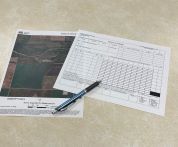
If you haven’t already done so, submit maps and report planted acreage to the San Luis Obispo County FSA Office. If you wish to receive your maps by e-mail, please call our office or email 805-434-0396 ext. 2 or email at Jeffrey.Sledd@usda.gov JULY 15, 2022, is the acreage reporting deadlines for San Luis Obispo County for the following crops:
- All Row Crops
- All Perennial Forage and Grasses
In order to maintain program eligibility and benefits, you must file timely acreage reports. Failure to file an acreage report by the crop acreage reporting deadline may cause ineligibility for future program benefits. FSA will not accept acreage reports provided more than a year after the acreage reporting deadline.
Producers are encouraged to file their acreage reports as soon as planting is completed.
|

The USDA Farm Service Agency (FSA) encourages you to review available USDA crop risk protection options, including federal crop insurance and Noninsured Crop Disaster Assistance Program (NAP) coverage before the crop deadline of September 1, 2022.
Federal crop insurance covers crop losses from natural adversities such as drought, hail, and excessive moisture. NAP covers losses from natural disasters on crops for which no permanent federal crop insurance program is available.
The following crops in San Luis Obispo County have a NAP application deadline of September 1, 2022:
- All Grass and mixed forage with intended use of grazing or forage
- Annual Row Crops with multiple plantings
- All Forage (Hay) and Grazing Crops
You can determine if crops are eligible for federal crop insurance or NAP by visiting the RMA website.
NAP offers higher levels of coverage, from 50 to 65 percent of expected production in 5 percent increments, at 100 percent of the average market price. Producers of organics and crops marketed directly to consumers also may exercise the “buy-up” option to obtain NAP coverage of 100 percent of the average market price at the coverage levels of between 50 and 65 percent of expected production. NAP basic coverage is available at 55 percent of the average market price for crop losses that exceed 50 percent of expected production.
For all coverage levels, the NAP service fee is the lesser of $325 per crop or $825 per producer per county, not to exceed a total of $1,950 for a producer with farming interests in multiple counties.
Beginning, underserved, veterans and limited resource farmers are now eligible for free catastrophic level coverage.
Federal crop insurance coverage is sold and delivered solely through private insurance agents. Agent lists are available at all USDA Service Centers or at USDA’s online Agent Locator. You can use the USDA Cost Estimator to predict insurance premium costs.
For more information on NAP, service fees, sales deadlines, contact your San Luis Obispo County USDA Service Center at 805-434-0396 ext. 2 or visit fsa.usda.gov.
Qualified veteran farmers or ranchers are eligible for a service fee waiver and premium reduction if the NAP applicant meets certain eligibility criteria.
|
In this Ask the Expert, Jack Carlile, Farm Loan Manager for the USDA Farm Service Agency (FSA), answers questions about farm operating loans and when producers should apply to secure funds for the current crop year.
As the Farm Loan Manager for the Cherokee County Service Center, Jack is responsible for managing the loan making and loan servicing activities for five counties in northeast Oklahoma. His office provides services for over 650 farm loan customers. Jack was raised on a cross bred cow/calf operation that his grandparents started. Over the years, each generation has added to the operation by purchasing additional pasture. The operation also grows and bales their own hay. Jack’s agriculture background and degree in agriculture economics from Oklahoma State University help him better understand the financing needs of his producers.
Who can apply for FSA Farm Loans?
Anyone can apply for FSA’s loan programs. Applications will be considered on basic eligibility requirements. To apply for a loan, you must meet the following general eligibility requirements including:
- Be a U.S. citizen or qualified alien.
- Operator of a family farm or ranch.
- Have a satisfactory credit history.
- Unable to obtain credit elsewhere at reasonable rates and terms to meet actual needs.
- Not be delinquent on any federal debts.
What can I purchase with operating loans?
Farm Operating Loans are traditionally used for purchasing capital items such as farm machinery, equipment, or livestock. Loan funds can also be used to help pay typical operating expenses for farming and ranching operations. For example, a rancher may use an operating loan to purchase forage for his cattle to feed them through the winter or a row crop producer may use an operating loan for paying for inputs like seed or fertilizer.
What is the maximum loan amount and terms?
The maximum loan amount for a Direct Farm Operating Loan is $400,000. Direct loans are made and serviced by FSA.
Producers can also apply for Guaranteed Operating Loans that are made by your commercial lender, and guaranteed against loss by FSA. The maximum loan amount for a Guaranteed Farm Operating Loan is $1,825,000. Loan terms for operating loans range from one to seven years.
How do I apply?
If you’re interested in applying for a farm loan, you can pick up an application by visiting your local FSA office. Visit farmers.gov to find the USDA Service Center nearest you.
When applying for a loan, you will need a business plan, which must include:
- Your mission, vision, and goals for your farm or ranch.
- Your current assets and liabilities.
- Marketing Plan (what your operation will produce and where you will market and sell your products.)
- Whether the amount of income your operation generates will be enough to pay your business and family living expenses.
When should I apply for an operating loan?
I would recommend beginning the application process a few months in advance of needing the funds to allow time for the request to be processed, and for any necessary security checks and searches to be completed. That allows time for the funds to be available for your use when most needed.
Where can I find more information?
To learn more about FSA loans visit farmers.gov/loans or fsa.usda.gov/farmloans. Fact sheets and application packages are also available at your USDA Service Center. To learn more about other types of FSA loans or to find the right loan for your operation, use the Farm Loan Discovery Tool by visiting farmers.gov/loans/farm-loan-discovery-tool.
|