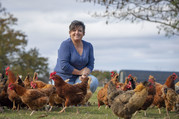
To date, USDA’s National Veterinary Services Laboratories has confirmed the presence of Highly Pathogenic Avian Influenza (HPAI) in commercial and backyard flocks in several states including State. Avian influenza viruses are classified as either “low pathogenic (LPAI)” or “highly pathogenic (HPAI)” based on their genetic features and the severity of the disease they cause in poultry. Caused by an influenza type A virus, HPAI can infect poultry (such as chickens, turkeys, pheasants, quail, domestic ducks, geese, and guinea fowl) and wild birds (especially waterfowl).
The clinical signs of birds affected with all forms of Avian Influenza may show one or more of the following:
- Sudden death without clinical signs
- Decreased water consumption up to 72 hours before other clinical signs
- Lack of energy and appetite
- Decreased egg production
- Soft–shelled or misshapen eggs
- Swelling of the head, eyelids, comb, wattles, and hocks
- Purple discoloration of the wattles, combs, and legs
- Nasal discharge
- Coughing, sneezing
- Lack of coordination
- Diarrhea
In addition to the disease infecting domestic birds, it is important to know that wild birds can also be infected and show no signs of illness. They can carry the disease to new areas when migrating, potentially exposing domestic poultry to the virus. The APHIS’ wild bird surveillance program provides an early warning system for the introduction and distribution of avian influenza viruses of concern in the United States, allowing APHIS and the poultry industry to take timely and rapid action.
With the recent detections of avian influenza in wild birds and domestic poultry in the United States, bird owners should review their biosecurity practices and stay vigilant to protect poultry and pet birds from transmission of this disease. The following bio-safety guidelines are effective methods for safeguarding commercial operations and smaller flocks:
- Backyard flock owners should practice strict biosecurity, including preventing birds from exposure and/or co-mingling with wild birds and other types of poultry.
- Shower, change clothes, and clean and disinfect footwear before entering your poultry housing areas.
- Respiratory protection such as a medical facemask would also be important and remember to always wear clean clothes when encountering healthy domestic birds.
- Carefully follow safe entry and exit procedures into your flock’s clean area.
- Reduce the attractiveness for wild birds to stop at your place by cleaning up litter and spilled feed around poultry housing areas.
- If you have free range guinea fowl and waterfowl, consider bringing them into coops or flight pens under nets to prevent interaction of domesticated poultry with wild birds and their droppings.
- It is best to restrict visitors from interacting with your birds currently.
- Do not touch sick or dead wildlife and keep them away from domestic poultry
- Try not to handle sick or deceased domestic birds (if you must, use proper personal protective equipment to minimize direct contact and cautiously disinfect anything that comes into contact with the deceased and or sick bird).
As part of the existing USDA Avian Influenza response plans, Federal and State partners as well as industry are responding quickly and decisively to these outbreaks by following these five basic steps:
-
Quarantine – restricting movement of poultry and poultry-moving equipment into and out of the control area;
-
Eradicate – depopulate the affected flock(s);
-
Monitor region – testing wild and domestic birds in a broad area around the quarantine area;
-
Disinfect – kills the virus in the affected flock locations; and
-
Test – confirming that the poultry farm is AI virus-free.
Sick or deceased domestic birds should be reported to your local veterinarian. Positive domestic cases are handled by APHIS and its partners. States that have confirmed cases of Avian Influenza should work closely with USDA-APHIS on surveillance, reporting and control efforts. Disposal methods will be evaluated on a case-by-case basis depending on a variety of factors, including the size of the flock, space requirements, associated costs, local conditions, and applicable laws/regulations.
The United States has the strongest Avian Influenza surveillance program in the world, where we actively look for the disease and provide fair market value compensation to affected producers to encourage reporting.
If you do not raise domestic birds or have a poultry operation but you encounter sick or dead wild birds, please use bio-safety measures, and report your findings through USDA’s toll-free number at 1-866-536-7593.
According to the Centers for Disease Control, this strain of Avian Influenza is a low risk to the public. While the transmission rate from animals to humans is low, it is a zoonotic disease, meaning it can be shared between species. To learn more about Avian Influenza and to remain up to date on the latest related news and information, you can visit the USDAAPHIS webpage.
|
FSA recently began mailing 303,000 pre-filled applications for the Emergency Relief Program (ERP), a new program designed to help agricultural producers impacted by wildfires, droughts, hurricanes, winter storms, and other qualifying natural disasters experienced during calendar years 2020 and 2021.
The past few years have been tough to say the least. As producers have dealt with the continued impacts of the COVID-19 pandemic, they have also struggled to recover from more frequent, more intense natural disasters. I am grateful that Congress passed, and President Biden signed into law the Extending Government Funding and Delivering Emergency Assistance Act (P.L. 117-43), which includes $10 billion in critical emergency relief.
After extensive stakeholder outreach, including with producers and groups that have not always been included in USDA programs, our team began work developing a responsive, easier-to-access program that could be rolled out in phases. We’re now rolling out the first phase of ERP, which uses existing Federal Crop Insurance or Noninsured Crop Disaster Assistance Program (NAP) data as the basis for calculating initial payments.
By leveraging existing data, we will be able to deliver approximately $6 billion in assistance on a faster timeline; at the same time, my team and I are committed to ensuring that producers who do not have existing data on file with USDA are captured in the second phase of ERP, which will be explicitly focused on filling gaps in previously implemented emergency assistance.
To apply for ERP Phase 1, here’s what you need to do:
- Check Your Mailbox
The form being mailed to you includes eligibility requirements, outlines the application process, and provides estimated ERP payment calculations. Producers will receive a separate application form for each program year in which an eligible loss occurred. Receipt of a pre-filled application is not confirmation that a producer is eligible to receive an ERP phase one payment. This application takes about 0.176 hours (that’s less than 15 minutes) for producers to complete, compared to the former Wildfire and Hurricane Indemnity Program – Plus application which took several hours for producers to complete and even longer for FSA staff.
The deadline to return completed ERP applications to FSA is Friday, July 22, 2022. If you have NAP coverage, you will receive pre-filled ERP applications later this summer. Details on ERP Phase 2 will be forthcoming as well.
- Check Your Eligibility
ERP covers losses to crops, trees, bushes, and vines due to a qualifying natural disaster event in calendar years 2020 and 2021. Eligible crops include all crops for which crop insurance or NAP coverage was available, except for crops intended for grazing. Qualifying natural disaster events include wildfires, hurricanes, floods, derechos, excessive heat, winter storms, freeze (including a polar vortex), smoke exposure, excessive moisture, qualifying drought*, and related conditions.
*Lists of 2020 and 2021 drought counties eligible for ERP are available online.
- Check Required Forms on File with FSA
Producers must have the following forms on file with FSA:
- Form AD-2047, Customer Data Worksheet.
- Form CCC-902, Farm Operating Plan for an individual or legal entity.
- Form CCC-901, Member Information for Legal Entities(if applicable).
- Form FSA-510, Request for an Exception to the $125,000 Payment Limitation for Certain Programs(if applicable).
- A highly erodible land conservation (sometimes referred to as HELC) and wetland conservation certification (Form AD-1026 Highly Erodible Land Conservation (HELC) and Wetland Conservation (WC) Certification) for the ERP producer and applicable affiliates.
If you have previously participated in FSA programs, you will likely have these required forms on file. However, if you’re uncertain or want to confirm the status of your forms, contact your local FSA county office.
- Check Historically Underserved Status with FSA, If Applicable
The ERP payment percentage for historically underserved producers, including beginning, limited resource, socially disadvantaged, and veteran farmers, and ranchers will be increased by 15% of the calculated ERP payment.
To qualify for the higher payment percentage, eligible producers must have the following form on file with FSA:
- Form CCC-860, Socially Disadvantaged, Limited Resource, Beginning and Veteran Farmer or Rancher Certification.
- Check Your Future Insurance Coverage
All producers who receive ERP phase one payments are statutorily required to purchase crop insurance, or NAP coverage where crop insurance is not available, for the next two available crop years, as determined by the Secretary.
Coverage requirements will be determined from the date a producer receives an ERP payment and may vary depending on the timing and availability of crop insurance or NAP for a producer’s particular crops. The final crop year to purchase crop insurance or NAP coverage to meet the second year of coverage for this requirement is the 2026 crop year.
- Check Your bank
Once the completed ERP application for payment is submitted to and signed by FSA, producers who have direct deposit should look for payment within three business days.
More Information
We have additional resources, including:
In addition to ERP, FSA is also implementing the first phase of the new Emergency Livestock Relief Program. At this time, FSA has made more than $588 million in payments to impacted livestock producers.
Bottom line, we take your feedback seriously, and we wanted to deliver this relief as soon as possible. We learned from previous relief programs, and we’re excited to be getting this to you as swiftly as we can.
USDA to Allow Producers to Request Voluntary Termination of Conservation Reserve Program Contract
The U.S. Department of Agriculture (USDA) will allow Conservation Reserve Program (CRP) participants who are in the final year of their CRP contract to request voluntary termination of their CRP contract following the end of the primary nesting season for fiscal year 2022. Participants approved for this one-time, voluntary termination will not have to repay rental payments, a flexibility implemented this year to help mitigate the global food supply challenges caused by the Russian invasion of Ukraine and other factors. Today, USDA also announced additional flexibilities for the Environmental Quality Incentives Program (EQIP) and Conservation Stewardship Program (CSP).
FSA is mailing letters to producers with expiring acres that detail this flexibility and share other options, such as re-enrolling sensitive acres in the CRP Continuous signup and considering growing organic crops. Producers will be asked to make the request for voluntary termination in writing through their local USDA Service Center.
If approved for voluntary termination, preparations can occur after the conclusion of the primary nesting season. Producers will then be able to hay, graze, begin land preparation activities and plant a fall-seeded crop before October 1, 2022. For land in colder climates, this flexibility may allow for better establishment of a winter wheat crop or better prepare the land for spring planting.
Organic Considerations
Since CRP land typically does not have a recent history of pesticide or herbicide application, USDA is encouraging producers to consider organic production. USDA’s Natural Resources Conservation Service (NRCS) provides technical and financial assistance to help producers plan and implement conservation practices, including those that work well for organic operations, such as pest management and mulching. Meanwhile, FSA offers cost-share for certification costs and other fees.
Other CRP Options
Participants can also choose to enroll all or part of their expiring acres into the Continuous CRP signup for 2022. Important conservation benefits may still be achieved by re-enrolling sensitive acres such as buffers or wetlands. Expiring water quality practices such as filter strips, grass waterways, and riparian buffers may be eligible to be reenrolled under the Clean Lakes, Estuaries, and Rivers (CLEAR) and CLEAR 30 options under CRP. Additionally, expiring continuous CRP practices such as shelterbelts, field windbreaks, and other buffer practices may also be re-enrolled to provide benefits for organic farming operations.
If producers are not planning to farm the land from their expiring CRP contract, the Transition Incentives Program (TIP) may also provide them two additional annual rental payments after their contract expires on the condition that they sell or rent their land to a beginning or veteran farmer or rancher or a member of a socially disadvantaged group.
Producers interested in the Continuous CRP signup, CLEAR 30, or TIP should contact FSA by Aug. 5, 2022.
NRCS Conservation Programs
USDA also encourages producers to consider NRCS conservation programs, which help producers integrate conservation on croplands, grazing lands and other agricultural landscapes. EQIP and CSP can help producers plant cover crops, manage nutrients and improve irrigation and grazing systems. Additionally, the Agricultural Conservation Easement Program (ACEP), or state or private easement programs, may be such an option. In many cases, a combination of approaches can be taken on the same parcel. For example, riparian areas or other sensitive parts of a parcel may be enrolled in continuous CRP and the remaining land that is returned to farming can participate in CSP or EQIP and may be eligible to receive additional ranking points.
Other Flexibilities to Support Conservation
Additionally, NRCS is also offering a new flexibility for EQIP and CSP participants who have cover cropping including in their existing contracts. NRCS will allow participants to either modify their plans to plant a cover crop (and instead shift to a conservation crop rotation) or delay their cover crop plans a year, without needing to terminate the existing contract. This will allow for flexibility to respond to market signals while still ensuring the conservation benefits through NRCS financial and technical assistance for participating producers.
More Information
Producers and landowners can learn more about these options by contacting FSA and NRCS at their local USDA Service Center.

The U.S. Department of Agriculture (USDA) will allow Conservation Reserve Program (CRP) participants who are in the final year of their CRP contract to request voluntary termination of their CRP contract following the end of the primary nesting season for fiscal year 2022. Participants approved for this one-time, voluntary termination will not have to repay rental payments, a flexibility implemented this year to help mitigate the global food supply challenges caused by the Russian invasion of Ukraine and other factors. Today, USDA also announced additional flexibilities for the Environmental Quality Incentives Program (EQIP) and Conservation Stewardship Program (CSP).
FSA is mailing letters to producers with expiring acres that detail this flexibility and share other options, such as re-enrolling sensitive acres in the CRP Continuous signup and considering growing organic crops. Producers will be asked to make the request for voluntary termination in writing through their local USDA Service Center.
If approved for voluntary termination, preparations can occur after the conclusion of the primary nesting season. Producers will then be able to hay, graze, begin land preparation activities and plant a fall-seeded crop before October 1, 2022. For land in colder climates, this flexibility may allow for better establishment of a winter wheat crop or better prepare the land for spring planting.
Organic Considerations
Since CRP land typically does not have a recent history of pesticide or herbicide application, USDA is encouraging producers to consider organic production. USDA’s Natural Resources Conservation Service (NRCS) provides technical and financial assistance to help producers plan and implement conservation practices, including those that work well for organic operations, such as pest management and mulching. Meanwhile, FSA offers cost-share for certification costs and other fees.
Other CRP Options
Participants can also choose to enroll all or part of their expiring acres into the Continuous CRP signup for 2022. Important conservation benefits may still be achieved by re-enrolling sensitive acres such as buffers or wetlands. Expiring water quality practices such as filter strips, grass waterways, and riparian buffers may be eligible to be reenrolled under the Clean Lakes, Estuaries, and Rivers (CLEAR) and CLEAR 30 options under CRP. Additionally, expiring continuous CRP practices such as shelterbelts, field windbreaks, and other buffer practices may also be re-enrolled to provide benefits for organic farming operations.
If producers are not planning to farm the land from their expiring CRP contract, the Transition Incentives Program (TIP) may also provide them two additional annual rental payments after their contract expires on the condition that they sell or rent their land to a beginning or veteran farmer or rancher or a member of a socially disadvantaged group.
Producers interested in the Continuous CRP signup, CLEAR 30, or TIP should contact FSA by Aug. 5, 2022.
NRCS Conservation Programs
USDA also encourages producers to consider NRCS conservation programs, which help producers integrate conservation on croplands, grazing lands and other agricultural landscapes. EQIP and CSP can help producers plant cover crops, manage nutrients and improve irrigation and grazing systems. Additionally, the Agricultural Conservation Easement Program (ACEP), or state or private easement programs, may be such an option. In many cases, a combination of approaches can be taken on the same parcel. For example, riparian areas or other sensitive parts of a parcel may be enrolled in continuous CRP and the remaining land that is returned to farming can participate in CSP or EQIP and may be eligible to receive additional ranking points.
Other Flexibilities to Support Conservation
Additionally, NRCS is also offering a new flexibility for EQIP and CSP participants who have cover cropping including in their existing contracts. NRCS will allow participants to either modify their plans to plant a cover crop (and instead shift to a conservation crop rotation) or delay their cover crop plans a year, without needing to terminate the existing contract. This will allow for flexibility to respond to market signals while still ensuring the conservation benefits through NRCS financial and technical assistance for participating producers.
More Information
Producers and landowners can learn more about these options by contacting FSA and NRCS at their local USDA Service Center.
|
Farm Service Agency (FSA) loans require applicants to have a satisfactory credit history. A credit report is requested for all FSA direct farm loan applicants. These reports are reviewed to verify outstanding debts, see if bills are paid timely and to determine the impact on cash flow.
Information on your credit report is strictly confidential and is used only as an aid in conducting FSA business.
Our farm loan staff will discuss options with you if you have an unfavorable credit report and will provide a copy of your report. If you dispute the accuracy of the information on the credit report, it is up to you to contact the issuing credit report company to resolve any errors or inaccuracies.
There are multiple ways to remedy an unfavorable credit score:
- Make sure to pay bills on time
- Setting up automatic payments or automated reminders can be an effective way to remember payment due dates.
- Pay down existing debt
- Keep your credit card balances low
- Avoid suddenly opening or closing existing credit accounts
FSA’s farm loan staff will guide you through the process, which may require you to reapply for a loan after improving or correcting your credit report.
For more information on FSA farm loan programs, contact your local County USDA Service Center or visit fsa.usda.gov.
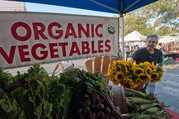
Agricultural producers and handlers who are certified organic, along with producers and handlers who are transitioning to organic production, can now apply for the U.S. Department of Agriculture’s (USDA) Organic and Transitional Education Certification Program (OTECP) and Organic Certification Cost Share Program (OCCSP), which help producers and handlers cover the cost of organic certification, along with other related expenses. Applications for OTECP and OCCSP are both due October 31, 2022.
OTECP covers:
- Certification costs for organic producers and handlers (25% up to $250 per category).
- Eligible expenses for transitional producers, including fees for pre-certification inspections and development of an organic system plan (75% up to $750).
- Registration fees for educational events (75% up to $200).
- Soil testing (75% up to $100).
Meanwhile, OCCSP covers 50% or up to $500 per category of certification costs in 2022.
This cost share for certification is available for each of these categories: crops, wild crops, livestock, processing/handling and State organic program fees.
Producers can receive cost share through both OTECP and OCCSP. Both OTECP and OCCSP cover costs incurred from October 1, 2021, to September 30, 2022. Producers have until October 31, 2022 to file applications, and FSA will make payments as applications are received.
To apply, producers and handlers should contact the Farm Service Agency (FSA) at their local USDA Service Center. As part of completing the OCCSP applications, producers and handlers will need to provide documentation of their organic certification and eligible expenses. Organic producers and handlers may also apply for OCCSP through participating State agencies.
Additional details can be found on the OTECP and OCCSP webpages.
|
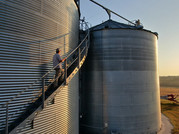
To assist Farm Storage Facility Loan (FSFL) borrowers experiencing financial hardship from the pandemic and other challenges in production agriculture, USDA’s Farm Service Agency (FSA) is offering a one-time annual installment payment deferral option. No fees or prepayment penalties apply for borrowers who choose this FSFL loan flexibility option.
Eligible borrowers can request a one-time only annual installment payment deferral for loans having terms of three, five, seven or ten years. The installment deferral option is not available for 12-year term loans.
The FSFL installment payments will remain the same, except for the last year. The original loan interest rate and annual payment due date will remain the same. However, because the installment payment deferral is a one-year loan term extension, the final payment will be higher due to additional accrued interest.
Borrowers interested in exercising the one-time annual installment deferral option should contact FSA to make the request and to obtain, complete and sign required forms.
FSFLs provide low-interest financing for producers to store, handle and transport eligible commodities.
More Information
In addition to offering flexibilities for FSFLs, FSA has also made other flexibilities to help producers impacted by the pandemic, including relaxing the loan-making process for farm operating and ownership loans and implementing the Disaster Set-Aside provision that enables an upcoming installment on a direct loan to be set aside for the year. More information on these flexibilities can be found at farmers.gov/coronavirus. For more information, contact your local USDA Service Center. To locate your local FSA office, visit farmers.gov/service-center-locator.
|
The USDA Farm Service Agency’s (FSA) Direct Farm Ownership loans can help farmers and ranchers become owner-operators of family farms, improve and expand current operations, increase agricultural productivity, and assist with land tenure to save farmland for future generations.
There are three types of Direct Farm Ownership Loans: regular, down payment and joint financing. FSA also offers a Direct Farm Ownership Microloan option for smaller financial needs up to $50,000.
Joint financing allows FSA to provide more farmers and ranchers with access to capital. FSA lends up to 50 percent of the total amount financed. A commercial lender, a State program or the seller of the property being purchased, provides the balance of loan funds, with or without an FSA guarantee. The maximum loan amount for a joint financing loan is $600,000, and the repayment period for the loan is up to 40 years.
The operation must be an eligible farm enterprise. Farm Ownership loan funds cannot be used to finance nonfarm enterprises and all applicants must be able to meet general eligibility requirements. Loan applicants are also required to have participated in the business operations of a farm or ranch for at least three years out of the 10 years prior to the date the application is submitted. The applicant must show documentation that their participation in the business operation of the farm or ranch was not solely as a laborer.
For more information about farm loans, contact your local County USDA Service Center or visit fsa.usda.gov.
If you want to use the Noninsured Crop Disaster Assistance Program (NAP) organic price and you select the "organic" option on your NAP application, you must report your crops as organic.
When certifying organic acres, the buffer zone acreage must be included in the organic acreage.
You must also provide a current organic plan, organic certificate or documentation from a certifying agent indicating an organic plan is in effect. Documentation must include:
- name of certified individuals
- address
- telephone number
- effective date of certification
- certificate number
- list of commodities certified
- name and address of certifying agent
- a map showing the specific location of each field of certified organic, including the buffer zone acreage
Certification exemptions are available for producers whose annual gross agricultural income from organic sales totals $5,000 or less. Although exempt growers are not required to provide a written certificate, they are still required to provide a map showing the specific location of each field of certified organic, transitional and buffer zone acreage.
For questions about reporting organic crops, contact your local County USDA Service Center.
Farm Service Agency (FSA) farm loans are considered progression lending. Unlike loans from a commercial lender, FSA loans are intended to be temporary in nature. Our goal is to help you graduate to commercial credit, and our farm loan staff is available to help borrowers through training and credit counseling.
The FSA team will help borrowers identify their goals to ensure financial success. FSA staff will advise borrowers on developing strategies and a plan to meet your goals and graduate to commercial credit. FSA borrowers are responsible for the success of their farming operation, but FSA staff will help in an advisory role, providing the tools necessary to help you achieve your operational goals and manage your finances.
For more information on FSA farm loan programs, contact your local County USDA Service Center or visit fsa.usda.gov.
Farm Service Agency (FSA) borrowers with farms located in designated primary or contiguous disaster areas who are unable to make their scheduled FSA loan payments should consider the Disaster Set-Aside (DSA) program.
DSA is available to producers who suffered losses as a result of a natural disaster and relieves immediate and temporary financial stress. FSA is authorized to consider setting aside the portion of a payment/s needed for the operation to continue on a viable scale.
Borrowers must have at least two years left on the term of their loan in order to qualify.
Borrowers have eight months from the date of the disaster designation to submit a complete application. The application must include a written request for DSA signed by all parties liable for the debt along with production records and financial history for the operating year in which the disaster occurred. FSA may request additional information from the borrower in order to determine eligibility.
All farm loans must be current or less than 90 days past due at the time the DSA application is complete. Borrowers may not set aside more than one installment on each loan.
The amount set-aside, including interest accrued on the principal portion of the set-aside, is due on or before the final due date of the loan.
For more information, contact your local County USDA Service Center or visit fsa.usda.gov.
|