In This Issue:
Farming on the Shore
County office visits in District 2 came to an end with a trip to the Accomack FSA office on the Eastern Shore. A stop by Shockley Farms allowed us to meet with a local producer who operates a farm and roadside stand. Their farm stand provides ample opportunity for consumers to acquire fresh, seasonal products from multiple producers on the shore. While visiting a Pollinator Habitat (CP-42) and a Shallow Water for Wildlife (CP-9), we were able to see the thriving conservation practices and the efforts producers make to ensure their success.
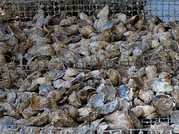
Cherrystone Aqua-Farms and Full Measure oyster farm each provided a tour of their facilities to see each step in the production of an oyster. Cherrystone Aqua-Farms is the largest farm-raised clam producer in the country and the largest oyster producer on the East Coast. Full Measure Oyster Farms emphasizes environmental stewardship in their daily work. Both farms provide millions of oysters to consumers each year and pride themselves on their hard work and dedication to growing the perfect oyster.
Dr. Ronald M. Howell, Jr., State Executive Director
|
This month, we not only celebrate the nation’s 246th birthday but also the liberties that are unique to this great country. Freedom of speech may be one of the most underappreciated of these rights. Every year, NRCS invites producers to share their candid opinions on top resource concerns and to be a part of the decision-making process for program delivery.
These Local Work Groups (LWGs) provide valuable feedback that helps us make sure we are allocating resources in the right places to meet your needs. The 2022 LWGs met at locations throughout Virginia this spring and provided my team with excellent feedback on a wide variety of issues and concerns. While we’re still reviewing reports and comments from participants in 37 of these LWGs, I’d like to take this opportunity to thank everyone who took part and to preview some of the topics that elicited the most response:
-
Urban agriculture resource concerns and potential locations.
-
Environmental Quality Incentives Program-Conservation Incentives Contract (EQIP-CIC) resource concerns and high-priority areas.
-
Source Water Protection Area identification and priority practices within SWPAs.
-
Conservation Stewardship Program (CSP) enhancement options.
-
Agricultural Conservation Easement Program (ACEP) visibility and enrollment.
LWGs are one of our best and most direct communication links with the producers we serve. We value this input and will consider all of these recommendations as we evaluate possible program changes for the 2023 fiscal year, which begins in October.
Dr. Edwin Martinez Martinez, Virginia State Conservationist
Hurricane season is officially underway, and it lasts until November 30. The National Oceanic and Atmospheric Administration (NOAA) predicts that the 2022 hurricane season will be above normal in the Atlantic and produce 14 to 21 named storms with six to 10 hurricanes and three to six major hurricanes. Additionally, NOAA predicts that the eastern Pacific hurricane season will produce 10 to 17 named storms, with four to eight hurricanes and zero to three major hurricanes.
Take precautions to prepare and protect your family and agricultural operation.
-
Develop an Emergency Plan - Ensure your household and employees know your hurricane plan, including meeting points, emergency contact lists, and alternate evacuation routes in case infrastructure is damaged.
-
Remove Debris and Secure Large Objects - Clean out culverts, ditches, and other drainage areas, especially before and during peak hurricane season to reduce water damage. Most injuries to animals, people, or structures during a hurricane are caused by flying objects. To lessen the risk, minimize the presence of equipment, supplies, and debris that may become airborne during high winds or encountered in floodwaters.
-
Secure Important Records and Documents- Pre- and post-hurricane documentation is extremely important for insurance compensation and recovery assistance. You’ll want to have thorough records of damages and losses sustained on your farm as well as documentation of your cleanup and recovery efforts.
- It is critical to document inventory of farm buildings, vehicles, equipment, and livestock before a disaster occurs. Take photos, videos, or make written lists with descriptions. Keep copies of this inventory in multiple places: computer, off-site in a safe location, and on a cloud-based server where information is transmitted and saved weekly.
-
Know Your Insurance Options- Regularly review your insurance policies with your agent to be sure you have adequate coverage, including flood insurance, for your facilities, vehicles, farm buildings, crops and livestock. Note, there are limitations on how soon insurance coverage will take effect. Generally, insurance policies will not cover damage if the policy was not in place before a disaster.
-
Gather Supplies - Have drinking water, canned food, a generator, batteries, a flashlight, and fuel available in case you lose power. For widespread outages, credit and debit cards may not work, so have cash handy.
-
Access Real-time Emergency Information- Download the FEMA app for free on the App Store and Google Play for safety tips on what to do before, during, and after disasters. Subscribe to our text message and email service to receive real-time, local operational and recovery information from the Farm Service Agency, Natural Resources Conservation Service and Risk Management Agency.
On farmers.gov, the Hurricane Webpage, Disaster Assistance Discovery Tool, Disaster-at-a-Glance fact sheet, and Farm Loan Discovery Tool can help producers and landowners determine program or loan options. For assistance with a crop insurance claim, producers and landowners should contact their crop insurance agent. For FSA and NRCS programs, they should contact their local USDA Service Center.
The U.S. Department of Agriculture (USDA) is announcing the signup period for its Clean Lakes, Estuaries, And Rivers initiative (CLEAR30) — a nationwide opportunity for certain landowners and agricultural producers currently implementing water quality practices through the Conservation Reserve Program (CRP) to enroll in 30-year contracts, extending the lifespan and strengthening the benefits of important water quality practices on their land.
Producers may apply for CLEAR30, a voluntary, incentive-based conservation program, from April 1, 2022, through Aug. 5, 2022.
Cropland and certain pastureland currently enrolled in Continuous CRP or the Conservation Reserve Enhancement Program (CREP) and dedicated to an eligible water quality practice such as riparian buffers, contour strips, grass waterways or wetland restoration may be eligible if their contracts are expiring by September 30, 2022.
CLEAR30 contracts will be effective beginning Oct. 1, 2022. These long-term contracts ensure that conservation practices remain in place for 30 years, which improves water quality through reducing sediment and nutrient runoff and helping prevent algal blooms. Conservation in riparian areas also provides important carbon sequestration benefits. Traditional CRP contracts run from 10 to 15 years.
About CLEAR30
CLEAR30 was established in the 2018 Farm Bill to better address water quality concerns. Originally, CLEAR30 was only available in the Great Lakes and Chesapeake Bay watersheds; in 2021, FSA made CLEAR30 available to agricultural producers and landowners nationwide, and participation grew nearly seven-fold from 2020 to 2021.
Annual rental payments for landowners who enroll in CLEAR30 will be equal to the current Continuous CRP annual payment rate plus a 20 percent water quality incentive payment and an annual rental rate adjustment of 27.5 percent.
How to Sign Up
To sign up for CLEAR30, landowners and producers should contact their local USDA Service Center by Aug. 5, 2022. Contact information can be found at farmers.gov/service-locator. Additionally, fact sheets and other resources are available at fsa.usda.gov/crp.
More Information
CLEAR30 is an option available through CRP, which is one of the largest voluntary private-lands conservation programs in the United States. CRP was originally intended to primarily control soil erosion and stabilize commodity prices by taking environmentally sensitive lands out of production. The program has evolved over the years, providing numerous conservation and economic benefits. In addition to CLEAR30, signups are also open for Continuous CRP and Grassland CRP.
If loan grain has been disposed of through feeding, selling or any other form of disposal without prior written authorization from the county office staff, it is considered unauthorized disposition. The financial penalties for unauthorized dispositions are severe and your name will be placed on a loan violation list for a two-year period. Always call before you haul any grain under loan.
The Farm Service Agency’s (FSA) Farm Storage Facility Loan (FSFL) program provides low-interest financing to help you build or upgrade storage facilities and to purchase portable (new or used) structures, equipment and storage and handling trucks.
Eligible commodities include corn, grain sorghum, rice, soybeans, oats, peanuts, wheat, barley, minor oilseeds harvested as whole grain, pulse crops (lentils, chickpeas and dry peas), hay, honey, renewable biomass, fruits, nuts and vegetables for cold storage facilities, floriculture, hops, maple sap, rye, milk, cheese, butter, yogurt, meat and poultry (unprocessed), eggs, and aquaculture (excluding systems that maintain live animals through uptake and discharge of water). Qualified facilities include grain bins, hay barns and cold storage facilities for eligible commodities.
Loans up to $50,000 can be secured by a promissory note/security agreement, loans between $50,000 and $100,000 may require additional security, and loans exceeding $100,000 require additional security.
You do not need to demonstrate the lack of commercial credit availability to apply. The loans are designed to assist a diverse range of farming operations, including small and mid-sized businesses, new farmers, operations supplying local food and farmers markets, non-traditional farm products, and underserved producers.
For more information, contact your County USDA Service Center or visit fsa.usda.gov/pricesupport.
USDA Farm Service Agency (FSA) reminds you to report failed acres in order to retain FSA program eligibility for some programs.
If you have failed acres, you should also use form CCC-576, Notice of Loss, to report failed acres.
For hand-harvested crops and certain perishables, you must notify FSA of damage or loss through the administrative County Office within 72 hours of the date of damage or loss first becomes apparent. This notification can be provided by filing a CCC-576, email, fax or phone. If you notify the County Office by any method other than by filing the CCC-576, you are still required to file a CCC-576, Notice of Loss, within the required 15 calendar days.
For losses on crops covered by the Non-Insured Crop Disaster Assistance Program (NAP), you must file a Notice of Loss within 15 days of the occurrence of the disaster or when losses become apparent. You must timely file a Notice of Loss for failed acres on all crops including grasses.
To file a Notice of Loss, contact your local County USDA Service Center.
Each year, state committees review and approve or disapprove county committee recommended changes or additions to specific combinations of crops.
Double-cropping is approved when two specific crops have the capability to be planted and carried to maturity for the intended use, as reported by the producer, on the same acreage within a crop year under normal growing conditions. The specific combination of crops recommended by the county committee must be approved by the state committee.
A crop following a cover crop terminated according to termination guidelines is approved double cropping and these combinations do not have to be approved by the state committee.
All producers are encouraged to contact their local FSA office for more information on the final planting date for specific crops. The final planting dates vary by crop, planting period and county so please contact your local FSA office for a list of county-specific planting deadlines. The timely planting of a crop, by the final planting date, may prevent loss of program benefits.
NAP provides financial assistance to you for crops that aren’t eligible for crop insurance to protect against lower yields or crops unable to be planted due to natural disasters including freeze, hail, excessive moisture, excessive wind or hurricanes, flood, excessive heat and qualifying drought (includes native grass for grazing), among others.
To receive payment, you had to purchase NAP coverage for 2022 crops and file a notice of loss the earlier of 15 days of the occurrence of the disaster or when losses become apparent or 15 days of the final harvest date.
For hand-harvested crops and certain perishable crops, you must notify FSA within 72 hours of when a loss becomes apparent.
Eligible crops must be commercially produced agricultural commodities for which crop insurance is not available, including perennial grass forage and grazing crops, fruits, vegetables, mushrooms, floriculture, ornamental nursery, aquaculture, turf grass, ginseng, honey, syrup, bioenergy, and industrial crops.
For more information on NAP, contact your County USDA Service Center or visit fsa.usda.gov/nap.
For the 2022 crop year, NAP forage producers with the intended use of grazing who elect to use independent assessments or other approved alternative loss percentage methods to establish their loss are no longer required to file a CCC-576 Notice of Loss with FSA. However, a CCC-576 Application for Payment form must be submitted to FSA no later than 60 calendar days after the coverage period ends. If an independent assessment is used to determine the loss, producers have 180 days to file an application for payment.
Producers that elect to have the grazing loss determined using similar mechanically harvested units still must timely file a CCC-576 Notice of Loss within 15 days of the disaster event or damage to the crop first becomes apparent or within 15 days of harvest.
Options Help More Beginning, Small and Urban Producers Gain Access to Credit
Producers can apply for a streamlined version of USDA guaranteed loans, which are tailored for smaller scale farms and urban producers EZ Guarantee Loans use a simplified application process to help beginning, small, underserved, and family farmers and ranchers apply for loans of up to $100,000 from USDA-approved lenders to purchase farmland or finance agricultural operations.
A new category of lenders will join traditional lenders, such as banks and credit unions, in offering USDA EZ Guarantee Loans. Microlenders, which include Community Development Financial Institutions and Rural Rehabilitation Corporations, will be able to offer their customers up to $50,000 of EZ Guaranteed Loans, helping to reach urban areas and underserved producers. Banks, credit unions and other traditional USDA-approved lenders, can offer customers up to $100,000 to help with agricultural operation costs.
EZ Guarantee Loans offer low interest rates and terms up to seven years for financing operating expenses and 40 years for financing the purchase of farm real estate. USDA-approved lenders can issue these loans with the Farm Service Agency (FSA) guaranteeing the loan up to 95 percent.
For more information about the available types of FSA farm loans, contact your County USDA Service Center or visit fsa.usda.gov/farmloans.
Farmers can use USDA farm ownership microloans to buy and improve property. These microloans are especially helpful to beginning or underserved farmers, U.S. veterans looking for a career in farming, and those who have small and mid-sized farming operations.
Microloans have helped farmers and ranchers with operating costs, such as feed, fertilizer, tools, fencing, equipment, and living expenses since 2013.
Microloans can also help with farmland and building purchases and soil and water conservation improvements. FSA designed the expanded program to simplify the application process, expand eligibility requirements and expedite smaller real estate loans to help farmers strengthen their operations. Microloans provide up to $50,000 to qualified producers and can be issued to the applicant directly from the USDA Farm Service Agency (FSA).
To learn more about the FSA microloan program, contact your County USDA Service Center or visit fsa.usda.gov/microloans.
If you live in one place long enough, you’ll bear witness to an ever-changing landscape. Most of us can only sit back and watch this process, but a fortunate few can actually take steps to preserve the original picture. Conservation easements are a great choice for those who want to protect prime farmlands and fragile ecosystems.
If you’re considering this option for your agricultural or forested properties, now is a good time to get the ball rolling. NRCS is seeing increased demand for easements nationwide, last year topping 5 million acres nationally and 16,500 in the commonwealth. The application-to-approval timeline is considerably longer than for other NRCS programs and can take years, not months, to finalize.
While NRCS accepts applications all year, summer is one of the best times to begin the conversation because the agency has yet to roll out Fiscal Year 2023 programs or make funding decisions. The agency offers Agricultural Land Easements (ALEs) that limit uses of the property to preserve historic or agricultural function and Wetland Reserve Easements (WREs) that restrict usage and restore and preserve wetland function. These are legal real estate transactions and stay with the land even if it is sold.
Landowners apply directly to partners qualified to hold ALEs but can work directly with NRCS on WREs. While a 30-year option is allowed by policy, permanent easements rank higher for funding and are the most common type in Virginia. Reach out to your local office to learn more about available options for your farm or forested land.
|
90-Day Treasury Bill
|
0.875%
|
|
Farm Operating Loans — Direct
|
3.875%
|
|
Farm Ownership Loans — Direct
|
4.125%
|
|
Farm Ownership Loans — Direct Down Payment, Beginning Farmer or Rancher
|
1.50%
|
|
Emergency Loans
|
3.75%
|
|
Farm Storage Facility Loans - 7 Years
|
3.125%
|
|
Commodity Loans 1996 - Present
|
3.375%
|
|