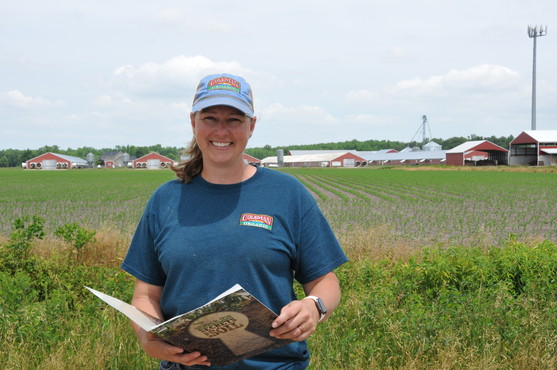
 Bobbi Jo Webber uses conservation as a guiding principle for the Webber family farm in Kent County, DE.
Delaware farmers Bobbi Jo and Matt Webber manage 1,500 acres of cropland and an organic poultry operation in the Chesapeake Bay watershed. For the past 22 years, the couple has used conservation principles to guide the operational decisions of their family farm. These resource-conserving principles are deeply rooted throughout their family and work to benefit both the Bay and their bottom line.
“We’ve been doing conservation on the farm forever. The first wetlands were done long before I was on the farm,” said Bobbi Jo referencing two distinct wetlands located on their farm. They were previously drained for farming but produced marginally. Today the restored wetlands serve as the farm’s kidneys to improve water quality. “Any water runoff that we get from farming will run directly into both wetlands which filters out any sediment, should any leave the farm, before it moves on to the Bay.”
 A new partnership website offers a one-stop shop for Delaware farmers and partners on all things soil health including upcoming events, presentations, soil health related resources, and much more.
The website, DelawareDigsHealthySoils.com, was developed by the Delaware Soil Health Partnership, a network that provides educational opportunities for soil health. Website visitors can also join a mailing list to receive notifications for new events.
The Delaware Soil Health Partnership has been hosting workshops, field days and other events focused on soil health management and local research since 2014. The Partnership is a collaborative effort between Delaware's Conservation Districts, USDA Natural Resources Conservation Service, the University of Delaware, Delaware State University, Delaware Department of Agriculture and the Delaware Department of Natural Resources and Environmental Control.
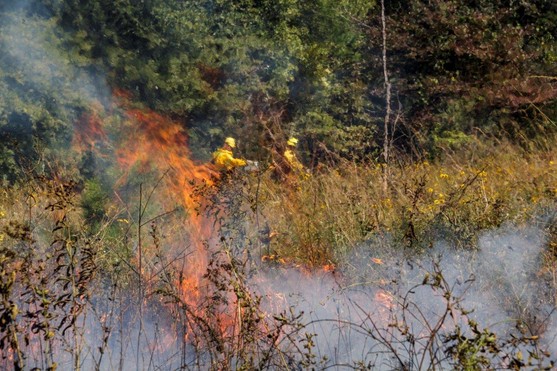 The Joint Chiefs’ Landscape Restoration Partnership enables NRCS and Forest Service to collaborate with partners such as agricultural producers and forest landowners to invest in conservation and restoration at a big enough scale to make a difference.
Proposals are developed through a collaborative process between NRCS, Forest Service and local partners. Past partners have included county, state, non-governmental, Tribal, utilities or private individual stakeholders.
Project proposals are due by Aug. 5, 2022, for the 2023 fiscal year.
|