In This Issue:
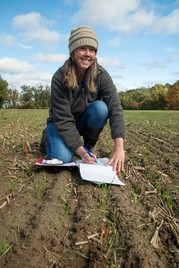
FSA is cleaning up our producer record database and needs your help. Please report any changes of address, zip code, phone number, email address or an incorrect name or business name on file to our office. You should also report changes in your farm operation, like the addition of a farm by lease or purchase. You should also report any changes to your operation in which you reorganize to form a Trust, LLC or other legal entity.
FSA and NRCS program participants are required to promptly report changes in their farming operation to the County Committee in writing and to update their Farm Operating Plan on form CCC-902.
To update your records, please contact your local FSA county office or visit https://www.farmers.gov/recover.
To find your local office, visit farmers.gov/service-center-locater.
|
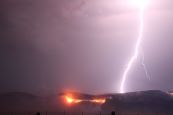
Severe weather events create significant challenges and often result in catastrophic loss for agricultural producers. Despite every attempt to mitigate risk, your operation may suffer losses. USDA offers several programs to help with recovery.
Risk Management
For producers who have risk protection through Federal Crop Insurance or the Noninsured Crop Disaster Assistance Program (NAP), we want to remind you to report crop damage to your crop insurance agent or the local Farm Service Agency (FSA) office.
If you have crop insurance, contact your agency within 72 hours of discovering damage and be sure to follow up in writing within 15 days. If you have NAP coverage, file a Notice of Loss (also called Form CCC-576) within 15 days of loss becoming apparent, except for hand-harvested crops, which should be reported within 72 hours.
Disaster Assistance
USDA also offers disaster assistance programs, which is especially important to livestock, fruit and vegetable, specialty and perennial crop producers who have fewer risk management options.
First, the Livestock Indemnity Program (LIP) and Emergency Assistance for Livestock, Honeybee and Farm-raised Fish Program (ELAP) reimburses producers for a portion of the value of livestock, poultry and other animals that died as a result of a qualifying natural disaster event or for loss of grazing acres, feed and forage. And, the Livestock Forage Disaster Program (LFP) provides assistance to producers of grazed forage crop acres that have suffered crop loss due to a qualifying drought. Livestock producers suffering the impacts of drought can also request Emergency Haying and Grazing on Conservation Reserve Program (CRP) acres.
Next, the Tree Assistance Program (TAP) provides cost share assistance to rehabilitate and replant tree, vines or shrubs loss experienced by orchards and nurseries. This complements NAP or crop insurance coverage, which cover the crop but not the plants or trees in all cases.
For LIP and ELAP, you will need to file a Notice of Loss for livestock and grazing or feed losses within 30 days and honeybee losses within 15 days. For TAP, you will need to file a program application within 90 days.
Documentation
It’s critical to keep accurate records to document all losses following this devastating cold weather event. Livestock producers are advised to document beginning livestock numbers by taking time and date-stamped video or pictures prior to after the loss.
Other common documentation options include:
- Purchase records
- Production records
- Vaccination records
- Bank or other loan documents
- Third-party certification
Other Programs
The Emergency Conservation Program and Emergency Forest Restoration Program can assist landowners and forest stewards with financial and technical assistance to restore damaged farmland or forests.
Additionally, FSA offers a variety of loans available including emergency loans that are triggered by disaster declarations and operating loans that can assist producers with credit needs. You can use these loans to replace essential property, purchase inputs like livestock, equipment, feed and seed, or refinance farm-related debts, and other needs.
Meanwhile, USDA’s Natural Resources Conservation Service (NRCS) provides financial resources through its Environmental Quality Incentives Program to help with immediate needs and long-term support to help recover from natural disasters and conserve water resources. Assistance may also be available for emergency animal mortality disposal from natural disasters and other causes.
Additional Resources
Additional details – including payment calculations – can be found on our NAP, ELAP, LIP, and TAP fact sheets. On farmers.gov, the Disaster Assistance Discovery Tool, Disaster-at-a-Glance fact sheet, and Farm Loan Discovery Tool can help you determine program or loan options.
While we never want to have to implement disaster programs, we are here to help. To file a Notice of Loss or to ask questions about available programs, contact your local USDA Service Center. All USDA Service Centers are open for business, including those that restrict in-person visits or require appointments because of the pandemic.
|
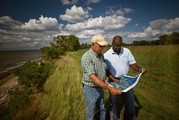
Farmers and ranchers know all too well that natural disasters can be a common, and likely a costly, variable to their operation. The Farm Service Agency (FSA) has emergency assistance programs to provide assistance when disasters strike, and for some of those programs, a disaster designation may be the eligibility trigger.
FSA administers four types of disaster designations.
USDA Secretarial Disaster Designation
- The designation process can be initiated by individual farmers, local government officials, State governors, State agriculture commissions, tribal councils or the FSA State Executive Director
- This designation is triggered by a 30-percent or greater production loss to at least one crop because of a natural disaster, or at least one producer who sustained individual losses because of a natural disaster and is unable to obtain commercial financing to cover those losses
- In 2012, USDA developed a fast-track process for disaster declarations for severe drought. This provides for a nearly automatic designation when, during the growing season, any portion of a county meets the D2 (Severe Drought) drought intensity value for eight consecutive weeks or a higher drought intensity value for any length of time as reported by the U.S. Drought Monitor (http://droughtmonitor.unl.edu)
Administrator’s Physical Loss Notification
- This designation is initiated by the FSA State Executive Director.
- The designation is triggered by physical damage and losses because of a natural disaster, including but not limited to dead livestock, collapsed buildings, and destroyed farm structures.
Presidential Designation
- A Presidential major disaster designation and emergency declaration is initiated by the Governor of the impacted state through the Federal Emergency Management Agency (FEMA).
- This designation is triggered by damage and losses caused by a disaster of such severity and magnitude that effective response is beyond the capability of the State and local governments.
Quarantine Designation
- This designation is requested of the Secretary of Agriculture by the FSA State Executive Director.
- A quarantine designation is triggered by damage and losses caused by the effects of a plant or animal quarantine approved by the Secretary under the Plant Protection Act or animal quarantine laws.
All four types of designations immediately trigger the availability of low-interest Emergency loans to eligible producers in all primary and contiguous counties. FSA borrowers in these counties who are unable to make their scheduled payments on any debt may be authorized to have certain set asides. Additional disaster assistance requiring a designation may also be provided by new programs in the future.
For more information on FSA disaster programs and disaster designations, please contact your local FSA county office or visit https://www.farmers.gov/recover. To find your local office, visit farmers.gov/service-center-locater.
|
The U.S. Department of Agriculture (USDA) Urban Agriculture and Innovation Production (UAIP) funds projects under the Environmental Quality Incentives Program (EQIP), which offers producers technical and financial assistance to address resource concerns on their land.
Approximately $500,000 in funding will be available to Florida participants through a competitive process. Florida producers’ and landowners’ deadline to apply was May 13, 2022, to be considered for funding in the current cycle. However, USDA’s Natural Resources Conservation Service (NRCS) accepts these applications year-round, and applications received after the batching date will automatically be considered during the next funding cycle.
WHY URBAN FARMING?
NRCS serves all agriculture – large to small, conventional to organic, rural to urban. As American agriculture continues to grow in new directions, NRCS conservation assistance is growing along with it. By bringing cultivation and opportunity to both rural and urban areas, NRCS addresses many needs to restore the health of the soil and the health of people. Urban agriculture pioneers grow fresh, healthy produce and improve the beauty of their neighborhoods. Through community gardens, produce is grown and donated to those who need it, and children and adults learn about agriculture first-hand. Farmer’s markets offer easy access to fresh foods in areas where grocery stores are miles away and they provide new income streams for residents.
FLORIDA PRIORITIES
Urban agricultural projects will be ranked according to priority resource concerns. The top three resource concerns in Florida are:
- source water depletion
- degraded plant conditions
- sediment, nutrients, and pathogen loss
Other priority resource concerns include field pesticide loss, inefficient energy use, pest pressure, soil quality limitations, terrestrial habitat, weather resilience, and storage and handling of pollutants.
FUNDING OPPORTUNITY AREAS
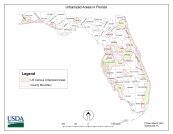
Priority areas for funding are those that have a population of 50 thousand or higher and include a two-mile adjoining radius. (Please see map of Urbanized Areas in Florida below, per the Census Bureau.) All practices, except conservation planning activities, are eligible and all land uses are eligible for the urban agriculture program.
HOW TO GET STARTED
To apply for EQIP’s EQIP Urban Agricultural Initiative Projects, contact NRCS at your local USDA Service Center to set up an in-person or phone appointment, via phone, email, and other digital tools. Also, work with your local Farm Service Agency office to establish farm records. Find your local Service Center at www.farmers.gov/service-locator. Because of the pandemic, some USDA Service Centers are open to limited visitors. On farmers.gov, you can create a secure account, apply for NRCS programs, electronically sign documents and manage your conservation contracts.
NRCS Florida State Office Contact: Teri Nehls, Program Specialist, Teri.Nehls@usda.gov, (352) 338-9545. Florida News Updates: News Releases | NRCS Florida (usda.gov)
OFFICE OF URBAN AGRICULTURE
The Office of Urban Agriculture and Innovative Production was established through the 2018 Farm Bill. It is led by NRCS and works in partnership with numerous USDA agencies, including FSA, to support urban agriculture. Its mission is to encourage and promote urban, indoor, and other emerging agricultural practices, including community composting and food waste reduction. More information is available at farmers.gov/urban. National Info Contact: urbanagriculture@usda.gov.
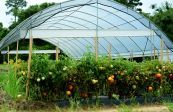
Photo caption (above), photo of high tunnel used for in-ground crop production.
|
 |
|
Map of U.S. Census urbanized areas in Florida |

Farmers and ranchers can use the Farm Loan Discovery Tool on farmers.gov to find information on USDA farm loans that may best fit their operations.
USDA’s Farm Service Agency (FSA) offers a variety of loan options to help farmers finance their operations. From buying land to financing the purchase of equipment, FSA loans can help.
USDA conducted field research in eight states, gathering input from farmers and FSA farm loan staff to better understand their needs and challenges.
How the Tool Works
Farmers who are looking for financing options to operate a farm or buy land can answer a few simple questions about what they are looking to fund and how much money they need to borrow. After submitting their answers, farmers will receive information on farm loans that best fit their specific needs. The loan application and additional resources also will be provided.
Farmers can download application quick guides that outline what to expect from preparing an application to receiving a loan decision. There are four guides that cover loans to individuals, entities, and youth, as well as information on microloans. The guides include general eligibility requirements and a list of required forms and documentation for each type of loan. These guides can help farmers prepare before their first USDA service center visit with a loan officer.
Farmers can access theFarm Loan Discovery Tool by visiting farmers.gov/fund and clicking the “Start” button. Follow the prompts and answer five simple questions to receive loan information that is applicable to your agricultural operation. The tool is built to run on any modern browser like Chrome, Edge, Firefox, or the Safari browser, and is fully functional on mobile devices. It does not work in Internet Explorer.
|
The Farm Loan team in Florida is already working on operating loans for spring 2022 and asks potential borrowers to submit their requests early so they can be timely processed. The farm loan team can help determine which loan programs are best for applicants.
FSA offers a wide range of low-interest loans that can meet the financial needs of any farm operation for just about any purpose. The traditional farm operating and farm ownership loans can help large and small farm operations take advantage of early purchasing discounts for spring inputs as well expenses throughout the year.
Microloans are a simplified loan program that will provide up to $50,000 for both Farm Ownership and Operating Microloans to eligible applicants. These loans, targeted for smaller and non-traditional operations, can be used for operating expenses, starting a new operation, purchasing equipment, and other needs associated with a farming operation. Loans to beginning farmers and members of underserved groups are a priority.
Other types of loans available include:
Marketing Assistance Loans allow producers to use eligible commodities as loan collateral and obtain a 9-month loan while the crop is in storage. These loans provide cash flow to the producer and allow them to market the crop when prices may be more advantageous.
Farm Storage Facility Loans can be used to build permanent structures used to store eligible commodities, for storage and handling trucks, or portable or permanent handling equipment. A variety of structures are eligible under this loan, including bunker silos, grain bins, hay storage structures, and refrigerated structures for vegetables and fruit. A producer may borrow up to $500,000 per loan.
Apr 15 - Spot Market Hog Pandemic Program (SMHPP) application deadline
July 15 - Acreage Reporting Sugar Cane
Oct 31 - Organic and Transitional Education and Certification Program (OTECP)
Oct 31 - Organic Certification Cost Share Program (OCCSP)
Dec 31 - A Second Disaster Set-Aside for Farm Loans
| Farm Operating - Direct |
2.872% |
| Farm Operating - Microloan |
2.2875% |
| Farm Ownership - Direct |
3.375% |
| Farm Ownership - Microloan |
3.375% |
| Farm Ownership - Direct, Joint Financing |
2.500% |
| Farm Ownership - Down Payment |
1.500% |
| Emergency Loan - Amount of Actual Loss |
3.750% |
|