|
|
San Luis Obispo County USDA Newsletter - May 2022
|
|
|
|
Farm Service Agency | Natural Resources Conservation Service | Risk Management Agency
|
|
Si Necesita una Explicación en Español, Por Favor Llámenos a la Oficina
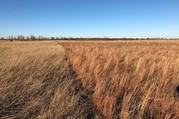
The U.S. Department of Agriculture (USDA) encourages producers and landowners to enroll in the Grassland Conservation Reserve Program (CRP). Landowners and producers interested in Grassland CRP should contact Jody at the San Luis Obispo County FSA Office to learn more or to apply for the program before the May 13, 2022 deadline.
Grassland CRP provides a unique opportunity for farmers, ranchers, and agricultural landowners to keep land in agricultural production and supplement their income while improving their soils and permanent grass cover. The program had its highest enrollment in history in 2021 and is part of the Biden-Harris Administration’s broader effort to equip producers with the tools they need to help address climate change and invest in the long-term health of our natural resources.
Grassland CRP is a federally funded voluntary working lands program. Through the program, USDA’s Farm Service Agency (FSA) provides annual rental payments to landowners to maintain and conserve grasslands while allowing producers to graze, hay, and produce seed on that land. Maintaining the existing permanent cover provides several benefits, including reducing erosion, providing wildlife habitat and migration corridors, and capturing and maintaining carbon in the soil and cover.
FSA provides participants with annual rental payments and cost-share assistance. The annual rental rate varies by county with a national minimum rental rate of $13 per acre for this signup. Contract duration is 10 or 15 years.
Grassland CRP National Priority Zones
Because Grassland CRP supports not only grazing operations but also biodiversity and conserving environmentally sensitive land such as that prone to wind erosion, FSA created two National Priority Zones in 2021: the Greater Yellowstone Migration Corridor and Dust Bowl Zone. As part of the Biden-Harris Administration’s focus on conservation in important wildlife corridors and key seasonal ranges, for this year’s signup, FSA is expanding the Greater Yellowstone Wildlife Migration Corridor Priority Zone to include seven additional counties across Montana, Wyoming, and Utah, to help protect the big-game animal migration corridor associated with Wyoming elk, mule deer, and antelope.
Offers within one of these National Priority Zones will receive an additional 15 ranking points and $5 per acre if at least 50% of the offer is located in the zone.
Alongside Grassland CRP, producers and landowners can also enroll acres in Continuous CRP under the ongoing sign up, which includes projects available through the Conservation Reserve Enhancement Program (CREP) and State Acres for Wildlife Enhancement (SAFE).
Broadening Reach of Program
As part of the Agency’s Justice40 efforts, producers and landowners who are historically underserved, including beginning farmers and military veterans, will receive 10 additional ranking points to enhance their offers.
Additionally, USDA is working to broaden the scope and reach of Grassland CRP by leveraging the Conservation Reserve Enhancement Program (CREP) to engage historically underserved communities. CREP is a partnership program that enables states, Tribal governments, non-profit, and private entities to partner with FSA to implement CRP practices and address high priority conservation and environmental objectives. Interested entities are encouraged to contact FSA.
More Information on CRP
Additionally, fact sheets and other resources are available at fsa.usda.gov/crp.
Signed into law in 1985, CRP is one of the largest voluntary private-lands conservation programs in the United States. The working lands signup announced today demonstrates how much it has evolved from the original program that was primarily intended to control soil erosion and only had the option to take enrolled land out of production. The program has expanded over the years and now supports a greater variety of conservation and wildlife benefits, along with the associated economic benefits.
|
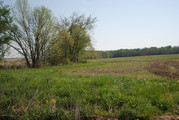
The Farm Service Agency (FSA) is accepting offers for specific conservation practices under the Conservation Reserve Program (CRP) Continuous Signup.
In exchange for a yearly rental payment, farmers enrolled in the program agree to remove environmentally sensitive land from agricultural production and to plant species that will improve environmental health and quality. The program’s long-term goal is to re-establish valuable land cover to improve water quality, prevent soil erosion, and reduce loss of wildlife habitat. Contracts for land enrolled in CRP are 10-15 years in length.
Under continuous CRP signup, environmentally sensitive land devoted to certain conservation practices can be enrolled in CRP at any time. Offers for continuous enrollment are not subject to competitive bidding during specific periods. Instead, they are automatically accepted provided the land and producer meet certain eligibility requirements and the enrollment levels do not exceed the statutory cap.
For more information, including a list of acceptable practices, contact your San Luis Obispo County USDA Service Center at (805) 434-0396 ext. 2 or visit fsa.usda.gov/crp.
Transitioning Expiring CRP Land to Beginning, Veteran or Underserved Farmers and Ranchers
CRP contract holders are encouraged to transition their Conservation Reserve Program (CRP) acres to beginning, veteran or socially disadvantaged farmers or ranchers through the Transition Incentives Program (TIP). TIP provides annual rental payments to the landowner or operator for up to two additional years after the CRP contract expires.
CRP contract holders no longer need to be a retired or retiring owner or operator to transition their land. TIP participants must agree to sell, have a contract to sell, or agree to lease long term (at least five years) land enrolled in an expiring CRP contract to a beginning, veteran, or socially disadvantaged farmer or rancher who is not a family member.
Beginning, veteran or social disadvantaged farmers and ranchers and CRP participants may enroll in TIP beginning two years before the expiration date of the CRP contract. The TIP application must be submitted prior to completing the lease or sale of the affected lands. New landowners or renters that return the land to production must use sustainable grazing or farming methods.
For more information on documentation requirements, contact your San Luis Obispo County USDA Service Center at (805) 434-0396 ext. 2 or visit fsa.usda.gov.
|

Agricultural producers who have not yet completed their crop acreage reports after spring planting should make an appointment with the San Luis Obispo County Farm Service Agency (FSA) before the applicable deadline.
An acreage report documents a crop grown on a farm or ranch and its intended uses. Filing an accurate and timely acreage report for all crops and land uses, including failed acreage and prevented planted acreage, can prevent the loss of benefits.
July 15, 2022, is the acreage reporting deadline for the following crops in San Luis Obispo County:
- Native Grass (Grazing Pastureland)
- Acreage Enrolled in CRP (Conservation Reserve Program)
- Acreage Enrolled in GRP (Grasslands Conservation Reserve Program)
- Fallowed Acreage (Ground left unplanted as part of crop rotation cycle)
- Vegetables (Row Crops)
- All other crops not previously reported
To file a crop acreage report, you will need to provide:
- Crop and crop type or variety.
- Intended use of the crop.
- Number of acres of the crop.
- Map with approximate boundaries for the crop.
- Planting date(s).
- Planting pattern, when applicable.
- Producer shares.
- Irrigation practice(s).
- Acreage prevented from planting, when applicable.
- Other information as required.
Acreage Reporting Details
The following exceptions apply to acreage reporting dates:
- If the crop has not been planted by the acreage reporting date, then the acreage must be reported no later than 15 calendar days after planting is completed.
- If a producer acquires additional acreage after the acreage reporting date, then the acreage must be reported no later than 30 calendar days after purchase or acquiring the lease. Appropriate documentation must be provided to the county office.
Producers should also report crop acreage they intended to plant, but due to natural disaster, were unable to plant. Prevented planting acreage must be reported on form CCC-576, Notice of Loss, no later than 15 calendar days after the final planting date as established by FSA and USDA’s Risk Management Agency.
Noninsured Crop Disaster Assistance Program (NAP) policy holders should note that the acreage reporting date for NAP-covered crops is the earlier of the dates listed above or 15 calendar days before grazing or harvesting of the crop begins.
More Information
For questions, please contact the San Luis Obispo County FSA office at (805) 434-0396 ext. 2.
|

Due to the persistent drought conditions in the Great Plains and West, the U.S. Department of Agriculture (USDA) is offering additional relief through the Emergency Assistance for Livestock, Honeybees and Farm-raised Fish Program (ELAP) to help ranchers cover above normal costs of hauling livestock to forage or other grazing acres. This policy enhancement complements previously announced ELAP compensation for hauling feed to livestock. ELAP livestock and feed hauling assistance is retroactive for 2021 and will be available for losses in 2022 and subsequent years.
ELAP Assistance Overview
ELAP provides financial assistance to eligible producers of livestock, honeybees, and farm-raised fish for losses due to disease, certain adverse weather events or loss conditions as determined by the Secretary of Agriculture. In addition to ELAP covering feed transportation costs where grazing and hay resources have been depleted, ELAP now also covers transportation costs associated with hauling livestock to feed sources This includes places where:
- Drought intensity is D2 for eight consecutive weeks as indicated by the S. Drought Monitor; or
- Drought intensity is D3 or greater.
Additionally, FSA has updated ELAP policy to also cover water hauling in areas experiencing D2 for eight consecutive weeks, lowering the drought intensity threshold (previously D3) triggering the availability of this financial assistance.
Eligibility
To be eligible for ELAP assistance, livestock must be intended for grazing and producers must have incurred feed or livestock transportation costs on or after Jan. 1, 2021. Although producers will self-certify losses and expenses to FSA, producers are encouraged to maintain good records and retain receipts and related documentation in the event these documents are requested for review by the local FSA County Committee.
Payment Calculations
USDA will reimburse eligible ranchers 60% of livestock transportation costs above what would have been incurred in a normal year. Producers qualifying as underserved (socially disadvantaged, limited resource, beginning or military veteran) will be reimbursed for 90% of the feed transportation cost above what would have been incurred in a normal year.
USDA uses a national cost formula to determine reimbursement costs that will not include the first 25 miles and distances exceeding 1,000 transportation miles. The calculation will also exclude the normal cost to transport hay or feed if the producer normally purchases some feed. For 2021, the initial cost formula of $6.60 per mile will be used (before the percentage is applied).
Online Decision Tool
Producers can use the updated ELAP Feed Livestock Transportation Producer Tool to help producers document and estimate payments to cover both feed and livestock transportation costs caused by drought. The tool (a Microsoft Excel workbook) and other resources are available at fsa.usda.gov/elap. Final payments may vary depending on eligibility.
Eligible ranchers should contact their FSA county office to apply for ELAP assistance. To simplify the application process, ranchers can print, or email payment estimates generated by the online tool for submission to FSA.
The deadline to request ELAP assistance for hauling livestock to forage in 2021 is June 30, 2022.
The deadline to request all ELAP assistance for 2022 calendar year losses will be Jan. 31, 2023.
More Information
Additional USDA disaster assistance information can be found on farmers.gov, including USDA resources specifically for producer impacted by drought and wildfire and the Disaster Assistance Discovery Tool, Disaster-at-a-Glance fact sheet and Farm Loan Discovery Tool. For FSA and Natural Resources Conservation Service programs, producers should contact the San Luis Obispo County Farm Service Agency for assistance at 805-434-0396 ext. 2. For assistance with a crop insurance claim, producers and landowners should contact their crop insurance agent.
|
|
|
|
San Luis Obispo County USDA Service Center
65 S Main Street
Suite 106
Templeton, CA 93465
Phone:805-434-0396 ext. 2
Fax:844-206-7035
|
COUNTY EXECUTIVE DIRECTOR
Jeffrey Sledd 805-536-3177
Jeffrey.Sledd@usda.gov
|
FARM LOAN MANAGER
Gary Troester 805-863-9937
Gary.Troester@usda.gov
|
|
FSA PROGRM STAFF
Jody Lyon, Lead Program Technician
Kim Kelley, Program Technician
Riley Haas, Program Technician
|
FSA FARM LOAN STAFF
Tarry Hetzel, Farm Loan Analyst
Daisy Banda, Farm Loan Officer Trainee
|
|
SAN LUIS OBISPO COUNTY COMMITTEE MEMBERS
LAA 1 - Nicolette Alford
LAA 2 - Daniel Jaureguy
LAA 3 - Lonnie Twisselman
Advisor - Arguimiro Casas
|
NEXT SCHEDULED COUNTY COMMITTEE MEETING
Thursday, May 12, 2022 at 9:00am
|
|
SERVICE CENTER OFFICE HOURS
8:00 AM - 4:30 PM
|
|
|