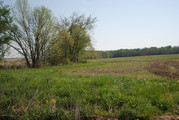
Agriculture Secretary Tom Vilsack announced the U.S. Department of Agriculture (USDA) is accepting more than 2 million acres in offers from agricultural producers and landowners through the Conservation Reserve Program (CRP) General signup, which included more than 4000 acres in Tennessee. This is the first of the program’s multiple signups occurring in 2022. With about 3.4 million acres expiring this year, Vilsack encourages producers and landowners to consider the Grassland and Continuous signups, both of which are currently open.
Producers submitted re-enrollment offers for just over half of expiring acres, similar to the rate in 2021. Offers for new land under General CRP were considerably lower compared to last year’s numbers, with fewer than 400,000 acres being offered this year versus over 700,000 acres offered last year.
It is important to note that submitting and accepting a CRP offer is the start of the process, and producers still need to develop a conservation plan before enrolling their land on October 1, 2022. Each year, during the window between offer acceptance and land enrollment, some producers change their mind and ultimately decide not to enroll some accepted acres without penalty.
The three other types of CRP — Grassland, Continuous, and CREP — are still available for either working-lands or targeted, often smaller sub-field, offers. Producers have submitted offers on nearly 260,000 acres through the Continuous and CREP signup so far this year. The Grassland signup – which last year had its highest participation ever – closes May 13, 2022.
General CRP Signup
The General CRP Signup 58 ran from Jan. 31 to March 11, 2022.
Through CRP, producers and landowners establish long-term, resource-conserving plant species, such as approved grasses or trees, to control soil erosion, improve soil health and water quality, and enhance wildlife habitat on agricultural land. In addition to the other well-documented benefits, lands enrolled in CRP are playing a key role in climate change mitigation efforts across the country.
In 2021, FSA introduced improvements to the program, which included a new Climate-Smart Practice Incentive to increase carbon sequestration and reduce greenhouse gas emissions. This incentive provides a 3%, 5% or 10% incentive payment based on the predominant vegetation type for the practices enrolled – from grasses to trees to wetland restoration.
More Information
While the General Signup is closed, producers and landowners can still apply for the Continuous and Grassland signups by contacting their local USDA Service Center.
Signed into law in 1985, CRP is one of the largest voluntary private-lands conservation programs in the United States. It was originally intended to primarily control soil erosion and potentially stabilize commodity prices by taking marginal lands out of production. The program has evolved over the years, providing many conservation and economic benefits. Learn more at fsa.usda.gov/crp.
USDA touches the lives of all Americans each day in so many positive ways. Under the Biden-Harris Administration, USDA is transforming America’s food system with a greater focus on more resilient local and regional food production, fairer markets for all producers, ensuring access to safe, healthy and nutritious food in all communities, building new markets and streams of income for farmers and producers using climate smart food and forestry practices, making historic investments in infrastructure and clean energy capabilities in rural America, and committing to equity across the Department by removing systemic barriers and building a workforce more representative of America. To learn more, visit www.usda.gov.
|

This planting season let’s highlight the innovation and leadership demonstrated by conservation-minded farmers in our #Plant2022 campaign. We’ll share your photos and stories on social media, blogs, and a nationwide storymap.
Learn more (https://go.usa.gov/xuTqj)
|
Does your operation include specialty crops? Whether you grow fruits, vegetables, tree nuts, dried fruits, horticulture, or nursery crops - USDA is here for you.
Over the past year, USDA has stepped up our support of specialty crop producers and local and regional food systems. USDA believes specialty crop producers are integral to the food system of the future, and we are working to improve available options for specialty crop producers as well as ensure equity in program delivery.
What’s New?
The Risk Management Agency (RMA) rolled out a new insurance option for small-scale producers who sell locally, which is named Micro Farm. This new insurance coverage option simplifies record keeping and covers post-production costs, such as washing and value-added products. It is available now, and you can learn more from an Approved Insurance Provider or your RMA specialty crop liaison.
In addition to Micro Farm, RMA rolled out other new insurance options in the past year, including: California Citrus Trees, Florida Citrus, Production and Revenue History option for Florida strawberries, and Hurricane Insurance Protection-Wind Index (HIP-WI). These new options either fill gaps in coverage or offer advantages over other policies. Since 2020, producers weathered several major hurricanes. The new HIP-WI played a crucial role in recovery with more than $250 million in indemnities paid so far with most payments issued in a matter of weeks following a hurricane.
Interest in growing and insuring specialty crops has grown significantly with $1 billion in liabilities for 1990 to $22 billion in liabilities for 2021. (For more details, check out reports on our Specialty Crops webpage.)
The Farm Service Agency (FSA) also offered pandemic assistance for organic producers. The new Organic and Transitional Education and Certification Program (OTECP) provided assistance to help cover loss of markets, increased costs, labor shortages and expenses related to obtaining or renewing their organic certification.
What’s Improved?
In the past year, RMA made improvements to existing policies -- including Whole-Farm Revenue Protection, a key insurance option for specialty crop producers. Beginning in the 2021 crop year, direct market producers could report two or more commodities using a new combined direct marketing code.
This reduced a tremendous burden for diversified producers and allowed them to receive a premium rate discount for diversification. For 2022, RMA increased coverage for organic and aquaculture producers and enabled organic producers to report certified organic acreage as long as the request for certification had been made by the reporting date, which provides additional flexibility to producers.
Want to Learn More?
These new and improved options for specialty crop producers are but a few of USDA’s strides over the past year to build a fairer, more transparent food system rooted in local and regional production. To learn more, please read USDA’s January 19, 2022, news release.
For crop insurance, visit RMA’s Specialty Crops webpage or contact your specialty crop liaison.
Also, if there is not a standard offer for the crop you would like insured, you may still be able to get a written agreement for coverage. RMA Regional Offices review these requests to help provide coverage. These requests also provide Regional Offices the opportunity to review the possible expansion of the policy to your county.
Lastly, you can read our Specialty Crops webpage on farmers.gov and question-and-answer with two specialty crop liaisons, Adrienne Steinacher and Matt Wilkin.
|
Tennessee State Office
579 U.S. Courthouse
801 Broadway
Nashville, Tennessee 37203
Phone: 615-277-2600
Fax: 855-494-7764
USDA is an equal opportunity provider, employer and lender. To file a complaint of discrimination, write: USDA, Office of the Assistant Secretary for Civil Rights, Office of Adjudication, 1400 Independence Ave., SW, Washington, DC 20250-9410 or call (866) 632-9992 (Toll-free Customer Service), (800) 877-8339 (Local or Federal relay), (866) 377-8642 (Relay voice users).
|