Jerry Hurrle - FSA Farm Loan Manager
We seem to have a winter that will last forever. Even though the calendar says it has been spring for a few weeks already, the sun will shine soon, and spring field work will begin. Planting may be a little later than normal, but hopefully we will have favorable conditions for planting and excellent growing conditions with no problems. Please be sure to keep safety in mind as we rush to get all the crops planted and the work finished this spring.
Farm Service Agency continues to have numerous loan options available for beginning farmers to start farming or expand their operation. We also have various options available for all farmers who may be experiencing financial difficulties or problems cash flowing. The options include operating loans, real estate loans and Micro loans to name a few. If you need financial assistance, please contact your local FSA office to review our programs and your options.
Chris Hogge - NRCS District Team Lead
The Minnesota Department of Agriculture (MDA) and the USDA’s Natural Resources Conservation Service (NRCS) are pleased to announce the Irrigation Partnerships to Protect Groundwater (project) located in Minnesota. Each partner will provide more than $3.5 M to the effort. The MDA is one of only 85 recipients selected nationwide for a Regional Conservation Partnership Program (RCPP) agreement with NRCS. The five-year project will focus on 20 counties across the state of Central Minnesota, including Benton and Sherburne counties. The MDA project, “Implementing Innovative Irrigation Practices to Protect Groundwater Quality and Quantity,” will work directly with agricultural producers using irrigation to implement conservation practices that protect groundwater and promote expanded precision-irrigation practices. Through the Irrigation Partnerships to Protect Groundwater project, MDA and NRCS hope to improve irrigation water management and reduce energy use and nitrate leaching on approximately 120 irrigation systems in Central Minnesota. If you have an irrigation system that needs updated, please contact the local NRCS office at 320-968-5300 EXT 2.
Ryan Brunn - FSA County Executive Director
With Mother Nature putting our planting season on hold a while longer, I encourage all producers to take care of any farm record changes or any other changes before you are out in the field. Producers who are buying, selling, or renting different land must notify the County Office as soon as possible after the transaction. Please provide a copy of the recorded deed for any purchased land. FSA is not notified by the courthouse of these sales. Also, if you will be renting new land, we will need a copy of the lease before we can add you to the farm and/or give you information about the farm such as maps, base acres, yields, etc. Updating records now will save you time during crop certification. If you have changed your bank or bank account, please provide FSA with your updated account as to not miss payments in the future.
Lastly, please stay safe in the fields and on the roads when planting conditions improve!
|
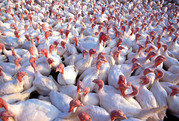
To date, USDA’s National Veterinary Services Laboratories has confirmed the presence of Highly Pathogenic Avian Influenza (HPAI) in commercial and backyard flocks in several states including Minnesota. Avian influenza viruses are classified as either “low pathogenic (LPAI)” or “highly pathogenic (HPAI)” based on their genetic features and the severity of the disease they cause in poultry. Caused by an influenza type A virus, HPAI can infect poultry (such as chickens, turkeys, pheasants, quail, domestic ducks, geese, and guinea fowl) and wild birds (especially waterfowl).
The clinical signs of birds affected with all forms of Avian Influenza may show one or more of the following:
- Sudden death without clinical signs
- Decreased water consumption up to 72 hours before other clinical signs
- Lack of energy and appetite
- Decreased egg production
- Soft–shelled or misshapen eggs
- Swelling of the head, eyelids, comb, wattles, and hocks
- Purple discoloration of the wattles, combs, and legs
- Nasal discharge
- Coughing, sneezing
- Lack of coordination
- Diarrhea
In addition to the disease infecting domestic birds, it is important to know that wild birds can also be infected and show no signs of illness. They can carry the disease to new areas when migrating, potentially exposing domestic poultry to the virus. The APHIS’ wild bird surveillance program provides an early warning system for the introduction and distribution of avian influenza viruses of concern in the United States, allowing APHIS and the poultry industry to take timely and rapid action.
With the recent detections of avian influenza in wild birds and domestic poultry in the United States, bird owners should review their biosecurity practices and stay vigilant to protect poultry and pet birds from transmission of this disease. The following bio-safety guidelines are effective methods for safeguarding commercial operations and smaller flocks:
- Backyard flock owners should practice strict biosecurity, including preventing birds from exposure and/or co-mingling with wild birds and other types of poultry.
- Shower, change clothes, and clean and disinfect footwear before entering your poultry housing areas.
- Respiratory protection such as a medical facemask would also be important and remember to always wear clean clothes when encountering healthy domestic birds.
- Carefully follow safe entry and exit procedures into your flock’s clean area.
- Reduce the attractiveness for wild birds to stop at your place by cleaning up litter and spilled feed around poultry housing areas.
- If you have free range guinea fowl and waterfowl, consider bringing them into coops or flight pens under nets to prevent interaction of domesticated poultry with wild birds and their droppings.
- It is best to restrict visitors from interacting with your birds currently.
- Do not touch sick or dead wildlife and keep them away from domestic poultry
- Try not to handle sick or deceased domestic birds (if you must, use proper personal protective equipment to minimize direct contact and cautiously disinfect anything that comes into contact with the deceased and or sick bird).
As part of the existing USDA Avian Influenza response plans, Federal and State partners as well as industry are responding quickly and decisively to these outbreaks by following these five basic steps:
-
Quarantine – restricting movement of poultry and poultry-moving equipment into and out of the control area;
-
Eradicate – depopulate the affected flock(s);
-
Monitor region – testing wild and domestic birds in a broad area around the quarantine area;
-
Disinfect – kills the virus in the affected flock locations; and
-
Test – confirming that the poultry farm is AI virus-free.
Sick or deceased domestic birds should be reported to your local veterinarian. Positive domestic cases are handled by APHIS and its partners. States that have confirmed cases of Avian Influenza should work closely with USDA-APHIS on surveillance, reporting and control efforts. Disposal methods will be evaluated on a case-by-case basis depending on a variety of factors, including the size of the flock, space requirements, associated costs, local conditions, and applicable laws/regulations.
The United States has the strongest Avian Influenza surveillance program in the world, where we actively look for the disease and provide fair market value compensation to affected producers to encourage reporting.
If you do not raise domestic birds or have a poultry operation but you encounter sick or dead wild birds, please use bio-safety measures, and report your findings through USDA’s toll-free number at 1-866-536-7593.
According to the Centers for Disease Control, this strain of Avian Influenza is a low risk to the public. While the transmission rate from animals to humans is low, it is a zoonotic disease, meaning it can be shared between species. To learn more about Avian Influenza and to remain up to date on the latest related news and information, you can visit the USDAAPHIS webpage.
|
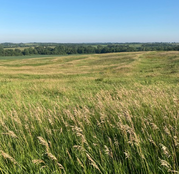
The U.S. Department of Agriculture (USDA) encourages producers and landowners to enroll in the Grassland Conservation Reserve Program (CRP) starting next week through May 13, 2022. Grassland CRP provides a unique opportunity for farmers, ranchers, and agricultural landowners to keep land in agricultural production and supplement their income while improving their soils and permanent grass cover. The program had its highest enrollment in history in 2021 and is part of the Biden-Harris Administration’s broader effort to equip producers with the tools they need to help address climate change and invest in the long-term health of our natural resources.
Grassland CRP is a federally funded voluntary working lands program. Through the program, USDA’s Farm Service Agency (FSA) provides annual rental payments to landowners to maintain and conserve grasslands while allowing producers to graze, hay, and produce seed on that land. Maintaining the existing permanent cover provides several benefits, including reducing erosion, providing wildlife habitat and migration corridors, and capturing and maintaining carbon in the soil and cover.
FSA provides participants with annual rental payments and cost-share assistance. The annual rental rate varies by county with a national minimum rental rate of $13 per acre for this signup. Contract duration is 10 or 15 years.
Grassland CRP National Priority Zones
Because Grassland CRP supports not only grazing operations but also biodiversity and conserving environmentally sensitive land such as that prone to wind erosion, FSA created two National Priority Zones in 2021: the Greater Yellowstone Migration Corridor and Dust Bowl Zone. As part of the Biden-Harris Administration’s focus on conservation in important wildlife corridors and key seasonal ranges, for this year’s signup, FSA is expanding the Greater Yellowstone Wildlife Migration Corridor Priority Zone to include seven additional counties across Montana, Wyoming, and Utah, to help protect the big-game animal migration corridor associated with Wyoming elk, mule deer, and antelope.
Offers within one of these National Priority Zones will receive an additional 15 ranking points and $5 per acre if at least 50% of the offer is located in the zone.
Alongside Grassland CRP, producers and landowners can also enroll acres in Continuous CRP under the ongoing sign up, which includes projects available through the Conservation Reserve Enhancement Program (CREP) and State Acres for Wildlife Enhancement (SAFE).
Broadening Reach of Program
As part of the Agency’s Justice40 efforts, producers and landowners who are historically underserved, including beginning farmers and military veterans, will receive 10 additional ranking points to enhance their offers.
Additionally, USDA is working to broaden the scope and reach of Grassland CRP by leveraging the Conservation Reserve Enhancement Program (CREP) to engage historically underserved communities. CREP is a partnership program that enables states, Tribal governments, non-profit, and private entities to partner with FSA to implement CRP practices and address high priority conservation and environmental objectives. Interested entities are encouraged to contact FSA.
More Information on CRP
Landowners and producers interested in Grassland CRP should contact their local USDA Service Center to learn more or to apply for the program before the May 13 deadline. Additionally, fact sheets and other resources are available at fsa.usda.gov/crp.
|

If you have experienced delays in receiving Agriculture Risk Coverage (ARC) and Price Loss Coverage (PLC) payments, Loan Deficiency Payments (LDPs) and Market Gains on Marketing Assistance Loans (MALs), it may be because you have not filed form CCC-941, Adjusted Gross Income Certification.
If you don’t have a valid CCC-941 on file for the applicable crop year you will not receive payments. All farm operator/tenants/owners who have not filed a CCC-941 and have pending payments should IMMEDIATELY file the form with their recording county FSA office. Farm operators and tenants are encouraged to ensure that their landowners have filed the form.
FSA can accept the CCC-941 for 2018, 2019, 2020, 2021, and 2022. Unlike the past, you must have the CCC-941 certifying your AGI compliance before any payments can be issued.
|
The U.S. Department of Agriculture (USDA) is updating its farm loan programs to better support current borrowers, including historically underserved producers. These improvements are part of USDA’s commitment to increase equity in all programs, including farm loans that provide important access to capital for covering operating expenses and purchasing land and equipment.
The 2018 Farm Bill authorized FSA to provide equitable relief to certain direct loan borrowers, who are non-compliant with program requirements due to good faith reliance on a material action of, advice of, or non-action from an FSA official. Previously, borrowers may have been required to immediately repay the loan or convert it to a non-program loan with higher interest rates, less favorable terms, and limited loan servicing.
Now, FSA has additional flexibilities to assist borrowers in such situations. If the agency provided incorrect guidance to an existing direct loan borrower, the agency may provide equitable relief to that borrower. FSA may assist the borrower by allowing the borrower to keep their loans at current rates or other terms received in association with the loan which was determined to be noncompliant or the borrower may receive other equitable relief for the loan as the Agency determines to be appropriate.
USDA encourages producers to reach out to their local loan officials to ensure they fully understand the wide range of loan and servicing options available that can assist them in starting, expanding or maintaining their operation.
Additional Updates
Equitable relief is one of several changes authorized by the 2018 Farm Bill that USDA has made to the direct and guaranteed loan programs. Other changes that were previously implemented include:
- Modifying the existing three-year farming experience requirement for Direct Farm Ownership loans to include additional items as acceptable experience.
- Allowing socially disadvantaged and beginning farmer applicants to receive a guarantee equal to 95%, rather than the otherwise applicable 90% guarantee.
- Expanding the definition of and providing additional benefits to veteran farmers.
- Allowing borrowers who received restructuring with a write down to maintain eligibility for an Emergency loan.
- Expanding the scope of eligible issues and persons covered under the agricultural Certified Mediation Program.
Additional information on these changes is available in the March 8, 2022 rule on the Federal Register.
More Background
FSA has taken other recent steps to increase equity in its programs. Last summer, USDA announced it was providing $67 million in competitive loans through its new Heirs’ Property Relending Program to help agricultural producers and landowners resolve heirs’ land ownership and succession issues. FSA also invested $4.7 million to establish partnerships with organizations to provide outreach and technical assistance to historically underserved farmers and ranchers, which contributed to a fourfold increase in participation by historically underserved producers in the Coronavirus Food Assistance Program 2 (CFAP 2), a key pandemic assistance program, since April 2021.
Additionally, in January 2021, Secretary Vilsack announced a temporary suspension of past-due debt collection and foreclosures for distressed direct loan borrowers due to the economic hardship imposed by the COVID-19 pandemic.
Producers can explore available loan options using the Farm Loan Discover Tool on farmers.gov (also available in Spanish) or by contacting their local USDA Service Center. Service Center staff continue to work with agricultural producers via phone, email, and other digital tools. Due to the pandemic, some USDA Service Centers are open to limited visitors. Producers can contact their local Service Center to set up an in-person or phone appointment to discuss loan options.
A new USDA report shows use of no-till, crop rotations, more efficient irrigation methods and advanced technologies have climbed in recent years. The report from USDA’s Natural Resources Conservation Service (NRCS) demonstrates progress made through voluntary conservation over a 10-year period. Findings from the report will inform future conservation strategies, including USDA’s efforts to tackle the climate crisis.
The “Conservation Practices on Cultivated Cropland: A Comparison of CEAP I and CEAP II Survey Data and Modeling” was developed by USDA’s Conservation Effects Assessment Project (CEAP). It found significant gains for soil health and soil carbon storage, while also identifying areas where additional and targeted nutrient management strategies are needed.
Key findings include:
- Farmers increasingly adopted advanced technology, including enhanced-efficiency fertilizers and variable rate fertilization to improve efficiency, assist agricultural economies and benefit the environment.
- More efficient conservation tillage systems, particularly no-till, became the dominant form of tillage, improving soil health and reducing fuel use.
- Use of structural practices increased, largely in combination with conservation tillage as farmers increasingly integrated conservation treatments to gain efficiencies. Structural practices include terraces, filter and buffer strips, grassed waterways and field borders.
- Irrigation expanded in more humid areas, and as irrigators shifted to more efficient systems and improved water management strategies, per-acre water application rates decreased by 19% and withdrawals by 7 million-acre-feet.
- Nearly 70% of cultivated cropland had conservation crop rotations, and 28% had high-biomass conservation crop rotations.
Because of this increased conservation, the report estimates:
- Average annual water (sheet and rill) and wind erosion dropped by 70 million and 94 million tons, respectively, and edge-of-field sediment loss declined by 74 million tons.
- Nearly 26 million additional acres of cultivated cropland were gaining soil carbon, and carbon gains on all cultivated cropland increased by over 8.8 million tons per year.
- Nitrogen and phosphorus losses through surface runoff declined by 3% and 6%, respectively.
- Average annual fuel use dropped by 110 million gallons of diesel fuel equivalents, avoiding associated greenhouse gas emissions of nearly 1.2 million tons of carbon dioxide equivalents.
About the Report
For this report, farmer survey data was collected from 2003-2006 and again from 2013-2016. NRCS evaluates conservation practice adoption through the CEAP Cropland Assessment, using a combination of farmer surveys, land use and soils information, along with resource models. CEAP project findings are used to guide USDA conservation policy and program development, along with assisting conservationists, farmers and ranchers and other land stewards with making sound and science-based conservation decisions.
Download the full report or a four-page summary of findings.
Next Steps
The report also revealed that cropping patterns have changed over the years in response to climate, policy, trade, renewable energy, and prices, presenting a nutrient management challenge. Improving the timing and application method of nutrients can allow production demands to be met while reducing the impacts of crop production on the environment. NRCS plans to continue its focus on nutrient management conservation practices and strategies with vigorous outreach efforts to farmers and further engagement with partner groups to adjust to these changing trends.
For more information on CEAP, visit the CEAP webpage or view this multimedia story.
|








