Manager Comments
Steve Frericks - FSA County Executive Director
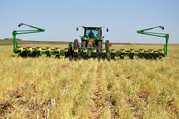
Hopefully the weather will cooperate soon so we can get spring planting in full swing. Spring will be fast and furious. Please ensure you make safety your #1 priority. Staff in the Stearns FSA Office have been very busy preparing for the acreage reporting season. As long as the COVID cases in the county remain low, we’ll be able to keep our doors open, which will be great for acreage reporting. If you would like your certification maps already, please contact the office and we will fulfill that request. We will be actively scheduling appointments just as soon as you are done planting ALL crops. We need All planting dates. Please call the office early to get a reserved time when you want it. Non-scheduled walk in's will be required to wait for those who scheduled an appointment. Call to reserve your spot. 320-251-7800 Ext 2.
Friday, April 29th is the deadline to apply for the Spot Market Hog Pandemic Program (SMHPP). Letters were sent to all current applicants outlining what type of supporting documentation is acceptable. Please review the article below for more information if you believe you would qualify for this program. Time is running out quickly.
If you have any farm changes, please contact the office as soon as possible to update your records. This will make acreage reporting go much more smoothly for all. Remember, the office can still use BOX and OneSpan, which is another option for obtaining your signatures once you return your completed maps. It is quick and easy.
The staff is actively reviewing all farm maps to identify any cropland changes that require our attention. This could be a result of many different things. New home construction, solar fields, gravel pits, cropland encroachment on CRP acres and many more. If you receive a letter requesting verification or review, please act upon this promptly. This process affects many programs.
The farm loan team is working feverishly to ensure all loan applicants are getting their loan requests reviewed timely. Please ensure you have complete applications and dedicated time to review your application if needed. Steve
|
Deadlines for Next two Months -
April 29- Deadline for Spot Market Hog Pandemic Program
May 1- Deadline for annual certification of asparagus
May 13- Deadline for the Grasslands Conservation Reserve Program (CRP) signup
May 31- Noninsured Crop Disaster Assistance Program, Minnesota closing deadline for ornamental nursery crops
May 31- Deadline to request a Marketing Assistance Loan for prior year harvested corn, soybeans and other oilseeds, rice, grain sorghum, and pulse crops.
June 15- FSA County Committee nomination period begins
July 15- Deadline for annual certification of spring-seeded crop acreage.
Farm Loan Program Interest Rates
2.750% - Farm Operating Loans, Direct
3.250% - Farm Ownership Loans, Direct
2.500% - Farm Ownership, Joint Financing
1.500% - Farm Ownership Loans, Beginning Farmer Down Payment
Farm Storage Facility Loan Program Interest Rates
1.875% - Farm Storage Facility Loans, 3-Year
1.875% - Farm Storage Facility Loans, 5-Year
2.000% - Farm Storage Facility Loans, 7-Year
2.000% - Farm Storage Facility Loans, 10-Year
2.125% - Farm Storage Facility Loans, 12-Year
April 2022 Commodity Loan Interest Rates
2.125% - Commodity Loans
STEARNS COUNTY COMMODITY LOAN RATES for 2021 CROP
Wheat HRS - 3.65/Bu
Barley - 2.36/Bu
Oats - 2.04/Bu
Corn - 2.08/Bu
Soybeans - 6.01/Bu
Keep Connected with FSA: With all of the existing programs and new programs becoming available to assist you, I don’t want you to miss out on any of these deadlines. I highly encourage you to sign up for our text message alerts. FSA provides text message alerts (no more than 2 per month) for important reminders and deadlines. Don’t miss out on getting these reminders. Let’s get you signed up right now! Take out your phone, send a message to 372-669 with MNStearns in the box of the text, and hit send. If you did these 3 easy steps you are signed up to receive text alerts. Thanks for doing this and you will receive quick reminders of important deadlines
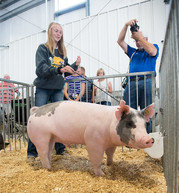
The U.S. Department of Agriculture (USDA) has clarified the definition of a spot market sale and hog eligibility under the Spot Market Hog Pandemic Program (SMHPP), which assists producers who sold hogs through a spot market sale from April 16, 2020, through Sept. 1, 2020. Hog producers will also now be required to submit documentation to support information provided on their SMHPP application. USDA’s Farm Service Agency (FSA) will accept applications through April 29, 2022, which is an extension of the April 15, 2022, deadline previously set for the program.
USDA is offering the SMHPP in response to a reduction in packer production due to the COVID-19 pandemic, which resulted in fewer negotiated hogs being procured and subsequent lower market prices. The program is part of USDA’s broader Pandemic Assistance for Producers initiative and addresses gaps in previous assistance for hog producers.
“Since opening signup for the Spot Market Hog Pandemic Program, we have heard from stakeholders and interested parties who have expressed concern and confusion about eligibility criteria, particularly as they related to the definition of a spot market sale and the definition of an eligible hog,” said FSA Administrator Zach Ducheneaux. “We have clarified the intent and scope of this program to target assistance to hog producers who were hard-hit by the pandemic but have not been included in other forms of assistance. In updating the SMHPP, we are working to provide new, broader, and more equitable opportunities for farmers, ranchers and producers.”
SMHPP Program Updates
When the pandemic disrupted normal marketing channels, including access to packers, producers sold their hogs through cash sales to local processors or butchers, direct sales to individuals and third-party intermediaries, including sale barns or brokers. The use of third-party intermediaries was the only available marketing alternative for many producers and are now included in SMHPP. The only direct to packer sales that are eligible for SMHPP are those through a negotiated sale. Hogs sold through a contract that includes a premium above the spot-market price or other formula such as the wholesale cut-out price remain ineligible. Hogs must be suitable and intended for slaughter to be eligible. Immature swine (pigs) are ineligible.
FSA will now require documentation to support the accuracy of information provided on the FSA-940 Spot Market Hog Pandemic Program application, including the number of hogs reported on the application that were sold through a spot market sale and how the price was determined for the sale.
SMHPP payments will be calculated by multiplying the number of head of eligible hogs, not to exceed 10,000 head, by the payment rate of $54 per head. To ensure SMHPP funding availability is disbursed equitably to all eligible producers, FSA will now issue payments after the application period ends. If calculated payments exceed the amount of available funding, payments will be factored.
Applying for Assistance
Eligible hog producers can apply for SMHPP by April 29, 2022, by completing the FSA-940, Spot Market Hog Pandemic Program application, along with required supporting documentation. Producers can visit farmers.gov/smhpp for examples of supporting documentation, information on applicant eligibility and more information on how to apply.
Applications can be submitted to the FSA office at any USDA Service Center nationwide by mail, fax, hand delivery or via electronic means. To find their local FSA office, producers should visit farmers.gov/service-locator. Hog producers can also call 877-508-8364 to speak directly with a USDA employee ready to offer assistance.
|
The U.S. Department of Agriculture (USDA) encourages producers and landowners to enroll in the Grassland Conservation Reserve Program (CRP) starting next week through May 13, 2022. Grassland CRP provides a unique opportunity for farmers, ranchers, and agricultural landowners to keep land in agricultural production and supplement their income while improving their soils and permanent grass cover. The program had its highest enrollment in history in 2021 and is part of the Biden-Harris Administration’s broader effort to equip producers with the tools they need to help address climate change and invest in the long-term health of our natural resources.
Grassland CRP is a federally funded voluntary working lands program. Through the program, USDA’s Farm Service Agency (FSA) provides annual rental payments to landowners to maintain and conserve grasslands while allowing producers to graze, hay, and produce seed on that land. Maintaining the existing permanent cover provides several benefits, including reducing erosion, providing wildlife habitat and migration corridors, and capturing and maintaining carbon in the soil and cover.
FSA provides participants with annual rental payments and cost-share assistance. The annual rental rate varies by county with a national minimum rental rate of $13 per acre for this signup. Contract duration is 10 or 15 years.
Grassland CRP National Priority Zones
Because Grassland CRP supports not only grazing operations but also biodiversity and conserving environmentally sensitive land such as that prone to wind erosion, FSA created two National Priority Zones in 2021: the Greater Yellowstone Migration Corridor and Dust Bowl Zone. As part of the Biden-Harris Administration’s focus on conservation in important wildlife corridors and key seasonal ranges, for this year’s signup, FSA is expanding the Greater Yellowstone Wildlife Migration Corridor Priority Zone to include seven additional counties across Montana, Wyoming, and Utah, to help protect the big-game animal migration corridor associated with Wyoming elk, mule deer, and antelope.
Offers within one of these National Priority Zones will receive an additional 15 ranking points and $5 per acre if at least 50% of the offer is located in the zone.
Alongside Grassland CRP, producers and landowners can also enroll acres in Continuous CRP under the ongoing sign up, which includes projects available through the Conservation Reserve Enhancement Program (CREP) and State Acres for Wildlife Enhancement (SAFE).
Broadening Reach of Program
As part of the Agency’s Justice40 efforts, producers and landowners who are historically underserved, including beginning farmers and military veterans, will receive 10 additional ranking points to enhance their offers.
Additionally, USDA is working to broaden the scope and reach of Grassland CRP by leveraging the Conservation Reserve Enhancement Program (CREP) to engage historically underserved communities. CREP is a partnership program that enables states, Tribal governments, non-profit, and private entities to partner with FSA to implement CRP practices and address high priority conservation and environmental objectives. Interested entities are encouraged to contact FSA.
More Information on CRP
Landowners and producers interested in Grassland CRP should contact their local USDA Service Center to learn more or to apply for the program before the May 13 deadline. Additionally, fact sheets and other resources are available at fsa.usda.gov/crp.
Signed into law in 1985, CRP is one of the largest voluntary private-lands conservation programs in the United States. The working lands signup announced today demonstrates how much it has evolved from the original program that was primarily intended to control soil erosion and only had the option to take enrolled land out of production. The program has expanded over the years and now supports a greater variety of conservation and wildlife benefits, along with the associated economic benefits.
USDA touches the lives of all Americans each day in so many positive ways. Under the Biden-Harris Administration, USDA is transforming America’s food system with a greater focus on more resilient local and regional food production, fairer markets for all producers, ensuring access to safe, healthy and nutritious food in all communities, building new markets and streams of income for farmers and producers using climate smart food and forestry practices, making historic investments in infrastructure and clean energy capabilities in rural America, and committing to equity across the Department by removing systemic barriers and building a workforce more representative of America. To learn more, visit usda.gov.

At USDA, we celebrate Earth Day 2022 on April 22nd by offering big thank-you to farmers, ranchers, and forest landowners for all they do. Every day, we recognize their efforts to conserve natural resources while producing food, fiber, and fuel for people in their communities and around the world. They’re doing what needs to be done to make sure we all enjoy the benefits of clean and plentiful water and healthy soils, ecosystems, and wildlife habitat.
The Earth Day 2022 theme is focused on engaging the more than 1 billion people, governments, institutions, and businesses who participate in Earth Day to recognize our collective responsibility and to help accelerate the transition to an equitable, prosperous green economy for all. Two-thirds of the land in the continental U.S. is privately owned, and the decisions that farmers and ranchers make on their land can impact wildlife.
We at USDA believe people and wildlife can thrive together. USDA’s Farm Service Agency and Natural Resources Conservation Service assist agricultural producers with adopting conservation practices that benefit not only farms, ranches, and forests but wildlife species.
|
Farmers and ranchers working with USDA’s Farm Service Agency or Natural Resources Conservation Service can now sign and share documents online in just a few clicks. By using Box or OneSpan, producers can digitally complete business transactions without leaving their homes or agricultural operations. Both services are free, secure, and available for multiple FSA and NRCS programs.
Box is a secure, cloud-based site where FSA or NRCS documents can be managed and shared. Producers who choose to use Box can create a username and password to access their secure Box account, where documents can be downloaded, printed, manually signed, scanned, uploaded, and shared digitally with Service Center staff. This service is available to any FSA or NRCS customer with access to a mobile device or computer with printer connectivity.
OneSpan is a secure eSignature solution for FSA and NRCS customers. Like Box, no software downloads or eAuthentication is required for OneSpan. Instead, producers interested in eSignature through OneSpan can confirm their identity through two-factor authentication using a verification code sent to their mobile device or a personalized question and answer. Once identity is confirmed, documents can be reviewed and e-signed through OneSpan via the producer’s personal email address. Signed documents immediately become available to the appropriate Service Center staff.
Box and OneSpan are both optional services for customers interested in improved efficiency in signing and sharing documents with USDA, and they do not replace existing systems using eAuthentication for digital signature. Instead, these tools provide additional digital options for producers to use when conducting business with FSA or NRCS.
USDA Service Center staff are available to help producers get started with Box and OneSpan through a few simple steps. Please visit farmers.gov/service-locator to find your local office and let Service Center staff know you’re interested in signing and sharing documents through these new features. In most cases, one quick phone call will be all that is needed to initiate the process.
Visit farmers.gov/mydocs to learn more about Box and OneSpan, steps for getting started, and additional resources for conducting business with USDA online.
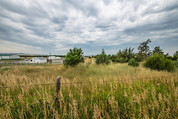
Our lives are dependent on healthy soil. Healthy soil gives us clean air and water, bountiful crops and forests, productive grazing lands, diverse wildlife and beautiful landscapes. It’s the reason why USDA’s Natural Resources Conservation Service experts are in your community and across the nation.
Soil is composed of air, water, organic matter and minerals. A community of organisms – functioning as a soil food web – lives all or parts of their lives in soil. More individual organisms are in a teaspoon of soil than there are people on earth. Increasing soil organic matter typically improves soil health, since organic matter improves several critical functions of soil.
To improve the health of their soil, more and more farmers and ranchers are keeping soil covered, reducing disturbance activities such as tilling, keeping plants growing throughout the year, and diversifying the crops they’re planting in a rotation. Taking these steps allow farmers and ranchers to help reduce erosion while increasing the soil’s ability to provide nutrients and water to the plant at critical times during the growing season.
When producers focus on improving soil health, they often have larger harvests, lower input costs, optimized nutrient use, and improved crop resilience during drought years like last year. In heavy rainfall years, healthy soil holds more water, reducing runoff that helps avert flooding downstream.
And because healthy soil allows for greater water infiltration and less erosion, nutrients and pesticides stay on the farm where they benefit crops, and are far less likely to be carried off the farm into streams and lakes where they can cause harm.
NRCS helps farmers install conservation practices such as cover crops to maintain and improve soil health – all of which can lead to productive, profitable and sustainable farming and ranching operations for generations to come.
For more information, contact your Stearns County USDA Service Center at 320-251-7800 or visit nrcs.usda.gov
|
USDA Farm Service Agency (FSA) reminds you to report prevented planted and failed acres in order to establish or retain FSA program eligibility for some programs. You should report crop acreage you intended to plant, but due to natural disaster, were prevented from planting. Prevented planting acreage must be reported on form CCC-576, Notice of Loss, no later than 15 calendar days after the final planting date as established by FSA and Risk Management Agency (RMA). According to CED Steve Frericks, the final planting dates are as follows for Stearns County:
Spring Wheat - 5/15/2022
Corn for Grain - 5/31/2022
Soybeans for Grain - 6/10/2022
If you’re unable to report the prevented planting acreage within the 15 calendar days following the final planting date, a late-filed report can be submitted. Late-filed reports will only be accepted if FSA conducts a farm visit to assess the eligible disaster condition that prevented the crop from being planted. A measurement service fee will be charged. Additionally, if you have failed acres, you should also use form CCC-576, Notice of Loss, to report failed acres. For hand-harvested crops and certain perishables, you must notify FSA of damage or loss through the administrative County Office within 72 hours of the date of damage or loss first becomes apparent. This notification can be provided by filing a CCC-576, email, fax or phone. If you notify the County Office by any method other than by filing the CCC-576, you are still required to file a CCC-576, Notice of Loss, within the required 15 calendar days. For losses on crops covered by the Non-Insured Crop Disaster Assistance Program (NAP), you must file a Notice of Loss within 15 days of the occurrence of the disaster or when losses become apparent. You must timely file a Notice of Loss for failed acres on all crops including grasses. To file a Notice of Loss, contact your Stearns County USDA Service Center at 320-251-7800 or visit www.fsa.usda.gov.
|