Luna/Grant County FSA Updates

View as a webpage / Share

US Department of Agriculture

Luna/Grant County FSA Updates  -  March 10, 2022


USDA to Provide Payments to Livestock Producers Impacted by Drought or Wildfire  

USDA Updates Farm Loan Programs to Increase Equity

Applying for NAP Payments


A MESSAGE FROM YOUR CED

IMPORTANT REMINDER:

CERTIFICATION FOR YOUR;

SPRING: BARLEY, OATS WHEAT AND POTATOES, ONIONS, AND PECANS DUE BY MAY 15TH 2022.

USDA to Provide Payments to Livestock Producers Impacted by Drought or Wildfire 

Cow Calf


         The U.S Department of Agriculture (USDA) announced that ranchers who have approved applications through the 2021 Livestock Forage Disaster Program (LFP) for forage losses due to severe drought or wildfire in 2021 will soon begin receiving emergency relief payments for increases in supplemental feed costs in 2021 through the Farm Service Agency’s (FSA) new Emergency Livestock Relief Program (ELRP).

                                                Background  

     On September 30, 2021, President Biden signed into law the Extending Government Funding and Delivering Emergency Assistance Act (P.L. 117-43). This Act includes $10 billion in assistance to agricultural producers impacted by wildfires, droughts, hurricanes, winter storms and other eligible disasters experienced during calendar years 2020 and 2021. Additionally, the Act specifically targets $750 million to provide assistance to livestock producers for losses incurred due to drought or wildfires in calendar year 2021. ELRP is part of FSA’s implementation of the Act.  

        For impacted producers, USDA will leverage LFP data to deliver immediate relief for increases in supplemental feed costs in 2021. LFP is an important tool that provides up to 60% of the estimated replacement feed cost when an eligible drought adversely impacts grazing lands or 50% of the monthly feed cost for the number of days the producer is prohibited from grazing the managed rangeland because of a qualifying wildfire.  

        FSA received more than 100,000 applications totaling nearly $670 million in payments to livestock producers under LFP for the 2021 program year.  

        Congress recognized requests for assistance beyond this existing program and provided specific funding for disaster-impacted livestock producers in 2021.   

                                           ELRP Eligibility – Phase One  

       To be eligible for an ELRP payment under phase one of program delivery, livestock producers must have suffered grazing losses in a county rated by the U.S. Drought Monitor as having a D2 (severe drought) for eight consecutive weeks or a D3 (extreme drought) or higher level of drought intensity during the 2021 calendar year, and have applied and been approved for 2021 LFP. Additionally, producers whose permitted grazing on federally managed lands was disallowed due to wildfire are also eligible for ELRP payments, if they applied and were approved for 2021 LFP. 

       As part of FSA’s efforts to streamline and simplify the delivery of ELRP phase one benefits, producers are not required to submit an application for payment; however, they must have the following forms on file with FSA within a subsequently announced deadline as determined by the Deputy Administrator for Farm Programs:  

  • CCC-853, Livestock Forage Disaster Program Application  
  • Form AD-2047, Customer Data Worksheet.  
  • Form CCC-902, Farm Operating Plan for an individual or legal entity.   
  • Form CCC-901, Member Information for Legal Entities (if applicable).   
  • Form FSA-510, Request for an Exception to the $125,000 Payment Limitation for Certain Programs (if applicable).   
  • Form CCC-860, Socially Disadvantaged, Limited Resource, Beginning and Veteran Farmer or Rancher Certification, if applicable, for the 2021 program year.   
  • A highly erodible land conservation (sometimes referred to as HELC) and wetland conservation certification (Form AD-1026 Highly Erodible Land Conservation (HELC) and Wetland Conservation (WC) Certification) for the ELRP producer and applicable affiliates.  

                                 ELRP Payment Calculation – Phase One  

       To further expedite payments to eligible livestock producers, determine eligibility, and calculate an ELRP phase one payment, FSA will utilize livestock inventories and drought-affected forage acreage or restricted animal units and grazing days due to wildfire already reported by the producer when they submitted a 2021 CCC-853, Livestock Forage Disaster Program Application form.   

       Phase one ELRP payments will be equal to the eligible livestock producer’s gross 2021 LFP calculated payment multiplied by a payment percentage, to reach a reasonable approximation of increased supplemental feed costs for eligible livestock producers in 2021.   

        The ELRP payment percentage will be 90% for historically underserved producers, including beginning, limited resource, and veteran farmers and ranchers, and 75% for all other producers.  These payments will be subject to a payment limitation.  

        To qualify for the higher payment percentage, eligible producers must have a CCC-860, Socially Disadvantaged, Limited Resource, Beginning and Veteran Farmer or Rancher Certification, form on file with FSA for the 2021 program year.  

        Payments to eligible producers through phase one of ELRP are estimated to total more than $577 million.  

                                                    ELRP - Phase Two   

       Today’s announcement is only Phase One of relief for livestock producers.  FSA continues to evaluate and identify impacts of 2021 drought and wildfire on livestock producers to ensure equitable and inclusive distribution of much-needed emergency relief program benefits.    

             Emergency Relief Program (ERP) Assistance for Crop Producers  

        FSA is developing a two-phased process to provide assistance to diversified, row crop and specialty crop operations that were impacted by an eligible natural disaster event in calendar years 2020 or 2021. 

        This program will provide assistance to crop producers and will follow a two-phased process similar to that of the livestock assistance with implementation of the first phase in the coming weeks. Phase one of the crop assistance program delivery will leverage existing Federal Crop Insurance or Noninsured Crop Disaster Assistance Program data as the basis for calculating initial payments.  

        Making the initial payments using existing safety net and risk management data will both speed implementation and further encourage participation in these permanent programs, including the Pasture, Rangeland, Forage Rainfall Index Crop Insurance Program, as Congress intended.  

        The second phase of the crop program will be intended to fill additional assistance gaps and cover eligible producers who did not participate in existing risk management programs.    

        Through proactive communication and outreach, USDA will keep producers and stakeholders informed as ERP implementation details are made available.    

                          Additional Livestock Drought Assistance  

       Due to the persistent drought conditions in the Great Plains and West, FSA will be offering additional relief through the Emergency Assistance for Livestock, Honeybees and Farm-raised Fish Program (ELAP) to help ranchers cover above normal costs of hauling livestock to forage.  This policy enhancement complements previously announced ELAP compensation for hauling feed to livestock.  Soon after FSA announced the assistance for hauling feed to livestock, stakeholders were quick to point out that producers also were hauling the livestock to the feed source as well and encouraged this additional flexibility.    

        It is important to note that, unlike ELRP emergency relief benefits which are only applicable for eligible losses incurred in the 2021 calendar year, this ELAP livestock and feed hauling compensation will not only be retroactive for 2021 but will also be available for losses in 2022 and subsequent years.   

        To calculate ELAP program benefits, an online tool is currently available to help producers document and estimate payments to cover feed transportation cost increases caused by drought and will soon be updated to assist producers with calculations associated with drought related costs incurred for hauling livestock to forage  

                                              More Information   

     Additional USDA disaster assistance information can be found on farmers.gov, including USDA resources specifically for producer impacted by drought and wildfire and the Disaster Assistance Discovery Tool, Disaster-at-a-Glance fact sheet, and Farm Loan Discovery Tool. For FSA and Natural Resources Conservation Service programs, producers should contact their local USDA Service Center. For assistance with a crop insurance claim, producers and landowners should contact their crop insurance agent.  


USDA Updates Farm Loan Programs to Increase Equity

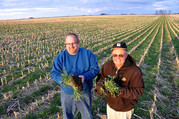
Generation


     The U.S. Department of Agriculture (USDA) is updating its farm loan programs to better support current borrowers, including historically underserved producers. These improvements are part of USDA’s commitment to increase equity in all programs, including farm loans that provide important access to capital for covering operating expenses and purchasing land and equipment.  

     The 2018 Farm Bill authorized FSA to provide equitable relief to certain direct loan borrowers, who are non-compliant with program requirements due to good faith reliance on a material action of, advice of, or non-action from an FSA official. Previously, borrowers may have been required to immediately repay the loan or convert it to a non-program loan with higher interest rates, less favorable terms, and limited loan servicing.  

     Now, FSA has additional flexibilities to assist borrowers in such situations. If the agency provided incorrect guidance to an existing direct loan borrower, the agency may provide equitable relief to that borrower. FSA may assist the borrower by allowing the borrower to keep their loans at current rates or other terms received in association with the loan which was determined to be noncompliant or the borrower may receive other equitable relief for the loan as the Agency determines to be appropriate.

     USDA encourages producers to reach out to their local loan officials to ensure they fully understand the wide range of loan and servicing options available that can assist them in starting, expanding or maintaining their operation.  

                                            Additional Updates  

     Equitable relief is one of several changes authorized by the 2018 Farm Bill that USDA has made to the direct and guaranteed loan programs. Other changes that were previously implemented include:  


  • Modifying the existing three-year farming experience requirement for Direct Farm Ownership loans to include additional items as acceptable experience. 
  • Allowing socially disadvantaged and beginning farmer applicants to receive a guarantee equal to 95%, rather than the otherwise applicable 90% guarantee. 
  • Expanding the definition of and providing additional benefits to veteran farmers. 
  • Allowing borrowers who received restructuring with a write down to maintain eligibility for an Emergency loan. 
  • Expanding the scope of eligible issues and persons covered under the agricultural Certified Mediation Program. 

     Additional information on these changes is available in the March 8, 2022 rule on the Federal Register. 

                                                 More Background 

     FSA has taken other recent steps to increase equity in its programs. Last summer, USDA announced it was providing $67 million in competitive loans through its new Heirs’ Property Relending Program to help agricultural producers and landowners resolve heirs’ land ownership and succession issues. FSA also invested $4.7 million to establish partnerships with organizations to provide outreach and technical assistance to historically underserved farmers and ranchers, which contributed to a fourfold increase in participation by historically underserved producers in the Coronavirus Food Assistance Program 2 (CFAP 2), a key pandemic assistance program, since April 2021. 

     Additionally, in January 2021, Secretary Vilsack announced a temporary suspension of past-due debt collection and foreclosures for distressed direct loan borrowers due to the economic hardship imposed by the COVID-19 pandemic. 

     Producers can explore available loan options using the Farm Loan Discover Tool on farmers.gov (also available in Spanish) or by contacting their local USDA Service Center. Service Center staff continue to work with agricultural producers via phone, email, and other digital tools. Due to the pandemic, some USDA Service Centers are open to limited visitors. Producers can contact their local Service Center to set up an in-person or phone appointment to discuss loan options.  


Applying for NAP Payments


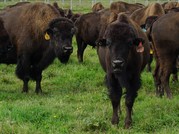
Bison


     The Noninsured Crop Disaster Assistance Program (NAP) provides financial assistance to you for crops that aren’t eligible for crop insurance to protect against lower yields or crops unable to be planted due to natural disasters including freeze, hail, excessive moisture, excessive wind or hurricanes, flood, excessive heat and qualifying drought (includes native grass for grazing), among others.

     In order to participate, you must obtain NAP coverage for the crop year by the applicable deadline using form CCC-471 “Application for Coverage” and pay the service fee. Application closing dates vary by crop. Producers are also required to submit an acceptable crop acreage report. Additionally, NAP participants must provide:

  • The quantity of all harvested production of the crop in which the producer held an interest during the crop year
  • The disposition of the harvested crop, such as whether it is marketable, unmarketable, salvaged or used differently than intended
  • Acceptable crop production records (when requested by FSA)

    Producers who fail to report acreage and production information for NAP-covered crops could see reduced or zero NAP assistance. These reports are used to calculate the approved yield.

     If your NAP-covered crops are affected by a natural disaster, notify your FSA office by completing Part B of form CCC-576 “Notice of Loss and Application for Payment.” This must be completed within 15 calendar days of the occurrence of the disaster or when losses become apparent or 15 days of the final harvest date. For hand-harvested crops and certain perishable crops, you must notify FSA within 72 hours of when a loss becomes apparent.

     To receive benefits, you must also complete Parts D, E, F and G of the CCC-576 “Notice of Loss and Application for Payment” within 60 days of the last day of coverage for the crop year for any NAP covered crops. The CCC-576 requires acceptable appraisal information. Producers must provide evidence of production and note whether the crop was marketable, unmarketable, salvaged or used differently than intended.


Eligible crops must be commercially produced agricultural commodities for which crop insurance is not available, including perennial grass forage and grazing crops, fruits, vegetables, mushrooms, floriculture, ornamental nursery, aquaculture, turf grass, ginseng, honey, syrup, bioenergy, and industrial crops.


For more information on NAP, contact your LUNA/GRANT County USDA Service Center at 575-546-9692 or visit fsa.usda.gov/nap.


USDA Service Center

405 East Florida St

Deming, Nm 88030

Phone: 575-546-9692
Fax: 877-450-0860


County Executive Director:

Mackey Irwin

mackey.irwin@usda.gov

Farm Loan Manager:

Leah Walsh
leah.Walsh@usda.gov

County Committee:

Jim Hyatt

Kathy Penn

Jolene Nunn

Evan Cole Viramontes

David Ogilvie

Program Technician: 

Justin Schwartz

justin.schwartz@usda.gov

Next Committee Meeting: 

Please Call For More Information