In This Issue:
USDA’s Farm Service Agency (FSA) offers disaster assistance and low-interest loan programs to assist you in your recovery efforts following drought. Available programs and loans include:
-
Non-Insured Crop Disaster Assistance Program (NAP) - provides financial assistance to producers of non-insurable crops when low yields, loss of inventory, or prevented planting occur due to natural disasters including qualifying drought (includes native grass for grazing).
-
Livestock Forage Disaster Program (LFP) – provides compensation to eligible livestock producers who suffered grazing losses for covered livestock due to drought on privately owned or cash leased land
-
Livestock Indemnity Program (LIP) - offers payments to eligible producers for livestock death losses in excess of normal mortality due to adverse weather. Drought is not an eligible adverse weather event, except when associated with anthrax, a condition that occurs because of drought and directly results in the death of eligible livestock.
-
Tree Assistance Program (TAP) – provides assistance to eligible orchardists and nursery tree growers for qualifying tree, shrub and vine losses due to natural disasters including excessive wind and qualifying drought.
-
Emergency Assistance for Livestock, Honeybees, and Farm-Raised Fish Program (ELAP) - provides emergency relief for losses due to feed or water shortages, disease, adverse weather, or other conditions, which are not adequately addressed by other disaster programs.
-
Emergency Loan Program – available to producers with agriculture operations located in a county under a primary or contiguous Secretarial Disaster designation. These low interest loans help producers recover from production and physical losses.
-
Emergency Conservation Program (ECP) - provides emergency funding for farmers and ranchers to rehabilitate land severely damaged by natural disasters and to implement emergency water conservation measures in periods of severe drought.
To establish or retain FSA program eligibility, you must report prevented planting and failed acres (crops and grasses). Prevented planting acreage must be reported on form FSA-576, Notice of Loss, no later than 15 calendar days after the final planting date as established by FSA and Risk Management Agency (RMA).
Producers in the following Counties are eligible to apply for 2022 Livestock Forage Disaster Program (LFP) benefits on:
- Alpine, CA – Native and Improved Inyo – Native, Improved and Long Season Small Grains
- Mono, CA – Native and Improved
- Churchill – Native
- Clark – Native and Improved
- Elko – Native
- Esmeralda – Native
- Eureka – Native
- Humboldt – Native
- Lander – Native
- Lincoln– Native
- Lyon– Native and Improved
- Mineral – Native
- Nye – Native
- Washoe – Native
- White Pine – Native
LFP provides compensation if you suffer grazing losses for covered livestock due to drought on privately owned or cash leased land or fire on federally managed land.
County committees can only accept LFP applications after notification is received by the National Office of qualifying drought or if a federal agency prohibits producers from grazing normal permitted livestock on federally managed lands due to qualifying fire. You must complete a CCC-853 and the required supporting documentation no later than January 31, 2023, for 2022 losses.
For additional information about LFP, including eligible livestock and fire criteria, contact your local County USDA Service Center Service Center Locator
Farmers and ranchers working with USDA’s Farm Service Agency or Natural Resources Conservation Service can now sign and share documents online in just a few clicks. By using Box or OneSpan, producers can digitally complete business transactions without leaving their homes or agricultural operations. Both services are free, secure, and available for multiple FSA and NRCS programs.
Box is a secure, cloud-based site where FSA or NRCS documents can be managed and shared. Producers who choose to use Box can create a username and password to access their secure Box account, where documents can be downloaded, printed, manually signed, scanned, uploaded, and shared digitally with Service Center staff. This service is available to any FSA or NRCS customer with access to a mobile device or computer with printer connectivity.
OneSpan is a secure eSignature solution for FSA and NRCS customers. Like Box, no software downloads or eAuthentication is required for OneSpan. Instead, producers interested in eSignature through OneSpan can confirm their identity through two-factor authentication using a verification code sent to their mobile device or a personalized question and answer. Once identity is confirmed, documents can be reviewed and e-signed through OneSpan via the producer’s personal email address. Signed documents immediately become available to the appropriate Service Center staff.
Box and OneSpan are both optional services for customers interested in improved efficiency in signing and sharing documents with USDA, and they do not replace existing systems using eAuthentication for digital signature. Instead, these tools provide additional digital options for producers to use when conducting business with FSA or NRCS.
USDA Service Center staff are available to help producers get started with Box and OneSpan through a few simple steps. Please visit farmers.gov/service-locator to find your local office and let Service Center staff know you’re interested in signing and sharing documents through these new features. In most cases, one quick phone call will be all that is needed to initiate the process.
Visit farmers.gov/mydocs to learn more about Box and OneSpan, steps for getting started, and additional resources for conducting business with USDA online.
To learn more about program flexibilities and Service Center status during the coronavirus pandemic, visit farmers.gov/coronavirus.
Producers Must Apply by May 13
The U.S. Department of Agriculture (USDA) encourages producers and landowners to enroll in the Grassland Conservation Reserve Program (CRP) starting next week through May 13, 2022. Grassland CRP provides a unique opportunity for farmers, ranchers, and agricultural landowners to keep land in agricultural production and supplement their income while improving their soils and permanent grass cover. The program had its highest enrollment in history in 2021 and is part of the Biden-Harris Administration’s broader effort to equip producers with the tools they need to help address climate change and invest in the long-term health of our natural resources.
Grassland CRP is a federally funded voluntary working lands program. Through the program, USDA’s Farm Service Agency (FSA) provides annual rental payments to landowners to maintain and conserve grasslands while allowing producers to graze, hay, and produce seed on that land. Maintaining the existing permanent cover provides several benefits, including reducing erosion, providing wildlife habitat and migration corridors, and capturing and maintaining carbon in the soil and cover.
FSA provides participants with annual rental payments and cost-share assistance. The annual rental rate varies by county with a national minimum rental rate of $13 per acre for this signup. Contract duration is 10 or 15 years.
Grassland CRP National Priority Zones
Because Grassland CRP supports not only grazing operations but also biodiversity and conserving environmentally sensitive land such as that prone to wind erosion, FSA created two National Priority Zones in 2021: the Greater Yellowstone Migration Corridor and Dust Bowl Zone. As part of the Biden-Harris Administration’s focus on conservation in important wildlife corridors and key seasonal ranges, for this year’s signup, FSA is expanding the Greater Yellowstone Wildlife Migration Corridor Priority Zone to include seven additional counties across Montana, Wyoming, and Utah, to help protect the big-game animal migration corridor associated with Wyoming elk, mule deer, and antelope.
Offers within one of these National Priority Zones will receive an additional 15 ranking points and $5 per acre if at least 50% of the offer is located in the zone.
Alongside Grassland CRP, producers and landowners can also enroll acres in Continuous CRP under the ongoing sign up, which includes projects available through the Conservation Reserve Enhancement Program (CREP) and State Acres for Wildlife Enhancement (SAFE).
Broadening Reach of Program
As part of the Agency’s Justice40 efforts, producers and landowners who are historically underserved, including beginning farmers and military veterans, will receive 10 additional ranking points to enhance their offers.
Additionally, USDA is working to broaden the scope and reach of Grassland CRP by leveraging the Conservation Reserve Enhancement Program (CREP) to engage historically underserved communities. CREP is a partnership program that enables states, Tribal governments, non-profit, and private entities to partner with FSA to implement CRP practices and address high priority conservation and environmental objectives. Interested entities are encouraged to contact FSA.
More Information on CRP
Landowners and producers interested in Grassland CRP should contact their local USDA Service Center to learn more or to apply for the program before the May 13 deadline. Additionally, fact sheets and other resources are available at fsa.usda.gov/crp.
Signed into law in 1985, CRP is one of the largest voluntary private-lands conservation programs in the United States. The working lands signup announced today demonstrates how much it has evolved from the original program that was primarily intended to control soil erosion and only had the option to take enrolled land out of production. The program has expanded over the years and now supports a greater variety of conservation and wildlife benefits, along with the associated economic benefits.
The Farm Service Agency (FSA) has several loan programs to help you start or continue an agriculture production. Farm ownership and operating loans are available.
While all qualified producers are eligible to apply for these loan programs, FSA has provided priority funding for members of targeted underserved applicants.
A targeted underserved applicant is one of a group whose members have been subjected to racial, ethnic or gender prejudice because of his or her identity as members of the group without regard to his or her individual qualities.
For purposes of this program, targeted underserved groups are women, African Americans, American Indians, Alaskan Natives, Hispanics, Asian Americans and Pacific Islanders.
FSA loans are only available to applicants who meet all the eligibility requirements and are unable to obtain the needed credit elsewhere.
FSA guaranteed loans allow lenders to provide agricultural credit to farmers who do not meet the lender's normal underwriting criteria. Farmers and ranchers apply for a guaranteed loan through a lender, and the lender arranges for the guarantee. FSA can guarantee up to 95 percent of the loss of principal and interest on a loan. Guaranteed loans can be used for both farm ownership and operating purposes.
Guaranteed farm ownership loans can be used to purchase farmland, construct or repair buildings, develop farmland to promote soil and water conservation or to refinance debt.
Guaranteed operating loans can be used to purchase livestock, farm equipment, feed, seed, fuel, farm chemicals, insurance and other operating expenses.
FSA can guarantee farm ownership and operating loans up to $1,825,000. Repayment terms vary depending on the type of loan, collateral and the producer's ability to repay the loan. Operating loans are normally repaid within seven years and farm ownership loans are not to exceed 40 years.
Options Help More Beginning, Small and Urban Producers Gain Access to Credit
Producers can apply for a streamlined version of USDA guaranteed loans, which are tailored for smaller scale farms and urban producers EZ Guarantee Loans use a simplified application process to help beginning, small, underserved, and family farmers and ranchers apply for loans of up to $100,000 from USDA-approved lenders to purchase farmland or finance agricultural operations.
A new category of lenders will join traditional lenders, such as banks and credit unions, in offering USDA EZ Guarantee Loans. Microlenders, which include Community Development Financial Institutions and Rural Rehabilitation Corporations, will be able to offer their customers up to $50,000 of EZ Guaranteed Loans, helping to reach urban areas and underserved producers. Banks, credit unions and other traditional USDA-approved lenders, can offer customers up to $100,000 to help with agricultural operation costs.
EZ Guarantee Loans offer low interest rates and terms up to seven years for financing operating expenses and 40 years for financing the purchase of farm real estate. USDA-approved lenders can issue these loans with the Farm Service Agency (FSA) guaranteeing the loan up to 95 percent.
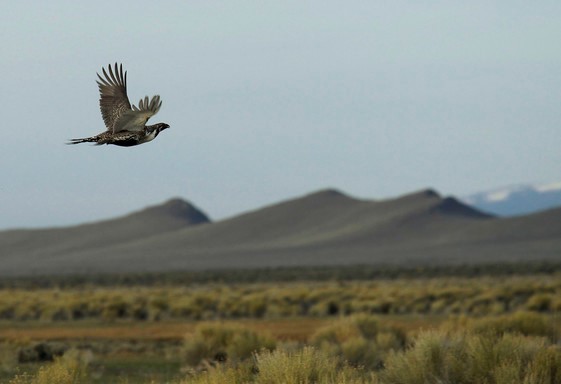
The Natural Resources Conservation Service (NRCS) announces an additional FY 2022 Environmental Quality Incentives Program (EQIP) application batching period for agricultural producers to apply specifically for Sage Grouse Initiative (SGI) funding to implement conservation practices on their private land and public land allotments. The additional batching period is being announced to assure that an adequate number of applications are on hand to fully utilize the FY 2022 allocation EQIP SGI funds provided to Nevada.
“This is the second opportunity to utilize SGI funding designated to Nevada to benefit landowners managing for sage grouse. If there is no response to this announcement, these dollars will go to other states where producers are asking for more SGI funding. We need our partners to amplify this message and help spread the word. We want to use the dollars in Nevada to improve habitat,” said NRCS Nevada State Conservationist Ray Dotson.
EQIP is a voluntary, financial assistance program that helps fund conservation practices to protect cropland, rangeland, water resources, soil resources and wildlife habitats. USDA financial assistance programs like EQIP give producers the opportunity to improve their farm and rangeland resources. Practices may include, but are not limited to: prescribed grazing, fencing, water developments, brush management and upland wildlife habitat management.
Applicants must meet USDA program eligibility requirements for land eligibility and person eligibility, including Adjusted Gross Income (AGI) limitations for individuals and entities seeking to participate. Applications need to be submitted before 4 p.m. on May 13, 2022 to be considered in the next FY 2022 ranking period.
Farm Bill programs have strict payment limits, and the amount of financial assistance producers may receive varies by program and will depend on future allocations received under the Farm Bill authority. Limited resource producers, beginning farmers and ranchers, or socially disadvantaged agricultural producers may be eligible for up to 15 percent higher payments, not to exceed 90 percent of the estimated cost to install the practice.
For more information about conservation planning and programs to help treat natural resource issues on your land, visit https://www.nrcs.usda.gov/ or call your local USDA Service Center.
|