|
March 22 is National Ag Day! We thank you, the American farmer, for feeding, sheltering and powering our great nation! Check out the National Ag Day blog.
According to the most recent Census of Agriculture from the National Agricultural Statistics Service (NASS), the average age of the farmer is nearly 58 years old. With that said, the future of Ag will rely on the ability of younger and beginning farmers to begin their agricultural business.
We, at Indiana FSA, want you to know that we support the beginning farmer, America's next generation of farmers and ranchers. Beginning Farmers will play an integral part in providing food, fiber and fuel to this great nation in the years to come.
Contact your local USDA Service Center to get started today!
Respectfully,
Your Indiana FSA Staff
Farm Service Agency (FSA) - FSA provides disaster assistance, safety new, farm loan, and conservation programs and is the go-to agency for many USDA records. If you're new to working with USDA, your FSA team will assist in registering your farm with a farm number. Depending on what you raise or grow, filing an acreage report each season can ensure you're eligible for many programs and allows you to vote in county FSA elections.
Natural Resources Conservation Service (NRCS) - NRCS provides financial and technical assistance and easement programs for conservation on working lands. Your NRCS team member will ask about your goals for your land and can help you develop a conservation plan and file an application for the wide range of NRCS programs.
Indiana Soil and Water Conservation Districts (SWCD) - SWCD provides support to conserve land, water, forests, wildlife and related natural resources.
Other USDA & Partner Agencies.....
Risk Management Agency (RMA) - RMA administers federal crop insurance through Approved Insurance Providers to help farmers prepare for the future. Special provisions are available to beginning farmers.
Rural Development (RD) - RD provides loans, grants, loan guarantees, and technical assistance, along with support for affordable housing, infrastructure modernization, businesses, cooperatives, and other essential community services.
Purdue Cooperative Extension - USDA and agricultural colleges around the country work together to support an extensive network of State, regional and county Cooperative Extension offices, which can help answer questions you may have about your operating and address common issues faced by agricultural producers.
USDA Service Centers across the country, are hearing from people who are interested in more space and working the land. We want you to know that we can help you get started in farming – on everything from helping you register your farm to getting financial assistance and advice.
Each state has a Beginning Farmer and Rancher Coordinator that can help you with questions on working with USDA. Find yours at https://www.farmers.gov/your-business/beginning-farmers/coordinators.
Make an appointment to ensure quick service. Staff can meet with you one-on-one to discuss your vision for your land and how we can help.
First, you want to make sure your farm is registered. If you purchased land, it might already be established with USDA’s Farm Service Agency (FSA) with a farm number on file. If not, FSA can help you register your farm.
To obtain a farm number, you’ll bring an official tax ID (Social Security number or an employer ID) and a property deed. If you do not own the land, bring a lease agreement to your FSA representative to show you have control of the property. If your operation is incorporated or an entity, you may also need to provide proof that you have signature authority and the legal ability to enter into contracts with USDA.
Your Farm Number is Established, What’s Next?
- Discuss your vision for your farm and your land. Discuss your business and conservation goals. Staff need to understand your vision to recommend programs for your operation.
- Make a plan to meet conservation compliance provisions.
- Verify eligibility
- File your program application
- Sign up for email or text updates
We Offer Access to Capital
USDA can provide access to capital through its farm loans, which is a great resource when producers aren’t able to get a loan from a traditional lender. Loans can help with purchasing land or equipment or with operating costs, and FSA even offers microloans, which are especially popular among producers with smaller farms. For more information, check out our Farm Loan Discovery Tool.
We Offer Financial Assistance for Conservation Practices
We can help you make conservation improvements to your farm, which are good for your bottom line and your operation. We’ll help you develop a conservation plan and apply for financial assistance that’ll cover the bulk of the costs for implementing. To learn more about some of the conservation practices that we help producers with, check out our Conservation at Work Video Series.
If you purchase land, and you don’t want to farm all of it, you can look at either a conservation easement or managing for native shrubs and grasses through either the Agricultural Conservation Easement Program (ACEP) or Conservation Reserve Program (CRP). Easements are long-term, while a CRP contract is 10-15 years. These are good options for land that is not optimal for production or sensitive lands like wetlands and grasslands.
Additional Resources
Depending on your farm, you may want to look at crop insurance. The USDA’s Risk Management Agency provides crop insurance to help you manage risks on your farm. There are many types of insurance products available for a wide variety of production practices, including organic and sustainable agriculture.
Your local communities also have great resources for farmers including conservation districts, Rural Development, cooperative extensions, and different farming groups. To get started with USDA, contact your local USDA Service Center.
After Your Meeting
- File your acreage reports throughout the year
- Keep in touch with your local office
- Learn about self-service options
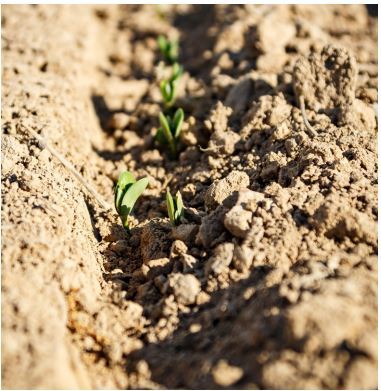
Ag producers should file crop acreage reports with FSA to document the crops grown and their intended uses. Filing an accurate and timely acreage report for all crops and land uses, including failed acreage and prevented planted acreage, can prevent the loss of benefits.
Deadlines to file crop acreage reports vary by crop and by state and county. FSA staff will provide you with maps and the acreage reporting deadlines. Indiana's acreage reporting deadlines can be found within the 2022 Important Program Deadline Dates document which is located on our Indiana FSA Resources Webpage.
More Information
For questions, you can view the Crop Acreage Reporting Fact Sheet or contact your local FSA office.
|
Farmers can use the Farm Loan Discovery Tool on farmers.gov to find information on USDA farm loans that may best fit their operations.
FSA offers a variety of loan options to help farmers finance their operations. From buying land to financing the purchase of equipment, FSA loans can help.
How the Tool Works
Farmers who are looking for financing options to operate a farm or buy land can answer a few simple questions about what they are looking to fund and how much money they need to borrow. After submitting their answers, farmers will receive information on farm loans that best fit their specific needs.
Farmers can download application quick guides that outline what to expect from preparing an application to receiving a loan decision. The guides include general eligibility requirements and a list of required forms and documentation for each type of loan. These guides can help farmers prepare before their first USDA service center visit with a loan officer.
Farmers can access the Farm Loan Discovery Tool by visiting farmers.gov/loans/farm-loan-discovery-tool. Follow the prompts and answer five simple questions to receive loan information that is applicable to your agricultural operation. The tool is built to run on any modern browser like Chrome, Edge, Firefox, or the Safari browser, and is fully functional on mobile devices. The tool does not work in Internet Explorer.
Ask the Expert Blog: Farm Operating Loan Q & A
In a recent Ask the Expert Blog, Jack Carlile, Farm Loan Manager for the FSA, answered questions about farm operating loans and when producers should apply in order to secure funds for the current crop year.
Check out the Ask the Expert Blog to find answers to the following questions
Additional Resources
To learn more about the types of loans available, read our guide book titled 'Your Guide to FSA Farm Loans'. Also, available in Spanish.
|
Each year, Congress targets a percentage of farm ownership and farm operating loan funds to beginning and socially disadvantaged farmers. Providing loan programs is important as these groups of farmers have historically experienced more difficulties obtaining financial assistance. FSA offers several loan programs to assist beginning and socially disadvantaged farmers (refer to the fact sheets titled Loans for Socially Disadvantaged Farmers and Ranchers and Loans for Beginning Farmers and Ranchers). FSA’s Down Payment Program is offered to assist socially disadvantaged and beginning farmers in purchasing a farm with a maximum loan amount of $300,150.
For more information on available loans, view the following fact sheets:
Farm Loan Program Information Chart Fact Sheet
Farm Loans Overview Fact Sheet
Loans for Beginning Farmers and Ranchers
Loans for Socially Disadvantaged Farmers and Ranchers
For help preparing the application forms, contact your local USDA Service Center, Regional Farm Loan Office or visit fsa.usda.gov.
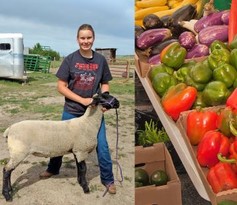
FSA makes loans to youth to establish and operate agricultural income-producing projects in connection with 4-H clubs, FFA and other agricultural groups.
Youth Loan projects must be planned and operated with the help of the organization advisor, produce sufficient income to repay the loan and provide the youth with practical business and educational experience. The maximum loan amount is $5,000.
Youth Loan Eligibility Requirements:
- Be a citizen of the United States (which includes Puerto Rico, the Virgin Islands, Guam, American Samoa, the Commonwealth of the Northern Mariana Islands) or a legal resident alien
- Be 10 years to 20 years of age
- Comply with FSA’s general eligibility requirements
- Be unable to get a loan from other sources
- Conduct a modest income-producing project in a supervised program of work as outlined above
- Demonstrate capability of planning, managing and operating the project under guidance and assistance from a project advisor. The project supervisor must recommend the youth loan applicant, along with providing adequate supervision.
For help preparing the application forms, contact your local USDA Service Center, Regional Farm Loan Office or visit fsa.usda.gov.
|
Commodity Loans
The 2018 Farm Bill extended loan authority through 2023 for Marketing Assistance Loans (MALs) and Loan Deficiency Payments (LDPs).
MALs and LDPs provide financing and marketing assistance for wheat, feed grains, soybeans, and other oilseeds, pulse crops, rice, peanuts, cotton, wool and honey. MALs provide you with interim financing after harvest to help you meet cash flow needs without having to sell your commodities when market prices are typically at harvest-time lows. A producer who is eligible to obtain a loan, but agrees to forgo the loan, may obtain an LDP if such a payment is available.
Farm Storage Facility Loans
The Farm Storage Facility Loan (FSFL) program provides low-interest financing to help you build or upgrade storage facilities and to purchase portable (new or used) structures, equipment and storage and handling trucks.
Eligible commodities include corn, grain sorghum, rice, soybeans, oats, peanuts, wheat, barley, minor oilseeds harvested as whole grain, pulse crops (lentils, chickpeas and dry peas), hay, honey, renewable biomass, fruits, nuts and vegetables for cold storage facilities, floriculture, hops, maple sap, rye, milk, cheese, butter, yogurt, meat and poultry (unprocessed), eggs, and aquaculture (excluding systems that maintain live animals through uptake and discharge of water). Qualified facilities include grain bins, hay barns and cold storage facilities for eligible commodities.
You do not need to demonstrate the lack of commercial credit availability to apply. The loans are designed to assist a diverse range of farming operations, including small and mid-sized businesses, new farmers, operations supplying local food and farmers markets, non-traditional farm products, and underserved producers.
For more information on price support loans, contact your local USDA Service Center or visit fsa.usda.gov/pricesupport.
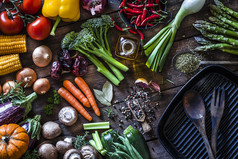
Noninsured Crop Disaster Assistance Program (NAP)
Farmers rely on crop insurance to protect themselves from disasters and unforeseen events, but not all crops are insurable through the RMA. FSA's NAP program provides producers another option to obtain coverage against disaster for these crops. NAP provides financial assistance to producers of non-insured crops impacted by natural disasters that result in lower yields, crop losses, or prevents crop planting.
Commercially produced crops and agricultural commodities for which crop insurance is not available are generally eligible for NAP. Eligible crops include those grown specifically for food, fiber, livestock consumption, biofuel or biobased products, or be commodities such as value loss crops like Christmas trees and ornamental nursery, honey, maple sap, and many others. Contact your FSA office to see which crops are eligible in your state and county.
|
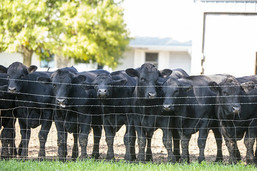
Livestock Disaster Assistance
The Livestock Indemnity Program (LIP) and Emergency Assistance for Livestock, Honeybee and Farm-raised Fish Program (ELAP) reimburses producers for a portion of the value of livestock, poultry and other animals that died as a result of a qualifying natural disaster event or for loss of grazing acres, feed and forage. And, the Livestock Forage Disaster Program (LFP) provides assistance to producers of grazed forage crop acres that have suffered crop loss due to a qualifying drought. Livestock producers suffering the impacts of drought can also request Emergency Haying and Grazing on Conservation Reserve Program (CRP) acres.
It’s critical to keep accurate records to document all losses following this devastating cold weather event. Livestock producers are advised to document beginning livestock numbers by taking time and date-stamped video or pictures prior to after the loss.
Other common documentation options include purchase records, production records, vaccination records, bank and other loan documents and any third-party certifications.
Additional Resources
Additional details – including payment calculations – can be found on our NAP, ELAP, LIP, and TAP fact sheets. On farmers.gov, you will find the Disaster Assistance Discovery Tool and the Disaster-at-a-Glance brochure.
|

Are you a specialty crop grower? USDA offers a variety of programs to support your farming operation.
You will find information on the NAP program in the above Disaster Assistance Programs article.
USDA also provides assistance with your Organic certification. Organic producers and handlers can apply for USDA funds to assist with the cost of receiving and maintaining organic certification through the Organic Certification Cost Share Program (OCCSP).
The program reimburses producers and handlers for a portion of their paid certification
costs. Once certified, organic producers and handlers are eligible to receive reimbursement for 50 percent of certification costs each year, up to a maximum of $500 per certification scope—crops, livestock, wild crops, handling, and State Organic Program fees.
Eligible costs include application fees, inspection costs, fees related to equivalency
agreement/arrangement requirements, travel/per diem for inspectors, user fees,
sales assessments and postage.
|
Visit Farmers.gov, FSA.USDA.gov or AskUSDA
Farmers.gov is a dynamic, mobile-friendly public website combined with an authenticated portal where farmers will be able to apply for programs, process transactions, and manage accounts. The big, green navigation bar near the top of every page – opens to show descriptions and subtopics, making it quick and easy to find the information you need.
FSA.USDA.gov offers program information on numerous program pages including the Program Fact Sheets pages which can be found at: https://www.fsa.usda.gov/news-room/fact-sheets/index.
You can also utilize AskUSDA to ask a question via live chat at ask.usda.gov, via phone at 1-833-ONE-USDA, or via email to askusda@usda.gov.

You’re currently subscribed to your local USDA Service Center newsletter and updates which also includes the Indiana Farm Service Agency State Office newsletters and bulletins.
News will continue to be sent via e-mail right to your home or farm office, or to your smartphone – allowing you to receive immediate notification of USDA news that applies to your agricultural operation.
You can also subscribe to text alerts from your local USDA Service Center by texting your local Service Center Keyword to 372-669. Keywords are your 2-digit state abbreviation and your county name. Example: The Keyword for Ripley County, IN would be INRipley. Standard text messaging rates apply. Contact your wireless carrier for details associated with your particular data plan. Participants may unsubscribe at any time.
For more information visit farmers.gov/working-with-us/stay-connected or for subscription assistance contact your local USDA Service Center.
|
|