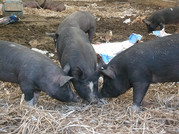
Farm Service Agency Will Accept Applications Through April 15
Hog producers who sold hogs through a spot market sale during the COVID-19 pandemic now have until April 15, 2022, to submit their applications for the U.S. Department of Agriculture’s (USDA) Spot Market Hog Pandemic Program (SMHPP). SMHPP, which is part of USDA’s Pandemic Assistance for Producers initiative, originally had a deadline to submit applications by Feb. 25, 2022.
SMHPP assists hog producers who sold hogs through a spot market sale from April 16, 2020, through Sept. 1, 2020, the period during which these producers faced the greatest reduction in market prices due to the pandemic. USDA is offering SMHPP in response to a reduction in packer production and supply chain issues due to the COVID-19 pandemic, which resulted in fewer negotiated hogs being procured and subsequent lower market prices. USDA’s Farm Service Agency (FSA) began accepting applications for SMHPP on Dec. 15, 2021.
In response to stakeholder feedback and our analysis of the program to date, USDA will be making adjustments to clarify the definition of a spot market sale and to hog eligibility, while including documentation requirements to prevent erroneous payments. USDA will also be announcing those updates soon and wants to assure hog producers that there will be ample time to submit their applications for assistance.
Applying for Assistance
Eligible hog producers can apply for SMHPP by completing the FSA-940, Spot Market Hog Pandemic Program application. Visit farmers.gov/smhpp to learn more.
Applications can be submitted to the FSA office at any USDA Service Center nationwide by mail, fax, hand delivery or via electronic means. To find their local FSA office, producers can visit farmers.gov/service-locator. Hog producers can also call 877-508-8364 to speak directly with a USDA employee ready to offer assistance. Service Center staff continue to work with agricultural producers via phone, email, and other digital tools. Because of the pandemic, some USDA Service Centers are open to limited visitors. Contact your Service Center to set up an in-person or phone appointment. Additionally, more information related to USDA’s response and relief for producers can be found at farmers.gov/coronavirus.
|
EFRP applications are being accepted in Assumption, Jefferson, Lafourche, Orleans, Plaquemines, St. Bernard, St. Charles, St. John the Baptiste and Terrebonne Parishes. If you’ve suffered a loss from a natural disaster, contact your local FSA County Office and request assistance. The sign-up period started Feb. 22 and ends on Mar. 22, 2022.
EFRP provides payments to eligible owners of nonindustrial private forest (NIPF) land to enable them to carry out emergency measures to restore land damaged by a natural disaster. After applications are received, local FSA County Committees determine land eligibility using the information provided and, if applicable, an on-site damage inspection to assess the type and extent of the damage.
Eligible forest restoration practices include debris removal, such as down or damaged trees, in order to establish a new stand or provide natural regeneration; site preparation, planting materials and labor to replant forest land; restoration of forestland roads, fire lanes, fuel breaks, or erosion control structures; fencing, tree shelters, and tree tubes to protect trees from wildlife damage; and wildlife enhancement to provide cover openings and wildlife habitat.
In order to meet eligibility requirements, NIPF land must have existing tree cover or have tree cover immediately before the natural disaster occurred and be sustainable for growing trees. The land must also be owned by any nonindustrial private individual, group, association, corporation, or other private legal entity that has definitive decision-making authority over the land. Finally, the natural disaster must have resulted in damage that, if untreated, would impair or endanger the natural resources on the land and/or materially affect future use of the land.
More Information
For more information on disaster recovery, visit farmers.gov/recover, or contact your local USDA Service Center. To locate your local FSA office, visit farmers.gov/service-center-locator.
In this Ask the Expert, Jack Carlile, Farm Loan Manager for the USDA Farm Service Agency (FSA), answers questions about farm operating loans and when producers should apply in order to secure funds for the current crop year.
As the Farm Loan Manager for the Cherokee County Service Center, Jack is responsible for managing the loan making and loan servicing activities for five counties in northeast Oklahoma. His office provides services for over 650 farm loan customers. Jack was raised on a cross bred cow/calf operation that his grandparents started. Over the years, each generation has added to the operation by purchasing additional pasture. The operation also grows and bales their own hay. Jack’s agriculture background and degree in agriculture economics from Oklahoma State University help him better understand the financing needs of his producers.
Who can apply for FSA Farm Loans?
Anyone can apply for FSA’s loan programs. Applications will be considered on basic eligibility requirements. To apply for a loan, you must meet the following general eligibility requirements including:
- Be a U.S. citizen or qualified alien.
- Operator of a family farm or ranch.
- Have a satisfactory credit history.
- Unable to obtain credit elsewhere at reasonable rates and terms to meet actual needs.
- Not be delinquent on any federal debts.
What can I purchase with operating loans?
Farm Operating Loans are traditionally used for purchasing capital items such as farm machinery, equipment, or livestock. Loan funds can also be used to help pay typical operating expenses for farming and ranching operations. For example, a rancher may use an operating loan to purchase forage for his cattle to feed them through the winter or a row crop producer may use an operating loan for paying for inputs like seed or fertilizer.
What is the maximum loan amount and terms?
The maximum loan amount for a Direct Farm Operating Loan is $400,000. Direct loans are made and serviced by FSA.
Producers can also apply for Guaranteed Operating Loans that are made by your commercial lender, and guaranteed against loss by FSA. The maximum loan amount for a Guaranteed Farm Operating Loan is $1,825,000. Loan terms for operating loans range from one to seven years.
How do I apply?
If you’re interested in applying for a farm loan, you can pick up an application by visiting your local FSA office. Visit farmers.gov to find the USDA Service Center nearest you.
When applying for a loan, you will need a business plan, which must include:
- Your mission, vision, and goals for your farm or ranch.
- Your current assets and liabilities.
- Marketing Plan (what your operation will produce and where you will market and sell your products.)
- Whether the amount of income your operation generates will be enough to pay your business and family living expenses.
When should I apply for an operating loan?
I would recommend beginning the application process a few months in advance of needing the funds to allow time for the request to be processed, and for any necessary security checks and searches to be completed. That allows time for the funds to be available for your use when most needed.
Where can I find more information?
To learn more about FSA loans visit farmers.gov/loans or fsa.usda.gov/farmloans. Fact sheets and application packages are also available at your USDA Service Center. To learn more about other types of FSA loans or to find the right loan for your operation, use the Farm Loan Discovery Tool by visiting farmers.gov/loans/farm-loan-discovery-tool.

As the 2022 crop production season begins, the U.S. Department of Agriculture’s National Agricultural Statistics Service (NASS) will contact approximately 1,100 Louisiana producers to determine their plans for the upcoming growing season.
Each year, the agriculture industry eagerly awaits USDA’s Prospective Plantings report, which provides the first survey-based estimates of U.S. farmers’ planting intentions for the year. The March Agricultural Survey provides the factual data that underpins these projections, making it one of the most important surveys we conduct each year.
NASS mailed survey questionnaires in February, asking producers to provide information about the types of crops they intend to plant in 2022, how many acres they intend to plant, and the amounts of grain and oilseed they store on their farms. NASS encourages producers to respond online or by mail. Those producers who did not respond by February 26 may be contacted for a telephone interview by a National Association of State Departments of Agriculture (NASDA) enumerator.
In accordance with federal law, NASS keeps responses confidential and publishes data in aggregate form only, ensuring that no individual operation or producer can be identified.
Survey results will be published in the Prospective Plantings and quarterly Grain Stocks and Rice Stocks reports to be released on March 31, 2022. These and all NASS reports are available online at www.nass.usda.gov/Publications. For more information, call the NASS Delta Regional Field Office at (800) 327-2970.
|
The Agricultural Foreign Investment Disclosure Act (AFIDA) requires all foreign owners of U.S. agricultural land to report their holdings to the Secretary of Agriculture. Foreign persons who have purchased or sold agricultural land in the county are required to report the transaction to FSA within 90 days of the closing. Failure to submit the AFIDA form could result in civil penalties of up to 25 percent of the fair market value of the property.
County government offices, realtors, attorneys and others involved in real estate transactions are reminded to notify foreign investors of these reporting requirements. The data gained from these disclosures is used in the preparation of periodic reports to the President and Congress concerning the effect of such holdings upon family farms and rural communities. Click here for more information on AFIDA.
The Farm Service Agency (FSA) provides a receipt to customers who request or receive assistance or information on FSA programs.
The 2014 Farm Bill requires a customer receipt to be issued for any agricultural program assistance requested from FSA, the Natural Resources Conservation Service (NRCS) and Rural Development (RD). Receipts include the date, summary of the visit and any agricultural information, program and/or loan assistance provided to an individual or entity.
A service is any information, program, or loan assistance provided whether through an office visit, email, fax, or letter.
Severe weather events create significant challenges and often result in catastrophic loss for agricultural producers. Despite every attempt to mitigate risk, your operation may suffer losses. USDA offers several programs to help with recovery.
Risk Management
For producers who have risk protection through Federal Crop Insurance or the Noninsured Crop Disaster Assistance Program (NAP), we want to remind you to report crop damage to your crop insurance agent or the local Farm Service Agency (FSA) office.
If you have crop insurance, contact your agency within 72 hours of discovering damage and be sure to follow up in writing within 15 days. If you have NAP coverage, file a Notice of Loss (also called Form CCC-576) within 15 days of loss becoming apparent, except for hand-harvested crops, which should be reported within 72 hours.
Disaster Assistance
USDA also offers disaster assistance programs, which is especially important to livestock, fruit and vegetable, specialty and perennial crop producers who have fewer risk management options.
First, the Livestock Indemnity Program (LIP) and Emergency Assistance for Livestock, Honeybee and Farm-raised Fish Program (ELAP) reimburses producers for a portion of the value of livestock, poultry and other animals that died as a result of a qualifying natural disaster event or for loss of grazing acres, feed and forage. And, the Livestock Forage Disaster Program (LFP) provides assistance to producers of grazed forage crop acres that have suffered crop loss due to a qualifying drought. Livestock producers suffering the impacts of drought can also request Emergency Haying and Grazing on Conservation Reserve Program (CRP) acres.
Next, the Tree Assistance Program (TAP) provides cost share assistance to rehabilitate and replant tree, vines or shrubs loss experienced by orchards and nurseries. This complements NAP or crop insurance coverage, which cover the crop but not the plants or trees in all cases.
For LIP and ELAP, you will need to file a Notice of Loss for livestock and grazing or feed losses within 30 days and honeybee losses within 15 days. For TAP, you will need to file a program application within 90 days.
Documentation
It’s critical to keep accurate records to document all losses following this devastating cold weather event. Livestock producers are advised to document beginning livestock numbers by taking time and date-stamped video or pictures prior to after the loss.
Other common documentation options include:
- Purchase records
- Production records
- Vaccination records
- Bank or other loan documents
- Third-party certification
Other Programs
The Emergency Conservation Program and Emergency Forest Restoration Program can assist landowners and forest stewards with financial and technical assistance to restore damaged farmland or forests.
Additionally, FSA offers a variety of loans available including emergency loans that are triggered by disaster declarations and operating loans that can assist producers with credit needs. You can use these loans to replace essential property, purchase inputs like livestock, equipment, feed and seed, or refinance farm-related debts, and other needs.
Meanwhile, USDA’s Natural Resources Conservation Service (NRCS) provides financial resources through its Environmental Quality Incentives Program to help with immediate needs and long-term support to help recover from natural disasters and conserve water resources. Assistance may also be available for emergency animal mortality disposal from natural disasters and other causes.
Additional Resources
Additional details – including payment calculations – can be found on our NAP, ELAP, LIP, and TAP fact sheets. On farmers.gov, the Disaster Assistance Discovery Tool, Disaster-at-a-Glance fact sheet, and Farm Loan Discovery Tool can help you determine program or loan options.
While we never want to have to implement disaster programs, we are here to help. To file a Notice of Loss or to ask questions about available programs, contact your local USDA Service Center. All USDA Service Centers are open for business, including those that restrict in-person visits or require appointments because of the pandemic.
If you want to use the Noninsured Crop Disaster Assistance Program (NAP) organic price and you select the "organic" option on your NAP application, you must report your crops as organic.
When certifying organic acres, the buffer zone acreage must be included in the organic acreage.
You must also provide a current organic plan, organic certificate or documentation from a certifying agent indicating an organic plan is in effect. Documentation must include:
- name of certified individuals
- address
- telephone number
- effective date of certification
- certificate number
- list of commodities certified
- name and address of certifying agent
- a map showing the specific location of each field of certified organic, including the buffer zone acreage
Certification exemptions are available for producers whose annual gross agricultural income from organic sales totals $5,000 or less. Although exempt growers are not required to provide a written certificate, they are still required to provide a map showing the specific location of each field of certified organic, transitional and buffer zone acreage.
For questions about reporting organic crops, contact your local County USDA Service Center.
|
U.S. Department of Agriculture (USDA) announced new features on the farmers.gov website designed to help facilitate the employment of H-2A workers.
USDA’s goal is to help farmers navigate the complex H-2A program that is administered by Department of Labor, Department of Homeland Security, and the State Department so hiring a farm worker is an easier process.
The primary new H-2A features on Farmers.gov include:
- A real-time dashboard that enables farmers to track the status of their eligible employer application and visa applications for temporary nonimmigrant workers;
- Streamlining the login information so if a farmer has an existing login.gov account they can save multiple applications tracking numbers for quick look-up at any time;
- Enables easy access to the Department of Labor’s (DOL) Foreign Labor Application Gateway (FLAG);
- Allows farmers to track time-sensitive actions taken in the course of Office of Foreign Labor Certification’s (OFLC) adjudication of temporary labor certification applications;
- Allowing for farmers to access all application forms on-line.
All information can be found at www.farmers.gov/manage/h2a.
In 2018, USDA unveiled farmers.gov, a dynamic, mobile-friendly public website combined with an authenticated portal where customers can apply for programs, process transactions and manage accounts. With feedback from customers and field employees who serve those customers, farmers.gov delivers farmer-focused features through an agile, iterative process to deliver the greatest immediate value to America’s agricultural producers – helping farmers and ranchers do right, and feed everyone.
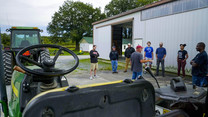
Are you new to farming or ranching? USDA can help you get started or grow your farming operation through a variety of programs and services. From farm loans to crop insurance to conservation programs to disaster assistance, USDA is here to support you and your operation.
USDA recently selected a national coordinator and state-level coordinators, who will focus on better serving beginning farmers and ranchers.
Each state coordinator will receive training and develop tailored beginning farmer outreach plans for their state. Coordinators will help field employees better reach and serve beginning farmers and ranchers and will also be available to assist beginning farmers who need help navigating the variety of resources USDA has to offer.
Visit farmers.gov to find Louisiana’s coordinator to help you get started today.
|
Farm Storage Facility Loans (3 years)--1.500%
Five-year loan terms (5 years): 1.750 %
Seven-year loan terms (7 years): 1.875%
Ten-year loan terms (10 years): 1.875%
Twelve-year loan terms (12 years): 2.000%
FSA Offices are now making appointments to sign up for the 2022 ARC/PLC Program. Call your local FSA Office for an appointment!
Mar. 11 - General Conservation Reserve Program (CRP) signup deadline
Mar. 15- Producers must report cover crop acreage to FSA to be eligible for Pandemic
Cover Crop Program (PCCP) benefits.
Mar. 15 - Agriculture Risk Coverage and Price Loss Coverage (ARCPLC) Election and
Enrollment Deadline
Mar. 22- EFRP Sign-up deadline in Assumption, Jefferson, Lafourche, Orleans,
Plaquemines, St. Bernard, St. Charles, St. John the Baptiste and Terrebonne
Parishes
Mar. 25 - Dairy Margin Coverage (DMC) and Supplemental Dairy Margin Coverage
(SDMC) signup deadline
Apr. 15 - Spot Market Hog Pandemic Program (SMHPP) deadline extended
May 13 - Grassland Conservation Reserve Program (CRP) enrollment deadline
May 16 - Extended Emergency Conservation Program (ECP) and Emergency Forest
Restoration Program (EFRP) Sign-up deadlines. “(In Applicable Parishes)”
May 31 - Deadline to apply for 2021 Marketing Assistance Loans (MAL)
June 1 - Status Date for determination of Minor Child and Change in Farming Operation
July 15- Acreage reporting deadline for spring seeded crops.
Aug. 1 – Deadline to request Farm reconstitutions
FSA now offers SMS texting; receive text message alerts on your cell phone regarding important deadlines, reporting requirements and updates. Contact your local FSA Office for more information.
All USDA Service Centers in Louisiana are currently closed to visitors because of the pandemic, but Farm Service Agency (FSA) and Natural Resources Conservation Service (NRCS) staff continue to work with agricultural producers via phone, email, and other digital tools.
Call your Service Center to schedule an appointment. You can find contact information at farmers.gov/service-locator.
|