|
|
Coos/Curry County USDA Updates
|
|
|
|
Farm Service Agency | Natural Resources Conservation Service | Risk Management Agency
|
|
Upcoming deadlines include:
-
March 25 - Deadline to apply for 2022 DMC and Supplemental DMC
-
Click here to learn more about local deadlines and ongoing programs.
-
Within 15 calendar days: Non-insured Disaster Assistance Program (NAP) notice of loss must be filed within 15 days of the weather event or when the damage becomes apparent. Hand harvested crops must be reported within 72 hours of damaging event.
-
Within 15 days of crop losses, livestock losses, honeybee losses, trees, vines or cane loss, etc. file a notice of loss with the local office. If you are not sure about whether the loss will qualify or not, still contact the office for more information. It is better to make the notice of loss and not have to use it then to need a timely filed notice of loss and not have it
Face masks and social distancing are still being used in the FSA & NRCS offices. Make an Appointment with FSA or NRCS - Producers are encouraged to call the office to schedule an appointment to ensure maximum use of their time and to make sure staff is available to tend to their important business needs and to meet COVID 19 protocols. Please call the office ahead of your visit to set an appointment and to discuss any records or documentation that might be needed during your appointment.

Agricultural producers who have not yet completed their crop acreage reports after spring planting should make an appointment with the Jackson/Josephine County Farm Service Agency (FSA) before the applicable deadline.
An acreage report documents a crop grown on a farm or ranch and its intended uses. Filing an accurate and timely acreage report for all crops and land uses, including failed acreage and prevented planted acreage, can prevent the loss of benefits.
How to File a Report
The following acreage reporting dates are applicable for Coos & Curry Counties:
July 15th - CREP acres, Grass, Mixed Forage
Service Center staff continue to work with agricultural producers via phone, email, and other digital tools. Because of the pandemic, some USDA Service Centers are open to limited visitors. Contact the Coos/Curry FSA office to set up an in-person or phone appointment.
To file a crop acreage report, you will need to provide:
- Crop and crop type or variety.
- Intended use of the crop.
- Number of acres of the crop.
- Map with approximate boundaries for the crop.
- Planting date(s).
- Planting pattern, when applicable.
- Producer shares.
- Irrigation practice(s).
- Acreage prevented from planting, when applicable.
- Other information as required.
Acreage Reporting Details
The following exceptions apply to acreage reporting dates:
- If the crop has not been planted by the acreage reporting date, then the acreage must be reported no later than 15 calendar days after planting is completed.
- If a producer acquires additional acreage after the acreage reporting date, then the acreage must be reported no later than 30 calendar days after purchase or acquiring the lease. Appropriate documentation must be provided to the county office.
Producers should also report crop acreage they intended to plant, but due to natural disaster, were unable to plant. Prevented planting acreage must be reported on form CCC-576, Notice of Loss, no later than 15 calendar days after the final planting date as established by FSA and USDA’s Risk Management Agency.
Noninsured Crop Disaster Assistance Program (NAP) policy holders should note that the acreage reporting date for NAP-covered crops is the earlier of the dates listed above or 15 calendar days before grazing or harvesting of the crop begins.
More Information
For questions, please contact the Coos/Curry County FSA office at 541-396-4323, ext 2
|
|
DEADLINE EXTENDED to March 25, 2022
Supplemental DMC Enrollment
Eligible dairy operations with less than 5 million pounds of established production history may enroll supplemental pounds based upon a formula using 2019 actual milk marketings, which will result in additional payments. Producers will be required to provide FSA with their 2019 Milk Marketing Statement.
Supplemental DMC coverage is applicable to calendar years 2021, 2022 and 2023. Participating dairy operations with supplemental production may receive retroactive supplemental payments for 2021 in addition to payments based on their established production history.
Supplemental DMC will require a revision to a producer’s 2021 DMC contract and must occur before enrollment in DMC for the 2022 program year. Producers will be able to revise 2021 DMC contracts and then apply for 2022 DMC by contacting their local USDA Service Center.
DMC 2022 Enrollment
After making any revisions to 2021 DMC contracts for Supplemental DMC, producers can sign up for 2022 coverage. DMC provides eligible dairy producers with risk management coverage that pays producers when the difference between the price of milk and the cost of feed falls below a certain level. So far in 2021, DMC payments have triggered for January through October for more than $1.0 billion.
For DMC enrollment, producers must certify with FSA that the operation is commercially marketing milk, sign all required forms and pay the $100 administrative fee. The fee is waived for farmers who are considered limited resource, beginning, socially disadvantaged, or a military veteran. To determine the appropriate level of DMC coverage for a specific dairy operation, producers can use the online dairy decision tool.
|
|
Coos and Curry
Local Work Group Meeting
5-7pm March 2, 2022 via Zoom
Contact the Coquille NRCS office for more details and a meeting invitation.
CONTACT:
Katie Woodruff District Conservationist
(541)824-8091
katlyn.woodruff@usda.gov or
Cheyanne Rico Soil Conservationist
(541)824-8093
cheyanne.rico@usda.gov
The USDA Natural Resources Conservation Service (NRCS) provides innovative conservation solutions to restore, enhance and protect Oregon’s working agricultural and forestry lands.
NRCS offers technical and financial assistance to private landowners and producers interested in preserving natural resources on the land. We invite your input to determine what resource concerns Coquille NRCS will address and where to focus our efforts within Coos and Curry counties. Based on your input, some resource concerns we may provide assistance in the future for include the following:
✓Cranberry Irrigation Efficiency
✓Forest Health and Fuels Reduction
✓Gorse and Other Invasive Species Management
✓Pollinator Habitat
✓Soil Health
✓Organic and High Tunnel Production
|
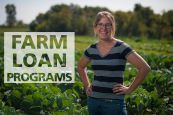
Farmers and ranchers can use the Farm Loan Discovery Tool on farmers.gov to find information on USDA farm loans that may best fit their operations.
USDA’s Farm Service Agency (FSA) offers a variety of loan options to help farmers finance their operations. From buying land to financing the purchase of equipment, FSA loans can help.
USDA conducted field research in eight states, gathering input from farmers and FSA farm loan staff to better understand their needs and challenges.
How the Tool Works
Farmers who are looking for financing options to operate a farm or buy land can answer a few simple questions about what they are looking to fund and how much money they need to borrow. After submitting their answers, farmers will receive information on farm loans that best fit their specific needs. The loan application and additional resources also will be provided.
Farmers can download application quick guides that outline what to expect from preparing an application to receiving a loan decision. There are four guides that cover loans to individuals, entities, and youth, as well as information on microloans. The guides include general eligibility requirements and a list of required forms and documentation for each type of loan. These guides can help farmers prepare before their first USDA service center visit with a loan officer.
Farmers can access the Farm Loan Discovery Tool by visiting farmers.gov/fund and clicking the “Start” button. Follow the prompts and answer five simple questions to receive loan information that is applicable to your agricultural operation. The tool is built to run on any modern browser like Chrome, Edge, Firefox, or the Safari browser, and is fully functional on mobile devices. It does not work in Internet Explorer.
About Farmers.gov
In 2018, USDA unveiled farmers.gov, a dynamic, mobile-friendly public website combined with an authenticated portal where farmers will be able to apply for programs, process transactions, and manage accounts.
The Farm Loan Discovery Tool is one of many resources on farmers.gov to help connect farmers to information that can help their operations. Earlier this year, USDA launched the My Financial Information feature, which enables farmers to view their loan information, history, payments, and alerts by logging into the website.
USDA is building farmers.gov for farmers, by farmers. In addition to the interactive farm loan features, the site also offers a Disaster Assistance Discovery Tool. Farmers can visit farmers.gov/recover/disaster-assistance-tool#step-1 to find disaster assistance programs that can help their operation recover from natural disasters.
For more information, contact the Coos/Curry FSA Office at 541-396-4323, ext 2 or visit farmers.gov.
|
|
|
|
Coos/Curry USDA Service Center
376 N Central Blvd
Coquille, OR 97423
Phone: 541-396-4323
Fax: 877-885-8382
Office Hours: Monday-Friday, 8:00 am-4:30 pm
FSA Staff NRCS & SWCD Staff
|
Bret A Harris, CED
bret.harris@usda.gov
|
Katlyn Woodruff, DC katlyn.woodruff@usda.gov
|
|
Karsten Van Roekel, FLOT
karsten.vanroekel@usda.gov
541-378-3537
|
Cheyanne Rico, SC
cheyanne.rico@usda.gov
|
|
|
|
|
Barbara Grant, Crep Tech
barbara.grant@or.nacdnet.net
|
|
|