|
Wendall Crunk Jr was elected to serve on the COC for LAA 2. Christopher Holy will be first alternate, and Mary Marecek will be second alternate.
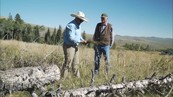
USDA opened signup for the Conservation Reserve Program (CRP) on January 31, 2022. The deadline for agricultural producers to sign up for general CRP is March 11, 2022 while signup for continuous CRP is ongoing.
Farmers and ranchers who enroll in CRP receive a yearly rental payment for voluntarily establishing long-term, resource-conserving plant species, such as approved grasses or trees (known as “covers”) to control soil erosion, improve water quality and develop wildlife habitat on marginally productive agricultural lands.
By enrolling in CRP, producers are improving water quality, reducing soil erosion, and restoring habitat for wildlife. This in turn spurs hunting, fishing, recreation, tourism, and other economic development across rural America.
CRP Enrollment Options
General Signup
CRP general signup will be held annually. The competitive general signup will now include increased opportunities for enrollment of wildlife habitat through the State Acres For Wildlife Enhancement (SAFE) initiative.
Grasslands Signups
CRP Grasslands signup helps landowners and operators protect grassland, including rangeland, and pastureland and certain other lands while maintaining the areas as grazing lands. A separate CRP Grasslands signup will be offered each year following general signup. The grassland signup will run April 4 to May 13, 2022.
Land Transition
The CRP Transition Incentives Program (TIP) is an option for producers interested in transitioning land to a beginning farmer or rancher or a member of a socially disadvantaged group to return land to production for sustainable grazing or crop production. CRP contract holders no longer need to be a retired or retiring owner or operator to transition their land. TIP participants may have a lease less than five years with an option to purchase, and they have two years before the end of the CRP contract to make conservation and land improvements.
CRP Rates and Payments
FSA recently posted updated soil rental rates for CRP. County average rates are posted on the CRP Statistics webpage. Soil rental rates are statutorily prorated at 90 percent for continuous signup and 85 percent for general signup. The rental rates will be assessed annually. Under continuous signup, producers also receive incentives, including a signup incentive payment and a practice incentive payment.
To enroll in CRP, contact your local FSA county office or visit fsa.usda.gov/crp. To locate your local FSA office, visit farmers.gov/service-locator.
|
Agricultural producers can now make elections and enroll in the Agriculture Risk Coverage (ARC) and Price Loss Coverage (PLC) programs for the 2022 crop year. These key U.S. Department of Agriculture (USDA) safety-net programs help producers weather fluctuations in either revenue or price for certain crops.
Enrollment for the 2022 crop year closes March 15, 2022.
ARC provides income support payments on historical base acres when actual crop revenue declines below a specified guaranteed level. PLC provides income support payments on historical base acres when the effective price for a covered commodity falls below its reference price.
Covered commodities include barley, canola, large and small chickpeas, corn, crambe, flaxseed, grain sorghum, lentils, mustard seed, oats, peanuts, dry peas, rapeseed, long grain rice, medium and short grain rice, safflower seed, seed cotton, sesame, soybeans, sunflower seed and wheat.
2022 Elections and Enrollment
Producers can elect coverage and enroll in crop-by-crop ARC-County or PLC, or ARC-Individual for the entire farm, for the 2022 crop year. Although election changes for 2022 are optional, enrollment (signed contract) is required for each year of the program. If a producer has a multi-year contract on the farm and makes an election change for 2022, it will be necessary to sign a new contract.
If an election is not submitted by the deadline of March 15, 2022, the election defaults to the current election for crops on the farm from the prior crop year.
For the crop year 2023, producers will have an opportunity to make new elections during those signups. Farm owners cannot enroll in either program unless they have a share interest in the farm.
Web-Based Decision Tools
In partnership with USDA, the University of Illinois and Texas A&M University offer web-based decision tools to assist producers in making informed, educated decisions using crop data specific to their respective farming operations. Tools include:
-
Gardner-farmdoc Payment Calculator, the University of Illinois tool that offers farmers the ability to run payment estimate modeling for their farms and counties for ARC-County and PLC.
-
ARC and PLC Decision Tool, the Texas A&M tool allows producers to analyze payment yield updates and expected payments for 2022. Producers who have used the tool in the past should see their username and much of their farm data already available in the system.
More Information
For more information on ARC and PLC, including two online decision tools that assist producers in making enrollment and election decisions specific to their operations, visit the ARC and PLC webpage.
For additional questions and assistance, contact your local USDA service center. To locate your local FSA office, visit farmers.gov/service-locator.
If you are a producer or landowner who participates in USDA’s Natural Resources Conservation Service (NRCS) conservation programs, the Farm Service Agency (FSA) may be reaching out by mail with information about a form you’ll need to fill out.
Starting this year, all producers and landowners participating or applying to participate in certain NRCS conservation programs must complete form CCC-902, Farm Operating Plan. Historically, to participate in these programs, legal entities could file either the CCC-901, Member Information or the CCC-902, while individuals were not specifically required to file the CCC-902 with FSA. Now, to ensure FSA and NRCS are properly determining payment eligibility and maximum payment limitations, all customers must have a CCC-902 on file to establish eligibility.
These changes will not affect participants who already have a Form CCC-902 with a “determined” status recorded with FSA. Customers that do not have a CCC-902 on file with FSA will be sent a letter in the mail in the coming weeks with detailed information on what is needed and how to file the form. The letter requests that the form be completed within 30 days of receiving the letter.
For added convenience, USDA is offering options for remote or in-person submission of the CCC-902. Fiscal year 2021 is considered a transition year to ensure all NRCS program participants can meet this updated filing requirement. Beginning in FY 2022, if form CCC-902 is not on file your payments may be impacted.
We can help: NRCS and FSA staff are available at USDA Service Centers nationwide to provide information and assistance to walk you through meeting this filing requirement. For more information, see the NRCS National Bulletin 300-21-7 or FSA Notice PL-293.
USDA has several fiscal year 2022 assistance opportunities for agricultural producers and private landowners for key programs, such as the Environmental Quality Incentives Program (EQIP), Conservation Stewardship Program (CSP), Agricultural Conservation Easement Program (ACEP), Regional Conservation Partnership Program (RCPP) and Agricultural Management Assistance (AMA) program.
Through conservation programs, USDA’s Natural Resources Conservation Service (NRCS) provides technical and financial assistance to help producers and landowners make conservation improvements on their land that benefit natural resources, build resiliency and contribute to the nation’s broader effort to combat the impacts of climate change.
Applying for Assistance
NRCS accepts applications for its conservation programs year-round. State Technical Committees, composed of representatives from conservation and agricultural-related organizations, work with NRCS to set state-specific, ranking dates to evaluate applications for funding. These dates account for producer needs, staff workload and ensure potential participants have ample opportunity to apply. Producers should apply by their state’s ranking dates to be considered for funding in the current cycle.
Funding is provided through a competitive process. State-specific, ranking dates for all programs are available. Applications received after ranking dates will be automatically deferred to the next funding period.
Program Options
EQIP provides cost share assistance for producers to use 170-plus conservation practices to address a wide variety of resource concerns. Within EQIP, Conservation Incentive Contracts allow producers to further target priority resource concerns. CSP helps producers take their conservation activities to the next level through comprehensive conservation and advanced conservation activities. ACEP helps producers enroll wetlands, grasslands and farmlands into easements for long-term protection. Additionally, through RCPP, producers and landowners can work with partners who are co-investing with NRCS on targeted projects.
Historically Underserved Producer Benefits
Special provisions are also available for historically underserved producers. For EQIP, historically underserved producers are eligible for advance payments to help offset costs related to purchasing materials or contracting services up front. In addition, historically underserved producers can receive higher EQIP payment rates (up to 90% of average cost). NRCS sets aside EQIP, CSP and ACEP funds for historically underserved producers.
Conservation Practices and Climate
NRCS conservation programs play a critical role in USDA’s commitment to partnering with farmers, ranchers, forest landowners and local communities to deliver climate solutions that strengthen agricultural operations and rural America. States may prioritize a variety of voluntary conservation practices through these NRCS programs, including those that support climate-smart agriculture and forestry (CSAF).
In fiscal year 2022, EQIP and CSP will provide targeted funding for CSAF practices, and Conservation Incentive Contracts – a new EQIP program – will be available nationwide with an emphasis on CSAF practices. Building on these efforts, NRCS will also prioritize climate investments through ACEP, RCPP and Conservation Innovation Grants.
Producers, landowners and forest managers interested in applying for assistance should contact the NRCS at their local USDA Service Center.
|