In This Issue:
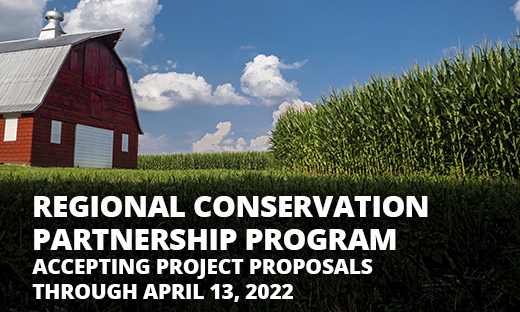 The U.S. Department of Agriculture announced up to $225 million in available funding for conservation partners through the Regional Conservation Partnership Program (RCPP). RCPP is a partner-driven program that leverages collective resources to find solutions to address natural resource challenges on agricultural land. This year’s funding announcements include opportunities for projects that address climate change, benefit historically underserved producers and support urban agriculture.
“RCPP is public-private partnership at its best,” said Natural Resources Conservation Service (NRCS) Nevada State Conservationist Ray Dotson. “We’re harnessing the power of partnership to create lasting solutions to global challenges, like climate change, and support producers and communities who have been underserved in the past.”
There are two types of funding opportunities under RCPP: RCPP Classic and RCPP Alternative Funding Arrangements (AFA). RCPP Classic projects are implemented using NRCS contracts and easements with producers, landowners and communities, in collaboration with project partners. Through RCPP AFA, partners have more flexibility in working directly with agricultural producers to support the development of new conservation structures and approaches that would not otherwise be available under RCPP Classic. Project types that may be suited to AFA, as highlighted by the 2018 Farm Bill include:
- Projects that use innovative approaches to leverage the federal investment in conservation.
- Projects that deploy a pay-for-performance conservation approach.
- Projects that seek large-scale infrastructure investment that generate conservation benefits for agricultural producers and nonindustrial private forest owners.
USDA is accepting project proposals for both components of RCPP through 11:59 p.m. on April 13, 2022. View the funding opportunity on grants.gov for RCPP Classic and RCPP AFA.
Additionally, a webinar with general program information for RCPP applicants is scheduled for 3-4:30 p.m. ET on Jan. 20, 2022. Visit the RCPP website for information on how to participate.
Funding is open to agriculture and silviculture associations, non-government organizations, Indian tribes, state and local governments, conservation districts and universities, among others.
Partners are expected to offer value-added contributions to amplify the impact of RCPP funding in an amount equal to or greater than the NRCS investment.
Private landowners can apply to participate in an RCPP project in their region through awarded partners or at their local USDA service center.
More Information
First authorized in the 2014 Farm Bill, RCPP has leveraged partner contributions of more than $1 for every $1 invested by USDA, resulting in nearly $3 billion collectively invested in natural resource conservation on private lands. Since inception, RCPP has made 579 awards involving over 3,000 partner organizations. Currently there are 408 active projects, with at least one active project in every state and area. Successful RCPP projects provide innovative conservation solutions, leverage partner contributions and offer impactful and measurable outcomes.
Today’s RCPP announcement builds on other efforts by the Biden-Harris Administration to address climate change. Earlier this week, NRCS announced a new Cover Crop Initiative, available through the Environmental Quality Incentives Program (EQIP) to help agricultural producers mitigate climate change through the widespread adoption of cover crops. NRCS also announced the signup for EQIP Conservation Incentive Contracts and an improvement to the Conservation Stewardship Program (CSP).
Last week, USDA’s Risk Management Agency (RMA) announced details of the new Post Application Coverage Endorsement, providing coverage for corn producers who “split apply nitrogen,” a more conservation friendly way to apply fertilizer.
USDA touches the lives of all Americans each day in so many positive ways. In the Biden-Harris Administration, USDA is transforming America’s food system with a greater focus on more resilient local and regional food production, fairer markets for all producers, ensuring access to safe, healthy and nutritious food in all communities, building new markets and streams of income for farmers and producers using climate smart food and forestry practices, making historic investments in infrastructure and clean energy capabilities in rural America, and committing to equity across the Department by removing systemic barriers and building a workforce more representative of America. To learn more, visit www.usda.gov
At USDA, we are committed to helping farmers complete loan applications, environmental reviews, and other paperwork free of charge. One-on-one support is available at more than 2,300 USDA Service Centers nationwide. USDA’s Farm Service Agency and Natural Resources Conservation Service staff are usually co-located at these Service Centers and can help guide farmers to the best USDA assistance based on their unique goals, whether it is loans, conservation programs, or insurance.
Service Center staff can guide farmers through the process of preparing and submitting required paperwork on their own, with no need to hire a paid preparer. Language translation service is available in all USDA Service Centers, so one-on-one assistance with a Service Center employee can be translated in real time for farmers requiring it. And while some program and loan applications do have an administrative fee for filing, there is never a charge for preparation services provided by USDA staff.
Farmers who work with the USDA Service Center can:
- Establish their farm by registering for a farm number, which is required for USDA programs and assistance.
- Learn how to meet conservation compliance provisions.
- Verify eligibility for USDA programs.
- Discuss their business and conservation goals.
- Create a conservation plan.
- Fill out and file loan and program applications.
We are committed to delivering USDA programs and services to America’s farmers and ranchers while taking safety measures in response to COVID-19. We encourage you to check the status of your local USDA Service Center and make an appointment to discuss your business needs.
An online tool is now available to help ranchers document and estimate payments to cover feed transportation costs caused by drought, which are now covered by the Emergency Assistance for Livestock, Honeybees and Farm-raised Fish Program (ELAP). The U.S. Department of Agriculture (USDA) updated the program this year to include feed transportation costs as well as lowered the threshold for when assistance for water hauling expenses is available. USDA’s Farm Service Agency (FSA) will begin taking applications this fall.
The new ELAP Feed Transportation Producer Tool is a Microsoft Excel workbook that enables ranchers to input information specific to their operation to determine an estimated payment. Final payments may vary depending on eligibility.
To use the tool, ranchers will need:
- Number of truckloads for this year.
- Mileage per truckload this year.
- Share of feed cost this year (if splitting loads).
- Number of truckloads you normally haul.
- Normal mileage per truckload.
- Share of normal feed cost
The tool requires Microsoft Excel, and a tutorial video is available.
Updates to ELAP
ELAP provides financial assistance to eligible producers of livestock, honeybees and farm-raised fish for losses due to disease, certain adverse weather events or loss conditions as determined by the Secretary of Agriculture. ELAP now covers feed transportation costs where grazing and hay resources have been depleted. This includes places where:
Drought intensity is D2 for eight consecutive weeks as indicated by the U.S. Drought Monitor; or
Drought intensity is D3 or greater.
The tool calculates the estimated payment for feed transportation assistance, but it is not an application. Once FSA begins accepting applications later this fall for feed transportation assistance, ranchers should contact their FSA county office to apply. To simplify the application process, ranchers can print or email payment estimates generated by this tool for submission to FSA. The deadline to apply for ELAP, including feed transportation costs, for 2021 is Jan. 31, 2022.
ELAP already covers above normal costs for hauling water to livestock in areas where drought intensity is D3 or greater on the drought monitor. FSA is also updating ELAP to also cover water hauling in areas experiencing D2 for eight consecutive weeks, lowering the threshold for this assistance to be available. Program benefits are retroactive for 2021.
Payment Calculations
USDA will reimburse eligible ranchers 60% of feed transportation costs above what would have been incurred in a normal year. Producers qualifying as underserved (socially disadvantaged, limited resource, beginning or military veteran) will be reimbursed for 90% of the feed transportation cost above what would have been incurred in a normal year.
USDA uses a national cost formula to determine reimbursement costs that will not include the first 25 miles and distances exceeding 1,000 transportation miles. The calculation will also exclude the normal cost to transport hay or feed if the producer normally purchases some feed. For 2021, the initial cost formula of $6.60 per mile will be used (before the percentage is applied).
Eligibility
To be eligible for ELAP assistance, livestock must be intended for grazing and producers must have incurred feed transportation costs on or after Jan. 1, 2021. Although producers will self-certify losses and expenses to FSA, producers are encouraged to maintain good records and retain receipts and related documentation in the event these documents are requested for review by the local FSA County Committee.
More Drought Recovery Information
USDA has taken additional steps to assist drought-impacted producers, including:
USDA offers a comprehensive portfolio of disaster assistance programs. On farmers.gov, the Disaster Assistance Discovery Tool, Disaster Assistance-at-a-Glance fact sheet, and Farm Loan Discovery Tool can help producers and landowners determine all program or loan options available for disaster recovery assistance. For details, producers should contact their local USDA Service Center.
As part of the Biden-Harris Administration’s ongoing efforts to support dairy farmers and rural communities, today the U.S. Department of Agriculture (USDA) opened signup for the Dairy Margin Coverage (DMC) program and expanded the program to allow dairy producers to better protect their operations by enrolling supplemental production. This signup period – which runs from Dec. 13, 2021 to Feb. 18, 2022 – enables producers to get coverage through this important safety-net program for another year as well as get additional assistance through the new Supplemental DMC.
Supplemental DMC will provide $580 million to better help small- and mid-sized dairy operations that have increased production over the years but were not able to enroll the additional production. Now, they will be able to retroactively receive payments for that supplemental production. Additionally, USDA’s Farm Service Agency (FSA) updated how feed costs are calculated, which will make the program more reflective of actual dairy producer expenses.
Supplemental DMC Enrollment
Eligible dairy operations with less than 5 million pounds of established production history may enroll supplemental pounds based upon a formula using 2019 actual milk marketings, which will result in additional payments. Producers will be required to provide FSA with their 2019 Milk Marketing Statement.
Supplemental DMC coverage is applicable to calendar years 2021, 2022 and 2023. Participating dairy operations with supplemental production may receive retroactive supplemental payments for 2021 in addition to payments based on their established production history.
Supplemental DMC will require a revision to a producer’s 2021 DMC contract and must occur before enrollment in DMC for the 2022 program year. Producers will be able to revise 2021 DMC contracts and then apply for 2022 DMC by contacting their local USDA Service Center.
DMC 2022 Enrollment
After making any revisions to 2021 DMC contracts for Supplemental DMC, producers can sign up for 2022 coverage. DMC provides eligible dairy producers with risk management coverage that pays producers when the difference between the price of milk and the cost of feed falls below a certain level. So far in 2021, DMC payments have triggered for January through October for more than $1.0 billion.
For DMC enrollment, producers must certify with FSA that the operation is commercially marketing milk, sign all required forms and pay the $100 administrative fee. The fee is waived for farmers who are considered limited resource, beginning, socially disadvantaged, or a military veteran. To determine the appropriate level of DMC coverage for a specific dairy operation, producers can use the online dairy decision tool.
Updates to Feed Costs
USDA is also changing the DMC feed cost formula to better reflect the actual cost dairy farmers pay for high-quality alfalfa hay. FSA will calculate payments using 100% premium alfalfa hay rather than 50%. The amended feed cost formula will make DMC payments more reflective of actual dairy producer expenses.
Additional Dairy Assistance
Today’s announcement is part of a broader package to help the dairy industry respond to the pandemic and other challenges. USDA is also amending Dairy Indemnity Payment Program (DIPP) regulations to add provisions for the indemnification of cows that are likely to be not marketable for longer durations, as a result, for example, of per- and polyfluoroalkyl substances. FSA also worked closely with USDA's Natural Resources Conservation Service to target assistance through the Environmental Quality Incentives Program) and other conservation programs to help producers safely dispose of and address resource concerns created by affected cows. Other recent dairy announcements include $350 million through the Pandemic Market Volatility Assistance Program and $400 million for the Dairy Donation Program.
Additional details on these changes to DMC and DIPP can be found in a rule that will be published soon in the Federal Register. This rule also included information on the new Oriental Fruit Fly Program as well as changes to FSA conservation programs. A copy of the rule is available here.
More Information
To learn more or to participate in DMC or DIPP, producers should contact their local USDA Service Center. Service Center staff continue to work with agricultural producers via phone, email and other digital tools. Because of the pandemic, some are open to limited visitors. Producers should contact their Service Center to set up an in-person or phone appointment. Additionally, more information related to USDA’s response and relief for producers can be found at farmers.gov/coronavirus.
From showing you what a SNOTEL site looks like and how it works, to how the data and information can help you, the new NRCS Nevada Snow Survey video reminds us of snow survey’s Nevada roots and how the NRCS Nevada Snow Survey program continues to benefit a wide range of users every hour, every day. Check it out on the NRCS Nevada YouTube Channel: https://youtu.be/gWm5TeASLY8.
|
Farm Service Agency (FSA) farm loans are considered progression lending. Unlike loans from a commercial lender, FSA loans are intended to be temporary in nature. Our goal is to help you graduate to commercial credit, and our farm loan staff is available to help borrowers through training and credit counseling.
The FSA team will help borrowers identify their goals to ensure financial success. FSA staff will advise borrowers on developing strategies and a plan to meet your goals and graduate to commercial credit. FSA borrowers are responsible for the success of their farming operation, but FSA staff will help in an advisory role, providing the tools necessary to help you achieve your operational goals and manage your finances.
Farmers can use USDA farm ownership microloans to buy and improve property. These microloans are especially helpful to beginning or underserved farmers, U.S. veterans looking for a career in farming, and those who have small and mid-sized farming operations.
Microloans have helped farmers and ranchers with operating costs, such as feed, fertilizer, tools, fencing, equipment, and living expenses since 2013.
Microloans can also help with farmland and building purchases and soil and water conservation improvements. FSA designed the expanded program to simplify the application process, expand eligibility requirements and expedite smaller real estate loans to help farmers strengthen their operations. Microloans provide up to $50,000 to qualified producers and can be issued to the applicant directly from the USDA Farm Service Agency (FSA).
FSA offers direct farm ownership and direct farm operating loans to producers who want to establish, maintain, or strengthen their farm or ranch. Direct loans are processed, approved and serviced by FSA loan officers.
Direct farm operating loans can be used to purchase livestock and feed, farm equipment, fuel, farm chemicals, insurance, and other costs including family living expenses. Operating loans can also be used to finance minor improvements or repairs to buildings and to refinance some farm-related debts, excluding real estate.
Direct farm ownership loans can be used to purchase farmland, enlarge an existing farm, construct and repair buildings, and to make farm improvements.
The maximum loan amount for direct farm ownership loans is $600,000 and the maximum loan amount for direct operating loans is $400,000 and a down payment is not required. Repayment terms vary depending on the type of loan, collateral and the producer's ability to repay the loan. Operating loans are normally repaid within seven years and farm ownership loans are not to exceed 40 years.
Please contact your local FSA office for more information or to apply for a direct farm ownership or operating loan.
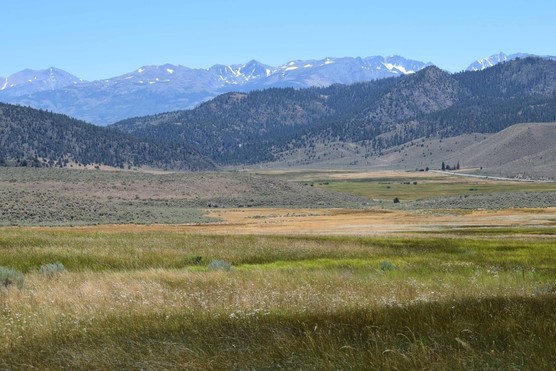
Nevada farmers, ranchers and private landowners are encouraged to apply for the USDA's Agricultural Conservation Easement Program (ACEP) to protect and restore agricultural working lands and wetlands through an ACEP easement. Applications for ACEP are accepted on a continuous basis; however, only the applications received by January 31, 2022 will be considered for funding during this particular cycle. Applications received after the deadline will be reviewed in subsequent cycles.
USDA’s Natural Resources Conservation Service (NRCS) is currently accepting ACEP applications nationwide through local USDA Service Centers, by mail and email, specific to state and federal restrictions based on Covid-19. Please visit the Nevada NRCS Easement Programs webpage for specific guidance on the ACEP application process.
Nevada NRCS State Conservationist Ray Dotson states, “For more than 25 years, NRCS has worked with landowners to protect their wetlands and agricultural lands. Conservation easements are important tools for people who are trying to improve soil health, water and air quality and wildlife habitat on their land.”
Wetland Reserve Easements
Through the ACEP wetland component, Wetland Reserve Easements (WRE), NRCS provides technical and financial assistance to private landowners and Indian tribes to restore, protect and enhance wetlands through the purchase of a wetland easement. NRCS will enroll eligible land through permanent easements, 30-year easements, term easements, or 30-year contracts.
Eligible lands include farmed or converted wetlands that can be hydrologically restored, agricultural lands substantially altered by flooding, and riparian areas that link protected wetland areas. As part of the easement, NRCS and the landowner work together to develop a plan for the restoration and maintenance of the wetland area.
Agricultural Land Easements
NRCS also provides financial assistance to eligible entities for purchasing Agricultural Land Easements (ALE) that protect the agricultural land use and conservation values of eligible land. For working farms, the program helps farmers keep their land in agriculture. ACEP-ALE also protects grazing uses by conserving grasslands and pastures.
Eligible cooperating entities include state or local agencies, non-profits and tribes. Landowners continue to own their property but voluntarily enter into a legal agreement with a cooperating entity to purchase an easement. The cooperating entity applies for matching funds from NRCS for the purchase of an easement from the landowner, permanently protecting its agricultural use and conservation values. Landowners do not apply directly to NRCS for funding under ACEP-ALE.
For additional information about ACEP and assistance filing program eligibility forms, contact your local Farm Service Agency at a USDA Service Center office. If additional assistance is needed, please contact the local NRCS field office  . .
|
|








