In This Issue:

USDA is expanding our online communications platform that the Farm Service Agency (FSA) has used for years to now include local information from the Natural Resources Conservation Service (NRCS), Risk Management Agency (RMA), and other USDA agencies.
Subscribers will now receive important information on FSA, NRCS and RMA programs, eligibility requirements, deadlines, and more.
You’re currently subscribed to the Florida State Office newsletter and updates. News will continue to be sent via e-mail right to your home or farm office, or to your smartphone – allowing you to receive immediate notification of USDA news that applies to your agricultural operation.
You can also subscribe to text alerts from the Florida State Office by texting Florida to 372-669. Standard text messaging rates apply. Contact your wireless carrier for details associated with your particular data plan. Participants may unsubscribe at any time.
For more information visit farmers.gov/working-with-us/stay-connected.
|
Farmers and ranchers working with USDA’s Farm Service Agency or Natural Resources Conservation Service can now sign and share documents online in just a few clicks. By using Box or OneSpan, producers can digitally complete business transactions without leaving their homes or agricultural operations. Both services are free, secure, and available for multiple FSA and NRCS programs.
Box is a secure, cloud-based site where FSA or NRCS documents can be managed and shared. Producers who choose to use Box can create a username and password to access their secure Box account, where documents can be downloaded, printed, manually signed, scanned, uploaded, and shared digitally with Service Center staff. This service is available to any FSA or NRCS customer with access to a mobile device or computer with printer connectivity.
OneSpan is a secure eSignature solution for FSA and NRCS customers. Like Box, no software downloads or eAuthentication is required for OneSpan. Instead, producers interested in eSignature through OneSpan can confirm their identity through two-factor authentication using a verification code sent to their mobile device or a personalized question and answer. Once identity is confirmed, documents can be reviewed and e-signed through OneSpan via the producer’s personal email address. Signed documents immediately become available to the appropriate Service Center staff.
Box and OneSpan are both optional services for customers interested in improved efficiency in signing and sharing documents with USDA, and they do not replace existing systems using eAuthentication for digital signature. Instead, these tools provide additional digital options for producers to use when conducting business with FSA or NRCS.
USDA Service Center staff are available to help producers get started with Box and OneSpan through a few simple steps. Please visit farmers.gov/service-locator to find your local office and let Service Center staff know you’re interested in signing and sharing documents through these new features. In most cases, one quick phone call will be all that is needed to initiate the process.
Visit farmers.gov/mydocs to learn more about Box and OneSpan, steps for getting started, and additional resources for conducting business with USDA online.
To learn more about program flexibilities and Service Center status during the coronavirus pandemic, visit farmers.gov/coronavirus.
The U.S. Department of Agriculture (USDA) is investing up to $2 million in cooperative agreements this year for risk management education and training programs that support historically underserved producers, small-scale farmers, and conservation practices. USDA’s Risk Management Agency (RMA) is investing in organizations, such as nonprofit organizations, universities, and county cooperative extension offices, to develop training and education tools to help producers learn how to effectively manage long-term risks and challenges.
RMA works with partners to assist producers, especially historically underserved, farmers and ranchers, in effectively managing long-term risks and challenges. RMA re-established its support of risk management education in 2021, investing nearly $1 million in nine risk management education projects. From 2002 to 2018, RMA provided annual funding for risk management education projects, supporting more than $126 million worth of projects in historically underserved communities.
How Organizations Can Apply
A broad range of risk management training activities are eligible for funding consideration, including training on Federal crop insurance options, record keeping, financial management, non-insurance-based risk management tools, and natural disaster preparedness among others. Partners can also train farmers at all levels on risk management options that help secure local food systems.
This selection process is competitive, and RMA will prioritize projects focused on underserved, organic, and specialty crop producers. Additionally, organizations providing training related to climate change, wildfire response, local foods, and urban ag will also be given stronger consideration.
Interested organizations must apply by 5:59 pm Eastern Time on March 11 through the Results Verification System at rvs.umn.edu.
Learn more.
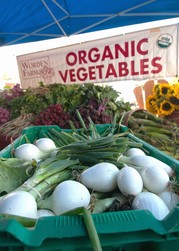
The U.S. Department of Agriculture (USDA) has extended the deadline for agricultural producers who are certified organic, or transitioning to organic, to apply for the Organic and Transitional Education and Certification Program (OTECP). This program provides pandemic assistance to cover certification and education expenses. The deadline to apply for 2020 and 2021 eligible expenses is now Feb. 4, 2022, rather than the original deadline of Jan. 7, 2022.
Signup for OTECP, administered by USDA’s Farm Service Agency (FSA), began Nov. 8.
Certified operations and transitional operations may apply for OTECP for eligible expenses paid during the 2020, 2021 and 2022 fiscal years. Signup for the 2022 fiscal year will be announced at a later date.
For each year, OTECP covers 25% of a certified operation’s eligible certification expenses, up to $250 per certification category (crop, livestock, wild crop, handling and State Organic Program fee). This includes application fees, inspection fees, USDA organic certification costs, state organic program fees and more.
Crop and livestock operations transitioning to organic production may be eligible for 75% of a transitional operation’s eligible expenses, up to $750, for each year. This includes fees charged by a certifying agent or consultant for pre-certification inspections and development of an organic system plan.
For both certified operations and transitional operations, OTECP covers 75% of the registration fees, up to $200, per year, for educational events that include content related to organic production and handling in order to assist operations in increasing their knowledge of production and marketing practices that can improve their operations, increase resilience and expand available marketing opportunities. Additionally, both certified and transitional operations may be eligible for 75% of the expense of soil testing required under the National Organic Program (NOP) to document micronutrient deficiency, not to exceed $100 per year.
Producers apply through their local FSA office and can also obtain one-on-one support with applications by calling 877-508-8364. The program application and additional information can be found at farmers.gov/otecp.
Additional Organic Support
OTECP builds upon USDA’s Organic Certification Cost Share Program (OCCSP) which provides cost share assistance of 50%, up to a maximum of $500 per scope, to producers and handlers of agricultural products who are obtaining or renewing their certification under the NOP. Although the application period for OCCSP ended Nov. 1, 2021, FSA will consider late-filed applications for those operations who still wish to apply.
Meanwhile, USDA’s Risk Management Agency (RMA) recently made improvements to Whole-Farm Revenue Protection to make it more flexible and accessible to organic producers.
To learn more about USDA’s broader assistance for organic producers, visit usda.gov/organic.
|
As part of the Biden-Harris Administration’s ongoing efforts to support dairy farmers and rural communities, today the U.S. Department of Agriculture (USDA) opened signup for the Dairy Margin Coverage (DMC) program and expanded the program to allow dairy producers to better protect their operations by enrolling supplemental production. This signup period – which runs from Dec. 13, 2021 to Feb. 18, 2022 – enables producers to get coverage through this important safety-net program for another year as well as get additional assistance through the new Supplemental DMC.
Supplemental DMC will provide $580 million to better help small- and mid-sized dairy operations that have increased production over the years but were not able to enroll the additional production. Now, they will be able to retroactively receive payments for that supplemental production. Additionally, USDA’s Farm Service Agency (FSA) updated how feed costs are calculated, which will make the program more reflective of actual dairy producer expenses.
Supplemental DMC Enrollment
Eligible dairy operations with less than 5 million pounds of established production history may enroll supplemental pounds based upon a formula using 2019 actual milk marketings, which will result in additional payments. Producers will be required to provide FSA with their 2019 Milk Marketing Statement.
Supplemental DMC coverage is applicable to calendar years 2021, 2022 and 2023. Participating dairy operations with supplemental production may receive retroactive supplemental payments for 2021 in addition to payments based on their established production history.
Supplemental DMC will require a revision to a producer’s 2021 DMC contract and must occur before enrollment in DMC for the 2022 program year. Producers will be able to revise 2021 DMC contracts and then apply for 2022 DMC by contacting their local USDA Service Center.
DMC 2022 Enrollment
After making any revisions to 2021 DMC contracts for Supplemental DMC, producers can sign up for 2022 coverage. DMC provides eligible dairy producers with risk management coverage that pays producers when the difference between the price of milk and the cost of feed falls below a certain level. So far in 2021, DMC payments have triggered for January through October for more than $1.0 billion.
For DMC enrollment, producers must certify with FSA that the operation is commercially marketing milk, sign all required forms and pay the $100 administrative fee. The fee is waived for farmers who are considered limited resource, beginning, socially disadvantaged, or a military veteran. To determine the appropriate level of DMC coverage for a specific dairy operation, producers can use the online dairy decision tool.
Updates to Feed Costs
USDA is also changing the DMC feed cost formula to better reflect the actual cost dairy farmers pay for high-quality alfalfa hay. FSA will calculate payments using 100% premium alfalfa hay rather than 50%. The amended feed cost formula will make DMC payments more reflective of actual dairy producer expenses.
Additional Dairy Assistance
Today’s announcement is part of a broader package to help the dairy industry respond to the pandemic and other challenges. USDA is also amending Dairy Indemnity Payment Program (DIPP) regulations to add provisions for the indemnification of cows that are likely to be not marketable for longer durations, as a result, for example, of per- and polyfluoroalkyl substances. FSA also worked closely with USDA's Natural Resources Conservation Service to target assistance through the Environmental Quality Incentives Program) and other conservation programs to help producers safely dispose of and address resource concerns created by affected cows. Other recent dairy announcements include $350 million through the Pandemic Market Volatility Assistance Program and $400 million for the Dairy Donation Program.
Additional details on these changes to DMC and DIPP can be found in a rule that will be published soon in the Federal Register. This rule also included information on the new Oriental Fruit Fly Program as well as changes to FSA conservation programs. A copy of the rule is available here.
More Information
To learn more or to participate in DMC or DIPP, producers should contact their local USDA Service Center. Service Center staff continue to work with agricultural producers via phone, email and other digital tools. Because of the pandemic, some are open to limited visitors. Producers should contact their Service Center to set up an in-person or phone appointment. Additionally, more information related to USDA’s response and relief for producers can be found at farmers.gov/coronavirus.
The U.S. Department of Agriculture (USDA) is in the process of issuing $1.8 billion in payments to agricultural producers who enrolled in the Agriculture Risk Coverage (ARC) and Price Loss Coverage (PLC) programs for the 2020 crop year. These payments provide critical support to help mitigate fluctuations in either revenue or prices for certain crops. These two USDA safety-net programs help producers of certain crops build back better after facing the impacts of COVID-19 and other challenges.
In addition, USDA’s Farm Service Agency (FSA) is encouraging producers to contact their local USDA Service Centers to make or change elections and to enroll for 2022 ARC or PLC, providing future protections against market fluctuations. The election and enrollment period opened on Oct. 18, 2021 and runs through March 15, 2022.
2020 Payments and Contracts
ARC and PLC payments for a given crop year are paid out the following fall to allow actual county yields and the Market Year Average prices to be finalized. This month, FSA processed payments to producers enrolled in 2020 ARC-County (ARC-CO), ARC-Individual (ARC-IC) and PLC for covered commodities that triggered for the crop year.
For ARC-CO, view the 2020 ARC-CO Benchmark Yields and Revenues online database for payment rates applicable to their county and each covered commodity.
For PLC, payments have triggered for barley, canola, chickpeas (large and small), dry peas, flaxseed, lentils, peanuts, seed cotton and wheat. More information on rice payments will be announced later this fall and in early 2022.
For ARC-IC, producers should contact their local FSA office for additional information pertaining to 2020 payment information, which relies on producer-specific yields for the crop and farm to determine benchmark yields and actual year yields when calculating revenues.
By the Numbers
More than 1.7 million contracts were signed in 2019. In 2020, producers signed nearly 1.8 million ARC or PLC contracts, and 251 million out of 273 million base acres were enrolled in the programs. In 2021, signed contracts surpassed 1.8 million.
Since the ARC and PLC were authorized by the 2014 Farm Bill and reauthorized by the 2018 Farm Bill, these safety-net programs have paid out more than $32.5 billion to producers of covered commodities.
2022 Elections and Enrollment
Producers can elect coverage and enroll in ARC-CO or PLC, which are both crop-by-crop, or ARC-IC, which is for the entire farm. Although election changes for 2022 are optional, producers must enroll through a signed contract each year. Also, if a producer has a multi-year contract on the farm and makes an election change for 2022, it will be necessary to sign a new contract.
If an election is not submitted by the deadline of March 15, 2022, the election remains the same as the 2021 election for crops on the farm. Farm owners cannot enroll in either program unless they have a share interest in the farm.
Covered commodities include barley, canola, large and small chickpeas, corn, crambe, flaxseed, grain sorghum, lentils, mustard seed, oats, peanuts, dry peas, rapeseed, long grain rice, medium and short grain rice, safflower seed, seed cotton, sesame, soybeans, sunflower seed, and wheat.
Web-Based Decision Tools
In partnership with USDA, the University of Illinois and Texas A&M University offer web-based decision tools to assist producers in making informed, educated decisions using crop data specific to their respective farming operations. Tools include:
- Gardner-farmdoc Payment Calculator, a tool available through the University of Illinois allows producers to estimate payments for farms and counties for ARC-CO and PLC.
-
ARC and PLC Decision Tool, a tool available through Texas A&M tallows producers to estimate payments and yield updates and expected payments for 2022.
Crop Insurance Considerations
ARC and PLC are part of a broader safety net provided by USDA, which also includes crop insurance and marketing assistance loans.
Producers are reminded that ARC and PLC elections and enrollments can impact eligibility for some crop insurance products.
Producers on farms with a PLC election have the option of purchasing Supplemental Coverage Option (SCO) through their Approved Insurance Provider; however, producers on farms where ARC is the election are ineligible for SCO on their planted acres for that crop on that farm.
Unlike SCO, the Enhanced Coverage Option (ECO) is unaffected by an ARC election. Producers may add ECO regardless of the farm program election.
Upland cotton farmers who choose to enroll seed cotton base acres in ARC or PLC are ineligible for the stacked income protection plan (STAX) on their planted cotton acres for that farm.
More Information
For more information on ARC and PLC, visit the ARC and PLC webpage or contact your local USDA Service Center.
Producers with farmers.gov accounts can now access farm records and maps online, the latest self-service feature added to the U.S. Department of Agriculture (USDA) website.
You can quickly and easily access your land information in real time by desktop computer, tablet or phone. Capabilities include:
- View, print and export detailed farm records such as cropland, base acres, yields, CRP acres, land ownership details, and much more;
- View, print and export farm/tract maps that can be provided to lenders, chemical or fertilizer providers, and FSA for reporting acreage and crop insurance agents; and
- Export common land unit (field) boundaries as ESRI shapefiles.
The ability to access these records on demand without a visit to the service center saves you time and money.
Farmers.gov now includes the most popular functionalities from FSAFarm+, the FSA portal for producers, while providing enhanced functionality and an improved user experience. A new enhancement expands the scope of accessibility to include farmers and ranchers who are members of an entity, as well as people with a power of attorney form (FSA-211) on file with FSA.
Managing USDA Business Online
Using farmers.gov, producers, entities and those acting on their behalf can also:
- View, upload, download, and e-sign conservation documents.
- Request financial assistance, including submitting a program application.
- View and submit conservation requests.
- View technical references and submit questions.
- Access information on current and past conservation practices, plans and contracts.
- Report practice completion and request practice certification.
- View farm loan and interest information (producers only).
Future plans include adding the ability to import and view other shapefiles, such as precision agriculture planting boundaries.
To access your information, you’ll will need a USDA eAuth account to login to farmers.gov. After obtaining an eAuth account, producers should visit farmers.gov and sign into the site’s authenticated portal via the Sign In/Sign Up link at the top right of the website. Google Chrome, Mozilla Firefox or Microsoft Edge are the recommended browsers to access the feature.
In addition to the self-service features available by logging into farmers.gov, the website also has ample information on USDA programs, including pandemic assistance, farm loans, disaster assistance, conservation programs and crop insurance. Recently, USDA updated the navigation and organization of the site as well as added some new webpages, including “Get Involved,” “Common Forms,” and “Translations.” Learn more about these changes.
Farmers and ranchers can use the Farm Loan Discovery Tool on farmers.gov to find information on USDA farm loans that may best fit their operations.
USDA’s Farm Service Agency (FSA) offers a variety of loan options to help farmers finance their operations. From buying land to financing the purchase of equipment, FSA loans can help.
USDA conducted field research in eight states, gathering input from farmers and FSA farm loan staff to better understand their needs and challenges.
How the Tool Works
Farmers who are looking for financing options to operate a farm or buy land can answer a few simple questions about what they are looking to fund and how much money they need to borrow. After submitting their answers, farmers will receive information on farm loans that best fit their specific needs. The loan application and additional resources also will be provided.
Farmers can download application quick guides that outline what to expect from preparing an application to receiving a loan decision. There are four guides that cover loans to individuals, entities, and youth, as well as information on microloans. The guides include general eligibility requirements and a list of required forms and documentation for each type of loan. These guides can help farmers prepare before their first USDA service center visit with a loan officer.
Farmers can access the Farm Loan Discovery Tool by visiting farmers.gov/fund and clicking the “Start” button. Follow the prompts and answer five simple questions to receive loan information that is applicable to your agricultural operation. The tool is built to run on any modern browser like Chrome, Edge, Firefox, or the Safari browser, and is fully functional on mobile devices. It does not work in Internet Explorer.
About Farmers.gov
In 2018, USDA unveiled farmers.gov, a dynamic, mobile-friendly public website combined with an authenticated portal where farmers will be able to apply for programs, process transactions, and manage accounts.
The Farm Loan Discovery Tool is one of many resources on farmers.gov to help connect farmers to information that can help their operations. Earlier this year, USDA launched the My Financial Information feature, which enables farmers to view their loan information, history, payments, and alerts by logging into the website.
USDA is building farmers.gov for farmers, by farmers. In addition to the interactive farm loan features, the site also offers a Disaster Assistance Discovery Tool. Farmers can visit farmers.gov/recover/disaster-assistance-tool#step-1 to find disaster assistance programs that can help their operation recover from natural disasters.
Farm loan borrowers who have pledged real estate as security for their Farm Service Agency (FSA) direct or guaranteed loans are responsible for maintaining loan collateral. Borrowers must obtain prior consent or approval from FSA or the guaranteed lender for any transaction that affects real estate security. These transactions include, but are not limited to:
- Leases of any kind
- Easements of any kind
- Subordinations
- Partial releases
- Sales
Failure to meet or follow the requirements in the loan agreement, promissory note, and other security instruments could lead to nonmonetary default which could jeopardize your current and future loans.
It is critical that borrowers keep an open line of communication with their FSA loan staff or guaranteed lender when it comes to changes in their operation. For more information on borrower responsibilities, read Your FSA Farm Loan Compass.
Producers are encouraged to call their local FSA office to schedule an appointment to ensure maximum use of their time and to make sure FSA staff is available to tend to their important business needs. Please call your local FSA office ahead to set an appointment and to discuss any records or documentation that might be needed during your appointment. To find your local FSA office, visit: offices.sc.egov.usda.gov/locator/app.
Jan 17 - Federal Holiday Observed. Offices Closed.
Jan 30 - Emergency Assistance for Livestock, Honeybees, and Farm-raised Fish Program (ELAP) for 2021 Losses deadline
Jan 30 - Livestock Forage Disaster Program (LFP) for 2021 Losses deadline
Feb 04 - Organic and Transitional Education and Certification Program deadline
Feb 18 - Signup for Dairy Margin Coverage ends
Feb 21 - Federal Holiday Observed. Offices Closed.
Feb 25 - Spot Market Hog Pandemic Program (SMHPP) deadline
| Farm Operating - Direct |
2.125% |
| Farm Operating - Microloan |
2.125% |
| Farm Ownership - Direct |
3.000% |
| Farm Ownership - Microloan |
3.000% |
| Farm Ownership - Direct, Joint Financing |
2.500% |
| Farm Ownership - Down Payment |
1.500% |
| Emergency Loan - Amount of Actual Loss |
3.125% |
|