|
FSA is accepting ECP applications in Ascension, Assumption, East Baton Rouge, East Feliciana, Jefferson, Lafourche, Livingston, Orleans, Plaquemines, St Bernard, St Charles, St Helena, St James, St John the Baptist, St Tammany, Tangipahoa, Terrebonne, Washington, and West Feliciana Parishes. If you’ve suffered a loss from a natural disaster contact your local FSA County Office and request assistance.
ECP helps you with the cost to restore damaged farmland to pre-disaster conditions. You may receive up to 75 percent of the cost of approved restoration activity. Limited resource, socially disadvantaged and beginning farmers and ranchers may receive up to 90 percent cost-share.
In most cases, you must apply for assistance prior to beginning reconstructive work. FSA’s National Environmental Policy Act (NEPA) and environmental compliance review process is required to be completed before any actions are taken. Submitting an application after reconstructive work has been completed may not qualify for ECP. Conservation concerns that were present on the land prior to the disaster are not eligible for ECP assistance.
FSA County Committees will evaluate applications based on information provided and if applicable, an on-site inspection of the damaged land, taking into consideration the type and extent of the damage. Submission of an application does not guarantee that cost-share funding will be provided.
Contact your local FSA office for approved ECP practices.
FSA is accepting EFRP applications in Livingston, Washington, St. Tammany, Tangipahoa and St. Helena Parishes. If you’ve suffered a loss from a natural disaster may contact your local FSA County Office and request assistance.
EFRP provides payments to eligible owners of nonindustrial private forest (NIPF) land to enable them to carry out emergency measures to restore land damaged by a natural disaster. After applications are received, local FSA County Committees determine land eligibility using information provided and if applicable, an on-site damage inspection to assess the type and extent of damage.
Eligible forest restoration practices include debris removal, such as down or damaged trees, in order to establish a new stand or provide natural regeneration; site preparation, planting materials and labor to replant forest land; restoration of forestland roads, fire lanes, fuel breaks or erosion control structures; fencing, tree shelters and tree tubes to protect trees from wildlife damage; and wildlife enhancement to provide cover openings and wildlife habitat.
In order to meet eligibility requirements, NIPF land must have existing tree cover or had tree cover immediately before the natural disaster occurred and be sustainable for growing trees. The land must also be owned by any nonindustrial private individual, group, association, corporation or other private legal entity that has definitive decision-making authority over the land. The natural disaster must have resulted in damage that if untreated would impair or endanger the natural resources on the land and/or materially affect future use of the land.
More Information
For more information on disaster recovery, visit farmers.gov/recover, or contact your local USDA Service Center. To locate your local FSA office, visit farmers.gov/service-center-locator.
Options Help More Beginning, Small and Urban Producers Gain Access to Credit
Producers can apply for a streamlined version of USDA guaranteed loans, which are tailored for smaller scale farms and urban producers EZ Guarantee Loans use a simplified application process to help beginning, small, underserved, and family farmers and ranchers apply for loans of up to $100,000 from USDA-approved lenders to purchase farmland or finance agricultural operations.
A new category of lenders will join traditional lenders, such as banks and credit unions, in offering USDA EZ Guarantee Loans. Microlenders, which include Community Development Financial Institutions and Rural Rehabilitation Corporations, will be able to offer their customers up to $50,000 of EZ Guaranteed Loans, helping to reach urban areas and underserved producers. Banks, credit unions and other traditional USDA-approved lenders, can offer customers up to $100,000 to help with agricultural operation costs.
EZ Guarantee Loans offer low interest rates and terms up to seven years for financing operating expenses and 40 years for financing the purchase of farm real estate. USDA-approved lenders can issue these loans with the Farm Service Agency (FSA) guaranteeing their loan losses up to a maximum of 90 percent in most cases. In some circumstances, a 95 percent guarantee is available.
For more information about the available types of FSA farm loans, contact your Local County USDA Service Center or visit fsa.usda.gov/farmloans.
Free basic coverage available for new and underserved loan applicants
Producers who apply for Farm Service Agency (FSA) farm loans will be offered the opportunity to enroll in the Noninsured Crop Disaster Assistance Program (NAP). NAP is available to producers who grow noninsurable crops and is especially important to fruit, vegetable, and other specialty crop growers.
New, underserved and limited income specialty growers who apply for farm loans could qualify for basic loss coverage at no cost.
The basic disaster coverage protects at 55 percent of the market price for crop losses that exceed 50 percent of production. Covered “specialty” crops include vegetables, fruits, mushrooms, floriculture, ornamental nursery, aquaculture, turf grass, ginseng, honey, syrup, hay, forage, grazing and energy crops. FSA allows beginning, underserved or limited income producers to obtain NAP coverage up to 90 days after the normal application closing date when they also apply for FSA credit.
Producers can also protect value-added production, such as organic or direct market crops, at their fair market value in those markets. Targeted underserved groups eligible for free or discounted coverage include American Indians or Alaskan Natives, Asians, Blacks or African Americans, Native Hawaiians or other Pacific Islanders, Hispanics, and women.
FSA offers a variety of loan products, including farm ownership loans, operating loans and microloans that have a streamlined application process.
NAP coverage is not limited to FSA borrowers, beginning, limited resource, or underserved farmers. Any producer who grows eligible NAP crops can purchase coverage. To learn more, contact your Local County USDA Service Center or visit fsa.usda.gov/nap or fsa.usda.gov/farmloans.
With the 2021 harvest season coming to an end, now is a good time for an annual financial check-up. This involves reviewing 2021 production and financial records and preparing for 2022. One of the most important keys to success is record keeping. This must be done throughout the year, including through the busy times of the year.
Record keeping should include a detailed breakdown of all financial inflows and outflows. Some of the inflows may include production records, income, program payments, other farm income, non-farm income and capital sales (sale of equipment or real estate). Outflows that should be tracked and recorded are all annual operating expenses, living expenses and personal debt payments, loan advances and/or debt repayment, as well as capital expenses (buying equipment, real estate, etc.). A capital sale or expense is a non-annual type inflow or outflow; this may include the purchase of a tractor or other farm equipment, overhauling equipment, and improving real estate.
An annual review of your records will help plan for the 2022 crop year. Good records will help determine where expenses may need to be reduced or whether more needs to be invested in the operation. FSA customers are encouraged to schedule an appointment with their loan officer as soon as possible to begin the application process.
The same holds true if finances are obtained through a local lender with an FSA guaranteed loan or non-guaranteed. Record keeping provides the lender with the necessary information to process the loan request and also helps prepare for the tax season.
As part of the Biden-Harris Administration’s ongoing efforts to support dairy farmers and rural communities, today the U.S. Department of Agriculture (USDA) opened signup for the Dairy Margin Coverage (DMC) program and expanded the program to allow dairy producers to better protect their operations by enrolling supplemental production. This signup period – which runs from Dec. 13, 2021 to Feb. 18, 2022 – enables producers to get coverage through this important safety-net program for another year as well as get additional assistance through the new Supplemental DMC.
Supplemental DMC will provide $580 million to better help small- and mid-sized dairy operations that have increased production over the years but were not able to enroll the additional production. Now, they will be able to retroactively receive payments for that supplemental production. Additionally, USDA’s Farm Service Agency (FSA) updated how feed costs are calculated, which will make the program more reflective of actual dairy producer expenses.
Supplemental DMC Enrollment
Eligible dairy operations with less than 5 million pounds of established production history may enroll supplemental pounds based upon a formula using 2019 actual milk marketings, which will result in additional payments. Producers will be required to provide FSA with their 2019 Milk Marketing Statement.
Supplemental DMC coverage is applicable to calendar years 2021, 2022 and 2023. Participating dairy operations with supplemental production may receive retroactive supplemental payments for 2021 in addition to payments based on their established production history.
Supplemental DMC will require a revision to a producer’s 2021 DMC contract and must occur before enrollment in DMC for the 2022 program year. Producers will be able to revise 2021 DMC contracts and then apply for 2022 DMC by contacting their local USDA Service Center.
DMC 2022 Enrollment
After making any revisions to 2021 DMC contracts for Supplemental DMC, producers can sign up for 2022 coverage. DMC provides eligible dairy producers with risk management coverage that pays producers when the difference between the price of milk and the cost of feed falls below a certain level. So far in 2021, DMC payments have triggered for January through October for more than $1.0 billion.
For DMC enrollment, producers must certify with FSA that the operation is commercially marketing milk, sign all required forms and pay the $100 administrative fee. The fee is waived for farmers who are considered limited resource, beginning, socially disadvantaged, or a military veteran. To determine the appropriate level of DMC coverage for a specific dairy operation, producers can use the online dairy decision tool.
Updates to Feed Costs
USDA is also changing the DMC feed cost formula to better reflect the actual cost dairy farmers pay for high-quality alfalfa hay. FSA will calculate payments using 100% premium alfalfa hay rather than 50%. The amended feed cost formula will make DMC payments more reflective of actual dairy producer expenses.
Additional Dairy Assistance
Today’s announcement is part of a broader package to help the dairy industry respond to the pandemic and other challenges. USDA is also amending Dairy Indemnity Payment Program (DIPP) regulations to add provisions for the indemnification of cows that are likely to be not marketable for longer durations, as a result, for example, of per- and polyfluoroalkyl substances. FSA also worked closely with USDA's Natural Resources Conservation Service to target assistance through the Environmental Quality Incentives Program) and other conservation programs to help producers safely dispose of and address resource concerns created by affected cows. Other recent dairy announcements include $350 million through the Pandemic Market Volatility Assistance Program and $400 million for the Dairy Donation Program.
Additional details on these changes to DMC and DIPP can be found in a rule that will be published soon in the Federal Register. This rule also included information on the new Oriental Fruit Fly Program as well as changes to FSA conservation programs. A copy of the rule is available here.
More Information
To learn more or to participate in DMC or DIPP, producers should contact their local USDA Service Center. Service Center staff continue to work with agricultural producers via phone, email and other digital tools. Because of the pandemic, some are open to limited visitors. Producers should contact their Service Center to set up an in-person or phone appointment. Additionally, more information related to USDA’s response and relief for producers can be found at farmers.gov/coronavirus.

Many Farm Service Agency (FSA) programs require all program participants, either individuals or legal entities, to be “actively engaged in farming.” This means participants provide a significant contribution to the farming operation, whether it is capital, land, equipment, active personal labor and/or management. For entities, each partner, stockholder or member with an ownership interest, must contribute active personal labor and/or management to the operation on a regular basis that is identifiable and documentable as well as separate and distinct from contributions of any other member. Members of joint operations must have a share of the profits or losses from the farming operation commensurate with the member’s contributions to the operation and must make contributions to the farming operation that are at risk for a loss, with the level of risk being commensurate with the member’s claimed share on the farming operation.
Joint operations comprised of non-family members or partners, stockholders or persons with an ownership in the farming operation must meet additional payment eligibility provisions. Joint operations comprised of family members are exempt from these additional requirements. For 2016 and subsequent crop years, non-family joint operations can have one member that may use a significant contribution of active personal management exclusively to meet the requirements to be determined “actively engaged in farming.” The person or member will be defined as the farm manager for the purposes of administering these management provisions.
Non-family joint operations may request to add up to two additional managers for their farming operation based on the size and/or complexity of the operation. If additional farm managers are requested and approved, all members who contribute management are required to complete form CCC-902MR, Management Activity Record. The farm manager should use the form to record management activities including capital, labor and agronomics, which includes crop selection, planting decisions, acquisition of inputs, crop management and marketing decisions. One form should be used for each month and the farm manager should enter the number of hours of time spent for each activity under the date of the month the actions were completed. The farm manager must also document if each management activity was completed on the farm or remotely.
The records and supporting business documentation must be maintained and timely made available for review by the appropriate FSA reviewing authority, if requested.
If the farm manager fails to meet these requirements, their contribution of active personal management to the farming operation for payment eligibility purposes will be disregarded and their payment eligibility status will be re-determined for the applicable program year.
In some instances, additional persons or members of a non-family member joint operation who meet the definition of farm manager may also be allowed to use such a contribution of active personal management to meet the eligibility requirements. However, under no circumstances may the number of farm managers in a non-family joint operation exceed a total of three in any given crop and program year.
|
On January 27, 2021, the Biden-Harris Administration suspended all debt collections, foreclosures, and other adverse actions for borrowers of direct farm loans and Farm Storage Facility Loans (FSFL) through USDA’s Farm Service Agency (FSA) because of the national public health emergency caused by the Coronavirus pandemic.
It has been determined that the January 2021 suspension included a waiver of the Debt Collection Improvement Act (DCIA) noncompliance for issuing new Marketing Assistance Loans (MAL), Loan Deficiency Payments (LDP) or FSFL to borrowers who are in delinquent status with FSFL or farm loans.
Under normal circumstances, DCIA specifies that a person cannot obtain Federal financial assistance in the form of loans (other than disaster loans), loan insurance, or guarantees if that person has delinquent Federal non-tax debt. MAL, LDP, and FSFL programs administered by FSA are currently subject to these statutory constraints.
FSA county offices will review MALs, LDPs, and FSFLs that were previously denied on or after January 27, 2021, because of DCIA noncompliance. Offices will notify applicants of the waiver provisions and the opportunity to obtain a loan. All applicable eligibility requirements remain in place with the exception of DCIA waiver.
Reach out to your local FSA office for more information. To find your local office, visit farmers.gov/service-locator.
USDA’s Farm Service Agency (FSA) has implemented pre-authorized debit (PAD) for Farm Loan Program (FLP) borrowers. PAD is a voluntary and alternative method for making weekly, bi-weekly, monthly, quarterly, semi-annual or annual payments on loans.
PAD payments are pre-authorized transactions that allow the National Financial and Accounting Operations Center (NFAOC) to electronically collect loan payments from a customer’s account at a financial institution.
PAD may be useful if you use nonfarm income from regular wages or salary to make payments on loans or adjustment offers or for payments from seasonal produce stands. PAD can only be established for future payments.
To request PAD, customers, along with their financial institution, must fill out form RD 3550-28. This form has no expiration date, but a separate form RD 3550-28 must be completed for each loan to which payments are to be applied. A fillable form can be accessed on the USDA Rural Development (RD) website at rd.usda.gov/publications/regulations-guidelines. Click forms and search for “Form 3550-28.”
If you have a “filter” on the account at your financial institution, you will need to provide the financial institution with the following information: Origination ID: 1220040804, Agency Name: USDA RD DCFO.
PAD is offered by FSA at no cost. Check with your financial institution to discuss any potential cost. Preauthorized debit has no expiration date, but you can cancel at any time by submitting a written request to your local FSA office. If a preauthorized debit agreement receives three payment rejections within a three-month period, the preauthorized debit agreement will be cancelled by FSA. The payment amount and due date of your loan is not affected by a cancellation of preauthorized debit. You are responsible to ensure your full payment is made by the due date.
For more information about PAD, contact your Local County USDA Service Center or visit fsa.usda.gov.
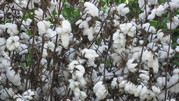
USDA announced the 2021-crop loan rate differentials for upland and extra-long staple cotton, which are applied to the crop loan rate to determine the per bale actual loan rate.
The differentials, also referred to as loan rate premiums and discounts, were calculated based on market valuations of various cotton quality factors for the prior three years. This calculation procedure is identical to that used in the past years.
The 2021 crop differential schedules are applied to 2021 crop loan rates of 52 cents per pound for the base grade of upland cotton and 95 cents per pound for extra-long staple cotton. The 2018 Farm Bill stipulates that the loan rate for the base quality of upland cotton ranges between 45 and 52 cents per pound based on the simple average of the Adjusted World Price for the two marketing years immediately preceding the next crop planting. However, the established loan rate cannot be less than 98% of the preceding year’s loan. The loan rate provided to an individual cotton bale is based on the quality of each individual bale as determined by USDA’s Agricultural Marketing Service classing measurements.
These differentials are important to cotton producers because they are used to derive the actual loan rate for each bale of cotton – above (premium) or below (discount) the average per pound loan rate, depending on the grade or quality of the cotton. The actual loan rate is significant because it is used to determine any marketing loan gains and loan deficiency payments.
USDA’s Commodity Credit Corporation adjusts cotton loan rates by these differentials so that cotton loan values reflect the differences in market prices for color, staple length, leaf, extraneous matter, micronaire, length uniformity and strength.
Loan rates are posted on the Farm Service Agency website. Commodity loans are part of a broader suite of programs available to cotton producers. To apply for loans or other programs, contact your local USDA service center.
|
If you received a payment under the Wildfires and Hurricanes Indemnity Program+ (WHIP+) or the Quality Loss Adjustment Program (QLA) for crop production and/or quality losses occurring in 2018, 2019, or 2020 crop years, you are required to meet linkage requirements by obtaining federal crop insurance or Non-Insured Crop Disaster Assistance Program (NAP) coverage at the 60/100 level, or higher, for both the 2022 and 2023 crop years.
When applying for WHIP+ or QLA, form FSA-895 (Crop Insurance and/or NAP Coverage Agreement) was submitted acknowledging the requirement to obtain federal crop insurance, if available, or NAP coverage if federal crop insurance is not available. The coverage requirement is applicable to the physical location county of the crop that received WHIP+ and/or QLA benefits.
Producers should not delay contacting their federal crop insurance agent or local county FSA Office to inquire about coverage options, as failure to obtain the applicable coverage by the sales/application closing date will result in the required refund of WHIP+ benefits received on the applicable crop, plus interest. You can determine if crops are eligible for federal crop insurance or NAP by visiting the RMA website.
For more information, contact your Local County USDA Service Center or visit fsa.usda.gov.
Jan. 31 - Emergency Assistance for Livestock, Honeybees, and Farm-raised Fish (ELAP)
Application for Payment deadline for 2021 applications
Feb. 4 - Deadline to apply for Organic and Transitional Education and
Certification Program (OTECP)
Feb. 14 - Emergency Conservation Program (ECP) and Emergency Forest Restoration
Program (EFRP) Sign-up deadlines. “(In Applicable Parishes)”
Feb. 18 - Supplemental Dairy Margin Coverage (DMC) and 2022 Dairy Margin Coverage
(DMC)
Feb. 21 - USDA Service Centers will be closed in observance of the President’s Day
Holiday
Feb. 28 - Noninsured Crop Disaster Assistance Program (NAP) Sales Closing Date-
Spring Seeded Crops, Hemp
Mar. 1 - Livestock Indemnity Program (LIP) Application for Payment deadline for 2021
applications
Mar. 15 - Agriculture Risk Coverage and Price Loss Coverage (ARCPLC) Election and
Enrollment Deadline
May 31 - Deadline to apply for 2021 Marketing Assistance Loans (MAL)
June 1 - Status Date for determination of Minor Child and Change in Farming Operation
Aug. 1 – Deadline to request Farm reconstitutions
|
Louisiana FSA now offers SMS texting; receive text message alerts on your cell phone regarding important deadlines, reporting requirements and updates. Contact your local FSA Office for more information.
All USDA Service Centers in Louisiana are currently closed to visitors because of the pandemic, but Farm Service Agency (FSA) and Natural Resources Conservation Service (NRCS) staff continue to work with agricultural producers via phone, email, and other digital tools.
Call your Service Center to schedule an appointment. You can find contact information at farmers.gov/service-locator.
|
|







