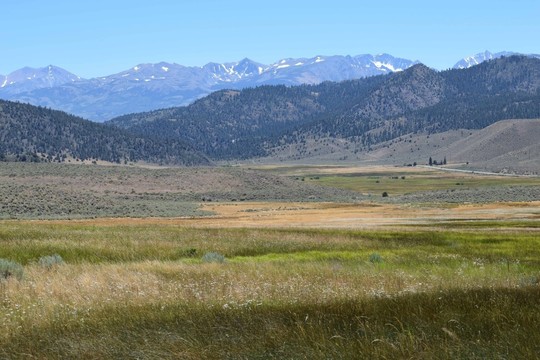
 NRCS Nevada’s Minden Field Office assisted NRCS California, working alongside the Eastern Sierra Land Trust and rancher Corky Ullman, to help secure 1,424 acres at the Ullman Ranch in Huntoon Valley outside Bridgeport, Calif. Through the Agricultural Conservation Easement Program (ACEP)-Agricultural Land Easement Grasslands of Special Environmental Significance, the agreement protects habitat for wildlife such as the Bi-State sage-grouse and mule deer. Photo by Susanna Danner, ESLT
USDA Conservation Easement Programs Protect
and Enhance Nevada Natural Resources
Sign-up By: January 31, 2022
Reno, Nev. –Nevada farmers, ranchers and private landowners are encouraged to apply for the USDA's Agricultural Conservation Easement Program (ACEP) to protect and restore agricultural working lands and wetlands through an ACEP easement. Applications for ACEP are accepted on a continuous basis; however, only the applications received by January 31, 2022 will be considered for funding during this particular cycle. Applications received after the deadline will be reviewed in subsequent cycles.
USDA’s Natural Resources Conservation Service (NRCS) is currently accepting ACEP applications nationwide through local USDA Service Centers, by mail and email, specific to state and federal restrictions based on Covid-19. Please visit the Nevada NRCS Easement Programs webpage for specific guidance on the ACEP application process.
Nevada NRCS State Conservationist Ray Dotson states, “For more than 25 years, NRCS has worked with landowners to protect their wetlands and agricultural lands. Conservation easements are important tools for people who are trying to improve soil health, water and air quality and wildlife habitat on their land.”
Wetland Reserve Easements
Through the ACEP wetland component, Wetland Reserve Easements (WRE), NRCS provides technical and financial assistance to private landowners and Indian tribes to restore, protect and enhance wetlands through the purchase of a wetland easement. NRCS will enroll eligible land through permanent easements, 30-year easements, term easements, or 30-year contracts.
Eligible lands include farmed or converted wetlands that can be hydrologically restored, agricultural lands substantially altered by flooding, and riparian areas that link protected wetland areas. As part of the easement, NRCS and the landowner work together to develop a plan for the restoration and maintenance of the wetland area.
Agricultural Land Easements
NRCS also provides financial assistance to eligible entities for purchasing Agricultural Land Easements (ALE) that protect the agricultural land use and conservation values of eligible land. For working farms, the program helps farmers keep their land in agriculture. ACEP-ALE also protects grazing uses by conserving grasslands and pastures.
Eligible cooperating entities include state or local agencies, non-profits and tribes. Landowners continue to own their property but voluntarily enter into a legal agreement with a cooperating entity to purchase an easement. The cooperating entity applies for matching funds from NRCS for the purchase of an easement from the landowner, permanently protecting its agricultural use and conservation values. Landowners do not apply directly to NRCS for funding under ACEP-ALE.
For additional information about ACEP and assistance filing program eligibility forms, contact your local Farm Service Agency at a USDA Service Center office. If additional assistance is needed, please contact the local NRCS field office.
###
USDA is an equal opportunity provider, employer, and lender.
|







