In This Issue:
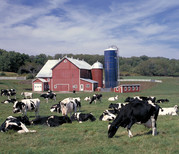
USDA opened signup for the Dairy Margin Coverage (DMC) Program and expanded the program to allow dairy producers to better protect their operations by enrolling supplemental production. This signup period – which runs from Dec. 13, 2021 to Feb. 18, 2022 – enables producers to get coverage through this important safety-net program for another year as well as get additional assistance through the new Supplemental DMC. Read more
|
The U.S. Department of Agriculture (USDA) announced a new program to assist hog producers who sold hogs through a negotiated sale during the period in which these producers faced the greatest reduction in market prices due to the COVID-19 pandemic. The Spot Market Hog Pandemic Program (SMHPP) is part of USDA’s Pandemic Assistance for Producers initiative and addresses gaps in previous assistance for hog producers. USDA’s Farm Service Agency (FSA) will accept applications Dec. 15, 2021 through Feb. 25, 2022.
SMHPP provides assistance to hog producers who sold hogs through a negotiated sale from April 16, 2020 through Sept. 1, 2020. Negotiated sale, or negotiated formula sale, means a sale of hogs by a producer to a packer under which the base price for the hogs is determined by seller-buyer interaction and agreement on a delivery day. USDA is offering SMHPP as packer production was reduced due to the COVID-19 pandemic due to employee illness and supply chain issues, resulting in fewer negotiated hogs being procured and subsequent lower market prices.
The Department has set aside up to $50 million in pandemic assistance funds through the Coronavirus Aid, Relief and Economic Security (CARES) Act for SMHPP.
SMHPP Program Details
Eligible hogs include hogs sold through a negotiated sale by producers between April 16, 2020, and Sept. 1, 2020. To be eligible, the producer must be a person or legal entity who has ownership in the hogs and whose production facilities are located in the United States, including U.S. territories. Contract producers, federal, state and local governments, including public schools and packers are not eligible for SMHPP.
SMHPP payments will be calculated by multiplying the number of head of eligible hogs, not to exceed 10,000 head, by the payment rate of $54 per head. FSA will issue payments to eligible hog producers as applications are received and approved.
Applying for Assistance
Eligible hog producers can apply for SMHPP starting Dec. 15, 2021, by completing the FSA-940, Spot Market Hog Pandemic Program application. Additional documentation may be required. Visit farmers.gov/smhpp for a copy of the Notice of Funds Availability, information on applicant eligibility and more information on how to apply.
Applications can be submitted to the FSA office at any USDA Service Center nationwide by mail, fax, hand delivery or via electronic means. To find your local FSA office, visit farmers.gov/service-locator. Hog producers can also call 877-508-8364 to speak directly with a USDA employee ready to offer assistance.
The USDA’s Risk Management Agency (RMA) reminds Florida potato growers that the final date to apply for crop insurance coverage for the 2022 crop year is December 31. Current policyholders who wish to make changes to their existing coverage also have until the December 31 sales closing date to do so.
Federal crop insurance is critical to the farm safety net. It helps producers and owners manage revenue risks and strengthens the rural economy. Coverage is available for potatoes in Flagler, Putnam, St. Johns, and Suwannee counties.
Growers are encouraged to visit their crop insurance agent soon to learn specific details for the 2022 crop year.
RMA is authorizing additional flexibilities due to coronavirus while continuing to support producers, working through Approved Insurance Providers (AIPs) to deliver services, including processing policies, claims and agreements. RMA staff are working with AIPs and other customers by phone, mail, and electronically to continue supporting crop insurance coverage for producers. Farmers with crop insurance questions or needs should continue to contact their insurance agents about conducting business remotely (by telephone or email). More information can be found at farmers.gov/coronavirus.
Crop insurance is sold and delivered solely through private crop insurance agents. A list of crop insurance agents is available online using the RMA Agent Locator. Producers can use the RMA Cost Estimator to get a premium amount estimate of their insurance needs online. Learn more about crop insurance and the modern farm safety net at www.rma.usda.gov.
USDA touches the lives of all Americans each day in so many positive ways. In the Biden-Harris Administration, USDA is transforming America’s food system with a greater focus on more resilient local and regional food production, fairer markets for all producers, ensuring access to healthy and nutritious food in all communities, building new markets and streams of income for farmers and producers using climate smart food and forestry practices, making historic investments in infrastructure and clean energy capabilities in rural America, and committing to equity across the Department by removing systemic barriers and building a workforce more representative of America. To learn more, visit www.usda.gov.
If you’ve been to farmers.gov before, things may look a little different from the last time you were here. We’ve made some changes, to improve how you find information so that you can find what you need even more easily and efficiently.
The big, green navigation bar near the top of every page – it’s different now. It opens up, to show descriptions and subtopics, making it quicker and easier to figure out what’s where and reduce guessing. Why? Two reasons: First, farmers.gov has grown a lot over the years and the old navigation wasn’t designed for the load. Second, because you asked for it. We analyzed your comments through the “Feedback” button on the site and tested our new designs and information organization with real farmers and ranchers through surveys and live testing sessions.
Along with the new website navigation, we restructured how our pages and topics are grouped and organized to help you easily access the information you need. We also relabeled some of our existing pages using more direct language. This means that pages or information you’ve used before may have different labels or be in new places.
Important changes:
- The old Fund page is now called Loans. The Loans page has information and resources about USDA loans, including the Farm Loan Programs.
- The Recover page is now Protection and Recovery. This page has information to help you prepare and recover from natural disasters, and to mitigate risk for your operation.
- The Conserve page is now Conservation. This page hasn’t changed much and still has information on how to implement conservation practices, improve and preserve natural resources, and address conservation concerns.
- The Manage page is now Working With Us. This page connects you with resources that tell you how USDA can help you start, expand, enhance, or improve your agricultural operation.
- The Connect page has been replaced with Your Business, a guide to USDA resources that cater to your specific operation. Information that was on the Connect page has been moved to the Contact Us page and the Get Involved page.
We are always updating farmers.gov based on your feedback and to stay up-to-date with important USDA announcements. We’ve recently created some new webpages, and updated some existing ones, to better equip you with the vital information you need. There are even more new pages coming soon, so stay tuned!
For farmers.gov, we don’t guess what farmers and ranchers want from a website. We start by asking, then test our designs with volunteers who are also farmers and ranchers.
There’s a feedback button on every page of farmers.gov. Based on your feedback, we looked for ways to make our site easier to use and to build the information that you’re looking for. Live user testing sessions provide data, such as this heatmap, showing where testers tended to click during an exercise.
You helped us create the new navigation design, the new information organization, and told us how to speak using your words, and not legalese.
Check out farmers.gov today!
|
Are you a military veteran interested in farming? USDA offers resources to help you:
-
Fund Your Operation: USDA’s Farm Service Agency offers a variety of funding opportunities to help agricultural producers finance their businesses. Certain funds are targeted for veterans and beginning farmers and ranchers.
-
Conserve Natural Resources: USDA’s Natural Resources Conservation Service offers conservation programs and expert one-on-one technical assistance to strengthen agricultural operations now and into the future. Veterans may be eligible for a cost share of up to 90 percent and advance payments of up to 50 percent to cover certain conservation practices.
-
Manage Risks: USDA is here to help you prepare for and recover from the unexpected. Veterans who are beginning farmers may be eligible for reduced premiums, application fee waivers, increased insurance coverage, and other incentives for multiple USDA programs that support risk management.
USDA wants to ensure that veterans transitioning to agriculture have the resources needed to succeed. While USDA offices are currently closed to visitors because of the pandemic, Service Center staff continue to work with agricultural producers via phone, email, and other digital tools. To conduct business, please contact your local USDA Service Center. Additionally, more information related to USDA’s response and relief for producers can be found at farmers.gov/coronavirus. If you’re a new farmer, you can also reach out to your state Beginning Farmer and Rancher Coordinator.
The U.S. Small Business Administration (SBA) announced a suite of updates to their COVID-19 Economic Injury Disaster Loan (EIDL) Program effective September 8, 2021. Updates include higher available loan amounts, an increased use of funding flexibility, a deferral of 24 months from the loan origination, simplified affiliation requirements, additional options to meet program size standards and a maximum cap for corporate groups.
This federal small business loan program supports small businesses’ recovery from the COVID-19 disaster’s economic impacts by providing accessible and borrower-friendly capital. In response to COVID-19, small business owners, including agricultural businesses, and nonprofit organizations in all U.S. states, Washington D.C., and territories can apply. Visit SBA’s COVID-19 EIDL webpage to learn more about recent updates, application requirements and options to apply.
Farmers and ranchers working with USDA’s Farm Service Agency or Natural Resources Conservation Service can now sign and share documents online in just a few clicks. By using Box or OneSpan, producers can digitally complete business transactions without leaving their homes or agricultural operations. Both services are free, secure, and available for multiple FSA and NRCS programs.
Box is a secure, cloud-based site where FSA or NRCS documents can be managed and shared. Producers who choose to use Box can create a username and password to access their secure Box account, where documents can be downloaded, printed, manually signed, scanned, uploaded, and shared digitally with Service Center staff. This service is available to any FSA or NRCS customer with access to a mobile device or computer with printer connectivity.
OneSpan is a secure eSignature solution for FSA and NRCS customers. Like Box, no software downloads or eAuthentication is required for OneSpan. Instead, producers interested in eSignature through OneSpan can confirm their identity through two-factor authentication using a verification code sent to their mobile device or a personalized question and answer. Once identity is confirmed, documents can be reviewed and e-signed through OneSpan via the producer’s personal email address. Signed documents immediately become available to the appropriate Service Center staff.
Box and OneSpan are both optional services for customers interested in improved efficiency in signing and sharing documents with USDA, and they do not replace existing systems using eAuthentication for digital signature. Instead, these tools provide additional digital options for producers to use when conducting business with FSA or NRCS.
USDA Service Center staff are available to help producers get started with Box and OneSpan through a few simple steps. Please visit farmers.gov/service-locator to find your local office and let Service Center staff know you’re interested in signing and sharing documents through these new features. In most cases, one quick phone call will be all that is needed to initiate the process.
Visit farmers.gov/mydocs to learn more about Box and OneSpan, steps for getting started, and additional resources for conducting business with USDA online.
To learn more about program flexibilities and Service Center status during the coronavirus pandemic, visit farmers.gov/coronavirus.
The U.S. Department of Agriculture (USDA) will provide pandemic assistance to cover certification and education expenses to agricultural producers who are certified organic or transitioning to organic. USDA will make $20 million available through the new Organic and Transitional Education and Certification Program (OTECP) as part of USDA’s broader Pandemic Assistance for Producers initiative, which provides new, broader and more equitable opportunities for farmers, ranchers and producers.
During the COVID-19 pandemic, certified organic and transitional operations faced challenges due to loss of markets, and increased costs and labor shortages, in addition to costs related to obtaining or renewing their organic certification, which producers and handlers of conventionally grown commodities do not incur. Transitional operations also faced the financial challenge of implementing practices required to obtain organic certification without being able to obtain the premium prices normally received for certified organic commodities.
Eligible Expenses
OTECP funding is provided through the Coronavirus Aid, Relief, and Economic Security Act (CARES Act). Certified operations and transitional operations may apply for OTECP for eligible expenses paid during the 2020, 2021 and 2022 fiscal years. For each year, OTECP covers 25% of a certified operation’s eligible certification expenses, up to $250 per certification category (crop, livestock, wild crop, handling and State Organic Program fee). This includes application fees, inspection fees, USDA organic certification costs, state organic program fees and more.
Crop and livestock operations transitioning to organic production may be eligible for 75% of a transitional operation’s eligible expenses, up to $750, for each year. This includes fees charged by a certifying agent or consultant for pre-certification inspections and development of an organic system plan.
For both certified operations and transitional operations, OTECP covers 75% of the registration fees, up to $200, per year, for educational events that include content related to organic production and handling in order to assist operations in increasing their knowledge of production and marketing practices that can improve their operations, increase resilience and expand available marketing opportunities. Additionally, both certified and transitional operations may be eligible for 75% of the expense of soil testing required under the National Organic Program (NOP) to document micronutrient deficiency, not to exceed $100 per year.
Applying for Assistance
Signup for 2020 and 2021 OTECP will be Nov. 8, 2021, through Jan. 7, 2022. Producers apply through their local Farm Service Agency (FSA) office and can also obtain one-on-one support with applications by calling 877-508-8364. Visit farmers.gov/otecp to learn more.
Additional Organic Support
OTECP builds upon USDA’s Organic Certification Cost Share Program (OCCSP) which provides cost share assistance of 50%, up to a maximum of $500 per scope, to producers and handlers of agricultural products who are obtaining or renewing their certification under the NOP. This year’s application period for OCCSP ended Nov. 1, 2021.
Additionally, USDA’s Risk Management Agency announced improvements to the Whole-Farm Revenue Program including increasing expansion limits for organic producers to the higher of $500,000 or 35%. Previously, small and medium size organic operations were held to the same 35% limit to expansion as conventional practice producers. Also, producers can now report acreage as certified organic, or as acreage in transition to organic, when the producer has requested an organic certification by the acreage reporting date.
To learn more about USDA’s assistance for organic producers, visit usda.gov/organic.
As USDA looks for long-term solutions to build back a better food system, the Department is committed to delivery of financial assistance to farmers, ranchers and agricultural producers and businesses who have been impacted by COVID-19 market disruptions. Since USDA rolled out the Pandemic Assistance for Producers initiative in March, the Department has provided support to America’s farmers and ranchers including:
For more details, please visit www.farmers.gov/pandemic-assistance.
Farmers and ranchers can use the Farm Loan Discovery Tool on farmers.gov to find information on USDA farm loans that may best fit their operations.
USDA’s Farm Service Agency (FSA) offers a variety of loan options to help farmers finance their operations. From buying land to financing the purchase of equipment, FSA loans can help.
USDA conducted field research in eight states, gathering input from farmers and FSA farm loan staff to better understand their needs and challenges.
How the Tool Works
Farmers who are looking for financing options to operate a farm or buy land can answer a few simple questions about what they are looking to fund and how much money they need to borrow. After submitting their answers, farmers will receive information on farm loans that best fit their specific needs. The loan application and additional resources also will be provided.
Farmers can download application quick guides that outline what to expect from preparing an application to receiving a loan decision. There are four guides that cover loans to individuals, entities, and youth, as well as information on microloans. The guides include general eligibility requirements and a list of required forms and documentation for each type of loan. These guides can help farmers prepare before their first USDA service center visit with a loan officer.
Farmers can access the Farm Loan Discovery Tool by visiting farmers.gov/fund and clicking the “Start” button. Follow the prompts and answer five simple questions to receive loan information that is applicable to your agricultural operation. The tool is built to run on any modern browser like Chrome, Edge, Firefox, or the Safari browser, and is fully functional on mobile devices. It does not work in Internet Explorer.
About Farmers.gov
In 2018, USDA unveiled farmers.gov, a dynamic, mobile-friendly public website combined with an authenticated portal where farmers will be able to apply for programs, process transactions, and manage accounts.
The Farm Loan Discovery Tool is one of many resources on farmers.gov to help connect farmers to information that can help their operations. Earlier this year, USDA launched the My Financial Information feature, which enables farmers to view their loan information, history, payments, and alerts by logging into the website.
USDA is building farmers.gov for farmers, by farmers. In addition to the interactive farm loan features, the site also offers a Disaster Assistance Discovery Tool. Farmers can visit farmers.gov/recover/disaster-assistance-tool#step-1 to find disaster assistance programs that can help their operation recover from natural disasters.
For more information, contact your County USDA Service Center or visit farmers.gov.
The Farm Loan teams in Florida is already working on operating loans for spring 2022 and asks potential borrowers to submit their requests early so they can be timely processed. The farm loan team can help determine which loan programs are best for applicants.
FSA offers a wide range of low-interest loans that can meet the financial needs of any farm operation for just about any purpose. The traditional farm operating and farm ownership loans can help large and small farm operations take advantage of early purchasing discounts for spring inputs as well expenses throughout the year.
Microloans are a simplified loan program that will provide up to $50,000 for both Farm Ownership and Operating Microloans to eligible applicants. These loans, targeted for smaller and non-traditional operations, can be used for operating expenses, starting a new operation, purchasing equipment, and other needs associated with a farming operation. Loans to beginning farmers and members of underserved groups are a priority.
Other types of loans available include:
Marketing Assistance Loans allow producers to use eligible commodities as loan collateral and obtain a 9-month loan while the crop is in storage. These loans provide cash flow to the producer and allow them to market the crop when prices may be more advantageous.
Farm Storage Facility Loans can be used to build permanent structures used to store eligible commodities, for storage and handling trucks, or portable or permanent handling equipment. A variety of structures are eligible under this loan, including bunker silos, grain bins, hay storage structures, and refrigerated structures for vegetables and fruit. A producer may borrow up to $500,000 per loan.
Dec 13 - Signup for Dairy Margin Coverage Begins
Dec 15 - Sign up for Pandemic Assistance to Hog Producers begins
Dec 24 - Federal Holiday Observed. Offices Closed.
Dec 31 - Final date to apply for crop insurance coverage for the 2022 potato crop year
Dec 31 - COVID EIDL Deadline – Small Business Administration
Dec 31 - Federal Holiday Observed. Offices Closed.
Jan 1 - Newly elected county committee members take office.
Jan 3 - Oriental Fruit Fly Signup Begins – Miami-Dade Only
Jan 7 - Organic and Transitional Education and Certification Program deadline
| Farm Operating - Direct |
2.000% |
| Farm Operating - Microloan |
2.000% |
| Farm Ownership - Direct |
3.000% |
| Farm Ownership - Microloan |
3.000% |
| Farm Ownership - Direct, Joint Financing |
2.500% |
| Farm Ownership - Down Payment |
1.500% |
| Emergency Loan - Amount of Actual Loss |
3.000% |
|