
The U.S. Department of Agriculture (USDA) announced a Request for Applications (RFA) for the new Pandemic Respose and Safety (PRS) Grant program and encourages eligible entities to apply now for funds. Applications must be submitted electronically through the grant portal at https://usda-prs.grantsolutions.gov/usda by 11:59 p.m. Eastern Time on Monday, November 22, 2021. Approximately $650 million in funding is available for the PRS grants, which are funded by the Pandemic Assistance provided in the Consolidated Appropriations Act of 2021.
The PRS Grant program will assist small businesses in certain commodity areas, including specialty crop producers, shellfish farming, finfish farming, aquaculture, and apiculture; specialty crop, meat, and other processors; distributors; and farmers markets. Small businesses and nonprofits in these industries can apply for a grant to cover COVID-related expenses such as workplace safety measures (e.g., personal protective equipment (PPE), retrofitting facilities for worker and consumer safety, shifting to online sales platforms, transportation, worker housing, and medical costs. The minimum funding request is $1,500 and the maximum funding request is $20,000.
The RFA and the PRS Grant Portal provide more details about eligibility for the grant. Eligible entities are required to obtain a free DUNS Number from Dun & Bradstreet (D&B) BEFORE applying for this program. USDA has created a custom PRS DUNS number portal at https://support.dnb.com/PandemicResponse.
Application resources including Frequently Asked Questions (FAQs), tip sheets in English and Spanish on applying for a DUNS Number, videos on “How to Apply” and more are available on the PRS Grant Portal.
For more information, you can also reach out to the PRS help desk, Monday-Friday, 9 a.m.-9 p.m. ET at (301) 238-5550 or usda.ams.prs@grantsolutions.gov.
Check your eligibility, obtain a DUNS number, and learn more about the application process at the PRS Grant Portal.
|
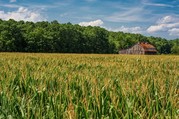
USDA Service Centers across the country, are hearing from people who are interested in more space and working the land and we want to let you know we can help. Are you new to farming because of the pandemic? USDA can help you get started in farming – on everything from helping you register your farm to getting financial assistance and advice.
Get Started with USDA
First, you want to make sure your farm is registered. If you purchased land, it might already be established with USDA’s Farm Service Agency (FSA) with a farm number on file. If not, FSA can help you register your farm.
To obtain a farm number, you’ll bring an official tax ID (Social Security number or an employer ID) and a property deed. If you do not own the land, bring a lease agreement to your FSA representative to show you have control of the property. If your operation is incorporated or an entity, you may also need to provide proof that you have signature authority and the legal ability to enter into contracts with USDA.
Access to Capital
USDA can provide access to capital through its farm loans, which is a great resource when producers aren’t able to get a loan from a traditional lender. Loans can help with purchasing land or equipment or with operating costs, and FSA even offers microloans, which are especially popular among producers with smaller farms. For more information, check out our Farm Loan Discovery Tool.
Conservation Practices
We can help you make conservation improvements to your farm, which are good for your bottom line and your operation. We’ll help you develop a conservation plan and apply for financial assistance that’ll cover the bulk of the costs for implementing. To learn more about some of the conservation practices that we help producers with, check out our Conservation at Work Video Series.
If you purchase land, and you don’t want to farm all of it, you can look at either a conservation easement or managing for native shrubs and grasses through either the Agricultural Conservation Easement Program (ACEP) or Conservation Reserve Program (CRP). Easements are long-term, while a CRP contract is 10-15 years. These are good options for land that is not optimal for production or sensitive lands like wetlands and grasslands.
Additional Resources
Depending on your farm, you may want to look at crop insurance. The USDA’s Risk Management Agency provides crop insurance to help you manage risks on your farm. There are many types of insurance products available for a wide variety of production practices, including organic and sustainable agriculture.
Your local communities also have great resources for farmers including conservation districts, Rural Development, cooperative extensions, and different farming groups. To get started with USDA, contact your local USDA service center.
|
Producers with farmers.gov accounts can now access farm records and maps online, the latest self-service feature added to the U.S. Department of Agriculture (USDA) website.
You can quickly and easily access your land information in real time by desktop computer, tablet, or phone. Capabilities include:
- View print and export detailed farm records such as cropland, base acres, yields, CRP acres, land ownership details, and much more.
- View, print and export farm/tract maps that can be provided to lenders, chemical or fertilizer providers, and FSA for reporting acreage and crop insurance agents; and
- Export common land unit (field) boundaries as ESRI shapefiles.
The ability to access these records on demand without a visit to the service center saves you time and money.
Farmers.gov now includes the most popular functionalities from FSAFarm+, the FSA portal for producers, while providing enhanced functionality and an improved user experience. A new enhancement expands the scope of accessibility to include farmers and ranchers who are members of an entity, as well as people with a power of attorney form (FSA-211) on file with FSA.
Managing USDA Business Online
Using farmers.gov, producers, entities and those acting on their behalf can also:
- View, upload, download, and e-sign conservation documents.
- Request financial assistance, including submitting a program application.
- View and submit conservation requests.
- View technical references and submit questions.
- Access information on current and past conservation practices, plans and contracts.
- Report practice completion and request practice certification.
- View farm loan and interest information (producers only).
Future plans include adding the ability to import and view other shapefiles, such as precision agriculture planting boundaries.
To access your information, you’ll will need a USDA eAuth account to login to farmers.gov. After obtaining an eAuth account, producers should visit farmers.gov and sign into the site’s authenticated portal via the Sign In/Sign Up link at the top right of the website. Google Chrome, Mozilla Firefox or Microsoft Edge are the recommended browsers to access the feature.
In addition to the self-service features available by logging into farmers.gov, the website also has ample information on USDA programs, including pandemic assistance, farm loans, disaster assistance, conservation programs and crop insurance. Recently, USDA updated the navigation and organization of the site as well as added some new webpages, including “Get Involved,” “Common Forms,” and “Translations.” Learn more about these changes.
The Agricultural Foreign Investment Disclosure Act (AFIDA) requires all foreign owners of U.S. agricultural land to report their holdings to the Secretary of Agriculture. Foreign persons who have purchased or sold agricultural land in the county are required to report the transaction to FSA within 90 days of the closing. Failure to submit the AFIDA form could result in civil penalties of up to 25 percent of the fair market value of the property. County government offices, realtors, attorneys, and others involved in real estate transactions are reminded to notify foreign investors of these reporting requirements. The data gained from these disclosures is used in the preparation of periodic reports to the President and Congress concerning the effect of such holdings upon family farms and rural communities. Click here for more information on AFIDA.
FSA is cleaning up our producer record database and needs your help. Please report any changes of address, zip code, phone number, email address or an incorrect name or business name on file to our office. You should also report changes in your farm operation, like the addition of a farm by lease or purchase. You should also report any changes to your operation in which you reorganize to form a Trust, LLC, or other legal entity.
FSA and NRCS program participants are required to promptly report changes in their farming operation to the County Committee in writing and to update their Farm Operating Plan on form CCC-902.
To update your records, contact your local County USDA Service Center.
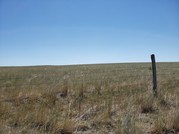
In response to the severe drought conditions in the West and Great Plains, the U.S. Department of Agriculture (USDA) announced today its plans to help cover the cost of transporting feed for livestock that rely on grazing. USDA is updating the Emergency Assistance for Livestock, Honeybees and Farm-Raised Fish Program (ELAP) to immediately cover feed transportation costs for drought impacted ranchers. USDA’s Farm Service Agency (FSA) will provide more details and tools to help ranchers get ready to apply at their local USDA Service Center later this month at fsa.usda.gov/elap.
ELAP provides financial assistance to eligible producers of livestock, honeybees, and farm-raised fish for losses due to disease, certain adverse weather events or loss conditions as determined by the Secretary of Agriculture.
ELAP already covers the cost of hauling water during drought, and this change will expand the program beginning in 2021 to cover feed transportation costs where grazing and hay resources have been depleted. This includes places where:
- Drought intensity is D2 for eight consecutive weeks as indicated by the S. Drought Monitor;
- Drought intensity is D3 or greater; or
- USDA has determined a shortage of local or regional feed availability.
Cost share assistance will also be made available to cover eligible cost of treating hay or feed to prevent the spread of invasive pests like fire ants.
Under the revised policy for feed transportation cost assistance, eligible ranchers will be reimbursed 60% of feed transportation costs above what would have been incurred in a normal year. Producers qualifying as underserved (socially disadvantaged, limited resource, beginning or military veteran) will be reimbursed for 90% of the feed transportation cost. above what would have been incurred in a normal year.
A national cost formula, as established by USDA, will be used to determine reimbursement costs which will not include the first 25 miles and distances exceeding 1,000 transportation miles. The calculation will also exclude the normal cost to transport hay or feed if the producer normally purchases some feed. For 2021, the initial cost formula of $6.60 per mile will be used (before the percentage is applied), but may be adjusted on a state or regional basis.
To be eligible for ELAP assistance, livestock must be intended for grazing and producers must have incurred feed transportation costs on or after Jan. 1, 2021. Although producers will self-certify losses and expenses to FSA, producers are encouraged to maintain good records and retain receipts and related documentation in the event these documents are requested for review by the local FSA County Committee. The deadline to file an application for payment for the 2021 program year is Jan. 31, 2022.
USDA offers a comprehensive portfolio of disaster assistance programs. On farmers.gov, the Disaster Assistance Discovery Tool, Disaster Assistance-at-a-Glance fact sheet, and Farm Loan Discovery Tool can help producers and landowners determine all program or loan options available for disaster recovery assistance.
More information on this expansion to ELAP is forthcoming. In the meantime, more information is available at fsa.usda.gov/elap or by contacting a local USDA Service Center.
|
USDA announced the 2021-crop loan rate differentials for upland and extra-long staple cotton, which are applied to the crop loan rate to determine the per bale actual loan rate.
The differentials, also referred to as loan rate premiums and discounts, were calculated based on market valuations of various cotton quality factors for the prior three years. This calculation procedure is identical to that used in the past years.
The 2021 crop differential schedules are applied to 2021 crop loan rates of 52 cents per pound for the base grade of upland cotton and 95 cents per pound for extra-long staple cotton. The 2018 Farm Bill stipulates that the loan rate for the base quality of upland cotton ranges between 45 and 52 cents per pound based on the simple average of the Adjusted World Price for the two marketing years immediately preceding the next crop planting. However, the established loan rate cannot be less than 98% of the preceding year’s loan. The loan rate provided to an individual cotton bale is based on the quality of each individual bale as determined by USDA’s Agricultural Marketing Service classing measurements.
These differentials are important to cotton producers because they are used to derive the actual loan rate for each bale of cotton – above (premium) or below (discount) the average per pound loan rate, depending on the grade or quality of the cotton. The actual loan rate is significant because it is used to determine any marketing loan gains and loan deficiency payments.
USDA’s Commodity Credit Corporation adjusts cotton loan rates by these differentials so that cotton loan values reflect the differences in market prices for color, staple length, leaf, extraneous matter, micronaire, length uniformity and strength.
Loan rates are posted on the Farm Service Agency website. Commodity loans are part of a broader suite of programs available to cotton producers. To apply for loans or other programs, contact your local USDA service center.
Farm Operating - Direct 1.750%
Farm Operating - Microloan 1.750%
Farm Ownership - Direct 2.875%
Farm Ownership - Microloan 2.875%
Farm Ownership - Direct, Joint Financing 2.500%
Farm Ownership - Down Payment 1.500%
Emergency Loan - Amount of Actual Loss 2.750%

Members of American Indian tribes holding agricultural land are eligible to vote in a Farm Service Agency (FSA) county committee election if the tribal member meets the minimum voting age. For purposes of FSA county committee elections, every member of an American Indian tribe is considered an agricultural landowner and eligible to vote as an individual, including individual Native American landowners of tribal lands, owners of trusts, owners of estates and land held in trust by the United States for the tribe, even if the individual does not personally produce a crop. Native American landowners interested in participating as an eligible voter must contact their local USDA Service Center to register. Contact your local FSA office with any questions. To find your local USDA Service Center, visit farmers.gov/service
|
|