In This Issue:

As we are approaching the end of another year, we are grateful for the opportunity to serve farmers and ranchers across Texas. We thank you all for your tireless work in feeding America and the world.
Regarding FSA programs, election and enrollment for the Agriculture Risk Coverage (ARC) and Price Loss Coverage (PLC) Programs for the 2022 crop year is open now through Tuesday, Mar. 15, 2022. We encourage producers to make arrangements early to avoid a last-minute rush. Payments have also been issued for 2020 covered commodities that met payment triggers, with more than $1.8 billion dollars being issued to producers nationwide.
From an operations perspective, it is crucial that every eligible producer participates in these elections, as FSA county committees are an important link between the agricultural community and the U.S. Department of Agriculture. Ballots were mailed to eligible voters on Nov. 1, 2021. Eligible voters who do not receive ballots can request them from their local USDA Service Center. The last day to return completed ballots to the USDA Service Center is Dec. 6, 2021. Newly elected county committee members will take office on Jan. 1, 2022.
Additionally, FSA is currently advertising vacancies for full time, permanent program technicians and county operations trainees across Texas. If you would like to join the hard-working employees of FSA, these vacancies and other career opportunities can be viewed online by searching Farm Service Agency and Texas at USAJOBS.gov.
While most FSA offices are open for scheduled, in-person appointments, our offices continue to take phone and virtual appointments, and we encourage you to prepare and complete as much business as you can during your appointment. Please be sure to call first to make an appointment before visiting your local FSA office.
I wish you all a safe and Happy Thanksgiving!
Sincerely,
Eddie Trevino
Acting State Executive Director
Farm Service Agency - Texas
|
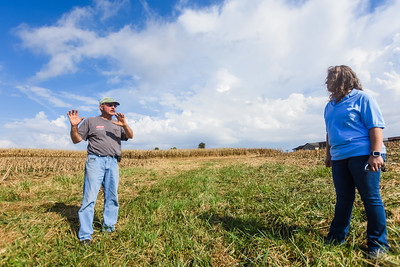
We recently announced five agreements we funded through our Texas Partners for Conservation Program to leverage NRCS resources, address local natural resource issues, encourage collaboration, and develop State and community level conservation leadership. The agreements are with South Texas Advancement Resource, Texas Small Farmers and Ranchers Community Based Organization, Texas Agricultural Land Trust, Texas A&M AgriLife Extension Service, and the Gillespie County Soil and Water Conservation District. We plan to advertise another request for proposals next spring, so keep an eye out for that announcement.
There are some great events for agricultural producers coming up:
The 4th Annual Texas Hispanic Farmer and Rancher conference, hosted by the University of Texas-Rio Grande Valley and National Center for Appropriate Technologies (NCAT), will be held virtually January 12-13, 2022. Attendance is free and will cover topics on USDA programs for ag producers, sustainable production methods, soil health, and farmers’ mental health.
The Texas Wheat Producers will hold a symposium in conjunction with the Amarillo Farm Show on December 1, 2021. The symposium will include updates from USDA.
The 8th National Conference on Grazing Lands will focus on grazing land sustainability by bringing together hundreds of land managers from across the nation to Myrtle Beach, South Carolina, December 6-9, 2021. Attendees will get the latest information in scientific and applied research and practical, workable solutions for grazing land issues.
Additional special efforts are underway to target specific conservation needs across the state:
The Rio Grande Joint Venture is accepting project proposals for its South Texas Grassland Restoration Incentive Program, which partners with private landowners to improve degraded native grasslands and grass-dominated shrublands to provide habitat for Northern Bobwhite, Scaled Quail, grassland birds and/or pollinators. This round of funding will focus on projects that can be completed by August 15, 2022. While applications are accepted year round, interested landowners need to apply by December 1, 2021, to be considered for funding in 2022. You can learn more at your local NRCS office.
Through the Texas Mid-Coast Initiative, NRCS works with partners—Ducks Unlimited, the Guadalupe-Blanco River Trust, and Coastal Bend Bays and Estuaries Program—to help landowners improve habitat conditions for fish and wildlife and improve the overall health of freshwater flows from streams and riparian areas into the coastal bays and estuaries. Landowners in Aransas, Calhoun, Goliad, Jackson, Matagorda, Refugio, San Patricio, and Victoria counties interested in enrolling wetlands into a conservation easement need to submit an application at their local NRCS office by December 17, 2021, to be considered for funding in 2022.
NRCS offices in Wilson and Karnes counties are accepting applications from landowners, land managers and other entities for $800,000 available through the Gulf Coast Conservation Reserve Program. NRCS will work with landowners to develop conservation plans outlining best management practices to improve water quality and wildlife habitat, including conservation buffers for riparian areas, on identified impaired stream segments in four contiguous Hydrologic Unit Code areas. There is a higher payment rate for conservation work through this program and there is no adjusted gross income limit.
Lastly, in late October, Northeast Lakeview College in San Antonio dedicated a garden it created on campus through a grant received from NRCS. The garden will be used to grow sustainable produce for the college’s food pantry and the community. The high tunnel and garden are expected to yield more than 600 pounds of produce annually. Not only are students learning to grow fresh, healthy produce, they will be sharing their bounty with other students and their community.
Sincerely,
Kristy Oates
State Conservationist
Natural Resources Conservation Service - Texas
|
The U.S. Department of Agriculture (USDA) will begin mailing ballots this week for the Farm Service Agency (FSA) county and urban county committee elections to all eligible agricultural producers and private landowners across the country. Elections are occurring in certain Local Administrative Areas (LAA) for these committee members who make important decisions about how federal farm programs are administered locally. To be counted, producers and landowners must return ballots to their local FSA county office or be postmarked by Dec. 6, 2021.
Producers must participate or cooperate in an FSA program to be eligible to vote in the county committee election. A cooperating producer is someone who has provided information about their farming or ranching operation but may not have applied or received FSA program benefits. Also, for County Committee elections, producers who are not of legal voting age, but supervise and conduct the farming operations of an entire farm, are eligible to vote.
Producers can find out if their LAA is up for election and if they are eligible to vote by contacting their local FSA county office. Eligible voters who do not receive a ballot in the mail can request one from their local FSA county office. To find your local USDA Service Center, visit farmers.gov/service-locator. Visit fsa.usda.gov/elections for more information.
Each committee has from three to 11 elected members who serve three-year terms of office, and at least one seat representing an LAA is up for election each year. Newly elected committee members will take office Jan.1, 2022.
Urban and Suburban County Committees
Ballots to elect urban committee members were sent beginning Nov. 1, 2021. These elections will serve local urban producers in the same jurisdiction. A fact sheet on the urban county committee election and a list of eligible cities can be found at fsa.usda.gov/elections.
The 2018 Farm Bill directed USDA to form urban county committees as well as make other advancements related to urban agriculture, including the establishment of the Office of Urban Agriculture and Innovative Production. Urban county committees will work to encourage and promote urban, indoor and other emerging agricultural production practices. Committee members will provide outreach to ensure urban producers understand USDA programs and serve as the voice of other urban producers. Additionally, the new county committees may address areas such as food access, community engagement, support of local activities to promote and encourage community compost and food waste reduction. Learn more at farmers.gov/urban.
The U.S. Department of Agriculture (USDA) will provide pandemic assistance to cover certification and education expenses to agricultural producers who are certified organic or transitioning to organic. USDA will make $20 million available through the new Organic and Transitional Education and Certification Program (OTECP) as part of USDA’s broader Pandemic Assistance for Producers initiative, which provides new, broader and more equitable opportunities for farmers, ranchers and producers.
During the COVID-19 pandemic, certified organic and transitional operations faced challenges due to loss of markets, and increased costs and labor shortages, in addition to costs related to obtaining or renewing their organic certification, which producers and handlers of conventionally grown commodities do not incur. Transitional operations also faced the financial challenge of implementing practices required to obtain organic certification without being able to obtain the premium prices normally received for certified organic commodities.
Eligible Expenses
OTECP funding is provided through the Coronavirus Aid, Relief, and Economic Security Act (CARES Act). Certified operations and transitional operations may apply for OTECP for eligible expenses paid during the 2020, 2021 and 2022 fiscal years. For each year, OTECP covers 25% of a certified operation’s eligible certification expenses, up to $250 per certification category (crop, livestock, wild crop, handling and State Organic Program fee). This includes application fees, inspection fees, USDA organic certification costs, state organic program fees and more.
Crop and livestock operations transitioning to organic production may be eligible for 75% of a transitional operation’s eligible expenses, up to $750, for each year. This includes fees charged by a certifying agent or consultant for pre-certification inspections and development of an organic system plan.
For both certified operations and transitional operations, OTECP covers 75% of the registration fees, up to $200, per year, for educational events that include content related to organic production and handling in order to assist operations in increasing their knowledge of production and marketing practices that can improve their operations, increase resilience and expand available marketing opportunities. Additionally, both certified and transitional operations may be eligible for 75% of the expense of soil testing required under the National Organic Program (NOP) to document micronutrient deficiency, not to exceed $100 per year.
Applying for Assistance
Signup for 2020 and 2021 OTECP will be Nov. 8, 2021, through Jan. 7, 2022. Producers apply through their local Farm Service Agency (FSA) office and can also obtain one-on-one support with applications by calling 877-508-8364. Visit farmers.gov/otecp to learn more.
Additional Organic Support
OTECP builds upon USDA’s Organic Certification Cost Share Program (OCCSP) which provides cost share assistance of 50%, up to a maximum of $500 per scope, to producers and handlers of agricultural products who are obtaining or renewing their certification under the NOP. This year’s application period for OCCSP ended Nov. 1, 2021.
Additionally, USDA’s Risk Management Agency announced improvements to the Whole-Farm Revenue Program including increasing expansion limits for organic producers to the higher of $500,000 or 35%. Previously, small and medium size organic operations were held to the same 35% limit to expansion as conventional practice producers. Also, producers can now report acreage as certified organic, or as acreage in transition to organic, when the producer has requested an organic certification by the acreage reporting date.
To learn more about USDA’s assistance for organic producers, visit usda.gov/organic.
As USDA looks for long-term solutions to build back a better food system, the Department is committed to delivery of financial assistance to farmers, ranchers and agricultural producers and businesses who have been impacted by COVID-19 market disruptions. Since USDA rolled out the Pandemic Assistance for Producers initiative in March, the Department has provided support to America’s farmers and ranchers including:
For more details, please visit www.farmers.gov/pandemic-assistance.
FSA is cleaning up our producer record database and needs your help. Please report any changes of address, zip code, phone number, email address or an incorrect name or business name on file to our office. You should also report changes in your farm operation, like the addition of a farm by lease or purchase. You should also report any changes to your operation in which you reorganize to form a Trust, LLC or other legal entity.
FSA and NRCS program participants are required to promptly report changes in their farming operation to the County Committee in writing and to update their Farm Operating Plan on form CCC-902.
To update your records, contact your local USDA Service Center.
The Farm Service Agency (FSA) is accepting offers for specific conservation practices under the Conservation Reserve Program (CRP) Continuous Signup.
In exchange for a yearly rental payment, farmers enrolled in the program agree to remove environmentally sensitive land from agricultural production and to plant species that will improve environmental health and quality. The program’s long-term goal is to re-establish valuable land cover to improve water quality, prevent soil erosion, and reduce loss of wildlife habitat. Contracts for land enrolled in CRP are 10-15 years in length.
Under continuous CRP signup, environmentally sensitive land devoted to certain conservation practices can be enrolled in CRP at any time. Offers for continuous enrollment are not subject to competitive bidding during specific periods. Instead they are automatically accepted provided the land and producer meet certain eligibility requirements and the enrollment levels do not exceed the statutory cap.
For more information, including a list of acceptable practices, contact your local USDA Service Center or visit fsa.usda.gov/crp.
CRP contract holders are encouraged to transition their Conservation Reserve Program (CRP) acres to beginning, veteran or socially disadvantaged farmers or ranchers through the Transition Incentives Program (TIP). TIP provides annual rental payments to the landowner or operator for up to two additional years after the CRP contract expires.
CRP contract holders no longer need to be a retired or retiring owner or operator to transition their land. TIP participants must agree to sell, have a contract to sell, or agree to lease long term (at least five years) land enrolled in an expiring CRP contract to a beginning, veteran, or socially disadvantaged farmer or rancher who is not a family member.
Beginning, veteran or social disadvantaged farmers and ranchers and CRP participants may enroll in TIP beginning two years before the expiration date of the CRP contract. The TIP application must be submitted prior to completing the lease or sale of the affected lands. New landowners or renters that return the land to production must use sustainable grazing or farming methods.
For more information, contact your local USDA Service Center or visit fsa.usda.gov.
If you are a producer or landowner who participates in USDA’s Natural Resources Conservation Service (NRCS) conservation programs, the Farm Service Agency (FSA) may be reaching out by mail with information about a form you’ll need to fill out.
Starting this year, all producers and landowners participating or applying to participate in certain NRCS conservation programs must complete form CCC-902, Farm Operating Plan. Historically, to participate in these programs, legal entities could file either the CCC-901, Member Information or the CCC-902, while individuals were not specifically required to file the CCC-902 with FSA. Now, to ensure FSA and NRCS are properly determining payment eligibility and maximum payment limitations, all customers must have a CCC-902 on file to establish eligibility.
These changes will not affect participants who already have a Form CCC-902 with a “determined” status recorded with FSA. Customers that do not have a CCC-902 on file with FSA will be sent a letter in the mail in the coming weeks with detailed information on what is needed and how to file the form. The letter requests that the form be completed within 30 days of receiving the letter.
For added convenience, USDA is offering options for remote or in-person submission of the CCC-902. Fiscal year 2021 is considered a transition year to ensure all NRCS program participants can meet this updated filing requirement. Beginning in FY 2022, if form CCC-902 is not on file your payments may be impacted.
We can help: NRCS and FSA staff are available at USDA Service Centers nationwide to provide information and assistance to walk you through meeting this filing requirement. For more information, see the NRCS National Bulletin 300-21-7 or FSA Notice PL-293.
If you have experienced delays in receiving Agriculture Risk Coverage (ARC) and Price Loss Coverage (PLC) payments, Loan Deficiency Payments (LDPs) and Market Gains on Marketing Assistance Loans (MALs), it may be because you have not filed form CCC-941, Adjusted Gross Income Certification.
If you don’t have a valid CCC-941 on file for the applicable crop year you will not receive payments. All farm operator/tenants/owners who have not filed a CCC-941 and have pending payments should IMMEDIATELY file the form with their recording county FSA office. Farm operators and tenants are encouraged to ensure that their landowners have filed the form.
FSA can accept the CCC-941 for 2018, 2019, 2020, 2021, and 2022. Unlike the past, you must have the CCC-941 certifying your AGI compliance before any payments can be issued.
Many Farm Service Agency (FSA) programs require all program participants, either individuals or legal entities, to be “actively engaged in farming.” This means participants provide a significant contribution to the farming operation, whether it is capital, land, equipment, active personal labor and/or management. For entities, each partner, stockholder or member with an ownership interest, must contribute active personal labor and/or management to the operation on a regular basis that is identifiable and documentable as well as separate and distinct from contributions of any other member. Members of joint operations must have a share of the profits or losses from the farming operation commensurate with the member’s contributions to the operation and must make contributions to the farming operation that are at risk for a loss, with the level of risk being commensurate with the member’s claimed share on the farming operation.
Joint operations comprised of non-family members or partners, stockholders or persons with an ownership in the farming operation must meet additional payment eligibility provisions. Joint operations comprised of family members are exempt from these additional requirements. For 2016 and subsequent crop years, non-family joint operations can have one member that may use a significant contribution of active personal management exclusively to meet the requirements to be determined “actively engaged in farming.” The person or member will be defined as the farm manager for the purposes of administering these management provisions.
Non-family joint operations may request to add up to two additional managers for their farming operation based on the size and/or complexity of the operation. If additional farm managers are requested and approved, all members who contribute management are required to complete form CCC-902MR, Management Activity Record. The farm manager should use the form to record management activities including capital, labor and agronomics, which includes crop selection, planting decisions, acquisition of inputs, crop management and marketing decisions. One form should be used for each month and the farm manager should enter the number of hours of time spent for each activity under the date of the month the actions were completed. The farm manager must also document if each management activity was completed on the farm or remotely.
The records and supporting business documentation must be maintained and timely made available for review by the appropriate FSA reviewing authority, if requested.
If the farm manager fails to meet these requirements, their contribution of active personal management to the farming operation for payment eligibility purposes will be disregarded and their payment eligibility status will be re-determined for the applicable program year.
In some instances, additional persons or members of a non-family member joint operation who meet the definition of farm manager may also be allowed to use such a contribution of active personal management to meet the eligibility requirements. However, under no circumstances may the number of farm managers in a non-family joint operation exceed a total of three in any given crop and program year.
Farmers and ranchers can use the Farm Loan Discovery Tool on farmers.gov to find information on USDA farm loans that may best fit their operations.
USDA’s Farm Service Agency (FSA) offers a variety of loan options to help farmers finance their operations. From buying land to financing the purchase of equipment, FSA loans can help.
USDA conducted field research in eight states, gathering input from farmers and FSA farm loan staff to better understand their needs and challenges.
How the Tool Works
Farmers who are looking for financing options to operate a farm or buy land can answer a few simple questions about what they are looking to fund and how much money they need to borrow. After submitting their answers, farmers will receive information on farm loans that best fit their specific needs. The loan application and additional resources also will be provided.
Farmers can download application quick guides that outline what to expect from preparing an application to receiving a loan decision. There are four guides that cover loans to individuals, entities, and youth, as well as information on microloans. The guides include general eligibility requirements and a list of required forms and documentation for each type of loan. These guides can help farmers prepare before their first USDA service center visit with a loan officer.
Farmers can access the Farm Loan Discovery Tool by visiting farmers.gov/fund and clicking the “Start” button. Follow the prompts and answer five simple questions to receive loan information that is applicable to your agricultural operation. The tool is built to run on any modern browser like Chrome, Edge, Firefox, or the Safari browser, and is fully functional on mobile devices. It does not work in Internet Explorer.
About Farmers.gov
In 2018, USDA unveiled farmers.gov, a dynamic, mobile-friendly public website combined with an authenticated portal where farmers will be able to apply for programs, process transactions, and manage accounts.
The Farm Loan Discovery Tool is one of many resources on farmers.gov to help connect farmers to information that can help their operations. Earlier this year, USDA launched the My Financial Information feature, which enables farmers to view their loan information, history, payments, and alerts by logging into the website.
USDA is building farmers.gov for farmers, by farmers. In addition to the interactive farm loan features, the site also offers a Disaster Assistance Discovery Tool. Farmers can visit farmers.gov/recover/disaster-assistance-tool#step-1 to find disaster assistance programs that can help their operation recover from natural disasters.
For more information, contact your local USDA Service Center or visit farmers.gov.
|