In This Issue:
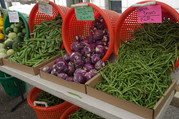
The U.S. Department of Agriculture (USDA) will provide pandemic assistance to cover certification and education expenses to agricultural producers who are certified organic or transitioning to organic. USDA will make $20 million available through the new Organic and Transitional Education and Certification Program (OTECP) as part of USDA’s broader Pandemic Assistance for Producers initiative, which provides new, broader and more equitable opportunities for farmers, ranchers and producers.
During the COVID-19 pandemic, certified organic and transitional operations faced challenges due to loss of markets, and increased costs and labor shortages, in addition to costs related to obtaining or renewing their organic certification, which producers and handlers of conventionally grown commodities do not incur. Transitional operations also faced the financial challenge of implementing practices required to obtain organic certification without being able to obtain the premium prices normally received for certified organic commodities.
Eligible Expenses
OTECP funding is provided through the Coronavirus Aid, Relief, and Economic Security Act (CARES Act). Certified operations and transitional operations may apply for OTECP for eligible expenses paid during the 2020, 2021 and 2022 fiscal years. For each year, OTECP covers 25% of a certified operation’s eligible certification expenses, up to $250 per certification category (crop, livestock, wild crop, handling and State Organic Program fee). This includes application fees, inspection fees, USDA organic certification costs, state organic program fees and more.
Crop and livestock operations transitioning to organic production may be eligible for 75% of a transitional operation’s eligible expenses, up to $750, for each year. This includes fees charged by a certifying agent or consultant for pre-certification inspections and development of an organic system plan.
For both certified operations and transitional operations, OTECP covers 75% of the registration fees, up to $200, per year, for educational events that include content related to organic production and handling in order to assist operations in increasing their knowledge of production and marketing practices that can improve their operations, increase resilience and expand available marketing opportunities. Additionally, both certified and transitional operations may be eligible for 75% of the expense of soil testing required under the National Organic Program (NOP) to document micronutrient deficiency, not to exceed $100 per year.
Applying for Assistance
Signup for 2020 and 2021 OTECP will be Nov. 8, 2021, through Jan. 7, 2022. Producers apply through their local Farm Service Agency (FSA) office and can also obtain one-on-one support with applications by calling 877-508-8364. Visit farmers.gov/otecp to learn more.
Additional Organic Support
OTECP builds upon USDA’s Organic Certification Cost Share Program (OCCSP) which provides cost share assistance of 50%, up to a maximum of $500 per scope, to producers and handlers of agricultural products who are obtaining or renewing their certification under the NOP. This year’s application period for OCCSP ended Nov. 1, 2021.
Additionally, USDA’s Risk Management Agency announced improvements to the Whole-Farm Revenue Program including increasing expansion limits for organic producers to the higher of $500,000 or 35%. Previously, small and medium size organic operations were held to the same 35% limit to expansion as conventional practice producers. Also, producers can now report acreage as certified organic, or as acreage in transition to organic, when the producer has requested an organic certification by the acreage reporting date.
To learn more about USDA’s assistance for organic producers, visit usda.gov/organic.
As USDA looks for long-term solutions to build back a better food system, the Department is committed to delivery of financial assistance to farmers, ranchers and agricultural producers and businesses who have been impacted by COVID-19 market disruptions. Since USDA rolled out the Pandemic Assistance for Producers initiative in March, the Department has provided support to America’s farmers and ranchers including:
For more details, please visit www.farmers.gov/pandemic-assistance.
|
Day/Time: Thursday, November 18th 2021 from 3:00-4:00 pm EST
Description: This webinar will provide an overview of USDA Farm Service Agency's programs that support organic and transitioning farmers through climate and environmentally-friendly farming practices. We will discuss FSA's *new* Organic and Transitional Education and Certification Program (OTECP), Organic Certification Cost Share Program (OCCSP), and Conservation Reserve Program (CRP) Organic Buffers. Learn about the needs of organic producers, what types of costs are reimbursed through OTECP and OCCSP, how CRP programs support organic agriculture production, and how to apply for USDA programs. The webinar will also highlight additional USDA resources for organic and transitioning producers.
Registration Link: https://globalmeetwebinar.webcasts.com/starthere.jsp?ei=1511913&tp_key=495fb1a7da
The U.S. Department of Agriculture (USDA) began mailing ballots on November 10, 2021 for the Farm Service Agency (FSA) county elections to all eligible agricultural producers and private landowners across the country. Elections are occurring in certain Local Administrative Areas (LAA) for these committee members who make important decisions about how federal farm programs are administered locally. To be counted, producers and landowners must return ballots to their local FSA county office or be postmarked by Dec. 6, 2021.
Producers must participate or cooperate in an FSA program to be eligible to vote in the county committee election. A cooperating producer is someone who has provided information about their farming or ranching operation but may not have applied or received FSA program benefits. Also, for County Committee elections, producers who are not of legal voting age, but supervise and conduct the farming operations of an entire farm, are eligible to vote.
Producers can find out if their LAA is up for election and if they are eligible to vote by contacting their local FSA county office. Eligible voters who do not receive a ballot in the mail can request one from their local FSA county office. To find your local USDA Service Center, visit farmers.gov/service-locator. Visit fsa.usda.gov/elections for more information.
Each committee has from three to 11 elected members who serve three-year terms of office, and at least one seat representing an LAA is up for election each year. Newly elected committee members will take office Jan.1, 2022.

Members of American Indian tribes holding agricultural land are eligible to vote in a Farm Service Agency (FSA) county committee election if the tribal member meets the minimum voting age. For purposes of FSA county committee elections, every member of an American Indian tribe is considered an agricultural landowner and eligible to vote as an individual, including individual Native American landowners of tribal lands, owners of trusts, owners of estates and land held in trust by the United States for the tribe, even if the individual does not personally produce a crop.
Native American landowners interested in participating as an eligible voter must contact their local USDA Service Center to register. Contact your local FSA office with any questions. To find your local USDA Service Center, visit farmers.gov/service-locator.
|
The USDA’s Risk Management Agency (RMA) reminds Florida avocado fruit growers that the final date to apply for crop insurance coverage for the 2022 crop year is November 30. Current policyholders who wish to make changes to their existing coverage also have until the November 30 sales closing date to do so.
Federal crop insurance is critical to the farm safety net. It helps producers and owners manage revenue risks and strengthens the rural economy. Coverage is available for avocado fruit in Miami-Dade County.
Growers are encouraged to visit their crop insurance agent soon to learn specific details for the 2022 crop year.
RMA is authorizing additional flexibilities due to coronavirus while continuing to support producers, working through Approved Insurance Providers (AIPs) to deliver services, including processing policies, claims, and agreements. RMA staff are working with AIPs and other customers by phone, mail and electronically to continue supporting crop insurance coverage for producers. Farmers with crop insurance questions or needs should continue to contact their insurance agents about conducting business remotely (by telephone or email). More information can be found at https://www.farmers.gov/coronavirus.
Crop insurance is sold and delivered solely through private crop insurance agents. A list of crop insurance agents is available online using the RMA Agent Locator. Producers can use the RMA Cost Estimator to get a premium amount estimate of their insurance needs online. Learn more about crop insurance and the modern farm safety net at www.rma.usda.gov.
The USDA’s Risk Management Agency (RMA) reminds Florida forage, livestock, and honey producers that the final date to apply for crop insurance coverage for the 2022 crop year is December 1. Current policyholders who wish to make changes to their existing coverage also have until the December 1 sales closing date to do so.
Federal crop insurance is critical to the farm safety net. It helps producers and owners manage revenue risks and strengthens the rural economy. Acreage intended for grazing and haying is insurable under the Pasture, Rangeland and Forage (PRF) program, and colonies of bees are insurable under the Apiculture program. The PRF and Apiculture programs for 2022 are under the Rainfall Index insurance plan. Coverage is available for PRF and Apiculture in all Florida counties. For more information regarding coverage, producers can access RMA Apiculture Grid ID Locator and the PRF Support Tool online.
Growers are encouraged to visit their crop insurance agent soon to learn specific details for the 2022 crop year.
RMA is authorizing additional flexibilities due to coronavirus while continuing to support producers, working through Approved Insurance Providers (AIPs) to deliver services, including processing policies, claims, and agreements. RMA staff are working with AIPs and other customers by phone, mail and electronically to continue supporting crop insurance coverage for producers. Farmers with crop insurance questions or needs should continue to contact their insurance agents about conducting business remotely (by telephone or email). More information can be found at farmers.gov/coronavirus.
Crop insurance is sold and delivered solely through private crop insurance agents. A list of crop insurance agents is available online using the RMA Agent Locator. Producers can use the RMA Cost Estimator to get a premium amount estimate of their insurance needs online. Learn more about crop insurance and the modern farm safety net at www.rma.usda.gov.
Farm Service Agency (FSA) farm loans are considered progression lending. Unlike loans from a commercial lender, FSA loans are intended to be temporary in nature. Our goal is to help you graduate to commercial credit, and our farm loan staff is available to help borrowers through training and credit counseling.
The FSA team will help borrowers identify their goals to ensure financial success. FSA staff will advise borrowers on developing strategies and a plan to meet your goals and graduate to commercial credit. FSA borrowers are responsible for the success of their farming operation, but FSA staff will help in an advisory role, providing the tools necessary to help you achieve your operational goals and manage your finances.
For more information on FSA farm loan programs, contact your local County USDA Service Center or visit fsa.usda.gov.
Farmers can use USDA farm ownership microloans to buy and improve property. These microloans are especially helpful to beginning or underserved farmers, U.S. veterans looking for a career in farming, and those who have small and mid-sized farming operations.
Microloans have helped farmers and ranchers with operating costs, such as feed, fertilizer, tools, fencing, equipment, and living expenses since 2013.
Microloans can also help with farmland and building purchases and soil and water conservation improvements. FSA designed the expanded program to simplify the application process, expand eligibility requirements and expedite smaller real estate loans to help farmers strengthen their operations. Microloans provide up to $50,000 to qualified producers and can be issued to the applicant directly from the USDA Farm Service Agency (FSA).
To learn more about the FSA microloan program, contact your local County USDA Service Center or visit fsa.usda.gov/microloans.
USDA’s National Agricultural Statistics Service (NASS) conducts hundreds of surveys every year and prepares reports covering virtually every aspect of U.S. agriculture.
If you receive a survey questionnaire, please respond quickly and online if possible.
The results of the surveys help determine the structure of USDA farm programs, such as soil rental rates for the Conservation Reserve Program and prices and yields used for the Agriculture Risk Coverage and Price Loss Coverage programs. This county-level data is critical for USDA farm payment determinations. Survey responses also help associations, businesses and policymakers advocate for their industry and help educate others on the importance of agriculture.
NASS safeguards the privacy of all respondents and publishes only aggregate data, ensuring that no individual operation or producer can be identified.
NASS data is available online at nass.usda.gov/Publications and through the searchable Quick Stats database. Watch a video on how NASS data is used at youtube.com/watch?v=m-4zjnh26io&feature=youtu.be.
Farm Service Agency (FSA) program payments are issued electronically into your bank account. In order to receive timely payments, you need to notify your FSA servicing office if you close your account or if your bank information is changed for any reason (such as your financial institution merging or being purchased). Payments can be delayed if FSA is not notified of changes to account and bank routing numbers.
For some programs, payments are not made until the following year. For example, payments for crop year 2019 through the Agriculture Risk Coverage and Price Loss Coverage program aren’t paid until 2020. If the bank account was closed due to the death of an individual or dissolution of an entity or partnership before the payment was issued, please notify your local FSA office as soon as possible to claim your payment.
November 22 - Pandemic Response and Safety (PRS) Grant Program deadline
November 25 - Federal Holiday Observed. Offices Closed.
Nov 30 - Crop Insurance Deadline for Florida Avocado Fruit Growers
Dec 1 - Crop Insurance Deadline for Florida Pasture, Rangeland, and Forage and Apiculture Producers
Dec 6 - COC Ballots Returned
Dec 24 - Federal Holiday Observed. Offices Closed.
Dec 31 - Federal Holiday Observed. Offices Closed.
Jan 1 - Newly elected county committee members take office.
Jan 7 - Organic and Transitional Education and Certification Program deadline
| Farm Operating - Direct |
1.750% |
| Farm Operating - Microloan |
1.750% |
| Farm Ownership - Direct |
2.875% |
| Farm Ownership - Microloan |
2.875% |
| Farm Ownership - Direct, Joint Financing |
2.500% |
| Farm Ownership - Down Payment |
1.500% |
| Emergency Loan - Amount of Actual Loss |
2.750% |
|