
The 2021 Farm Service Agency County Committee Elections will begin on Nov. 1, 2021, when ballots are mailed to eligible voters. The deadline to return ballots to local FSA offices, or to be postmarked, is Dec. 6, 2021.
County committee members are an important component of the operations of FSA and provide a link between the agricultural community and USDA. Farmers and ranchers elected to county committees help deliver FSA programs at the local level, applying their knowledge and judgment to make decisions on commodity price support programs; conservation programs; incentive indemnity and disaster programs for some commodities; emergency programs and eligibility. FSA committees operate within official regulations designed to carry out federal laws.
To be an eligible voter, farmers and ranchers must participate or cooperate in an FSA program. A person who is not of legal voting age but supervises and conducts the farming operations of an entire farm, may also be eligible to vote. A cooperating producer is someone who has provided information about their farming or ranching operation(s) but may not have applied or received FSA program benefits.
Eligible voters who do not receive a ballot can obtain one from their local USDA Service Center.
More information on county committees, such as the new 2021 fact sheet, can be found on the FSA website at fsa.usda.gov/elections or at your local USDA Service Center.
|
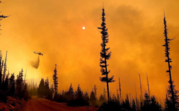
California agricultural operations have been significantly impacted by the wildfires and ongoing, severe drought. The U.S. Department of Agriculture (USDA) has technical and financial assistance available to help farmers and livestock producers recover. Impacted producers should contact their local USDA Service Center to report losses and learn more about program options available to assist in their recovery from crop, land, infrastructure and livestock losses and damages.
“Production agriculture is vital to the California economy, and USDA stands ready to assist in the recovery from these wildfires and extreme drought conditions,” said Gloria Montaño Greene as Deputy Under Secretary for Farm Production and Conservation (FPAC). “I assure you that USDA employees are working diligently to deliver FPAC’s extensive portfolio of disaster assistance programs and services to all impacted agricultural producers.”
USDA Disaster Assistance for Wildfire and Drought Recovery
Producers who experience livestock deaths due to wildfires may be eligible for the Livestock Indemnity Program (LIP).
Meanwhile, for both wildfire and drought recovery, the Emergency Assistance for Livestock, Honeybees, and Farm-Raised Fish Program (ELAP) provides eligible producers with compensation for feed losses as well as water hauling expenses associated with transportation of water to livestock. For ELAP, producers will need to file a notice of loss within 30 days and honeybee losses within 15 days.
Livestock producers may also be eligible for the Livestock Forage Disaster Program (LFP) for 2021 grazing losses due to drought. LFP benefits may be available for loss of grazing acres due to wildfires on federally managed lands on which a producer is prohibited, by a federal agency, from grazing normally permitted livestock. FSA maintains a list of counties eligible for LFP and makes updates each Thursday.
Additionally, eligible orchardists and nursery tree growers may be eligible for cost-share assistance through the Tree Assistance Program (TAP) to replant or rehabilitate eligible trees, bushes or vines lost during the drought. This complements Noninsured Crop Disaster Assistance Program (NAP) or crop insurance coverage, which covers the crop but not the plants or trees in all cases. For TAP, a program application must be filed within 90 days.
“Once you are able to safely evaluate the wildfire or drought impact on your operation, be sure to contact your local FSA office to timely report all crop, livestock and farm infrastructure damages and losses,” said Jacque Johnson, Acting State Executive Director for the Farm Service Agency (FSA) in California. “To expedite FSA disaster assistance, you will likely need to provide documents, such as farm records, herd inventory, receipts and pictures of damages or losses”
FSA also offers a variety of direct and guaranteed farm loans, including operating and emergency farm loans, to producers unable to secure commercial financing. Producers in counties with a primary or contiguous disaster designation may be eligible for low-interest emergency loans to help them recover from production and physical losses. Loans can help producers replace essential property, purchase inputs like livestock, equipment, feed and seed, cover family living expenses or refinance farm-related debts and other needs.
Risk Management
Producers who have risk protection through Federal Crop Insurance or FSA’s NAP should report crop damage to their crop insurance agent or FSA office. If they have crop insurance, producers should report crop damage to their agent within 72 hours of damage discovery and follow up in writing within 15 days. For NAP covered crops, a Notice of Loss (CCC-576) must be filed within 15 days of the loss becoming apparent, except for hand-harvested crops, which should be reported within 72 hours.
“Crop insurance and other USDA risk management options are there to help producers manage risk because we never know what nature has in store for the future,” said Jeff Yasui, Director of RMA’s Regional Office that covers California. “The Approved Insurance Providers, loss adjusters and agents are experienced and well trained in handling these types of events.”
Conservation
Outside of the primary nesting season, emergency and non-emergency haying and grazing of Conservation Reserve Program (CRP) acres may be authorized to provide relief to livestock producers in areas affected by a severe drought or similar natural disasters. Producers interested in haying or grazing of CRP acres should contact their county FSA office to determine eligibility.
The Emergency Conservation Program and Emergency Forest Restoration Program can assist landowners and forest stewards with financial and technical assistance to restore fencing, damaged farmland or forests.
USDA’s Natural Resources Conservation Service (NRCS) is always available to provide technical assistance in the recovery process by assisting producers to plan and implement conservation practices on farms, ranches and working forests impacted by natural disasters.
Long-term damage from wildfires and drought includes forage production loss in pastures and fields and increased wind erosion on crop fields not protected with soil health practices. Visit your local USDA Service Center to learn more about these impacts, potential recovery tactics, and how to take steps to make your land more resilient to drought in the future.
“USDA can be a very valuable partner to help landowners with their recovery and resiliency efforts,” said Carlos Suarez, NRCS State Conservationist in California. “Our staff will work one-on-one with landowners to make assessments of the damages and develop approaches that focus on effective recovery of the land.”
Assistance for Communities
Additional NRCS programs include the Emergency Watershed Protection (EWP) program, which provides assistance to local government sponsors with the cost of addressing watershed impairments or hazards such as damaged upland sites stripped of vegetation by wildfire, debris removal and streambank stabilization.
Eligible sponsors include cities, counties, towns, or any federally recognized Native American tribe or tribal organization. Sponsors must submit a formal request (via mail or email) to the state conservationist for assistance within 60 days of the natural disaster occurrence or 60 days from the date when access to the sites become available. For more information, please contact your local NRCS office.
“EWP provides immediate assistance to communities to mitigate potential hazards to life and property resulting from the fires and particularly the severe erosion and flooding that can occur after the fire,” Suarez said. “We can work with a local sponsor to help a damaged watershed so that lives and property are protected while preventing further devastation in the community.”
In addition to EWP, Conservation Technical Assistance (CTA) is another valuable service that NRCS can provide following a wildfire. NRCS technical assistance can help fire victims with planning cost-effective post fire restoration practices.
More Information
On farmers.gov, the Disaster Assistance Discovery Tool, Disaster Assistance-at-a-Glance fact sheet, and Farm Loan Discovery Tool can help producers and landowners determine program or loan options. For assistance with a crop insurance claim, producers and landowners should contact their crop insurance agent. For FSA and NRCS programs, they should contact their local USDA Service Center.
USDA touches the lives of all Americans each day in so many positive ways. In the Biden-Harris Administration, USDA is transforming America’s food system with a greater focus on more resilient local and regional food production, fairer markets for all producers, ensuring access to healthy and nutritious food in all communities, building new markets and streams of income for farmers and producers using climate smart food and forestry practices, making historic investments in infrastructure and clean energy capabilities in rural America, and committing to equity across the Department by removing systemic barriers and building a workforce more representative of America. To learn more, visit www.usda.gov.
|
USDA’s Farm Service Agency (FSA) announced that organic producers and handlers can apply for USDA funds to assist with the cost of receiving and maintaining organic certification through the Organic Certification Cost Share Program (OCCSP). Applications for eligible certification expenses paid between Oct. 1, 2020, and Sept. 30, 2021, are due Nov. 1, 2021.
OCCSP provides cost-share assistance to producers and handlers of agricultural products for the costs of obtaining or maintaining organic certification under the USDA’s National Organic Program. Eligible producers include any certified producers or handlers who have paid organic certification fees to a USDA-accredited certifying agent. Producers can be reimbursed for expenses including application fees, inspection costs, fees related to equivalency agreement and arrangement requirements, travel expenses for inspectors, user fees, sales assessments and postage.
For 2021, OCCSP will reimburse 50 percent of a certified operation’s allowable certification costs, up to a maximum of $500 for each of the following categories or “scopes:”
- crops
- wild crops
- livestock
- processing/handling
- State organic program fees.
Organic farmers and ranchers may apply through an FSA county office or a participating state agency.
More Information
To learn more about organic certification cost share, please visit the OCCSP webpage, visit usda.gov/organic, or contact your local USDA Service Center.
|
Are drought conditions affecting your agricultural operation? The U.S. Drought Monitor (USDM) is a resource producers can use to help determine how to best respond and react to a drought as it develops or lingers.
The USDM is an online, weekly map showing the location, extent, and severity of drought across the United States. It categorizes the entire country as being in one of six levels of drought. The map is released on Thursdays and depicts conditions for the week.
The USDM provides producers with the latest information about drought conditions where they live, enabling producers to best respond and react to a drought as it develops or lingers. In some cases, the USDM may help a producer make specific decisions about their operation, such as reducing the stocking rate because forage is not growing. For others, it may provide a convenient big-picture snapshot of broader environmental conditions.
The USDM incorporates varying data – rain, snow, temperature, streamflow, reservoir levels, soil moisture, and more – as well as first-hand information submitted from on-the-ground sources such as photos, descriptions, and experiences. The levels of drought are connected to the frequency of occurrence across several different drought indicators. What makes the USDM unique is that it is not a strictly numeric product. The mapmakers rely on their judgment and a nationwide network of 450-plus experts to interpret conditions for each region. They synthesize their discussion and analysis into a single depiction of drought for the entire country.
USDA uses the Drought Monitor to determine a producer’s eligibility for certain drought assistance programs, like the Livestock Forage Disaster Program and Emergency Haying or Grazing on Conservation Reserve Program acres.
Additionally, the Farm Service Agency uses the Drought Monitor to trigger and “fast track” Secretarial Disaster Designations which then provides producers impacted by drought access to emergency loans that can assist with credit needs.
Learn more about the U.S. Drought Monitor.
Farmers can use USDA farm ownership microloans to buy and improve property. These microloans are especially helpful to beginning or underserved farmers, U.S. veterans looking for a career in farming, and those who have small and mid-sized farming operations.
Microloans have helped farmers and ranchers with operating costs, such as feed, fertilizer, tools, fencing, equipment, and living expenses since 2013.
Microloans can also help with farmland and building purchases and soil and water conservation improvements. FSA designed the expanded program to simplify the application process, expand eligibility requirements and expedite smaller real estate loans to help farmers strengthen their operations. Microloans provide up to $50,000 to qualified producers and can be issued to the applicant directly from the USDA Farm Service Agency (FSA).
To learn more about the FSA microloan program, contact your local county USDA Service Center or visit fsa.usda.gov/microloans.
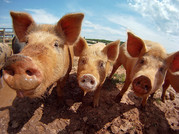
The Farm Service Agency (FSA) makes loans to youth to establish and operate agricultural income-producing projects in connection with 4-H clubs, FFA and other agricultural groups. Projects must be planned and operated with the help of the organization advisor, produce sufficient income to repay the loan and provide the youth with practical business and educational experience. The maximum loan amount is $5,000.
Youth Loan Eligibility Requirements:
- Be a citizen of the United States (which includes Puerto Rico, the Virgin Islands, Guam, American Samoa, the Commonwealth of the Northern Mariana Islands) or a legal resident alien
- Be 10 years to 20 years of age
- Comply with FSA’s general eligibility requirements
- Be unable to get a loan from other sources
- Conduct a modest income-producing project in a supervised program of work as outlined above
- Demonstrate capability of planning, managing and operating the project under guidance and assistance from a project advisor. The project supervisor must recommend the youth loan applicant, along with providing adequate supervision.
- For help preparing the application forms, contact your local county USDA Service Center.
|
USDA Farm Service Agency (FSA) reminds you to report prevented planting and failed acres in order to establish or retain FSA program eligibility for some programs.
You should report crop acreage you intended to plant, but due to natural disaster, were prevented from planting. Prevented planting acreage must be reported on form CCC-576, Notice of Loss, no later than 15 calendar days after the final planting date as established by FSA and Risk Management Agency (RMA).
If you’re unable to report the prevented planting acreage within the 15 calendar days following the final planting date, a late-filed report can be submitted. Late-filed reports will only be accepted if FSA conducts a farm visit to assess the eligible disaster condition that prevented the crop from being planted. A measurement service fee will be charged.
Additionally, if you have failed acres, you should also use form CCC-576, Notice of Loss, to report failed acres.
For hand-harvested crops and certain perishables, you must notify FSA of damage or loss through the administrative County Office within 72 hours of the date of damage or loss first becomes apparent. This notification can be provided by filing a CCC-576, email, fax or phone. If you notify the County Office by any method other than by filing the CCC-576, you are still required to file a CCC-576, Notice of Loss, within the required 15 calendar days.
For losses on crops covered by the Non-Insured Crop Disaster Assistance Program (NAP), you must file a Notice of Loss within 15 days of the occurrence of the disaster or when losses become apparent. You must timely file a Notice of Loss for failed acres on all crops including grasses.
For more information, contact your local county USDA Service Center or visit fsa.usda.gov.
The USDA Farm Service Agency (FSA) in California has partnered with the California Agriculture Mediation Program to provide free mediation services. Mediation can be an effective tool for farmers and ranchers who are experiencing challenges with their farm loans, creditors, neighbors, leases, or USDA agencies,.
Mediation is free to any producer for debt/credit issues, family farm transitions, leases, neighbor disputes, organic certification, adverse USDA decisions, and more. If your issue is not included in our authorized list of covered topics, we’ll work with you to find an affordable option.
Discussions and notes made during mediation cannot be shared unless everyone agrees to do so. Keeping information private helps create a safe space for difficult conversations. If you come to an agreement or plan, the parties may then decide to share it outside of the meeting.
Mediators are trained to help people talk to each other in a productive way. The mediator does not take a “side” in the conversation, but instead is there to support the conversation and move it forward to address the issue at hand. All of our mediators have agricultural backgrounds, so they understand the issues that are unique to the industry.
The mediator leads a discussion about reaching an agreement or plan. Should the parties reach an agreement, the mediator will draft a settlement document, which is a binding contract. But the parties, not the mediator, decide the outcome and course of action.
Statistically, 75 percent of mediations result in an agreement. Sometimes even if a final agreement is not reached, everyone gains a better understanding of the issue. Mediation can go hand-in-hand with other processes such as working with an estate planner or applying for a farm loan. Mediation can reopen lines of communication and help the participants continue productive conversations outside the meeting.
For more information, submit a request for mediation at www.calamp.org
Or contact:
Matt Strassberg (Director) at 916-330-4500 x101 or matts@emcenter.org
Mary Campbell (S. CA Coordinator) at 916-330-4500 x101 or maryc@emcenter.org
Jenna Muller (N. CA Coordinator) at 916-330-4500 x101 or jennam@emcenter.org
Farmers, are you searching for your future manager or supervisor? Whether you have a current employee who could use some additional training, or are seeking to hire a new team member, The Beginning Farm and Ranch Management Apprenticeship provides a structured pathway for aspiring farm managers to develop the knowledge and skills they need to be successful on your farm. The Center for Land-Based Learning covers all tuition for coursework and provides support for farmers and apprentices. To learn more about training an apprentice, visit https://landbasedlearning.org/apprentice-farmer-mentor
If you’re an orchardist or nursery tree grower who experienced losses from natural disasters during calendar year 2021, you must submit a TAP application either 90 calendar days after the disaster event or the date when the loss is apparent.
TAP provides financial assistance to help you replant or rehabilitate eligible trees, bushes and vines damaged by natural disasters.
Eligible tree types include trees, bushes or vines that produce an annual crop for commercial purposes. Nursery trees include ornamental, fruit, nut and Christmas trees that are produced for commercial sale. Trees used for pulp or timber are ineligible.
To qualify for TAP, orchardists must suffer a qualifying tree, bush or vine loss in excess of 15 percent mortality from an eligible natural disaster, plus an adjustment for normal mortality. The eligible trees, bushes or vines must have been owned when the natural disaster occurred; however, eligible growers are not required to own the land on which the eligible trees, bushes and vines were planted.
If the TAP application is approved, the eligible trees, bushes and vines must be replaced within 12 months from the date the application is approved. The cumulative total quantity of acres planted to trees, bushes or vines, for which you can receive TAP payments, cannot exceed 1,000 acres annually.
|