
It is mid-September and harvest is in full swing in much of Minnesota. Our state continues to experience significant areas of severe to exceptional drought conditions. The drought has resulted in 67 primary and 16 contiguous county Secretarial Disaster Designations. The designations result in producer eligibility for low interest emergency loans. Extended periods of time in D2, D3, and D4 on the Drought Monitor have triggered eligibility in 67 counties for the Livestock Forage Program (LFP). Local county offices continue to accept applications in LFP-eligible counties.
Another FSA program that offers opportunity for compensation related to expenses incurred for hauling water to livestock due to an eligible drought is the Emergency Assistance for Livestock, Honeybees, and Farm-raised Fish (ELAP) Program. Recently, USDA expanded assistance to cover feed transportation costs where grazing and hay resources have been depleted. Livestock producers are encouraged to review the Fact Sheet, news release, and contact their local FSA office for additional details.
October 12, 2021 is the deadline for filing a Coronavirus Food Assistance Program (CFAP 2) application or a Pandemic Livestock Indemnity Program (PLIP) application. Producers are encouraged to reach out to their local service center to gain additional details on these programs and other FSA program benefits they may be eligible for.
Due to the ongoing pandemic, our Minnesota service centers continue to operate with limited visitors, by appointment only. If you feel an in-person appointment is needed to conduct your business rather than by phone or online, please reach out to your local FSA office so they can assist in scheduling an appointment. As a reminder, all visitors and staff are required to wear a mask in a federal facility. Our local staff appreciate your efforts to protect them and their families. Your patience is appreciated as we continue to operate under COVID protocol.
I hope you enjoy a safe and healthy harvest season.
Respectfully,
Michelle Page, Acting State Executive Director
|
Farm Service Agency Reminds Producers of Upcoming Pandemic Program Deadlines
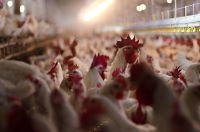
The U.S. Department of Agriculture (USDA) is providing additional time for livestock and poultry producers to apply for the Pandemic Livestock Indemnity Program (PLIP). Producers who suffered losses during the pandemic due to insufficient access to processing may now apply for assistance for those losses and the cost of depopulation and disposal of the animals through Oct. 12, 2021, rather than the original deadline of Sept. 17, 2021. PLIP is part of USDA’s Pandemic Assistance for Producers initiative.
PLIP provides payments to producers for losses of livestock or poultry depopulated from March 1, 2020 through Dec. 26, 2020, due to insufficient processing access as a result of the pandemic. Payments are based on 80% of the fair market value of the livestock and poultry and for the cost of depopulation and disposal of the animal. Eligible livestock and poultry include swine, chickens and turkeys.
PLIP Program Details
PLIP payments are calculated by multiplying the number of head of eligible livestock or poultry by the payment rate per head, and then subtracting the amount of any payments the eligible livestock or poultry owner has received for disposal of the livestock or poultry under the Natural Resources Conservation Service (NRCS) Environmental Quality Incentives Program (EQIP) or a state program. The payments will also be reduced by any Coronavirus Food Assistance Program (CFAP 1 and 2) payments paid on the same inventory of swine that were depopulated.
Eligible livestock and poultry producers can apply for PLIP through the Oct. 12, 2021 deadline by completing the FSA-620, Pandemic Livestock Indemnity Program application, and submitting it to any Farm Service Agency county office. Additional documentation may be required. Visit farmers.gov/plip more information on how to apply.
Additional Pandemic Assistance
Other programs within the Pandemic Assistance for Producer initiative with upcoming deadlines include:
To learn more about USDA’s commitment to delivery of financial assistance to farmers, ranchers and agricultural producers and businesses who have been impacted by COVID-19 market disruptions, visit farmers.gov/pandemic-assistance.
|
The U.S. Department of Agriculture’s Agricultural Marketing Service (AMS) announced it will soon publish Requests for Applications (RFAs) for the Pandemic Response and Safety (PRS) Grants program to support agricultural stakeholders who haven’t yet received substantial federal financial assistance in responding to the COVID-19 crisis. This grant program will provide assistance to small businesses in certain commodity areas, including small scale specialty crop producers, food processors, manufacturers, distributors and farmers markets.
A grant forecast is now available to help potential applicants determine their eligibility and to prepare to apply for funding. Eligible entities should visit the PRS grant portal at usda-prs.grantsolutions.gov for complete information on the program, including how to obtain a free of charge DUNS Number from Dun & Bradstreet (D&B) BEFORE applying for this program. On September 23, USDA will issue another announcement indicating that entities may submit their applications through the grant portal; entities will need their DUNS number to submit an application.
Visit usda-prs.grantsolutions.gov or the AMS website to learn more.
Set-Aside Delays Loan Payments for Borrowers
USDA’s Farm Service Agency (FSA) will broaden the use of the Disaster Set-Aside (DSA) loan provision, normally used in the wake of natural disasters, to allow farmers with USDA farm loans who are affected by COVID-19, and are determined eligible, to have their next payment set aside. In some cases, FSA may also set aside a second payment for farmers who have already had one payment set aside because of a prior designated disaster.
FSA direct loan borrowers will receive a letter with the details of the expanded Disaster Set-Aside authorities, which includes the possible set-aside of annual operating loans, as well as explanations of the additional loan servicing options that are available. To discuss or request a loan payment Set-Aside, borrowers should call or email the farm loan staff at their local FSA county office.
The set-aside payment’s due date is moved to the final maturity date of the loan or extended up to twelve months in the case of an annual operating loan. Any principal set-aside will continue to accrue interest until it is repaid. This aims to improve the borrower’s cashflow in the current production cycle.
FSA previously announced it was relaxing the loan-making process and adding flexibilities for servicing direct and guaranteed loans to provide credit to producers in need. Direct loan applicants and borrowers are encouraged to contact their local FSA county office to discuss loan making and servicing flexibilities and other needs or concerns. Customers participating in FSA’s guaranteed loan programs are encouraged to contact their lender. Information on these flexibilities, and office contact information, can be found on farmers.gov/coronavirus.
FSA will be accepting most forms and applications by facsimile or electronic signature. Some services are also available online to customers with an eAuth account, which provides access to the farmers.gov portal where producers can view USDA farm loan information and certain program applications and payments. Customers can track payments, report completed practices, request conservation assistance and electronically sign documents. Customers who do not already have an eAuth account can enroll at farmers.gov/sign-in.
CRP contract holders are encouraged to transition their Conservation Reserve Program (CRP) acres to beginning, veteran or socially disadvantaged farmers or ranchers through the Transition Incentives Program (TIP). TIP provides annual rental payments to the landowner or operator for up to two additional years after the CRP contract expires.
CRP contract holders no longer need to be a retired or retiring owner or operator to transition their land. TIP participants must agree to sell, have a contract to sell, or agree to lease long term (at least five years) land enrolled in an expiring CRP contract to a beginning, veteran, or socially disadvantaged farmer or rancher who is not a family member.
Beginning, veteran or social disadvantaged farmers and ranchers and CRP participants may enroll in TIP beginning two years before the expiration date of the CRP contract. The TIP application must be submitted prior to completing the lease or sale of the affected lands. New landowners or renters that return the land to production must use sustainable grazing or farming methods.
For more information, contact your local County USDA Service Center or visit fsa.usda.gov.
The Farm Service Agency (FSA) assists beginning farmers to finance agricultural enterprises. Under these designated farm loan programs, FSA can provide financing to eligible applicants through either direct or guaranteed loans. FSA defines a beginning farmer as a person who:
- Has operated a farm for not more than 10 years
- Will materially and substantially participate in the operation of the farm
- Agrees to participate in a loan assessment, borrower training and financial management program sponsored by FSA
- Does not own a farm in excess of 30 percent of the county’s average size farm.
For more information contact, contact your local County USDA Service Center or visit fsa.usda.gov.
Access your land information in real time
Producers with farmers.gov accounts can now access farm records and maps online, the latest self-service feature added to the U.S. Department of Agriculture (USDA) website.
You can quickly and easily access your land information in real time by desktop computer, tablet or phone. Capabilities include:
- View, print and export detailed farm records such as cropland, base acres, yields, CRP acres, land ownership details, and much more;
- View, print and export farm/tract maps that can be provided to lenders, chemical or fertilizer providers, and FSA for reporting acreage and crop insurance agents; and
- Export common land unit (field) boundaries as ESRI shapefiles.
The ability to access these records on demand without a visit to the service center saves you time and money.
Farmers.gov now includes the most popular functionalities from FSAFarm+, the FSA portal for producers, while providing enhanced functionality and an improved user experience. A new enhancement expands the scope of accessibility to include farmers and ranchers who are members of an entity, as well as people with a power of attorney form (FSA-211) on file with FSA.
Managing USDA Business Online
Using farmers.gov, producers, entities and those acting on their behalf can also:
- View, upload, download, and e-sign conservation documents.
- Request financial assistance, including submitting a program application.
- View and submit conservation requests.
- View technical references and submit questions.
- Access information on current and past conservation practices, plans and contracts.
- Report practice completion and request practice certification.
- View farm loan and interest information (producers only).
Future plans include adding the ability to import and view other shapefiles, such as precision agriculture planting boundaries.
To access your information, you’ll will need a USDA eAuth account to login to farmers.gov. After obtaining an eAuth account, producers should visit farmers.gov and sign into the site’s authenticated portal via the Sign In/Sign Up link at the top right of the website. Google Chrome, Mozilla Firefox or Microsoft Edge are the recommended browsers to access the feature.
In addition to the self-service features available by logging into farmers.gov, the website also has ample information on USDA programs, including pandemic assistance, farm loans, disaster assistance, conservation programs and crop insurance. Recently, USDA updated the navigation and organization of the site as well as added some new webpages, including “Get Involved,” “Common Forms,” and “Translations.” Learn more about these changes.
If you received a payment under the Wildfires and Hurricanes Indemnity Program+ (WHIP+) or the Quality Loss Adjustment Program (QLA) for crop production and/or quality losses occurring in 2018, 2019, or 2020 crop years, you are required to meet linkage requirements by obtaining federal crop insurance or Non-Insured Crop Disaster Assistance Program (NAP) coverage at the 60/100 level, or higher, for both the 2022 and 2023 crop years.
When applying for WHIP+ or QLA, form FSA-895 (Crop Insurance and/or NAP Coverage Agreement) was submitted acknowledging the requirement to obtain federal crop insurance, if available, or NAP coverage if federal crop insurance is not available. The coverage requirement is applicable to the physical location county of the crop that received WHIP+ and/or QLA benefits.
Producers should not delay contacting their federal crop insurance agent or local county FSA Office to inquire about coverage options, as failure to obtain the applicable coverage by the sales/application closing date will result in the required refund of WHIP+ benefits received on the applicable crop, plus interest. You can determine if crops are eligible for federal crop insurance or NAP by visiting the RMA website.
For more information, contact your County USDA Service Center or visit fsa.usda.gov.

If you’re an orchardist or nursery tree grower who experienced losses from natural disasters during calendar year 2021, you must submit a TAP application either 90 calendar days after the disaster event or the date when the loss is apparent.
TAP provides financial assistance to help you replant or rehabilitate eligible trees, bushes and vines damaged by natural disasters.
Eligible tree types include trees, bushes or vines that produce an annual crop for commercial purposes. Nursery trees include ornamental, fruit, nut and Christmas trees that are produced for commercial sale. Trees used for pulp or timber are ineligible.
To qualify for TAP, orchardists must suffer a qualifying tree, bush or vine loss in excess of 15 percent mortality from an eligible natural disaster, plus an adjustment for normal mortality. The eligible trees, bushes or vines must have been owned when the natural disaster occurred; however, eligible growers are not required to own the land on which the eligible trees, bushes and vines were planted.
If the TAP application is approved, the eligible trees, bushes and vines must be replaced within 12 months from the date the application is approved. The cumulative total quantity of acres planted to trees, bushes or vines, for which you can receive TAP payments, cannot exceed 1,000 acres annually.
|
USDA surpasses goal with more than 5.3 million acres enrolled through CRP signups in 2021
The U.S. Department of Agriculture (USDA) has accepted offers for more than 2.5 million acres from agricultural producers and private landowners for enrollment through this year’s Grassland Conservation Reserve Program (CRP) Signup. This is double last year’s enrollment and brings the total acres enrolled across all CRP signups in 2021 to more than 5.3 million acres, surpassing USDA’s 4-million-acre goal. Producers and landowners submitted offers for nearly 4 million acres in Grassland CRP, the highest in the signup’s history.
Minnesota producers enrolled 2,259 acres through this year’s Grassland CRP signup. Through Grassland CRP, producers and landowners can conserve grasslands, rangelands, and pastures, while retaining the right to conduct common grazing practices, such as haying, mowing, or harvesting seed from the enrolled land, pursuant to approved conservation plans designed to promote thoughtful use while creating and maintaining vital habitat.
Updates to Grassland CRP
FSA rolled out a number of updates to its CRP signups earlier this year. This included setting a minimum payment rate for Grassland CRP as well as establishing new national priority zones.
Download the “What’s New” fact sheet to learn more about CRP updates.
CRP and Climate Change Mitigation
Additionally, lands enrolled in CRP – including grasslands – play an important role in addressing climate change. For example, this enrollment of more than 2.5 million acres of grazing land into Grassland CRP will mitigate an additional estimated 22,000 metric tons of CO2 equivalent.
By the Numbers
In addition to the more than 2.5 million acres enrolled in Grassland CRP, almost 1.9 million acres in offers were accepted through the General CRP Signup and 902,000 acres were accepted so far through the Continuous Signup. Additional enrollment information on the General and Continuous signups is available in the Aug. 23, 2021 news release.
The 2018 Farm Bill established a nationwide acreage limit for CRP, with the total number of acres that may be enrolled capped at 25 million acres in fiscal year (FY) 2021 and growing to 27 million by FY 2023. Currently, 20.6 million acres are enrolled. With more than 5.3 million acres accepted for enrollment, the USDA will start 2022 off with about 22.9 million acres, leaving room for further enrollment and program expansion up to the FY 2022 cap of 25.5 million.
More Information
For more information on Grassland CRP or any other CRP program, contact your local FSA county office or visit fsa.usda.gov/crp. To locate your local FSA office, visit farmers.gov/service-locator.
Farm Service Agency (FSA) program payments are issued electronically into your bank account. In order to receive timely payments, you need to notify your FSA servicing office if you close your account or if your bank information is changed for any reason (such as your financial institution merging or being purchased). Payments can be delayed if FSA is not notified of changes to account and bank routing numbers.
For some programs, payments are not made until the following year. For example, payments for crop year 2019 through the Agriculture Risk Coverage and Price Loss Coverage program aren’t paid until 2020. If the bank account was closed due to the death of an individual or dissolution of an entity or partnership before the payment was issued, please notify your local FSA office as soon as possible to claim your payment.
 |
|
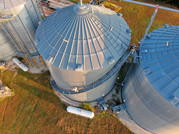
Bins are ideally designed to hold a level volume of grain. When bins are overfilled and grain is heaped up, airflow is hindered, and the chance of spoilage increases.
Producers using farm-stored grain as collateral for their marketing assistance loan should remember that they are responsible for maintaining the quality of the grain through the term of the loan.
|
NAP provides financial assistance to you for crops that aren’t eligible for crop insurance to protect against lower yields or crops unable to be planted due to natural disasters including freeze, hail, excessive moisture, excessive wind or hurricanes, flood, excessive heat and qualifying drought (includes native grass for grazing), among others.
To receive payment, you had to purchase NAP coverage for 2021 crops and file a notice of loss the earlier of 15 days of the occurrence of the disaster or when losses become apparent or 15 days of the final harvest date.
For hand-harvested crops and certain perishable crops, you must notify FSA within 72 hours of when a loss becomes apparent.
Eligible crops must be commercially produced agricultural commodities for which crop insurance is not available, including perennial grass forage and grazing crops, fruits, vegetables, mushrooms, floriculture, ornamental nursery, aquaculture, turf grass, ginseng, honey, syrup, bioenergy, and industrial crops.
For more information on NAP, contact your County USDA Service Center or visit fsa.usda.gov/nap.
|