Wyoming State Office September Newsletter

View as a webpage / Share

Wyoming State Office  -  September 13, 2021

NASS to send 2021 Hemp Acreage and Production survey this fall

Hemp

This October, USDA’s National Agricultural Statistics Service will mail its first Hemp Acreage and Production

Survey. The survey will collect information on the total planted and harvested area, yield, production, and value of hemp in the United States. 

The Domestic Hemp Production Program established in the Agriculture Improvement Act of 2018 (2018 Farm Bill) allows for the cultivation of hemp under certain conditions. The Hemp Acreage and Production survey will provide needed data about the hemp industry to assist producers, regulatory agencies, state governments, processors, and other key industry entities. 

Producers may complete the survey online at agcounts.usda.gov or they may complete and return the survey by mail using the return envelope provided. 

Learn more about the survey at nass.usda.gov/go/hemp.


Understanding the U.S. Drought Monitor

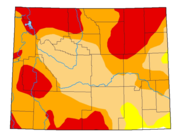
wydrought

Are drought conditions affecting your agricultural operation? The U.S. Drought Monitor (USDM) is a resource producers can use to help determine how to best respond and react to a drought as it develops or lingers. 

The USDM is an online, weekly map showing the location, extent, and severity of drought across the United States. It categorizes the entire country as being in one of six levels of drought. The map is released on Thursdays and depicts conditions for the week.

The USDM provides producers with the latest information about drought conditions where they live, enabling producers to best respond and react to a drought as it develops or lingers. In some cases, the USDM may help a producer make specific decisions about their operation, such as reducing the stocking rate because forage is not growing. For others, it may provide a convenient big-picture snapshot of broader environmental conditions.

The USDM incorporates varying data – rain, snow, temperature, streamflow, reservoir levels, soil moisture, and more – as well as first-hand information submitted from on-the-ground sources such as photos, descriptions, and experiences. The levels of drought are connected to the frequency of occurrence across several different drought indicators. What makes the USDM unique is that it is not a strictly numeric product. The mapmakers rely on their judgment and a nationwide network of 450-plus experts to interpret conditions for each region. They synthesize their discussion and analysis into a single depiction of drought for the entire country.

USDA uses the Drought Monitor to determine a producer’s eligibility for certain drought assistance programs, like the Livestock Forage Disaster Program and Emergency Haying or Grazing on Conservation Reserve Program acres.

Additionally, the Farm Service Agency uses the Drought Monitor to trigger and “fast track” Secretarial Disaster Designations which then provides producers impacted by drought access to emergency loans that can assist with credit needs.

Learn more about the U.S. Drought Monitor.


Streamlining How You Find Information on Farmers.gov

ckfield

If you’ve been to farmers.gov before, things may look a little different from the last time you were here. We’ve made some changes, to improve how you find information so that you can find what you need even more easily and efficiently. 

The big, green navigation bar near the top of every page – it’s different now. It opens up, to show descriptions and subtopics, making it quicker and easier to figure out what’s where and reduce guessing. Why? Two reasons: First, farmers.gov has grown a lot over the years and the old navigation wasn’t designed for the load. Second, because you asked for it.  We analyzed your comments through the “Feedback” button on the site and tested our new designs and information organization with real farmers and ranchers through surveys and live testing sessions. 

Along with the new website navigation, we restructured how our pages and topics are grouped and organized to help you easily access the information you need. We also relabeled some of our existing pages using more direct language. This means that pages or information you’ve used before may have different labels or be in new places. 

Important changes: 

  • The old Fund page is now called Loans. The Loans page has information and resources about USDA loans, including the Farm Loan Programs. 
  • The Recover page is now Protection and Recovery. This page has information to help you prepare and recover from natural disasters, and to mitigate risk for your operation. 
  • The Conserve page is now Conservation. This page hasn’t changed much and still has information on how to implement conservation practices, improve and preserve natural resources, and address conservation concerns. 
  • The Manage page is now Working With Us. This page connects you with resources that tell you how USDA can help you start, expand, enhance, or improve your agricultural operation. 
  • The Connect page has been replaced with Your Business, a guide to USDA resources that cater to your specific operation.  Information that was on the Connect page has been moved to the Contact Us page and the Get Involved page. 

We are always updating farmers.gov based on your feedback and to stay up-to-date with important USDA announcements. We’ve recently created some new webpages, and updated some existing ones, to better equip you with the vital information you need. There are even more new pages coming soon, so stay tuned! 

For farmers.gov, we don’t guess what farmers and ranchers want from a website. We start by asking, then test our designs with volunteers who are also farmers and ranchers. 

There’s a feedback button on every page of farmers.gov. Based on your feedback, we looked for ways to make our site easier to use and to build the information that you’re looking for. Live user testing sessions provide data, such as this heatmap, showing where testers tended to click during an exercise. 

You helped us create the new navigation design, the new information organization, and told us how to speak using your words, and not legalese. 

Check out farmers.gov today!


USDA Offers Disaster Assistance for Producers Facing Inclement Weather

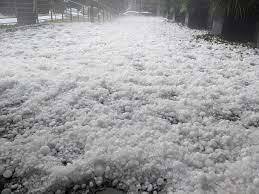
hail

Severe weather events create significant challenges and often result in catastrophic loss for agricultural producers. Despite every attempt to mitigate risk, your operation may suffer losses. USDA offers several programs to help with recovery.

Risk Management

For producers who have risk protection through Federal Crop Insurance or the Noninsured Crop Disaster Assistance Program (NAP), we want to remind you to report crop damage to your crop insurance agent or the local Farm Service Agency (FSA) office.

If you have crop insurance, contact your agency within 72 hours of discovering damage and be sure to follow up in writing within 15 days. If you have NAP coverage, file a Notice of Loss (also called Form CCC-576) within 15 days of loss becoming apparent, except for hand-harvested crops, which should be reported within 72 hours.

Disaster Assistance

USDA also offers disaster assistance programs, which is especially important to livestock, fruit and vegetable, specialty and perennial crop producers who have fewer risk management options.

First, the Livestock Indemnity Program (LIP) and Emergency Assistance for Livestock, Honeybee and Farm-raised Fish Program (ELAP) reimburses producers for a portion of the value of livestock, poultry and other animals that died as a result of a qualifying natural disaster event or for loss of grazing acres, feed and forage. And, the Livestock Forage Disaster Program (LFP) provides assistance to producers of grazed forage crop acres that have suffered crop loss due to a qualifying drought.  Livestock producers suffering the impacts of drought can also request Emergency Haying and Grazing on Conservation Reserve Program (CRP) acres.

Next, the Tree Assistance Program (TAP) provides cost share assistance to rehabilitate and replant tree, vines or shrubs loss experienced by orchards and nurseries. This complements NAP or crop insurance coverage, which cover the crop but not the plants or trees in all cases.

For LIP and ELAP, you will need to file a Notice of Loss for livestock and grazing or feed losses within 30 days and honeybee losses within 15 days. For TAP, you will need to file a program application within 90 days.

Documentation

It’s critical to keep accurate records to document all losses following this devastating cold weather event. Livestock producers are advised to document beginning livestock numbers by taking time and date-stamped video or pictures prior to after the loss.

Other common documentation options include:

  • Purchase records
  • Production records
  • Vaccination records
  • Bank or other loan documents
  • Third-party certification

Other Programs

The Emergency Conservation Program and Emergency Forest Restoration Program can assist landowners and forest stewards with financial and technical assistance to restore damaged farmland or forests.

Additionally, FSA offers a variety of loans available including emergency loans that are triggered by disaster declarations and operating loans that can assist producers with credit needs.  You can use these loans to replace essential property, purchase inputs like livestock, equipment, feed and seed, or refinance farm-related debts, and other needs.

Meanwhile, USDA’s Natural Resources Conservation Service (NRCS) provides financial resources through its Environmental Quality Incentives Program to help with immediate needs and long-term support to help recover from natural disasters and conserve water resources. Assistance may also be available for emergency animal mortality disposal from natural disasters and other causes.

Additional Resources

Additional details – including payment calculations – can be found on our NAPELAPLIP, and TAP fact sheets. On farmers.gov, the Disaster Assistance Discovery ToolDisaster-at-a-Glance fact sheet, and Farm Loan Discovery Tool can help you determine program or loan options.

While we never want to have to implement disaster programs, we are here to help. To file a Notice of Loss or to ask questions about available programs, contact your local USDA Service Center. All USDA Service Centers are open for business, including those that restrict in-person visits or require appointments because of the pandemic.

Wyoming State Office

951 Werner Ct Ste 130
Casper, WY 82601

Phone: 307-261-5231
Fax: 855-415-3427

Jodene Johnson, AO/Acting State Exec Director

jodene.johnson@usda.gov