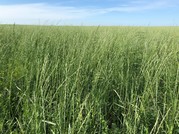
The U.S. Department of Agriculture (USDA) has set a July 23, 2021, deadline for agricultural producers and landowners to apply for the Conservation Reserve Program (CRP) General signup 56. Additionally, USDA’s Farm Service Agency (FSA) will accept applications for CRP Grasslands from July 12 to August 20. This year, USDA updated both signup options to provide greater incentives for producers and increase its conservation benefits, including reducing the impacts of climate change.
Both signups are competitive and will provide for annual rental payments for land devoted to conservation purposes.
“Bottom line, CRP now makes more financial sense for producers while also providing a bigger return on investment in terms of natural resource benefits. The General and Grasslands signups are part of a broader suite of tools available through CRP to integrate key conservation practices on our nation’s working lands.”
General Signup
Through CRP, producers and landowners establish long-term, resource-conserving plant species, such as approved grasses or trees, to control soil erosion, improve water quality, and enhance wildlife habitat on cropland. Lands enrolled in CRP also play a key role in mitigating impacts from climate change, and FSA has added a new Climate-Smart Practice Incentive for practices that sequester carbon and reduce greenhouse gas emissions.
FSA is also adding a one-time “inflationary” adjustment for payment rates, as well as having more flexibility on adjusting soil rental rates.
FSA opened the General Signup in January 2021 and extended the original deadline to July 23, 2021, to enable producers to consider FSA’s new improvements to the program.
Grasslands Signup
CRP Grasslands helps landowners and operators protect grassland, including rangeland, and pastureland and certain other lands, while maintaining the areas as grazing lands. Protecting grasslands contributes positively to the economy of many regions, provides biodiversity of plant and animal populations, and improves environmental quality.
FSA has updated the Grasslands Signup to establish a minimum rental rate of $15 per acre, as well as new National Grassland Priority Zones.
How to Sign Up
To enroll in the CRP General signup, producers and landowners should contact their local USDA Service Center by the July 23 deadline. To enroll in the CRP Grasslands signup, they should contact USDA by the August 20 deadline. While USDA offices may have limited visitors because of the pandemic, Service Center staff continue to work with agricultural producers via phone, email, and other digital tools. To work with FSA, producers and landowners should contact their local USDA Service Center. Contact information can be found at farmers.gov/service-locator.
More Information on CRP
Signed into law in 1985, CRP is one of the largest voluntary private-lands conservation programs in the United States. It was originally intended to primarily control soil erosion and potentially stabilize commodity prices by taking marginal lands out of production. The program has evolved over the years, providing many conservation and economic benefits. The program marked its 35-year anniversary this past December.
|
The National Environmental Policy Act (NEPA) requires Federal agencies to consider all potential environmental impacts for federally funded projects before the project is approved.
For all Farm Service Agency (FSA) programs, an environmental review must be completed before actions are approved, such as site preparation or ground disturbance. These programs include, but are not limited to, the Emergency Conservation Program (ECP), Farm Storage Facility Loan (FSFL) program and farm loans. If project implementation begins before FSA has completed an environmental review, the request will be denied. Although there are exceptions regarding the Stafford Act and emergencies, it’s important to wait until you receive written approval of your project proposal before starting any actions.
Applications cannot be approved until FSA has copies of all permits and plans. Contact your local FSA office early in your planning process to determine what level of environmental review is required for your program application so that it can be completed timely.
Farm Service Agency (FSA) borrowers with farms located in designated primary or contiguous disaster areas who are unable to make their scheduled FSA loan payments should consider the Disaster Set-Aside (DSA) program.
DSA is available to producers who suffered losses as a result of a natural disaster and relieves immediate and temporary financial stress. FSA is authorized to consider setting aside the portion of a payment/s needed for the operation to continue on a viable scale.
Borrowers must have at least two years left on the term of their loan in order to qualify.
Borrowers have eight months from the date of the disaster designation to submit a complete application. The application must include a written request for DSA signed by all parties liable for the debt along with production records and financial history for the operating year in which the disaster occurred. FSA may request additional information from the borrower in order to determine eligibility.
All farm loans must be current or less than 90 days past due at the time the DSA application is complete. Borrowers may not set aside more than one installment on each loan.
The amount set-aside, including interest accrued on the principal portion of the set-aside, is due on or before the final due date of the loan.
For more information, contact your local County USDA Service Center or visit fsa.usda.gov.
There are options for Farm Service Agency (FSA) loan customers during financial stress. If you are a borrower who is unable to make payments on a loan, contact your local FSA Farm Loan Manager to learn about your options.
When changes in farm ownership or operation take place, a farm reconstitution is necessary. The reconstitution — or recon — is the process of combining or dividing farms or tracts of land based on the farming operation.
To be effective for the current Fiscal Year (FY), farm combinations and farm divisions must be requested by August 1 of the FY for farms subject to the Agriculture Risk Coverage (ARC) and Price Loss Coverage (PLC) program. A reconstitution is considered to be requested when all of the required signatures are on FSA-155 and all other applicable documentation, such as proof of ownership, is submitted.
Total Conservation Reserve Program (CRP) and non-ARC/PLC farms may be reconstituted at any time.
The following are the different methods used when doing a farm recon:
-
Estate Method — the division of bases, allotments and quotas for a parent farm among heirs in settling an estate
-
Designation of Landowner Method — may be used when (1) part of a farm is sold or ownership is transferred; (2) an entire farm is sold to two or more persons; (3) farm ownership is transferred to two or more persons; (4) part of a tract is sold or ownership is transferred; (5) a tract is sold to two or more persons; or (6) tract ownership is transferred to two or more persons. In order to use this method, the land sold must have been owned for at least three years, or a waiver granted, and the buyer and seller must sign a Memorandum of Understanding
-
DCP Cropland Method — the division of bases in the same proportion that the DCP cropland for each resulting tract relates to the DCP cropland on the parent tract
-
Default Method — the division of bases for a parent farm with each tract maintaining the bases attributed to the tract level when the reconstitution is initiated in the system.
For questions on your farm reconstitution, contact your local County USDA Service Center.
The USDA Farm Service Agency (FSA) reminds producers that FSA offers targeted farm ownership and farm operating loans to assist underserved applicants and beginning farmers and ranchers.
USDA defines underserved applicants as a group whose members have been subjected to racial, ethnic, or gender prejudice because of their identity as members of the group without regard to their individual qualities. For farm loan program purposes, targeted underserved groups are women, African Americans, American Indians and Alaskan Natives, Hispanics and Asians and Pacific Islanders.
Underserved or beginning farmers and ranchers who cannot obtain commercial credit from a bank can apply for either FSA direct loans or guaranteed loans. Direct loans are made to applicants by FSA. Guaranteed loans are made by lending institutions who arrange for FSA to guarantee the loan. FSA can guarantee up to 95 percent of the loss of principal and interest on a loan. The FSA guarantee allows lenders to make agricultural credit available to producers who do not meet the lender's normal underwriting criteria.
The direct and guaranteed loan program provides for two types of loans: farm ownership loans and farm operating loans. In addition to customary farm operating and ownership loans, FSA offers Microloans through the direct loan program. Microloans focus on the financing needs of small, beginning farmer, niche, and non-traditional farm operations. Microloans are available for both ownership and operating finance needs. To learn more about microloans, visit fsa.usda.gov/microloans.
To qualify as a beginning producer, the individual or entity must meet the eligibility requirements outlined for direct or guaranteed loans. Individuals and all entity members must have operated a farm for less than 10 years. Applicants must materially or substantially participate in the operation.
For more information on FSA’s farm loan programs and targeted underserved and beginning farmer guidelines, contact your local County USDA Service Center or visit fsa.usda.gov/farmloans.
Persons with disabilities who require accommodations to attend or participate in any meeting/event/function should contact Mary Anne Coffin at 207-990-9140 or Federal Relay Service at 1-800-877-8339.
Service Center staff continue to work with agricultural producers via phone, email, and other digital tools. Because of the pandemic, USDA Service Centers are open to limited visitors. Contact your Service Center to set up an in-person or phone appointment. Additionally, more information related to USDA’s response and relief for producers can be found at farmers.gov/coronavirus.
|