In This Issue:
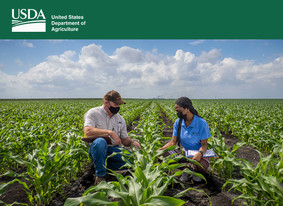
Summer is a busy time of year for farmers and ranchers as well as your local FSA office.
Agricultural producers who have not yet completed their crop acreage reports after planting should make an appointment with their local Farm Service Agency (FSA) office before the applicable deadline. July 15 is a major deadline for most crops, but acreage reporting deadlines vary by county and by crop. Contact your FSA county office for acreage reporting deadlines that are specific to your county.
The County Committee Nomination period opened June 14. Individuals may nominate themselves or others as a candidate. Additionally, organizations representing minority and women agricultural producers may nominate candidates. FSA county committee members are local agricultural producers who help ensure fair and equitable administration of FSA farm programs in their county or multi-county jurisdiction. All nomination forms for the 2021 election must be postmarked or received in the local USDA Service Center by Aug. 2, 2021.
A new FSA Urban County Committee will be established for 2022 in Dallas, Texas. Urban farmers who participate or cooperate in an FSA or NRCS program, or are willing to get an FSA farm/tract number, in the counties selected are encouraged to participate by nominating themselves or others as a candidate to run for County Committee elections. Additional information can be found at fsa.usda.gov/elections.
The American Rescue Plan Act Section 1005 provides debt payments for socially disadvantaged borrowers who hold a qualifying USDA farm loan. If you’re uncertain of your demographic designation on file at FSA, you can contact your local service center to verify your classification on record. If an update or correction is needed, you may either fill out USDA Form AD-2047 or work with your local service center to update your record, including race and ethnicity.
If you need to conduct any business with your local FSA office, please call to make an appointment.
Sincerely,
Eddie Trevino
Acting State Executive Director
Farm Service Agency - Texas
|
In response to catastrophic aquaculture losses due to major winter storms that hit states along the U.S. Gulf Coast including Texas in February, the U.S. Department of Agriculture’s (USDA) Farm Service Agency (FSA) announced a policy change that makes food fish and other aquatic species eligible for the Emergency Assistance for Livestock, Honey Bees and Farm-raised Fish Program (ELAP). Previously, only farm-raised game and bait fish were eligible for death loss ELAP benefits. Beginning June 1, eligible aquaculture producers can request ELAP assistance for 2021 losses. This policy change is for the 2021 and subsequent program years.
ELAP provides financial assistance to eligible producers of livestock, honeybees and farm-raised fish for losses due to disease, certain adverse weather events or loss conditions, including blizzards and wildfires, as determined by the Secretary.
To be eligible, losses must have occurred on or after Jan. 1, 2021. For farm-raised fish and other aquatic species death losses only that occurred prior to June 1, 2021, FSA is waiving the requirement to file a notice of loss within 30 calendar days of when the loss is apparent. An aquaculture producer will still need to be able to provide contemporaneous records upon request to document the eligible loss event and demonstrate the beginning and ending inventory. The deadline to file an application for payment for the 2021 program year is Jan. 31, 2022.
Producers must provide acreage reports for the surface acres of water where their aquatic species are raised. Acreage reports for 2021 must be filed by Sept. 30, 2022.
More Information
USDA offers a comprehensive portfolio of disaster assistance programs. On farmers.gov, the Disaster Assistance Discovery Tool, Disaster-at-a-Glance fact sheet, and Farm Loan Discovery Tool can help producers and landowners determine all program or loan options available for disaster recovery assistance. For assistance with a crop insurance claim, producers and landowners should contact their crop insurance agent. For FSA and NRCS programs, they should contact their local USDA Service Center.
USDA Farm Service Agency (FSA) reminds you to report prevented planted and failed acres in order to establish or retain FSA program eligibility for some programs.
You should report crop acreage you intended to plant, but due to natural disaster, were prevented from planting. Prevented planting acreage must be reported on form CCC-576, Notice of Loss, no later than 15 calendar days after the final planting date as established by FSA and Risk Management Agency (RMA).
If you’re unable to report the prevented planting acreage within the 15 calendar days following the final planting date, a late-filed report can be submitted. Late-filed reports will only be accepted if FSA conducts a farm visit to assess the eligible disaster condition that prevented the crop from being planted. A measurement service fee will be charged.
Additionally, if you have failed acres, you should also use form CCC-576, Notice of Loss, to report failed acres.
For hand-harvested crops and certain perishables, you must notify FSA of damage or loss through the administrative County Office within 72 hours of the date of damage or loss first becomes apparent. This notification can be provided by filing a CCC-576, email, fax or phone. If you notify the County Office by any method other than by filing the CCC-576, you are still required to file a CCC-576, Notice of Loss, within the required 15 calendar days.
For losses on crops covered by the Non-Insured Crop Disaster Assistance Program (NAP), you must file a Notice of Loss within 15 days of the occurrence of the disaster or when losses become apparent. You must timely file a Notice of Loss for failed acres on all crops including grasses.
To file a Notice of Loss, contact your local USDA Service Center or visit www.fsa.usda.gov.
The U.S. Department of Agriculture (USDA) has set a July 23, 2021, deadline for agricultural producers and landowners to apply for the Conservation Reserve Program (CRP) General signup 56. Additionally, USDA’s Farm Service Agency (FSA) will accept applications for CRP Grasslands from July 12 to August 20. This year, USDA updated both signup options to provide great incentives for producers and increase its conservation benefits, including reducing the impacts of climate change.
Both signups are competitive and will provide for annual rental payments for land devoted to conservation purposes.
Bottom line, CRP now makes more financial sense for producers while also providing a bigger return on investment in terms of natural resource benefits. The General and Grasslands signups are part of a broader suite of tools available through CRP to integrate key conservation practices on our nation’s working lands.
General Signup
Through CRP, producers and landowners establish long-term, resource-conserving plant species, such as approved grasses or trees, to control soil erosion, improve water quality, and enhance wildlife habitat on cropland. Lands enrolled in CRP also play a key role in mitigating impacts from climate change, and FSA has added a new Climate-Smart Practice Incentive for practices that sequester carbon and reduce greenhouse gas emissions.
FSA is also adding a one-time “inflationary” adjustment for payment rates, as well as having more flexibility on adjusting soil rental rates.
FSA opened the General Signup in January 2021 and extended the original deadline to July 23, 2021, to enable producers to consider FSA’s new improvements to the program.
Grasslands Signup
CRP Grasslands helps landowners and operators protect grassland, including rangeland, and pastureland and certain other lands, while maintaining the areas as grazing lands. Protecting grasslands contributes positively to the economy of many regions, provides biodiversity of plant and animal populations, and improves environmental quality.
FSA has updated the Grasslands Signup to establish a minimum rental rate of $15 per acre, as well as new National Grassland Priority Zones.
How to Sign Up
To enroll in the CRP General signup, producers and landowners should contact their local USDA Service Center by the July 23 deadline. To enroll in the CRP Grasslands signup, they should contact USDA by the August 20 deadline. While USDA offices may have limited visitors because of the pandemic, Service Center staff continue to work with agricultural producers via phone, email, and other digital tools. To work with FSA, producers and landowners should contact their local USDA Service Center. Contact information can be found at farmers.gov/service-locator.
More Information on CRP
Signed into law in 1985, CRP is one of the largest voluntary private-lands conservation programs in the United States. It was originally intended to primarily control soil erosion and potentially stabilize commodity prices by taking marginal lands out of production. The program has evolved over the years, providing many conservation and economic benefits. The program marked its 35-year anniversary this past December.
Under the Biden-Harris Administration, USDA is engaged in a whole-of-government effort to combat the climate crisis and conserve and protect our nation’s lands, biodiversity, and natural resources, including our soil, air and water. Through conservation practices, USDA aims to enhance economic growth and create new streams of income for farmers, ranchers, producers and private foresters. Successfully meeting these challenges will require USDA and our agencies to pursue a coordinated approach alongside USDA stakeholders, including state, local, and tribal governments. USDA touches the lives of all Americans each day in so many positive ways. In the Biden-Harris Administration, USDA is transforming America’s food system with a greater focus on more resilient local and regional food production, fairer markets for all producers, ensuring access to safe, healthy and nutritious food in all communities, building new markets and streams of income for farmers and producers using climate smart food and forestry practices, making historic investments in infrastructure and clean energy capabilities in rural America, and committing to equity across the Department by removing systemic barriers and building a workforce more representative of America. To learn more, visit https://www.usda.gov.
If you have experienced delays in receiving Agriculture Risk Coverage (ARC) and Price Loss Coverage (PLC) payments, Loan Deficiency Payments (LDPs) and Market Gains on Marketing Assistance Loans (MALs), it may be because you have not filed form CCC-941, Adjusted Gross Income Certification.
If you don’t have a valid CCC-941 on file for the applicable crop year you will not receive payments. All farm operator/tenants/owners who have not filed a CCC-941 and have pending payments should IMMEDIATELY file the form with their recording county FSA office. Farm operators and tenants are encouraged to ensure that their landowners have filed the form.
FSA can accept the CCC-941 for 2018, 2019, 2020 and 2021. Unlike the past, you must have the CCC-941 certifying your AGI compliance before any payments can be issued.
Many Farm Service Agency (FSA) programs require all program participants, either individuals or legal entities, to be “actively engaged in farming.” This means participants provide a significant contribution to the farming operation, whether it is capital, land, equipment, active personal labor and/or management. For entities, each partner, stockholder or member with an ownership interest, must contribute active personal labor and/or management to the operation on a regular basis that is identifiable and documentable as well as separate and distinct from contributions of any other member. Members of joint operations must have a share of the profits or losses from the farming operation commensurate with the member’s contributions to the operation and must make contributions to the farming operation that are at risk for a loss, with the level of risk being commensurate with the member’s claimed share on the farming operation.
Joint operations comprised of non-family members or partners, stockholders or persons with an ownership in the farming operation must meet additional payment eligibility provisions. Joint operations comprised of family members are exempt from these additional requirements. For 2016 and subsequent crop years, non-family joint operations can have one member that may use a significant contribution of active personal management exclusively to meet the requirements to be determined “actively engaged in farming.” The person or member will be defined as the farm manager for the purposes of administering these management provisions.
Non-family joint operations may request to add up to two additional managers for their farming operation based on the size and/or complexity of the operation. If additional farm managers are requested and approved, all members who contribute management are required to complete form CCC-902MR, Management Activity Record. The farm manager should use the form to record management activities including capital, labor and agronomics, which includes crop selection, planting decisions, acquisition of inputs, crop management and marketing decisions. One form should be used for each month and the farm manager should enter the number of hours of time spent for each activity under the date of the month the actions were completed. The farm manager must also document if each management activity was completed on the farm or remotely.
The records and supporting business documentation must be maintained and timely made available for review by the appropriate FSA reviewing authority, if requested.
If the farm manager fails to meet these requirements, their contribution of active personal management to the farming operation for payment eligibility purposes will be disregarded and their payment eligibility status will be re-determined for the applicable program year.
In some instances, additional persons or members of a non-family member joint operation who meet the definition of farm manager may also be allowed to use such a contribution of active personal management to meet the eligibility requirements. However, under no circumstances may the number of farm managers in a non-family joint operation exceed a total of three in any given crop and program year.
To assist Farm Storage Facility Loan (FSFL) borrowers experiencing financial hardship from the pandemic and other challenges in production agriculture, USDA’s Farm Service Agency (FSA) is offering a one-time annual installment payment deferral option. No fees or prepayment penalties apply for borrowers who choose this FSFL loan flexibility option.
Eligible borrowers can request a one-time only annual installment payment deferral for loans having terms of three, five, seven or ten years. The installment deferral option is not available for 12-year term loans.
The FSFL installment payments will remain the same, except for the last year. The original loan interest rate and annual payment due date will remain the same. However, because the installment payment deferral is a one-year loan term extension, the final payment will be higher due to additional accrued interest.
Borrowers interested in exercising the one-time annual installment deferral option should contact FSA to make the request and to obtain, complete and sign required forms.
FSFLs provide low-interest financing for producers to store, handle and transport eligible commodities.
More Information
In addition to offering flexibilities for FSFLs, FSA has also made other flexibilities to help producers impacted by the pandemic, including relaxing the loan-making process for farm operating and ownership loans and implementing the Disaster Set-Aside provision that enables an upcoming installment on a direct loan to be set aside for the year. More information on these flexibilities can be found at farmers.gov/coronavirus. For more information, contact your local USDA Service Center. To locate your local FSA office, visit farmers.gov/service-center-locator.
FSA offers direct farm ownership and direct farm operating loans to producers who want to establish, maintain, or strengthen their farm or ranch. Direct loans are processed, approved and serviced by FSA loan officers.
Direct farm operating loans can be used to purchase livestock and feed, farm equipment, fuel, farm chemicals, insurance, and other costs including family living expenses. Operating loans can also be used to finance minor improvements or repairs to buildings and to refinance some farm-related debts, excluding real estate.
Direct farm ownership loans can be used to purchase farmland, enlarge an existing farm, construct and repair buildings, and to make farm improvements.
The maximum loan amount for direct farm ownership loans is $600,000 and the maximum loan amount for direct operating loans is $400,000 and a down payment is not required. Repayment terms vary depending on the type of loan, collateral and the producer's ability to repay the loan. Operating loans are normally repaid within seven years and farm ownership loans are not to exceed 40 years.
Please contact your local FSA office for more information or to apply for a direct farm ownership or operating loan.
The U.S. Department of Agriculture (USDA) Farm Service Agency (FSA) county committees are a critical component of the day-to-day operations of FSA and allow grassroots input and local administration of federal farm programs.
Committees are comprised of locally elected agricultural producers responsible for the fair and equitable administration of FSA farm programs in their counties. Committee members are accountable to the Secretary of Agriculture. If elected, members become part of a local decision making and farm program delivery process.
A county committee is composed of three to 11 elected members from local administrative areas (LAA). Each member serves a three-year term. To be eligible for nomination and hold office as a committee member or alternate, a person must fulfill each of the following requirements: (1) be a producer with an interest in farming or ranching operations, (2) participate or cooperate in any FSA program provided for by law, (3) be a U.S. citizen, (4) be of legal voting age, (5) meet the basic eligibility requirements, and (6) reside in the county or multi-county jurisdiction in which they will be serving. A cooperating producer is someone who has provided information about their farming or ranching operation(s) but may not have applied or received FSA program benefits.
All nomination forms for the 2021 election must be postmarked or received in the local USDA Service Center by Aug. 2, 2021. For more information on FSA county committee elections and appointments, refer to the FSA fact sheet: Eligibility to Vote and Hold Office as a COC Member available online at: fsa.usda.gov/elections.
The U.S. Department of Agriculture (USDA) plans to conduct a sign-up June 21 through July 2, 2021, to provide eligible cotton producers and importers of cotton and cotton-containing products an opportunity to request a referendum on whether to continue the Cotton Research and Promotion Program.
During this period, eligible cotton producers can sign up to request a continuance referendum in person at their local Farm Service Agency (FSA) county office. Producers also may request a sign-up form in the mail from their FSA county office or through the Agricultural Marketing Service (AMS) Cotton Board webpage. Producers can return their forms via their FSA office or by mailing them to USDA, AMS, Cotton and Tobacco Program, Attention: Cotton Sign-Up, P.O. Box 23181, Washington, DC 20077-8249.
Eligible importers can sign up to request a continuance referendum through the AMS Cotton Board webpage or they can request a sign-up form by contacting CottonRP@usda.gov or (540) 361-2726. Importer forms can be returned to USDA, AMS, Cotton and Tobacco Program, Attention: Cotton Sign-Up, P.O. Box 23181, Washington, DC 20077-8249.
A referendum would be conducted if it is supported by 10% or more of the number of eligible cotton producers and importers voting in the most recent referendum, which was in 1991. At least 4,662 sign-up requests would be required to initiate a referendum. No action is necessary if a referendum is not desired.
Background
Every five years, USDA is required to review the Cotton Research and Promotion Program to determine whether to conduct a referendum on continuing the assessments under the program. On Dec. 18, 2020, USDA issued a decision that a referendum was unnecessary. The 1966 Cotton Research and Promotion Act provides an opportunity for producers and importers to request a referendum through a sign-up period.
A direct final rule with the amended dates, name changes, addresses, and other administrative changes was posted in the Federal Register on April 19, 2021. A Notice to the Trade also was published on the AMS on May 14, 2021.
Since 1966, Congress has authorized industry-funded research and promotion boards to provide a framework for agricultural industries to pool their resources and combine efforts to develop new markets, strengthen existing markets and conduct important research and promotion activities. AMS provides oversight to 22 boards. The oversight ensures fiscal accountability and program integrity and is paid for by industry assessments.
Applications are now being accepted for Cohort 10 of the Battleground to Breaking Ground Program for active-duty military, veterans and others offered through the Texas A&M AgriLife Extension Service.
Applications for tuition waivers will open June 7 for this cohort that begins in the fall. Cohort 10 applications will be open from June 7 through July 14.
There is a limit of 45 people in each Battleground to Breaking Ground cohort. Fifteen of these spaces are offered tuition-free for active duty and retired military whose applications are accepted.
What is Battleground to Breaking Ground?
The Battleground to Breaking Ground Program is a three-phase program designed to increase the number of military veteran farmers and ranchers, as well as other beginning farmers and ranchers in Texas and beyond. While designed for active-duty military and military veterans and their families, military spouses and beginning farmers and ranchers can also benefit from it.
The program includes face-to-face and online educational training in farm management and production, individualized educational planning to support diverse agriculture business interests, and both hands-on and online learning.
This in addition to follow-up mentor support and peer-to-peer learning are offered using a structured format. The program also offers an array of veteran transition, VA benefits, health and wellness, and disability coaching services.
An introductory video on the program can be viewed at: https://vimeo.com/272791249.
Basic Training and Key Dates
Successful applicants who accept the tuition waiver for Cohort 10 will need to attend the “basic training” portion of the project in person Aug.12-14 at Mesquite Field Farm in Nixon.
The cost for basic training is $125 for participants and $75 for spouses. It includes meals, activities, a farm tour, the Battleground to Breaking Ground workshop and all workshop materials. Attendees are responsible for their own lodging.
Key dates for this Cohort 10 will be:
- June 7, Tuition-waived application process opens.
- June 7, Tuition paid option for Phase 2 opens.
- June 16, Applicant webinar at 2 p.m. Registration link to webinar in application.
- July 14, Tuition-waived application process closes.
- Aug. 9, Paid tuition due.
- Aug. 16, Cohort coursework begins.
For updates, sign up for the Texas AgrAbility newsletter at https://bit.ly/2QVt9B2.
Program Options and Costs
There are two options for Cohort 10 participation. The first is for active-duty military and veterans only. For this option, participants must complete an application for one of the 15 tuition-waived spots. Once those spots are filled, additional participants will be required to pay full tuition.
The second option is for all participants. Those paying the full tuition cost can skip the application process and bypass any in-person requirements.
The tuition cost for Phase 2 of the program is $600, and the cost for Phase 3 is $900.
Application instructions can be found on the Texas AgrAbility website at https://bit.ly/3wET3Ix. A recorded instructional webinar is also available.
Phases of the Battleground to Breaking Ground Program
Phase 1 is an agriculture workshop. This is a day-long program covering business planning, rural business ideas, farming/ranching with a disability and funding sources for agricultural businesses. The Phase 1 workshop is also available online for $30.
Phase 2 includes 16 weeks of online business planning courses, individual education planning, educational webinars and additional educational modules for agencies/organizations that provide funding. Weekly lessons walk participants through business planning, agriculture operations and management, agricultural marketing, and agriculture business financial planning and management.
Participants complete their agriculture business plan throughout the course receiving transition services through VetAdvisors and disability services through the Texas AgrAbility program of AgriLife Extension.
Phase 3 includes hands-on training involving eight months of online courses specific to the participant’s area of production; 100 hours of hands-on learning through mentorship and custom-tailored learning opportunities; ongoing transition and disability support services; and monthly coaching and education planning calls.
Other Benefits of the Program
Graduation from the Battleground to Breaking Ground program also helps participants meet the eligibility requirements for USDA Farm Service Agency low-interest farm loans. It also provides useful information on and access to additional funding sources through other loans and grants.
Once participants have completed all requirements for the second and third phase, they will receive a certificate of completion highlighting skills acquired through the program.
More Information
For more information, email Erin Kimbrough at erin.pilosi@ag.tamu.edu or visit txagrability.tamu.edu/bgbg/.
|