In This Issue:
From Nebraska FSA:
Traffic is picking up at county Farm Service Agency offices across the state as folks have parked their planters and are working with us to complete their 2021 crop acreage certification. The deadline for certification of spring crop, perennial forage (pastures) and Conservation Reserve Program (CRP) acres is July 15. We still have a lot of you to get through the door so we need your attention sooner rather than later. If you haven’t already, please contact your county FSA office for certification details. Also, please remember, that certification of perennial forage acres such as pasture ground is important to maintain eligibility for drought disaster assistance programs like the Livestock Forage Program.
It’s the start of the FSA County Committee election season, with nominations for local county committee representatives now being accepted through Aug. 2. County Committees play an important role in your local agriculture community because they are made up of farmers and ranchers, elected by farmers and ranchers. County Committees provide a local voice on FSA programming and county office operations. Want to learn more? Read below and then stop in and visit with your County Executive Director.
USDA over the past couple weeks has made several announcements associated with the Conservation Reserve Program (CRP), including a new deadline of July 23 for those who want to submit an application for general CRP practices. The articles below explain the details and are worth your time to read if you are interested in CRP.
That's all for this month. Talk to you in July.
--Acting State Executive Director Tim Divis
From Nebraska NRCS:
Hello. I want to take this opportunity to introduce myself. My name is Britt Weiser, and I have just been announced as the Nebraska Natural Resources Conservation Service (NRCS) Acting State Conservationist.
Craig Derickson had served as the Nebraska State Conservationist for NRCS for the past 10 years. He retired on Dec. 31, 2020, after 35 years of federal service. For the past six months, Jeff Vander Wilt served as the acting Nebraska State Conservationist; his appointment ended June 18, 2021. I will serve as the Acting State Conservationist until August 13, and then Nebraska NRCS will have one more acting state conservationist until a permanent state conservationist is hired this fall.
I have worked for NRCS for 32 years in three states, and I have been with Nebraska NRCS since 2009. I know most of our employees and partners across the state. We have a good team in place to continue our important work of helping producers improve their natural resources.
I look forward to serving as your Acting State Conservationist through mid-August and ensuring Nebraska’s farmers and ranchers are provided great service through our programs and technical assistance.
--Acting State Conservationist Britt Weiser
The U.S. Department of Agriculture (USDA) Farm Service Agency (FSA) encourages all farmers, ranchers and FSA program participants to take part in their County FSA Committee election nomination process.
FSA’s county committees are a critical component of FSA and allow grassroots input and local administration of federal farm programs. Committees are comprised of locally elected agricultural producers responsible for the fair and equitable administration of FSA farm programs in their counties. Committee members are accountable to the Secretary of Agriculture. The candidate nomination period is now open and runs through Aug. 2, 2021.
Each FSA County Office has a county committee comprised of three to 11 members, each from a local administrative area (LAA). Each member serves a three-year term. One-third of the seats on the committee is open for election each year.
To be eligible for nomination and hold office as a committee member or alternate, a person must fulfill each of the following requirements: (1) be a producer with an interest in farming or ranching operations, (2) participate or cooperate in any FSA program provided for by law, (3) be a U.S. citizen, (4) be of legal voting age, (5) meet the basic eligibility requirements, and (6) reside in the county or multi-county jurisdiction in which they will be serving.
County committees may have an appointed adviser to further represent the local interests of underserved farmers and ranchers. Underserved producers are beginning, women and other minority farmers and ranchers and landowners, and/or operators who have limited resources.
All nomination forms for the 2021 election must be postmarked or received in the local USDA service center by Aug. 2, 2021. For more information on FSA county committee elections and appointments, refer to the FSA fact sheet: Eligibility to Vote and Hold Office as a COC Member available online at: fsa.usda.gov/elections.
The U.S. Department of Agriculture (USDA) has set a July 23, 2021, deadline for agricultural producers and landowners to apply for the Conservation Reserve Program (CRP) General signup 56. Additionally, USDA’s Farm Service Agency (FSA) will accept applications for CRP Grasslands from July 12 to August 20. This year, USDA updated both signup options, including changes to incentives for producers to increase enrollment and increase its conservation benefits, including reducing the impacts of climate change.
Both signups are competitive and will provide for annual rental payments for land devoted to conservation purposes.
General Signup
Through CRP, producers and landowners establish long-term, resource-conserving plant species, such as approved grasses or trees, to control soil erosion, improve water quality, and enhance wildlife habitat on cropland. Lands enrolled in CRP also play a key role in mitigating impacts from climate change, and FSA has added a new Climate-Smart Practice Incentive for practices that sequester carbon and reduce greenhouse gas emissions.
FSA is also adding a one-time “inflationary” adjustment for payment rates, as well as having more flexibility on adjusting soil rental rates.
FSA opened the General Signup in January 2021 and extended the original deadline to July 23, 2021, to enable producers to consider FSA’s new improvements to the program.
Grasslands Signup
CRP Grasslands helps landowners and operators protect grassland, including rangeland, and pastureland and certain other lands, while maintaining the areas as grazing lands. Protecting grasslands contributes positively to the economy of many regions, provides biodiversity of plant and animal populations, and improves environmental quality.
FSA has updated the Grasslands Signup to establish a minimum rental rate of $15 per acre, as well as new National Grassland Priority Zones.
How to Sign Up
To enroll in the CRP General signup, producers and landowners should contact their local USDA Service Center by the July 23 deadline. To enroll in the CRP Grasslands signup, they should contact USDA after July 12 through the August 20 deadline.
To work with FSA, producers and landowners should contact their local USDA Service Center. Contact information can be found at farmers.gov/service-locator.
Many Farm Service Agency (FSA) programs require all program participants, either individuals or legal entities, to be “actively engaged in farming.” This means participants provide a significant contribution to the farming operation, whether it is capital, land, equipment, active personal labor and/or management. For entities, each partner, stockholder or member with an ownership interest, must contribute active personal labor and/or management to the operation on a regular basis that is identifiable and documentable as well as separate and distinct from contributions of any other member. Members of joint operations must have a share of the profits or losses from the farming operation commensurate with the member’s contributions to the operation and must make contributions to the farming operation that are at risk for a loss, with the level of risk being commensurate with the member’s claimed share on the farming operation.
Joint operations comprised of non-family members or partners, stockholders or persons with an ownership in the farming operation must meet additional payment eligibility provisions. Joint operations comprised of family members are exempt from these additional requirements. For 2016 and subsequent crop years, non-family joint operations can have one member that may use a significant contribution of active personal management exclusively to meet the requirements to be determined “actively engaged in farming.” The person or member will be defined as the farm manager for the purposes of administering these management provisions.
Non-family joint operations may request to add up to two additional managers for their farming operation based on the size and/or complexity of the operation. If additional farm managers are requested and approved, all members who contribute management are required to complete form CCC-902MR, Management Activity Record. The farm manager should use the form to record management activities including capital, labor and agronomics, which includes crop selection, planting decisions, acquisition of inputs, crop management and marketing decisions. One form should be used for each month and the farm manager should enter the number of hours of time spent for each activity under the date of the month the actions were completed. The farm manager must also document if each management activity was completed on the farm or remotely.
The records and supporting business documentation must be maintained and timely made available for review by the appropriate FSA reviewing authority, if requested.
If the farm manager fails to meet these requirements, their contribution of active personal management to the farming operation for payment eligibility purposes will be disregarded and their payment eligibility status will be re-determined for the applicable program year.
In some instances, additional persons or members of a non-family member joint operation who meet the definition of farm manager may also be allowed to use such a contribution of active personal management to meet the eligibility requirements. However, under no circumstances may the number of farm managers in a non-family joint operation exceed a total of three in any given crop and program year.
Producers to Receive Assistance through QLA, WHIP+
More than $1 billion in payments will be released over the next several weeks starting June 15 for agricultural producers with approved applications for the Quality Loss Adjustment (QLA) Program and for producers who have already received payments through the Wildfire and Hurricane Indemnity Program Plus (WHIP+). These U.S. Department of Agriculture (USDA) programs provide disaster assistance to producers who suffered losses to 2018 and 2019 natural disasters.
Producers weathered some significant natural disasters in 2018 and 2019, and USDA’s Farm Service Agency (FSA) provided support for crop value and production losses through QLA and crop quantity losses through WHIP+.
QLA Payments
QLA provides assistance to crop and forage producers who suffered a quality loss due to qualifying natural disasters occurring in 2018 or 2019. FSA began issuing payments to producers on June 15. FSA accepted applications from Jan. 6 to April 9, 2021. Based on these QLA applications, producers will receive 100% of the calculated assistance under QLA.
For each crop year, 2018, 2019 and 2020, the maximum amount that a person or legal entity may receive, directly or indirectly, is $125,000. Payments made to a joint operation (including a general partnership or joint venture) will not exceed $125,000, multiplied by the number of persons and legal entities that comprise the ownership of the joint operation. A person or legal entity is ineligible for QLA payment if the person’s or legal entity’s average Adjusted Gross Income exceeds $900,000, unless at least 75% is derived from farming, ranching or forestry-related activities.
Second WHIP+ Payments
WHIP+ provides payments to producers to offset production losses due to hurricanes, wildfires, and other qualifying natural disasters that occurred in 2018 and 2019. WHIP+ covered losses of crops, trees, bushes and vines that occurred as a result of those disaster events.
Producers who applied for and have received their first WHIP+ payment can expect to receive the second payment beginning in mid-June for eligible crop losses. Due to budget constraints, producers received an initial WHIP+ payment for 2019 crop losses equal to 50% of the calculated payment. This second payment will be equal to 40% of the calculated payment for a total 90% WHIP+ program payment. This second round of WHIP+ payments are expected to exceed $700 million. A third round of payments may be issued if sufficient funds become available. Producers with 2018 crop losses have already been compensated at 100%.
Future Insurance Coverage Requirements
All producers receiving QLA Program and WHIP+ payments are required to purchase federal crop insurance or Noninsured Crop Disaster Assistance Program (NAP) coverage for the next two available crop years at the 60% coverage level or higher. If eligible, QLA participants may meet the insurance purchase requirement by purchasing Whole-Farm Revenue Protection coverage offered through USDA’s Risk Management Agency.
More Information
USDA offers a comprehensive portfolio of disaster assistance programs. On farmers.gov, the Disaster Assistance Discovery Tool, Disaster-at-a-Glance fact sheet, and Farm Loan Discovery Tool can help producers and landowners determine all program or loan options available for disaster recovery assistance. For assistance with a crop insurance claim, producers and landowners should contact their crop insurance agent. For FSA and NRCS programs, they should contact their local USDA Service Center.
The Livestock Indemnity Program (LIP) provides financial benefits to producers who suffer livestock losses above normal mortality due to adverse weather, which can include extreme heat, tornadoes, hail and lightning.
Livestock producers who have experienced weather-related livestock losses are reminded that reporting and documenting those losses is an important part of the LIP application process. Producers must report losses within 30 days of when those livestock losses become apparent. A phone call to the county FSA office can serve as official notice of loss.
Adequate documentation must be provided that proves the death or injury of eligible livestock occurred as a direct result of an eligible loss condition in the calendar year for which benefits are being requested. Documentation also must provide sufficient data that identifies the quantity and the livestock kind/type and weight range. Documents providing acceptable evidence may include, but are not limited to, any or a combination of the following:
- contemporaneous producer records existing at the time of event - pictures with a date
- rendering truck receipts or certificates
- veterinary records
- records assembled for tax purposes
- private insurance documents
- bank or other loan documents
- brand inspection records
Livestock owners or contract growers who suffered livestock losses will file a notice of loss and an application for payment at the USDA Service Center responsible for the physical location county where the livestock deaths or injuries occurred. While livestock owners and contract growers must file the notice of loss by 30 calendar days of when the loss is first apparent to the participant, producers have until March 1, 2022, to file the application for payment and provide the supporting documentation.
Options Help More Beginning, Small and Urban Producers Gain Access to Credit
Producers can apply for a streamlined version of USDA guaranteed loans, which are tailored for smaller scale farms and urban producers. EZ Guarantee Loans use a simplified application process to help beginning, small, underserved, and family farmers and ranchers apply for loans of up to $100,000 from USDA-approved lenders to purchase farmland or finance agricultural operations.
A new category of lenders will join traditional lenders, such as banks and credit unions, in offering USDA EZ Guarantee Loans. Microlenders, which include Community Development Financial Institutions and Rural Rehabilitation Corporations, will be able to offer their customers up to $50,000 of EZ Guaranteed Loans, helping to reach urban areas and underserved producers. Banks, credit unions and other traditional USDA-approved lenders, can offer customers up to $100,000 to help with agricultural operation costs.
EZ Guarantee Loans offer low interest rates and terms up to seven years for financing operating expenses and 40 years for financing the purchase of farm real estate. USDA-approved lenders can issue these loans with the Farm Service Agency (FSA) guaranteeing the loan up to 95 percent.
For more information about the available types of FSA farm loans, contact your county USDA Service Center or visit farmers.gov/fund.
The Farm Service Agency’s (FSA) Farm Storage Facility Loan (FSFL) program provides low-interest financing to help you build or upgrade storage facilities and to purchase portable (new or used) structures, equipment and storage and handling trucks.
Eligible commodities include corn, grain sorghum, rice, soybeans, oats, peanuts, wheat, barley, minor oilseeds harvested as whole grain, pulse crops (lentils, chickpeas and dry peas), hay, honey, renewable biomass, fruits, nuts and vegetables for cold storage facilities, floriculture, hops, maple sap, rye, milk, cheese, butter, yogurt, meat and poultry (unprocessed), eggs, and aquaculture (excluding systems that maintain live animals through uptake and discharge of water). Qualified facilities include grain bins, hay barns and cold storage facilities for eligible commodities.
Loans exceeding $100,000 require additional security.
You do not need to demonstrate the lack of commercial credit availability to apply. The loans are designed to assist a diverse range of farming operations, including small and mid-sized businesses, new farmers, operations supplying local food and farmers markets, non-traditional farm products, and underserved producers.
For more information contact your county USDA Service Center or visit fsa.usda.gov/pricesupport.
FSFL Interest Rates for the Month of June:
Farm Storage Facility Loan 3 year term: 0.375%
Farm Storage Facility Loan 5 year term: 0.875%
Farm Storage Facility Loan 7 year term: 1.25%
Farm Storage Facility Loan 10 year term: 1.625%
Farm Storage Facility Loan 12 year term: 1.750%
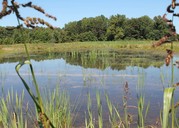
Landowners and agricultural producers currently enrolled in the Conservation Reserve Program (CRP) now have a wider opportunity to enroll in a 30-year contract through the Clean Lakes, Estuaries, And Rivers initiative, called CLEAR30. The U.S. Department of Agriculture (USDA) is expanding CLEAR30 – a water-quality focused option available through CRP – to be nationwide now.
Interested producers with CRP contracts expiring September 30, 2021, should sign up by August 6, 2021. CLEAR30 provides an opportunity for producers to receive incentives for a 30-year commitment to water quality practices on their CRP land, building on their original 10- to 15-year CRP contracts.
These long-term contracts ensure that practices remain in place for 30 years, which improves water quality through reducing sediment and nutrient runoff and helping prevent algal blooms.
About CLEAR30
CLEAR30 was created by the 2018 Farm Bill to better address water quality concerns. Originally, CLEAR30 was only available in the Great Lakes and Chesapeake Bay watersheds. Now, access is expanded to agricultural producers nationwide.
Eligible producers must have certain water quality benefitting practices currently enrolled under continuous CRP or through the Conservation Reserve Enhancement Program (CREP), under contracts that are expiring on September 30, 2021.
These long-term contracts will help ensure that conservation impacts and benefits remain in place for 30 years, reducing sediment and nutrient runoff and, ultimately, algal blooms. Conservation in riparian areas also provides important carbon sequestration benefits. Traditional CRP contracts run from 10 to 15 years.
Annual rental payments for landowners who enroll in CLEAR30 will be equal to the current Continuous CRP annual payment rate plus a 20% water quality incentive and annual rate adjustment of 27.5%.
How to Sign Up
To sign up for CLEAR30, contact your local USDA Service Center by August 6, 2021. While USDA offices may be closed to visitors because of the pandemic, Service Center staff continue to work with agricultural producers via phone, email, and other digital tools. To conduct business, please contact your local USDA Service Center. Contact information can be found at farmers.gov/service-locator.
|

The USDA Natural Resources Conservation Service (NRCS) is looking for qualified candidates to fill several positions across the state. Interested individuals have until July 15 to apply. The NRCS is a Federal Agency within the U.S. Department of Agriculture. It works with private landowners to help them conserve and protect natural resources on their property. More information about the positions available, locations, qualifications, and a direct link to the application website for each position is available on the Nebraska NRCS website – www.ne.nrcs.usda.gov.
|
Jeff Nichols has been selected as the State Rangeland Management Specialist for the Natural Resources Conservation Service (NRCS) in Nebraska. He began the position June 21.
The State Rangeland Management Specialist is the primary leadership position for all NRCS rangeland programs. This includes a variety of duties such as training employees, developing/distributing technical information, maintaining relationships with stakeholders/partner organizations, and providing an advisory capacity to various committees and groups.
Nichols brings to this position over 30 years of experience with an agronomy and range management background. He will be leading the NRCS in providing technical assistance on issues that occur on grazing lands such as invasive species, drought, wildfires, hail, and pest loss. Emphasis will be placed upon promoting grazing management strategies that are profitable for producers, while maintaining or improving the overall health of the grazing lands resource.
He plans to place an immediate focus on efforts to slow the Eastern Red Cedar encroachment affecting much of the state’s rangelands. This is an area of specialty he has had success dealing with previously through brush management in combination with prescribed burning.
For more information about rangeland conservation and other programs and services available from NRCS, visit your local USDA Service Center or www.ne.nrcs.usda.gov.
June 15, 2021 – FSA County Committee election season begins with opening of candidate nomination period
July 5, 2021 – USDA Service Centers closed for federal holiday
July 12, 2021 – FSA begins accepting applications for Conservation Reserve Program (CRP) Grasslands
July 15, 2021 – FSA deadline to report all spring-seeded crops, perennial forage and CRP acreage
July 15, 2021 – FSA deadline for reporting 2020 production for those enrolled in the Agriculture Risk Coverage (ARC)-Individual program
July 15, 2021 – End of primary nesting season for CRP program purposes
July 16, 2021 – Community Compost and Food Waste Reduction pilot project application deadline
July 19, 2021 – NRCS Conservation Innovation Grant proposal deadline
July 23, 2021 – FSA deadline to submit applications for CRP General signup 56
July 30, 2021 – Grant submission deadline for Urban Ag and Innovation Production projects
August 2, 2021 – FSA deadline to request farm transfers or reconstitutions for 2021
August 2, 2021 – FSA deadline to submit a candidate nomination for FSA County Committee election
August 6, 2021 – FSA deadline to submit applications for CRP CLEAR30 signup 55
August 20, 2021 – FSA deadline to submit applications for CRP Grasslands
OPERATING/OWNERSHIP
Farm Operating: 1.875%
Microloan Operating: 1.875%
Farm Ownership: 3.25%
Farm Ownership - Joint Financing: 2.5%
Farm Ownership - Down Payment: 1.5%
Emergency - Actual Loss: 2.875%
FARM STORAGE
Farm Storage Facility Loan 3 year term: 0.375%
Farm Storage Facility Loan 5 year term: 0.875%
Farm Storage Facility Loan 7 year term: 1.25%
Farm Storage Facility Loan 10 year term: 1.625%
Farm Storage Facility Loan 12 year term: 1.750%
MARKETING ASSISTANCE
Commodity Loan: 1.125%
|








