Wyoming State Newsletter

View as a webpage / Share

Wyoming State Newsletter  -  May 21, 2021

USDA Offers Disaster Assistance for Producers Facing Inclement Weather

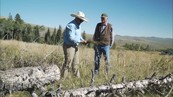
Image of Brush Management depicting two people in a field

Severe weather events create significant challenges and often result in catastrophic loss for agricultural producers.

Despite every attempt to mitigate risk, your operation may suffer losses. USDA offers several programs to help with recovery.

Risk Management

For producers who have risk protection through Federal Crop Insurance or the Noninsured Crop Disaster Assistance Program (NAP), we want to remind you to report crop damage to your crop insurance agent or the local Farm Service Agency (FSA) office.

If you have crop insurance, contact your agency within 72 hours of discovering damage and be sure to follow up in writing within 15 days. If you have NAP coverage, file a Notice of Loss (also called Form CCC-576) within 15 days of loss becoming apparent, except for hand-harvested crops, which should be reported within 72 hours.

Disaster Assistance

USDA also offers disaster assistance programs, which is especially important to livestock, fruit and vegetable, specialty and perennial crop producers who have fewer risk management options.

First, the Livestock Indemnity Program (LIP) and Emergency Assistance for Livestock, Honeybee and Farm-raised Fish Program (ELAP) reimburses producers for a portion of the value of livestock, poultry and other animals that died as a result of a qualifying natural disaster eventor for loss of grazing acres, feed and forage. And, the Livestock Forage Disaster Program (LFP) provides assistance to producers of grazed forage crop acres that have suffered crop loss due to a qualifying drought.  Livestock producers suffering the impacts of drought can also request Emergency Haying and Grazing on Conservation Reserve Program (CRP) acres.

Next, the Tree Assistance Program (TAP) provides cost share assistance to rehabilitate and replant tree, vines or shrubs loss experienced by orchards and nurseries. This complements NAP or crop insurance coverage, which cover the crop but not the plants or trees in all cases.

For LIP and ELAP, you will need to file a Notice of Loss for livestock and grazing or feed losses within 30 days and honeybee losses within 15 days. For TAP, you will need to file a program application within 90 days.

Documentation

It’s critical to keep accurate records to document all losses following this devastating cold weather event. Livestock producers are advised to document beginning livestock numbers by taking time and date-stamped video or pictures prior to after the loss.

Other common documentation options include:

  • Purchase records
  • Production records
  • Vaccination records
  • Bank or other loan documents
  • Third-party certification

Other Programs

The Emergency Conservation Program and Emergency Forest Restoration Program can assist landowners and forest stewards with financial and technical assistance to restore damaged farmland or forests.

Additionally, FSA offers a variety of loans available including emergency loans that are triggered by disaster declarations and operating loans that can assist producers with credit needs.  You can use these loans to replace essential property, purchase inputs like livestock, equipment, feed and seed, or refinance farm-related debts, and other needs.

Meanwhile, USDA’s Natural Resources Conservation Service (NRCS) provides financial resources through its Environmental Quality Incentives Program to help with immediate needs and long-term support to help recover from natural disasters and conserve water resources. Assistance may also be available for emergency animal mortality disposal from natural disasters and other causes.

Additional Resources

Additional details – including payment calculations – can be found on our NAPELAPLIP, and TAP fact sheets. On farmers.gov, the Disaster Assistance Discovery ToolDisaster-at-a-Glance fact sheet, and Farm Loan Discovery Tool can help you determine program or loan options.

While we never want to have to implement disaster programs, we are here to help. To file a Notice of Loss or to ask questions about available programs, contact your local USDA Service Center. All USDA Service Centers are open for business, including those that restrict in-person visits or require appointments because of the pandemic.


CRP Haying and Grazing

Haying and grazing of CRP acres is authorized under certain conditions to improve the quality and performance of the CRP cover or to provide emergency relief to livestock producers due to certain natural disasters.  There are two types of haying and grazing authorization: non-emergency and emergency.

Emergency haying and grazing of CRP acres may be authorized within a county to provide relief to livestock producers in areas affected by a severe drought or similar natural disaster.  Emergency haying and grazing status is reviewed and authorized each Thursday using the U.S. Drought monitor.  Counties are approved for emergency haying and grazing due to drought conditions on a county by county basis, when a county is designated as level “D2 Drought - Severe” according to the U.S. Drought Monitor.

In general, non-emergency haying may be utilized every three years and non-emergency grazing may be utilized every two years. Additional grazing may be available to new and beginning farmers.

CRP participants requesting emergency or non-emergency haying and grazing must file a request with their county FSA office indicating the acres to be hayed or grazed before the activity begins.  

Before CRP acres are declared eligible for haying or grazing, a modified conservation plan developed by NRCS or a technical service provider must be obtained. The modified conservation plan must be site specific, include the authorized duration and reflect local wildlife needs and concerns. The primary purpose must be to maintain vegetative cover, minimize soil erosion and protect water quality and wildlife habitat quality. These plans must ensure no long-term damage to the conservation cover is caused.

Emergency haying and grazing is authorized on all practices outside the primary nesting season including practices implemented under State Acres for Wildlife Enhancement (SAFE) such as CP38E SAFE-Grass when such activity is specifically outlined in the SAFE agreement. Contact your local office for State Specific restrictions related to SAFE.  For non-emergency haying and grazing, all practices are eligible except for CP12 Wildlife Food Plot and several tree practices. Contact your FSA office for a full list of ineligible practices.

Acres ineligible for both emergency and non-emergency haying and grazing include acres devoted to:

  • Useful life easements;
  • Land within 20 feet of a stream or other permanent water body; and
  • Any acres where haying and or grazing would cause long-term damage to the CRP cover.

For more information on CRP haying and grazing visit fsa.usda.gov/crp or contact your FSA county office. To locate your FSA office, visit farmers.gov/service-locator.


USDA Supports Military Veteran’s Transition to Farming

Are you a military veteran interested in farming? USDA offers resources to help you:

Fund Your Operation: USDA’s Farm Service Agency offers a variety of funding opportunities to help agricultural producers finance their businesses. Certain funds are targeted for veterans and beginning farmers and ranchers.

Conserve Natural Resources: USDA’s Natural Resources Conservation Service offers conservation programs and expert one-on-one technical assistance to strengthen agricultural operations now and into the future. Veterans may be eligible for a cost share of up to 90 percent and advance payments of up to 50 percent to cover certain conservation practices.

Manage Risks: USDA is here to help you prepare for and recover from the unexpected. Veterans who are beginning farmers may be eligible for reduced premiums, application fee waivers, increased insurance coverage, and other incentives for multiple USDA programs that support risk management.

USDA wants to ensure that veterans transitioning to agriculture have the resources needed to succeed. While USDA offices are currently closed to visitors because of the pandemic, Service Center staff continue to work with agricultural producers via phone, email, and other digital tools. To conduct business, please contact your local USDA Service Center. Additionally, more information related to USDA’s response and relief for producers can be found at farmers.gov/coronavirus. If you’re a new farmer, you can also reach out to your state Beginning Farmer and Rancher Coordinator.


Change to Policy on Filing a Notice of Loss for Grazed Forage Producers with NAP Coverage

Range

For the 2021 and subsequent crop years, NAP forage producers with the intended use of grazing who elect to use independent assessments or other approved alternative loss percentage methods to establish their loss are no longer required to file a CCC-576 Notice of Loss with FSA.  However, a CCC-576 Application for Payment form must be submitted to FSA no later than 60 calendar days after the coverage period ends.

Producers that elect to have the grazing loss determined using similar mechanically harvested units still must timely file a CCC-576 Notice of Loss within 15 days of the disaster event or damage to the crop first becomes apparent or within 15 days of harvest.


Supervised Credit from FSA

Farm Service Agency (FSA) farm loans are considered supervised credit. Unlike loans from a commercial lender, FSA loans are intended to be temporary in nature. Our goal is to help you graduate to commercial credit, and our farm loan staff is available to help borrowers through training and credit counseling.

The FSA team will help borrowers identify their goals to ensure financial success. FSA staff will advise borrowers on developing strategies and a plan to meet your goals and graduate to commercial credit. FSA borrowers are responsible for the success of their farming operation, but FSA staff will help in an advisory role, providing the tools necessary to help you achieve your operational goals and manage your finances.

For more information on FSA farm loan programs, visit your County USDA Service Center at  fsa.usda.gov.


Wyoming State Office

951 Werner Ct.
Suite 130
Casper, Wyoming 82601

Phone: 307-261-5231
Fax: 855-415-3427

Jodene Johnson
Acting State Executive Director
Jodene.Johnson@usda.gov


State Committee:

Nancy Tarver - Chair
David Slover - Member
Lee Craig - Member
Ronald Givens - Member
Pete Arambel - Member


To find contact information for your local office go to www.fsa.usda.gov/wy