
Dear ARS Postdocs,
Please join us for our next installment of AgriCulture's Fall 2023 Postdoc Research Series webinars at 1:30pm EDT on Thursday, October 19th for a great lineup of postdoc research presentations!

Erin Pfarr Moreau, Ph.D.
Three decades of rust surveys in the United States reveal drastic virulence changes in oat crown rust
Erin's research interests fall at the intersection of horticultural and small grains genetics, breeding, and pathology. At the Cereal Disease Laboratory in St. Paul, MN, Erin’s postdoctoral research revolves around oat crown rust (OCR) resistance. Her main projects entail fine mapping an OCR resistance gene and searching for novel sources of resistance in wild oat species. In this seminar, Erin will be presenting a meta-analysis of 30 years of the Cereal Disease Lab’s OCR virulence surveys. The results show a highly variable pathogen that is quickly overcoming OCR resistance genes. There are also regional virulence differences between Northern and Southern isolates that are likely driven by the northern presence of the alternate host, common buckthorn. Understanding how the OCR pathogen is changing over time is essential for determining which resistance genes to use in breeding for development of OCR resistant cultivars for sustainable and profitable oat production.
Cereal Disease Laboratory
|

Ecological restoration in the face of greater climatic extremes
I conduct research in restoration ecology, invasive species management and broader ecological themes in rangeland ecosystems around the world. I'm particularly interested in the spatial contexts of biotic interactions and abiotic processes at varying scales. The research in this presentation explores how we can maximize current ecosystem restoration efforts in the face of increasing extreme climatic events. For plant restoration, many efforts focus on planting in a single year following disturbance. We propose a risk-mitigation approach wherein plantings are conducted across multiple years for all projects using a bet hedging strategy.
Range and Meadow Forage Management Research
NP 215 - Grass, Forage, and Rangeland Agroecosystems
|

Piyush Pandey, Ph.D.
Phenotyping individual plants in UAS images using deep learning and computer vision
I work with maize plant images acquired using unoccupied aerial systems (UASs) to extract plant traits at the individual level. Individual plant traits are important in precision agriculture applications and in genetics research such as in mutant screening experiments. Using UAS images for this purpose requires the delineation of individual plants in field images and is an intractable task if attempted manually. Using computer vision tools for detecting maize plants at the early growth stage, I work on tracking the individual plant through the growing season. The tools that I have developed for my research can also be used for similar problems in agriculture and environmental monitoring.
Plant Genetics Research Unit
NP301 - Plant Genetic Resources, Genomics and Genetic Improvement
|
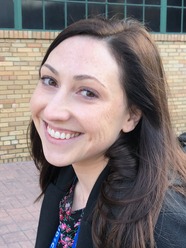
Rebecca Dupre, Ph.D.
Off-flavors in fish: the role of accurate quantification in prevention and remediation
Rebecca is a former ORISE postdoc and recent SY hire in the Food Processing and Sensory Quality Research Unit. Having earned her Ph.D. in Chemistry, she is passionate about using instrumental analyses in problem-solving. Off-flavors in farm-raised fish contribute to major economic losses for the aquaculture industry, and the most common off-flavor compounds are the terpenoids geosmin and 2-methylisoborneol. Rebecca's research focuses on obtaining high-quality quantitative data using GCMS and applying that information to understand the dynamics of GSM and MIB within aquacultural systems. Identification of effective strategies for eliminating off-flavors in fish inherently depends upon robust and accurate testing methods.
Southern Regional Research Center
|
We look forward to seeing you all then!
The AgriCulture subcommittee
Zoom info:
Join us for an "Postdoc Research Talks"
Join ZoomGov Meeting
https://www.zoomgov.com/j/1615703416
Meeting ID: 161 570 3416
One tap mobile
+16692545252,,1615703416# US (San Jose)
+16468287666,,1615703416# US (New York)
Dial by your location
+1 669 254 5252 US (San Jose)
+1 646 828 7666 US (New York)
+1 551 285 1373 US
+1 669 216 1590 US (San Jose)
Meeting ID: 161 570 3416
Find your local number: https://www.zoomgov.com/u/abWiLE47eh
Join by SIP
1615703416@sip.zoomgov.com
Join by H.323
161.199.138.10 (US West)
161.199.136.10 (US East)
Meeting ID: 161 570 3416
|