Buying Local for Child Nutrition Programs is Getting Easier!
USDA’s Food and Nutrition Service (FNS) recently expanded the strategies available to child nutrition program (CNP) operators when using the geographic preference option to buy local foods. On April 25, USDA published the final rule, Child Nutrition Programs: Meal Patterns Consistent With the 2020-2025 Dietary Guidelines for Americans. The rule implements a broad range of changes to CNP meal patterns to make meals more nutritious than ever. The changes include expanding the geographic preference option to allow “local as a specification.” Under this expansion, CNP food purchasers will be able to require in their solicitations that unprocessed agricultural products be locally grown, raised, or caught. The USDA Patrick Leahy Farm to School Team understands the value of strong connections with local food producers, and is working hard to help CNP operators get the most out of the geographic preference option. On Thursday, June 20, at 2 p.m. ET, the Patrick Leahy Farm to School Team will host a webinar for farm to school partners on the expanded geographic preference option. Registration for the webinar is open!
|
EPA Announces Communities for 2024 Local Foods, Local Places Program
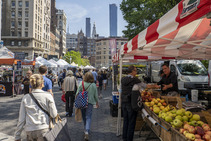
Recently, the U.S. Environmental Protection Agency (EPA), in partnership with the Appalachian Regional Commission, selected six communities to receive technical assistance through the Local Food, Local Places program. This shared effort will develop local food systems to advance environmental protection, strengthen local economies, and further sustainability goals. The program also helps integrate food system assets into communities, boosting local revitalization efforts and encouraging more active lifestyles, thereby improving overall quality of life, especially within marginalized communities.
|
June is National Dairy Month!
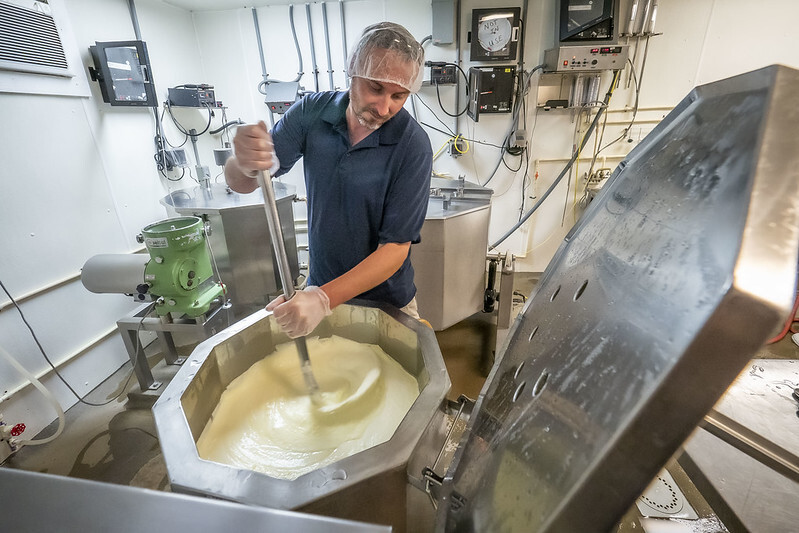 USDA AMS is proud to support the dairy industry with programs like the Dairy Business Innovation (DBI) Initiatives. Since its inception in 2019, the DBI Initiatives have been supporting dairy businesses in the development, production, marketing and distribution of dairy products. DBI Initiatives provide direct technical assistance and grants to dairy businesses, including niche dairy products, such as specialty cheese, or dairy products derived from the milk of a dairy animal, including cow, sheep and goat milk. Current grantees of the initiative include the University of Tennessee; Vermont Agency of Agriculture, Food & Markets; University of Wisconsin and California State University, Fresno. The next time you find yourself shopping at a local market, be sure to thank your dairy farmers for all their hard work!
Each month, we highlight the work of Farmers Market and Local Food Promotion grant recipients.
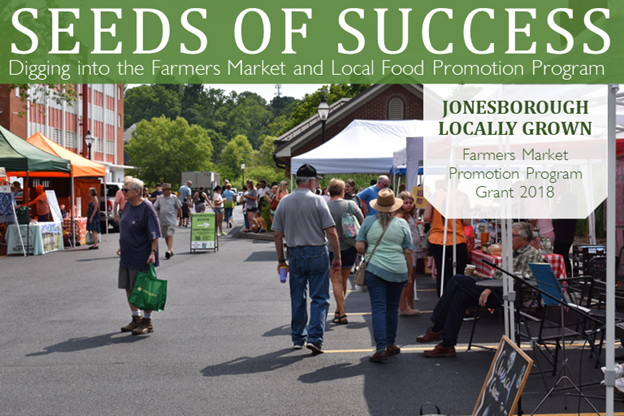
Jonesborough Locally Grown (JLG) started its first farmers market in 2008 and became a non-profit organization in 2013, expanding to two producer-only markets in the area. Over the years, JLG has supported over 200 farmers through marketing trainings for new and beginning farmers, community events like their annual Farm to Table Dinner, and more. To help increase foot traffic and sales through more events and marketing, JLG applied for and received a 2018 Farmers Market Promotion Program (FMPP) grant for $174,441. Read more about JLG’s strategies in their new Seeds of Success feature.
.
June
Rural Cooperative Development Grant Program: This program aims to improve the economic condition of rural areas by helping individuals and businesses start, expand or improve rural cooperatives and other mutually-owned businesses through Cooperative Development Centers. Grant funds can be used to operate a Rural Cooperative Development Center that serves eligible rural areas by conducting feasibility studies, developing business plans, and providing leadership and operational improvement training.
Application Deadline: June 3
Grassland Conservation Reserve Program: This program aims to help landowners and operators protect grasslands while maintaining the areas as grazing lands. This is a federally-funded voluntary program that contracts with agricultural producers so that environmentally sensitive agricultural land is not farmed or ranched, but instead used for conservation benefits. The Farm Service Agency provides participants with rental payments and cost-share assistance, and contract duration is 10 or 15 years.
Signup Deadline: June 28
July
Regional Conservation Partnership Program (RCPP): This program is a partner-driven approach to conservation that funds regional solutions to natural resource challenges on agricultural land. There are two separate funding opportunities: RCPP Classic and RCPP Alternative Funding Arrangements (AFA). RCPP Classic projects are implemented using Natural Resources Conservation Service contracts and easements with producers, landowners and communities in collaboration with project partners. Through RCPP AFA, the lead partner works directly with agricultural producers to support the development of innovative conservation approaches that would not otherwise be available under RCPP Classic. Learn more through upcoming webinars.
Application Deadline: July 2
Outreach and Assistance for Socially Disadvantaged and Veteran Farmers and Ranchers (2501 Program): The goal of this program is to encourage and assist underserved farmers and ranchers and military veteran farmers and ranchers with owning and operating farms and ranches and in participating equitably in the full range of programs offered by USDA. Grants are awarded to community-based, non-profit organizations, and eligible tribal entities with at least three years of experience in working with socially disadvantaged farmers and ranchers or veteran farmers and ranchers. Individual farmers and ranchers are not eligible to apply for 2501 Program grants.
Application Deadline: July 5
|