|
USDA Transition to Organic Partnership Program Highlighted at Iowa Summer Field Days
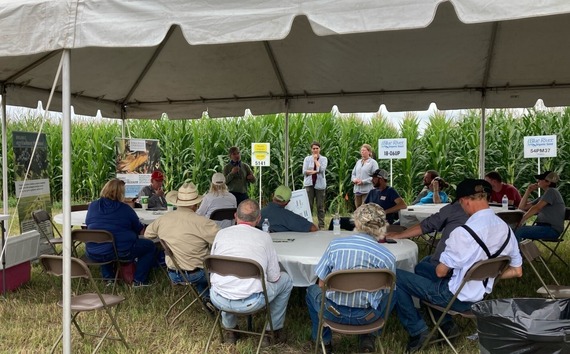
Photo: The Iowa State University Organic Ag Program and Midwest TOPP project were main topics during on-farm and research station field days.
Iowa State University’s (ISU) Organic Agriculture Program, a USDA Transition to Organic Partnership Program (TOPP) core partner, recently participated in four field days in Iowa. The field days focused on TOPP initiatives, research-based farming and practical farming solutions for organic growers and those interested in transitioning to organic. The 256 attendees learned about TOPP and agronomic, economic and environmental benefits of organic practices in light of climate change challenges.
Featured events included a Practical Farmers of Iowa Field Day, demonstrating organic no-till soybeans at A&W Farms in Cambridge; organic no-till black beans at the Rodale Midwest Organic Center in Marion; the long-term comparison of organic and conventional crop rotations at ISU Neely-Kinyon Farm in Greenfield; and an on-farm tour of organic corn varieties and weed management equipment at Shriver Farm in Jefferson, a family farm that uses modern organic farming practices and weed control on its 1,800 organic acres. Farmer Scott Shriver, whose farm transitioned to organic in 1998, hopes to mentor an aspiring organic farmer in the region through the TOPP mentorship program.
Field day speakers included plant breeders from the ISU Agronomy Department, a soil scientist from the USDA Agricultural Research Service, National Lab for Ag and the Environment, and several organic farmers. Discussions covered best practices for organic corn, soybean, wheat and rye production, fertilizing and weed management. Speakers also shared the benefits of using longer crop rotations, well thought out manure applications and cover crops, which have resulted in greater soil quality in the organic fields at the ISU Neely-Kinyon Farm.
Diversity, Creativity, and Joy – Southeast TOPP Partner Meeting Showcases the Strength of the Organic Community
Photo: More than 30 TOPP partner organizations from seven states and two territories came together for the first Southeast TOPP Partner Annual Meeting.
Florida Organic Growers (FOG), the Southeast Regional Lead for the USDA Transition to Organic Partnership Program (TOPP), recently coordinated its first annual meeting of partner organizations across the region’s seven states and two territories. Over two days, more than 30 partners shared milestones and success stories from year one and brainstormed strategies to support the organic community through the next four years of the TOPP. Many partners noted the immense value of networking with peer organizations across the region to exchange information and discuss similar successes and challenges.
The partners shared photos and data to showcase outreach and support to transitioning farmers in Mississippi, Alabama, and Louisiana. They highlighted the development of technical assistance and educational opportunities with regional universities, community building and events that brought producers together in Puerto Rico and Georgia. They also shared the creative solutions that certifiers in South Carolina and producers in the U.S. Virgin Islands are developing to overcome barriers and bring new opportunities to producers across the Southeast.
If you had walked past the meeting room, you might have thought there was a boisterous family reunion happening as the attendees formed new relationships – all with a lot of laughter, storytelling, and joy. Colleagues who had known each other for decades happily reconnected, and partners who had only met over Zoom greeted each other in person with wide smiles. Bringing the partners together provided a forum to discuss challenges that TOPP will help address in the months and years to come.
TOPP Field Day in Kansas Stirs Curiosity
About USDA Organic
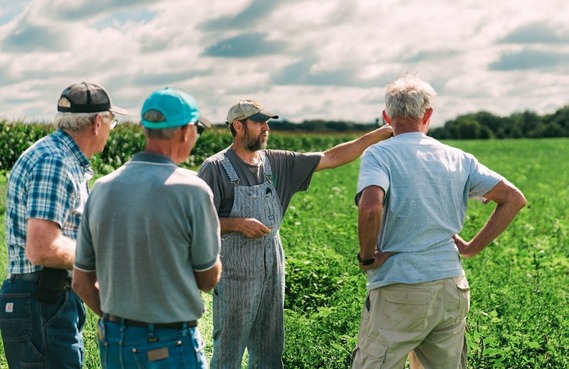 |
Photo: Plains region farmers listen and learn in the fields of Brad Edelman's certified organic farm.
The USDA Transition to Organic Partnership Program (TOPP) is paving the way for farmers to educate fellow members of the agricultural community on organic production practices, markets and certification. Curious farmers are attending free organic farm tours and sessions on transitioning to organic and taking advantage of technical assistance resources and mentorships available through TOPP.
In hopes of helping producers in Colorado, Kansas, Nebraska, North Dakota, Oklahoma and South Dakota realize their goals of organic production, TOPP’s Plains regional lead Organic Crop Improvement Association (OCIA) and state partners have been holding events to reach producers interested in transitioning to organic and those looking to expand their existing organic acreage.
Recently, OCIA held a TOPP field day on Brad Edelman's certified organic farm in Sabetha, Kansas, where certified organic producers and farmers enjoyed networking and hearty conversations around on-farm organic practices and solutions to common challenges in organic production.
The field day included a wagon tour of the farm, presentations on organic cover crops and organic transition, and a panel discussion that allowed experienced organic farmers to share their experiences with those interested in organic. They also discussed what is working well for organic producers in the Plains region.
About the Transition to Organic Partnership Program
The USDA Transition to Organic Partnership Program (TOPP) is investing up to $100 million over five years in cooperative agreements with non-profit organizations who are partnering with others to provide technical assistance and wrap-around support for transitioning and existing organic farmers. USDA is building partnership networks in six regions across the United States with trusted organizations serving direct farmer training, education, and outreach activities.
For more information on upcoming TOPP events, mentorship opportunities, and farmer resources in your region, visit OrganicTransition.org. Visit USDA's TOPP Success Stories page to read about the exciting work being done in communities throughout the United States.
|