What’s New in Commodity Procurement?
Trade Mitigation Continues
On August 27, 2018, Secretary of Agriculture Sonny Perdue announced the U.S. Department of Agriculture was authorizing monies for trade mitigation programs, meant to offset unjustifiably high tariffs on U.S. agricultural products. Commodity Procurement Program (CPP) administers one of those programs, the Food Purchase and Distribution Program (FPDP). Through this program, CPP is purchasing approximately $1.2 billion worth of commodities.
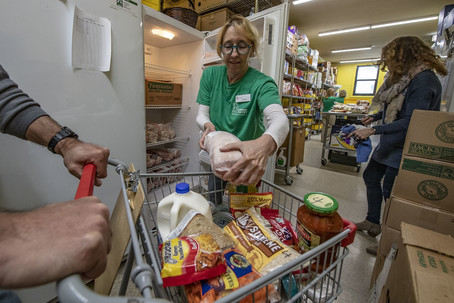
On May 23, 2019, Secretary Perdue announced another $1.4 billion would go to purchasing surplus commodities affected by trade retaliations. This will go to buying fruits, vegetables, meat and dairy products, which will go to food banks, school lunch programs, and other programs serving low-income individuals.
USDA will also continue its commodity purchases for other domestic and international nutrition assistance programs. For a complete list of purchase activity, please visit https://www.ams.usda.gov/selling-food/solicitations
EDI Pilot Program Begins
The U.S. Department of Agriculture’s Web Based Supply Chain Management (WBSCM) program is now pleased to offer its domestic trading partners (vendors, suppliers, and business partners) an Electronic Data Interchange (EDI) service. EDI is a secure, private business-to-business (B2B) communication channel that will provide a variety of service offerings that can help reduce costs, increase processing speed, and eliminate errors associated with manual data entry. Initially, EDI will be available for the following activities:
- Commodity Purchase Order
- Commodity Purchase Order Change Request
- Functional Acknowledgement
Anticipated future offerings include purchasing and shipment documents, such as:
- Advance Shipping Notification (ASN)
- Goods Receipts (GR)
- Freight Purchase Orders
- Service Purchase Orders
- Invoice
Contact us at wbscmedi@usda.gov for more information. Our team of experts will work with you to implement the service so that you may begin enjoying the benefits of EDI as quickly as possible.
Events
Commodity Procurement's Hilary Cole Presents at ACDA
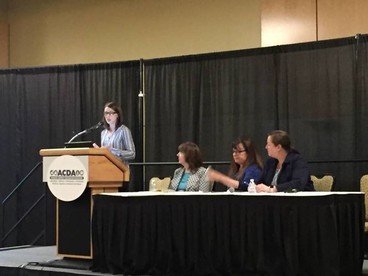 CP’s Hilary Cole presented at the American Commodity Distribution Association (ACDA) in May. She discussed how a request for a USDA Foods item goes from a concept to an acquisition. Cole is the Branch Chief for CPP's Livestock, Poultry, and Fish team.
Web-Based Supply Chain Management New Vendor Training in June
CPP will provide domestic commodity vendors a free, live, one-hour interactive training session on June 20 on the WBSCM system that covers the bidding process. The training will include utilizing the export/import option, plus entering multiple plant offers and constraints. To register, submit your name, email address, phone number, and company name to the WBSCM Help Desk at WBSCMAMSHelpDesk@ams.usda.gov.
|