 Sonia Jimenez
Deputy Administrator, Specialty Crops Program
As we reflect on the successes of 2018 and look forward to 2019, the Specialty Crops Program (SCP) is enthusiastic about where we’ve been and where we’re headed. In concert with Agricultural Marketing Service (AMS) leadership, several areas of focus direct our activity moving into the new year:
- Roll out MyMarketNews, a digital database providing large sets of multi-year market news data to users in a common format for all market areas.
- Revise laboratory practices by ensuring laboratory procedures are consistently applied and meet recognized quality standards.
- Embrace upgraded technology by developing a new IT system that processes inspection requests, incorporates audits, issues certificates and handles billing into a single, seamlessly integrated structure.
- Develop a service matrix and plan of action to modernize and gain efficiencies to ensure grading services are meeting customer’s needs in today’s environment.
- Maximize customer experience and efficiency by implementing E-Voting for checkoff programs.
- Increase support for Trade Mitigation, Food Assistance and other feeding programs through economic analysis, standards and audit services.
- Improve government efficiency through the development of business practices allowing us to fill vacancies in a timely manner.
- Promote Employee Engagement with input from employee work groups and committees aimed at increasing employees’ commitment with the new AMS, our mission and strategic goals.
- Work closer with industry as a true “Partner in Produce” and collaborate with States and other agencies by embracing our collective spirit of service for the advancement of our shared stakeholders.
SCP begins 2019 moving aggressively on these agenda items and many others, embracing our industry’s support in moving American agricultural interests both domestically and abroad.
In this issue, we highlight our Promotion & Economics Division (PED) and the twelve commodity boards we work with to benefit the agricultural industry. We’ll touch on the $3.7 million of assistance available to fruit and vegetable growers in sixteen states through the GAP Assistance Program. We also have great information on the AMS Commodity Procurement Food Purchase and Distribution Program and the initial contracts awarded in the dispersal of the allotted $1.2 billion package.
Finally, allow me to extend to you Best Wishes for a happy and healthy holiday season and our sincere thanks for allowing us to serve you in 2018. We look forward to working even closer with you in 2019!
|
Hakim Fobia
Promotion & Economics Division, Specialty Crops Program
The Specialty Crops Program plays a vital role in Agricultural Marketing Service (AMS) oversight of 22 Research and Promotion (R&P) boards empowering farmers, ranchers and agricultural businesses. Every R&P program’s mission is to maintain and expand the markets for its commodity.
SCP’s Promotion & Economics Division (PED) is responsible for twelve of those R&P programs. PED helps ensure fiscal accountability and program integrity. In order to apply and enforce the legislative and regulatory provisions of checkoff acts and orders and promote consistency in oversight of all commodity promotion and research programs, PED and the boards follow written and approved guidelines. The board members and staff direct and carry out programs and day-to-day board management responsibilities.
The links below take you to each commodity board website where you can find details about the board and its activities in service to the agricultural industry:
Christmas Trees Paper & Packaging
Hass Avocados Peanuts
Highbush Blueberries Popcorn
Honey Potatoes
Mangos Softwood Lumber
Mushrooms Watermelons
SCP’s Promotion & Economics Division would be happy to hear from you. Please contact us at (202) 720-9915.
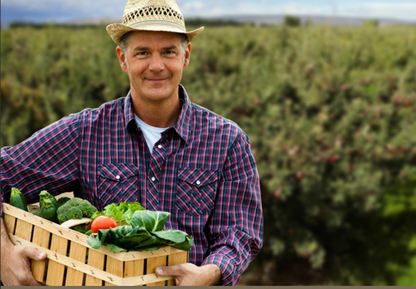 The U.S. Department of Agriculture will provide $3.7 million of financial assistance in 2019 to defray the costs of undergoing voluntary USDA Harmonized Good Agricultural Practices (GAP) audits administered by USDA’s Agricultural Marketing Service (AMS). The GAP Assistance Program will be available to fruit and vegetable growers in 16 states .
Beginning Jan. 2, 2019, USDA’s Risk Management Agency will provide Agricultural Management Assistance (AMA) funds to cover up to 100% of the cost of the Harmonized GAP audit and the Harmonized GAP Plus+ audit for farmers in the following states authorized by Congress to receive financial assistance for conservation and financial risk mitigation: Connecticut, Delaware, Hawaii, Maine, Maryland, Massachusetts, Nevada, New Hampshire, New Jersey, New York, Pennsylvania, Rhode Island, Utah, Vermont, West Virginia and Wyoming. The funding will be available to assist producers in 2019 or longer, depending on availability of funds.
If an AMA-eligible state is currently using a Specialty Crop Block Grant to offer GAP Cost Share to its producers, the state may request to reallocate the funds to other eligible expenditures.
The AMA funding is focused on Harmonized GAP and the Harmonized GAP Plus+ audits. They are the two most comprehensive audits USDA offers and give farmers the best market options for their products, while reducing the cost of separate audits for different buyer requirements.
Both audits are aligned with the technical provisions in FDA’s Food Safety Modernization Act Produce Safety Rule, meet the requirements for the Produce GAP Harmonization Initiative and demonstrate adherence to industry and FDA best practices. The USDA Harmonized GAP Plus+ audit additionally meets buyer requirements for Global Food Safety Initiative audits.
More information is available from AMS’ Specialty Crops Inspection Division, Audit Services Branch at (202) 720-5021 or scaudits@ams.usda.gov.

Robert Wintersteen
Commodity Procurement Program, Agricultural Marketing Service
USDA’s Agricultural Marketing Service (AMS), Commodity Procurement Program (CPP), is currently soliciting and awarding the first round of contracts for the Food Purchase and Distribution Program (FPDP). This will be a continuing effort throughout Fiscal Year 2019, with $1.2 billion allotted for this purchase program.
The program was created to provide an outlet for agricultural commodities that are negatively affected by tariffs. The average number of trucks purchased by CPP under the annual schedule is 64,862 per year. The estimated number of trucks that could potentially be purchased under this program is 33,847, a possible increase of 52 percent. These purchases will be for 28 different commodities throughout four phases covering delivery periods during the 2019 calendar year.
The table below highlights some of the contracts that have been awarded for this program thus far. For purchases that are coming up in subsequent quarters of FY 2019, please be sure to subscribe to CPP’s email list for more information about these upcoming bids.
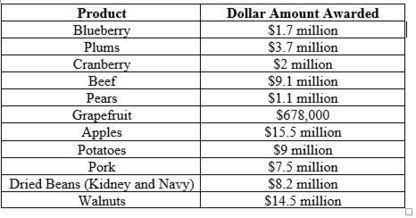 So far apples have represented the biggest awards made, with more than $15 million worth purchased amounting to about 60 million apples delivered. The products awarded so far will be delivered to 304 different locations, among them smaller food banks and large warehouses that will further distribute these commodities.
If your firm would like the opportunity to participate, AMS has resources available to help guide you through our qualification process. There are six steps for becoming a USDA approved vendor. A detailed guide available online at https://www.ams.usda.gov/selling-food/becoming-approved. Potential vendors can also view a brief webinar that lays out the steps of how to become approved. If you have any questions about the process, contact CPP at NewVendor@ams.usda.gov.
|