By David Wilkinson, Director, The White House Office of Social Innovation and Civic Participation
Government supports social programs to help foster better outcomes in people’s lives. We invest in workforce training programs to help people develop the skills they need to find good jobs and support their families; we invest in child welfare to provide stability in the lives of children who may be victims of abuse or neglect; we invest in early learning programs to set kids on a path for educational and life success.
Too often, however, we don’t create the best incentives for nonprofit service providers and for that reason we don’t always see the outcomes we’d like for our public investment. For instance, in the case of workforce training, we often compensate programs for how many people receive training, rather than how many trainees get jobs that pay family wages.
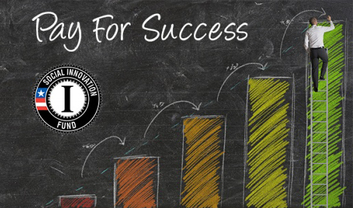
To be sure, we may get good results by funding proxies for success (training) rather than success itself (jobs). But logic and experience tell us that we get better results when we simply pay for the outcomes we want, when we pay for success. Enabling us to do just that is an innovative approach to social service funding appropriately called Pay for Success.
In a significant step for the field, the Corporation for National and Community Service announced 27 awards through its Social Innovation Fund PFS grant program. The winners – nonprofit organizations and state and local governments – will receive support from Social Innovation Fund intermediary grantees to find opportunities and develop capacity for PFS initiatives.
Read more on how Pay for Success is enabling governments to pay for outcomes, driving better results and making more efficient use of resources here.
 |
|
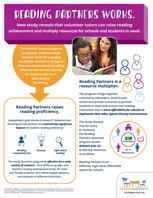
Reading Partners, a subgrantee of the Edna McConnell Clark Foundation, recently released a study showing community volunteers and AmeriCorps members can make a significant impact on student reading proficiency and are a low cost option for schools. Read more here. |
 Portfolio Spotlights
To engage diverse audiences - academia, philanthropy, policy
- in discourse and dialogue about the model that the SIF uses to scale what
works, the SIF KI compiles updates on the work of our intermediaries and
subgrantees. These spotlights aim to disseminate the work of our
intermediaries and subgrantees working in the fields of youth development, economic opportunity, healthy futures, and pay
for success.
|
CEO and Mayor's Fund Help Shape Policy with Evidence
Nearly a million New Yorkers earn less than $20,000 per year because they lack the skills needed to secure a living-wage job. Mayor Bill de Blasio’s Jobs for New Yorkers Task Force seeks to better understand and combat this “skills gap.”
The New York City Center for Economic Opportunity (CEO) is helping to fuel this effort. CEO brings years of experience designing and testing innovative economic opportunity programs as a unit under the Mayor’s Office of Operations, as well as a body of knowledge about effective workforce services from rigorous evaluations of these programs.
“We’re not just a funder,” said David Berman, CEO’s Director of Programs and Evaluation. “We partner with city agencies and nonprofits and evaluation firms. We are involved in program design and evaluation.”
Continue reading here.
CSH Improves Health and Lowers Care Costs for the Long-term Homeless
Individuals experiencing long-term homelessness also often suffer from medical fragility caused or aggravated by life on the streets and in shelters. Lacking stable access to housing and preventative health care services, they become “high-utilizers” of costly inpatient and emergency care.
The Corporation for Supportive Housing (CSH) advances high-quality solutions and cost-effective programs to improve the lives of the most vulnerable people in our society by supporting locally-based organizations that provide access to public resources that enable the chronically homeless to connect to homes, health care, and the community. As a Social Innovation Fund (SIF) intermediary, CSH is leading a project that integrates health care and housing for individuals with multiple, chronic health conditions who experience homelessness.
Continue reading here.
 Established in 1988, Global Youth Service Day (GYSD) celebrates and mobilizes the millions of young people who improve their communities through service. GYSD is the largest service event in the world and the only one dedicated to the contributions that children and youth make 365 days of the year. Serve and celebrate #GYSD on April 17-19, 2015. Learn how to get involved at gysd.org.
|
Do you have SIF News that should
be in our next newsletter? If so, please e-mail a quick summary and URL to innovation@cns.gov.
|