|
Next Meeting
August 11, 2022
10:00–11:00 a.m. EDT |
|
|
Chair, Inspector General Sandra D. Bruce, U.S. Department of Education
Vice Chair, Inspector General Jay Lerner, Federal Deposit Insurance Corporation
OIGs Represented on the Work Group
AmeriCorps, AbilityOne, AOC, CIGIE, CNS, DHS, DIA, DNI, DOA, DOC, DOD, DOE, DOI, DOJ, DOL, DOT, ED, EEOC, FCA, FDIC, FEC, FHFA, FRB & CFPB, GSA, HHS, HUD, NARA, NASA, NEA, NEH, NGA, NRO, NSA, NSF, PBGC, PRAC, SBA, SEC, SIGTARP, Smithsonian, SSA, State, USAID, USDA, USPS, VA
For more information about the work group mission, members, and resources, check out the CIGIE Diversity, Equity, Inclusion, and Accessibility Work Group website.
|
Message from the Chair & Vice Chair
Welcome to another issue of The Ally—your source for information on diversity, equity, inclusion, and accessibility (DEIA) in the Inspector General community! We’re thrilled to share this issue with you—once again, it's packed with useful information and personal perspectives that can help us on our journey of understanding, connection, and education.
We're excited to share (and reshare!) a huge success for the DEIA work group since our last issue. As many of you know, in June we issued "Advancing Diversity, Equity, Inclusion, and Accessibility: A Roadmap for Offices of Inspectors General." We could not be more proud of and impressed with the hard work and collaboration that went into bringing this product to life. And we do mean life: we will continue to update the roadmap as our community evolves, and this document is already leading to evolution in our community. As you can read below in the section Work Group Happenings, Inspector General Salehi, Export-Import Bank of the United States, shared how her small OIG is already collaborating internally and externally to implement the roadmap. We also heard the roadmap was shared and discussed this week at a training event with the Association of Government Accountants in California. And it's understandable why: with its 4 sections, 8 focus areas, 23 routes, and actions, metrics, references, and resources, the roadmap is a ground-breaking tool for OIGs of all sizes. We look forward to hearing more about how you put it to work in your agencies, and we welcome more input from the community as we plan to update it in the coming months. In October we'll add more information on safe and harassment-free workplaces, and in January we plan to update it with more information related to accessibility and other new content as needed.
|
|
Also in this issue, since we recently celebrated Independence Day in the United States, we share voices from our community and from descendants of Frederick Douglass about what independence means to our people, our country, and our history. These voices offer valuable perspectives as we continue our efforts to advance DEIA at OIGs and in our communities. We welcome your voice in the mix too. Please consider contributing a story, photo, or idea for our future issues; you may send them to Dorona.Chappelle@ed.gov.
Be safe, be kind, and take care.
Sandra and Jay
|
|
|
 Our Voices: Hearing from Our Community
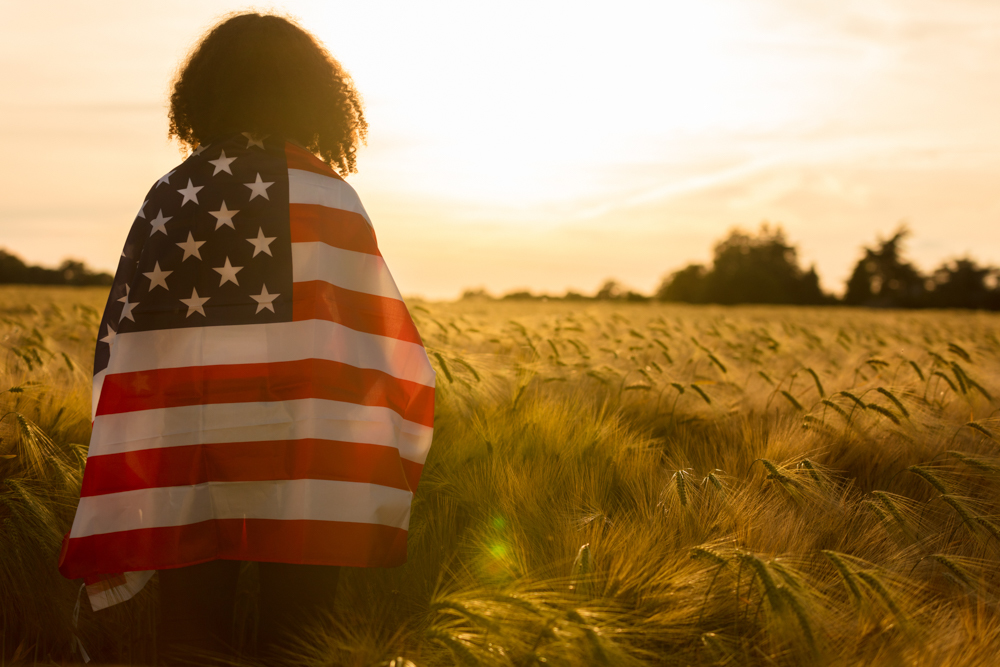
Reflections on Independence Day
Nancy Brown, Senior Counsel, Health and Human Services
Mari Farthing, Writer-Editor, U.S. Department of Education
For two little girls growing up on opposite sides of the rust belt, childhood is remembered as a patchwork of family and friends, a time to be naïve and happy amid the incredible diversity of the city streets they lived on. These girls, from completely different yet similar worlds, grew up believing that ethnic diversities were a way to understand others—and understanding “what someone was” allowed these kids a shorthand to understand the values and traditions of the many people around them. It was a way to bring people closer, acknowledging and celebrating differences but not judging them.
In celebration of the country’s bicentennial in 1976 in Milwaukee, Mari remembers a replica of the Liberty Bell visiting her grade school’s playground, while in Philadelphia that same year, Nancy remembers events happening just across the street from her family’s home to celebrate. This was the year that the meaning of “Independence Day” was explained to both girls.
In Mari’s blue-collar family, July 4 meant a big backyard cookout, one of three held each summer that would bring family and friends to the yard. Memorial Day kicked off summer, Labor Day put an endcap on it, and July 4 was her mom’s birthday—and it wasn’t until 1976 that she understood July 4 was also meant to celebrate the country. The family celebration grew to include the kids participating in the city’s parade, which this year included Mari’s red, white, and blue streamer-festooned bike (with a star-spangled banana seat and training wheels), which ended at a nearby park’s botanical gardens for a free dixie cup of vanilla ice cream. Even with the addition of the parade, the holiday remained primarily a family celebration. Life was lived in the moment; there wasn’t much consideration given to the past or the future, for that matter. The family enjoyed a perk of freedom—the ability to take it for granted.
In Nancy’s white-collar family, it was more complicated. Nancy’s parents moved to Philadelphia in the 1960s to gain a level of freedom and opportunity that wasn’t available to them even as college educated African Americans living in the South. For Nancy’s family, there was no family gathering, nor parade. Instead, the 4th of July was when Nancy’s father shared with her the irony he felt regarding celebrating the 4th of July. He introduced her to the words of the great African American orator, statesman and former enslaved individual, Frederick Douglass, who reflected on the celebratory nature of the 4th of July by stating:
I am not included within the pale of this glorious anniversary! Your high independence only reveals the immeasurable distance between us. The blessings in which you, this day, rejoice, are not enjoyed in common. The rich inheritance of justice, liberty, prosperity and independence, bequeathed by your fathers, is shared by you, not me …This Fourth of July is yours not mine.
Nancy’s father taught her that freedom was a relative concept and that the United States was still an imperfect union with more work to be completed so that true freedom could be enjoyed by all who live here. He also reminded her that this work was the responsibility of all, not just a select few.
Freedom means different things to different people—that was true in 1776, in 1976, and it’s true today. So as these two women, once little girls from rust belt cities, discussed their shared childhood ideas about freedom, they considered what Independence Day can mean to them now. They considered that America is still a very young nation with every opportunity to better its course as it moves forward into the future. Frederick Douglass was also full of great hope for the nation as he acknowledged that it was young. He said:
The eye of the reformer is met with angry flashes, portending disastrous times; but his heart may well beat lighter at the thought that America is young, and that she is still in the impressible stage of her existence. May he not hope that high lessons of wisdom, of justice, and of truth, will yet give direction to her destiny?
As allies, we work to understand one another, to celebrate the diversity of who we are and what we are, and to bridge gaps between our understanding. And when it comes to Independence Day, maybe it’s not a time to just reflect on the past or what freedom meant over 200 years ago, but to think about what freedom means to us now. Perhaps the 4th of July can become a day where we, as allies, intentionally take stock of where we are as a nation and recommit ourselves to standing up for liberty and freedom for all. Perhaps we can each find at least one way that we can thoughtfully commit ourselves to improving our world. In 1852, 13 years before the end of slavery, Frederick Douglass thought it was possible to make freedom a concept that all people can celebrate. In 2022, why shouldn’t we?
Read the full text of Frederick Douglass' speech.
|
|
Education and Awareness
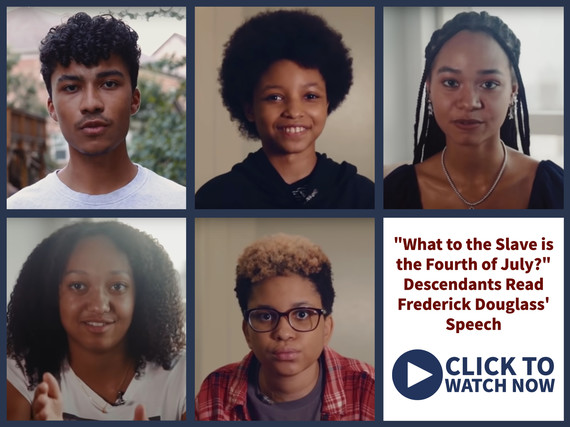 Click on the image above to watch a video of descendants of Frederick Douglass read his speech and discuss it in the context of our current times. Also on this past July 4, the National Park Service hosted a reenactment of this famous speech. If you missed out, you can mark your calendar for this annual event to see it next year. And in the meantime, you can learn more about Frederick Douglass and take a virtual tour at the Frederick Douglass National Historic Site in Washington, D.C.
|
|
 Work Group Happenings
June Meeting: Mindfulness and Mental Health
At our June work group meeting, Nicole Gardner, Special Agent in Change, and Jillisa Hope Milner, Managing Editor and Communications Specialist, both from the U.S. Department of Education OIG, shared information on mindfulness in the workplace.
Key Takeaways on Mindfulness
- The human stress response (otherwise known as "fight or flight") is natural and healthy, but humans weren't meant to stay in this state of stress long-term.
- Mindfulness is paying attention to your present moment experience with an attitude of openness and curiosity. Meditation is an exercise that increases your capacity to be mindful throughout the day.
- Mindfulness and meditation can help build resilience and counteract the effects of chronic stress. Consistent practice of mindfulness and meditation has emotional, cognitive, physical, and behavioral benefits.
Want to know more about it? Check out Nicole and Jillisa's slides, and these Top 10 Myths about Mindfulness.
July Meeting: Implementing the CIGIE DEIA Roadmap
At our July meeting, Parisa Salehi, Inspector General, Export-Import Bank of the United States, shared information about how her OIG has been collaborating to implement the DEIA Roadmap. Specifically, when the roadmap was issued, her OIG took three steps:
- First focusing on a tactical approach, senior leadership discussed the roadmap and asked teams to list 10 items for AIGs to advance DEIA for their office. They then prioritized the lists based on quick wins and longer term outcomes.
- Next focusing on a strategic approach, they shared the roadmap with their strategic planning group and asked them to incorporate it into the office's strategic plan.
- Finally, focusing on a grassroots approach, they looked for ways to get staff excited about implementing elements of the roadmap so it's not just a top-down movement.
Inspector General Salehi is also coordinating talks among small OIGs to facilitate collaboration and creative approaches to implementing the roadmap and advancing DEIA in their offices.
|
|
Observances
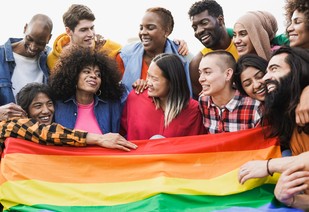
June: Pride Month
Pride Month is observed in June to honor the anniversary of the Stonewall Uprising, a touchstone event in LGBTQ history that laid the foundation for Pride. In the late 1960s, being openly gay was largely prohibited in most places. New York, in particular, had a rule that the simple presence of someone gay or gender queer counted as disorderly conduct, effectively outlawing gay bars.
On June 28, 1969, patrons of the Stonewall Inn, a popular bar with a diverse LGBTQ clientele, stood their ground after police raided the establishment. The resulting clash led to days of riots and protests, known as the Stonewall Uprising.
One year later, on the anniversary of the Stonewall Uprising, thousands of people flooded the streets of Manhattan in the Christopher Street Gay Liberation Day March, regarded as the first gay pride event ever.
Pride Month is a celebration and a call for greater unity, visibility, and equality for the LGBTQIA+ community.
SOURCE: What is Pride Month? Facts, Meaning and Why We Celebrate (today.com)
|

July: National Disability Independence Day
National Disability Independence Day is celebrated on July 26 to honor the anniversary of when the Americans with Disabilities Act (ADA) was passed (July 26, 1990). The ADA was passed by Congress as the nation’s first comprehensive law that prohibits discrimination and guarantees that people with disabilities have the same opportunities as everyone else. Importantly, the ADA does not focus solely on facilities any longer. Desktop computers, tablets, apps, and mobile devices are all required to be accessible—to everyone.
SOURCE: The Meaning of National Disability Independence Day – ADASURE
|
|
|
In Case You Missed It
Upcoming Events
Section 508 Best Practices: Information and Communication Technology Guidance for Implementing Accessibility into DEIA Plans in the Federal Workforce
Webinar: July 26 from 1:00 p.m. to 2:30 p.m. Eastern
Focus: General Services Administration’s “Executive Guide to Federal Information Technology Accessibility” and “Technology Accessibility Playbook”
For more details or to register, visit https://www.accessibilityonline.org.
|
|
We want to hear from you!
Share your stories with us! Everyone in the OIG community is encouraged to submit photos, stories, or ideas for future issues. Contact The Ally team at dorona.chappelle@ed.gov with your submissions, ideas, or feedback! Submissions for our next issue are due September 2.
Newsletter staff: Traci L. Taylor, DOI OIG; Katie Balestra, DOI OIG; Nancy Brown, HHS OIG; Mari Farthing, ED OIG; Adelle Harris, DOE OIG; Jina Hwang, FRB/CFPB OIG; Nicole Matthis, State OIG; Jillisa Hope Milner, ED OIG.
|
|
|
|
|