|
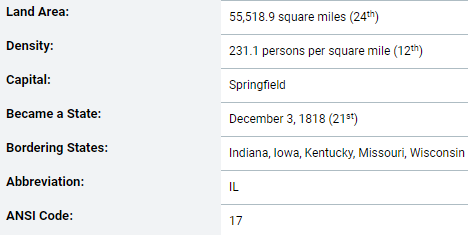
Illinois 203rd Anniversary of Statehood (1818):
December 3, 2021 |
|
|
|
|
|
|
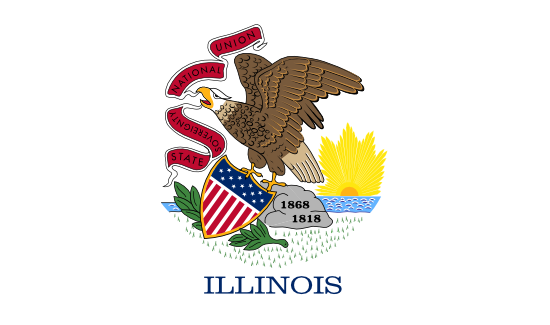
| Illinois joined the Union on December 3, 1818, as the 21st state. |
|
|
|
|
|
|
|
Nickname: The Prairie State
State Slogan: "Land of Lincoln"
State Animal: White-tailed deer
State Amphibian: Eastern tiger salamander
State Bird: Northern cardinal
State Fish: Bluegill
State Microbe: Penicillium rubens
State Tree: White oak
State Flower: Violet
State Fruit: GoldRush apple
State Grain: Corn
State Vegetable: Sweet corn
State Snack Food: Popcorn |
|
|
|
|
|
|
| The area of Illinois was part of the original territory of the United States, being part of lands ceded by four states to the United States and designated in 1787 as the "Territory northwest of the River Ohio." Illinois Territory was organized on February 3, 1809, from the western part of Indiana Territory, and included all of present-day Illinois, most of Wisconsin, the western part of the Upper Peninsula of Michigan, and northeastern Minnesota. |
|
|
|
|
|
|
|
Although the territory had not yet been legally established, census data for Illinois are available beginning with the 1800 census. The 1810 population is for the entire area of the Illinois Territory, including territory not in the present state.
|
|
|
|
|
|
|
| Data for the legally established state of Illinois are available beginning with the 1820 census. |
|
|
|
|
The following facts are available thanks to the public’s invaluable participation in U.S. Census Bureau surveys. We appreciate the information shared by each respondent as we continuously count and measure America’s people, places, and economy. |
|
|
|
|
|
The percentage of people in Illinois who have obtained at least a bachelor's degree
|
|
|
|
|
|
The total number of housing units in Illinois
|
|
|
|
|
|
The percentage of the labor force in Illinois who are employed
|
|
|
|
|
| 2020 Census: The Population of Illinois |
|
|
|
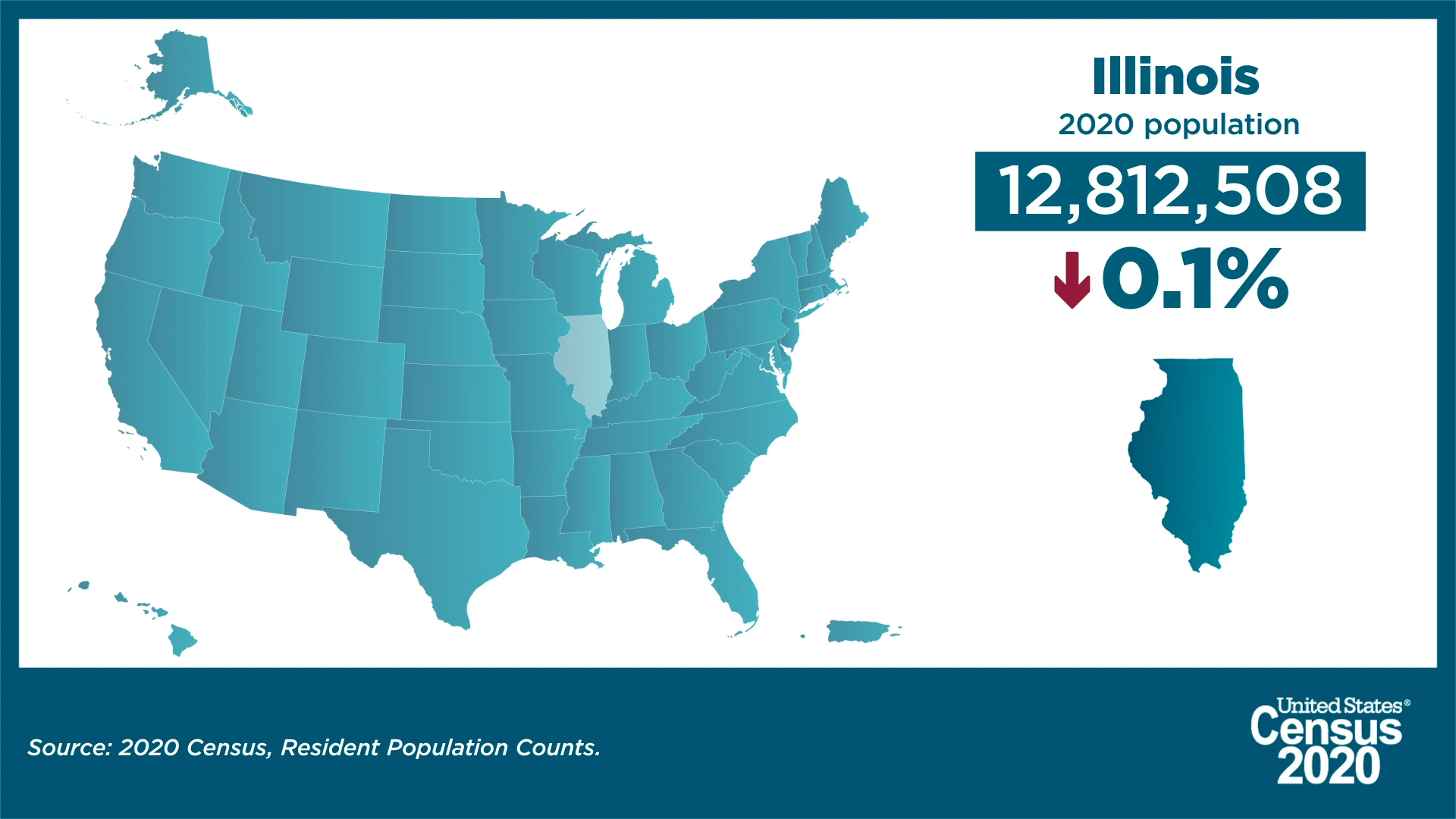
| The number of people living in Illinois was 12,812,508 as of April 1, 2020, a decrease of 0.1% since the 2010 Census. View Illinois’ population change by decade. |
|
|
|
|
| Illinois Population Down 0.1% in 2020 |
|
|
|
| America Counts has launched a state-by-state look at the demographic changes the new 2020 Census results reveal. |
|
|
|
|
| Our state profiles bring you key population characteristics of your state and your county all on one page. |
|
|
|
|
| See how they compare to the nation overall and to neighboring counties and states. Through interactive state and county maps for the 50 states, the District of Columbia and Puerto Rico, each page provides a snapshot of change from 2010 to 2020 on five topics. |
|
|
|
|
|
Did you know?
- The numeric change in population for Illinois from 2010-2020 was -18,124.
- The percentage of population aged 18 and older in Illinois was 78.0%, a total of 9,999,469 adults.
- This was an increase of 3.1% from the 2010 Census population aged 18 and older in Illinois.
|
|
|
|
|
 |
| About the Geographic Areas |
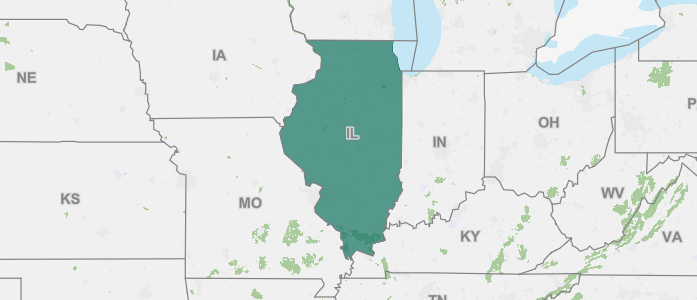
Illinois has 12 metropolitan statistical areas, 22 micropolitan statistical areas, 2 metropolitan divisions, and 7 combined statistical areas.
There are 102 counties in Illinois. All counties are functioning governmental units; each is governed by a board with between 5 and 29 members. |
|
|
|
|
|
| Foreign Trade |
Take a look at the various imports to and exports from Illinois. See where materials such as medicaments, immunological products, video game consoles and machines, tricycles and pedal cars, tractors, dump trucks designed for off-highway use, soybeans, corn, and more rank on both lists. Also, see lists of the countries that have sent the most imports by 2020 dollar value to Illinois and the countries that have received the most exported goods from Illinois as measured by 2020 dollar value.
|
|
|
|
|
|
|
|
|
|
|
|
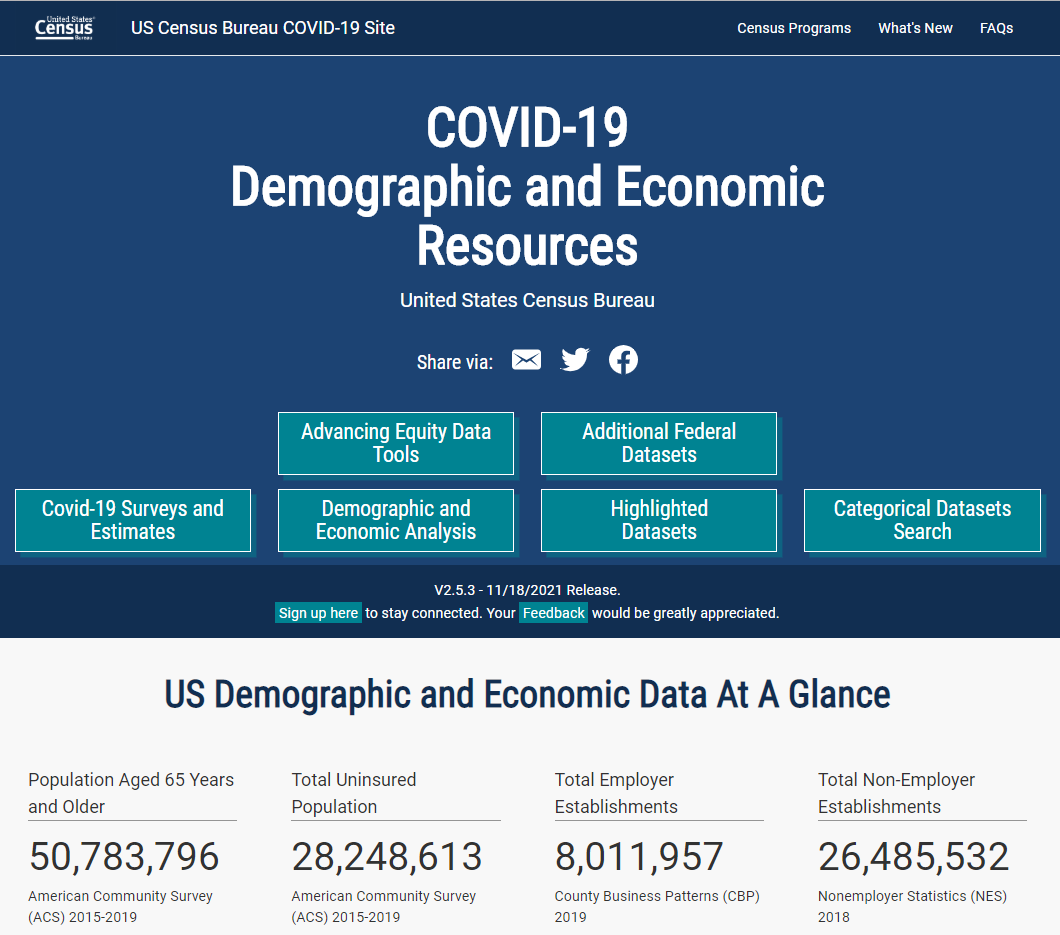
| View Illinois Statistics in Our COVID-19 Data Hub |
|
|
|
| View the state COVID-19 impact planning report. Take a look at new survey data and estimates. |
|
|
|
|
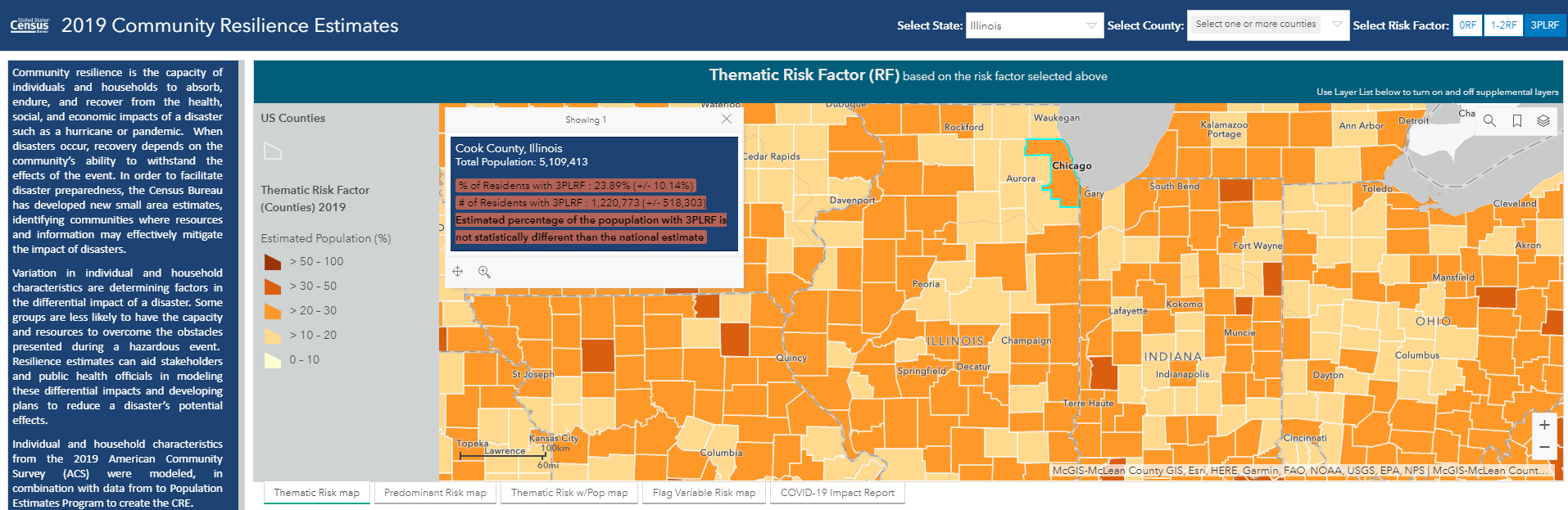
| Community Resilience Estimates: Illinois |
|
|
|
| Community resilience is the capacity of individuals and households to absorb, endure, and recover from the health, social, and economic impacts of a disaster such as a hurricane or pandemic. When disasters occur, recovery depends on the community’s ability to withstand the effects of the event. In order to facilitate disaster preparedness, the Census Bureau has developed new small area estimates, identifying communities where resources and information may effectively mitigate the impact of disasters. View Community Resilience Estimates for Illinois. |
|
|
|
|
| Looking For More Relevant Data and Information About Illinois? |
|
|
|
|
| Customize the data that you receive from the Census Bureau. When you click on the link for your state below, we will be able to provide you with more timely and relevant information. We'll be able to send you state-specific updates, upcoming events in your area, job opportunities, interactive data visualizations, and more. Take the next step today! |
|
|
|
|
|
Help us spread the word about Census Bureau data. Share this newsletter on social media or forward it to a friend. |
|
|
|
|
|
|
|
| About the Census Bureau |
| We serve as the nation’s leading provider of quality data about its people and economy. The Census Bureau is the federal government's largest statistical agency. We are a statistical organization focused on data. Policy-makers, businesses, and the public use our information to make far-reaching decisions. |
|
|
|
|
|
|
|
|
|
|