|
|
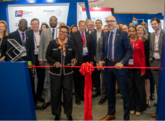
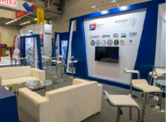
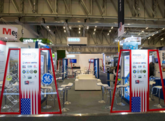
The power of partnership was in full force in Cape Town, South Africa, recently as Power Africa and the U.S. Commercial Service hosted the Power Africa U.S. Pavilion at Enlit Africa 2022.
The Power Africa U.S. Pavilion brought together 11 U.S. clean tech energy companies seeking market opportunities in sub-Saharan Africa. The 11 companies were part of a “CEO Program” organized by the U.S. and Foreign Commercial Service teams and supported by Power Africa transaction advisors from East and Southern Africa, and Power Africa interagency partners including the U.S. Trade and Development Agency, the U.S. International Development Finance Corporation, the U.S. Department of Agriculture, and the U.S. Department of Commerce’s Commercial Law Development Program. Delegations from South Africa, Mozambique, Zambia, and Namibia joined us for over 70 meetings that identified a full slate of opportunities.
Our goal was to support two-way trade and investment by creating an environment for U.S. and African companies to meaningfully engage with government officials, policymakers, practitioners, financiers and entrepreneurs working across the African energy sector. We designed the Pavilion to encourage networking and collaboration, from formal meetings to impromptu conversations…over arguably the best coffee at the conference.
|
|
|
As showcased in the videos below, a few messages came out loud and clear. First and foremost, there is significant optimism and demand for clean tech innovation to accelerate decarbonization. Second, trade and investment by U.S. companies actively working in or seeking to enter African energy markets can be increased through better market intelligence, continued adoption of open and transparent procurement processes, and more on-the-ground technical assistance. Finally, relationships matter, and they are strengthened when you can meet in person.
Events like Enlit and the CEO Program create an ecosystem to promote and connect goods and services, and unlock deals by matching the right partners with bankable projects. The value was demonstrated in real time and we anticipate seeing the benefit of these relationships develop. The CEO Program is already exhibiting tangible results. In July, the U.S. based Progression Energy and the South African Council for Scientific and Industrial Research (CSIR) executed a memorandum of understanding to collaborate on studying the feasibility of one or more offshore wind projects along the South African coast. The CSIR committed to provide technical support, data and research to Progression Energy, helping offshore wind become a reality in South Africa.
We thank the City of Cape Town--a municipal leader on power procurement, on a path to becoming a carbon-neutral city--for hosting us and providing the opportunity to convene this diverse group of leaders working to realize the region’s clean energy future.
|
|
 |
|
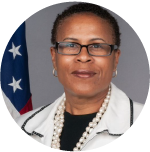
CYNTHIA A. GRIFFIN
Minister Counselor for
Commercial Affairs
and Regional Senior
Commercial Officer
|
|
 |
|
MARK CARRATO
Coordinator,
Power Africa
|
|
|
Hear directly from some the participants about their experience in the CEO Program, their work in the energy sector and the next big thing in clean energy tech and what it will mean for Africa: |
|
 David Milner
Reducing power plant emissions
|
 Gorgui Ndoye
Bringing green solutions to meet energy needs
|
 Clint Lingeveldt
Dynamics of hydro-tech policy
|
|
 Peter Agbro
Decentralized power generation
|
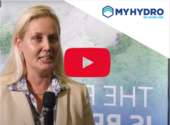 Zelda Weitz
Fish-friendly hydropower
|
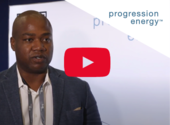 Josh Franklin
Progressing off-shore wind energy
|
|
 Kwabena Osei-Sarpong
Navigating business in Africa
|
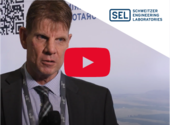 Andre Du Plessis
Quality components in manufacturing is key
|
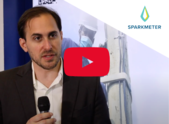 Daniel Schnitzer
Smart grid controls
|
|
|
Amine Berrada
Advancing faster deployment
of utility-scale power
|
|
Power Africa's U.S. Government Partners |
|
 U.S. COMMERCIAL SERVICE
Connecting you to Global Markets.
The U.S. Commercial Service is the trade
promotion arm of the U.S. Department of
Commerce’s International Trade Administration.
|
 POWER AFRICA
Works with our partners to create 60 million first-time electricity
connections and 30,000 megawatts of new electricity generation capacity by 2030.
|
|
|
|