|
Technology can make growing up more complicated. The NOPE Campaign helps kids and families prepare.
|
|
|
Young people use technology every day to learn, play, connect, and build relationships. But the same digital spaces that create opportunities for connection can also be used to pressure, manipulate, threaten, or exploit them.
In 2025, NCMEC’s CyberTipline received more than 1.4 million reports of online enticement — a 158% increase from 2024. Yet many young people still do not ask for help when something happens. In a recent survey, one in five minors who experienced an online sexual interaction did not disclose their experience to anyone.
|
|
Online harm is preventable. Prevention starts with giving young people practical safety skills and making sure they know there are trusted adults they can turn to without fear of blame, punishment, or shame.
|
|
|
People who cause harm may use secrecy, fear, guilt, or threats to keep young people from asking for help. Adults can help counter those messages by talking early and often, listening without judgment, and reinforcing a simple message: You can come to me. You are not in trouble. We will figure this out together.
That’s the idea behind the NOPE Campaign, a new national public awareness and education campaign from the ACF Office on Trafficking in Persons (OTIP).
NOPE gives young people four clear, memorable actions they can use to respond to uncomfortable or unsafe online situations.
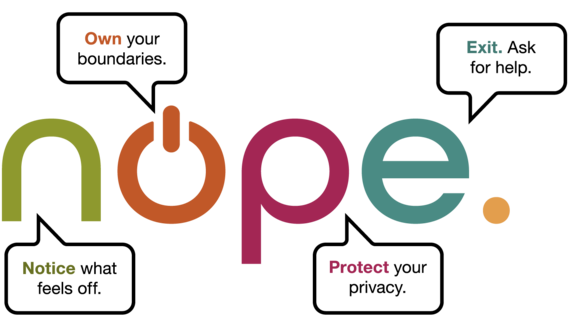 NOPE helps young people recognize and respond to concerning situations before they escalate, while reinforcing an equally important message: if something has already happened, they are not at fault and help is available.
New Resources for Parents and Caregivers
Parents and caregivers play an important role in prevention. They do not need to know every app, game, or trend to keep their children safer. Parents and caregivers who stay involved, talk with their children regularly, and respond calmly and without blame can help children stay safer online. Building these safety skills together will also make it easier for children to ask for help when they need it.
Through “Caregiver Connect,” a new online resource hub, parents and caregivers can access practical NOPE Campaign resources designed for everyday family life to help them:
- Talk regularly about online safety.
- Recognize warning signs.
- Reinforce healthy boundaries and privacy.
- Make decisions about technology use and access.
- Plan for unsafe situations.
- Make it safer to ask for help.
- Respond calmly and without blame.
- Know where to turn for help.

Parents and caregivers play an important role in prevention. They do not need to know every app, game, or trend to keep their children safer. Parents and caregivers who stay involved, talk with their children regularly, and respond calmly and without blame can help children stay safer online. Building these safety skills together will also make it easier for children to ask for help when they need it.
|
|
|
Helping Children and Youth Stay Safer Online
This guide explains common online risks and gives you practical ways to start conversations, make it safer to ask for help, stay involved, practice NOPE safety skills, and model healthy digital habits.
|
The NOPE Toolkit: Readiness and Online Safety Skills for Families
Help your child build online safety skills before they are needed. This toolkit helps families make decisions about technology access, set shared expectations, practice NOPE safety skills, and plan how to respond if something happens online.
|
|
Connected Conversations
If you are not sure how to start talking about online safety, the Connected Conversations: Talk About Online Safety guide can help. Find age-appropriate conversation starters for ages 5-7, 8-12, and 13+ about online experiences, warning signs, boundaries, privacy, relationships, and asking for help.
|
Caregiver Help Guide
If your child experiences online abuse, this guide can help you respond supportively and decide what to do next. Find guidance on how to report online abuse, preserve important information, connect with services, and support your child and family.
|
|
|
Additional resources for professionals who work with children and youth, including educators and community partners, will be released soon.
|
|
Help Us Spread the Word
Share the NOPE Campaign and Caregiver Connect resource hub with the children, families, and communities you serve.
Organizations can also order NOPE materials — hotline cards, stickers, and wristbands. Spreading the word will help us reach more children in schools, youth programs, community events, and other settings. Materials are available in limited quantities.
|
|
|
Sign up for the Caregiver Connect listserv to receive new tips, tools, and resources for supporting your child’s safety and well-being.
|
|
|
|
|