|
Resources to Help Youth Thrive After Care
There are over 365,000 children and youth in foster care. Approximately 18,500 youth exit the foster care system each year without a permanent family.
|
|
|
The transition to adulthood is a time of great potential for all young people, but youth who exit foster care without permanent connections often face increased barriers to achieving independent living and self-sufficiency.
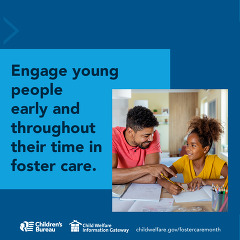
To help prepare youth for independence, child welfare professionals should engage youth, their families, and other important people in their lives in conversations about their future early and throughout their time in care.
|
|
|
Youth involved in making decisions, setting permanency goals, and creating a transition plan alongside their support systems are better equipped for the future.
Youth should also be connected to appropriate services that provide access to concrete supports, such as housing, education, job training, health care, and family support. These federally funded services can be the key difference between stability and instability for many young people.
Explore the National Foster Care Month resources to find an array of innovative strategies, information on transition-aged youth in foster care, and life-skills toolkits and resources to get youth engaged and improve outcomes.
Featured resources from the collection:
|
|
|
Follow us on Facebook, X (formerly Twitter), and LinkedIn so you can help amplify National #FosterCareMonth.
Tell your colleagues to sign up for the National Foster Care Month subscription list! Give them access to special messaging during the campaign.
|
|
|
|