As we focus on permanency planning with youth—not for them—this means we must make conscious efforts to understand a young person's cultural values and community connections, including being aware of their associated historical and personal traumas.
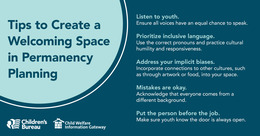
Building a strong foundation for permanency planning starts with providing a space that feels welcoming and safe for youth to fully be themselves. Here, they can feel empowered to use their voice, explore their identity, and have tough conversations about race and bias and how society might perceive their identity.
Professionals can make or break what opportunities are available to youth. These conversations will help professionals build relationships and gain a better understanding of which services and communities might be the most beneficial for youth to consider in their permanency plan.
By connecting youth to the appropriate services and communities, youth can develop strategies to cope with exclusion, discrimination, bias, and racism which will help them maintain a positive identity and prepare for the future.
This collection will help you partner with youth in permanency planning. Find resources about culturally responsive practice, identity development, and youth engagement.
|