September Is Kinship Care Month
Kinship care, in its various forms, has become increasingly important in meeting the needs of children involved with the child welfare system. It helps maintain familial and cultural connections and promotes stability, permanency, and the well-being of children in need of out-of-home placement.
Historically, kinship care has been used in many communities of color to sustain family relationships and protect and preserve the culture and history of these communities. Research has proven that placing children in the care of relatives or kin reduces the trauma of family separation and helps children maintain a sense of family, belonging, and identity.
This September, join the Children's Bureau in prioritizing these important connections and recognizing that when children cannot remain safely with their parents, kinship care must be the first path we take.
Join the webinar, “Lifting the Voices of Kinship Caregivers,” on September 7 to hear two state Kinship Navigator programs share best practices related to uplifting the well-being of kinship caregivers. Register now!
Resources to Support Your Work With Kinship Caregivers

Personal storytelling is a powerful way to connect real-life scenarios to important practice issues and raise awareness about how the foster care system can support youth and families. These stories highlight the important role kinship caregivers play in the lives of children and youth in foster care and best practices for how kinship support programs and other foster care service agencies can act as a support to children, youth, and families.
Examples of Best Practices and Other Resources
|
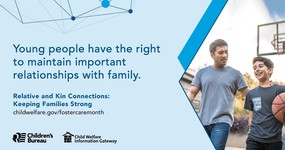
Visit the National Foster Care Month website to find year-round support for ways to increase and enhance your partnerships with kin caregivers.
Explore resources that demonstrate how prioritizing the placement of children and youth in foster care with biological family, or kin, can help transform the child welfare system into one that truly supports families and maintains connections. This includes an emphasis on family finding and other child-specific recruitment strategies, best practices for family engagement, and licensing relative caregivers who understand their unique ability to partner with parents to support reunification.
|
Outreach Tools
Use these messages and GIFs in your outreach throughout the month (and year-round!) to raise awareness in your communities about the benefits of kinship care!
|