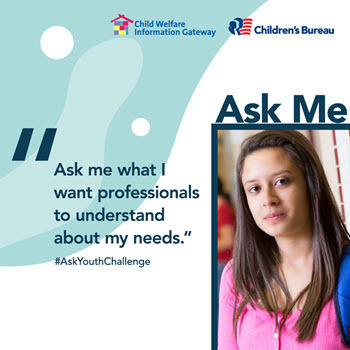
When professionals engage us in the conversation, it makes a difference
"Everyone kept saying they knew what was best for me…which made me ask, 'How can you possibly know what's best for me when you don't know me?'"—Traevon, age 20, Foster Care Youth Voices: Caring Adult Mentors.
Many of us are like Traevon. Wefrequently experience disempowering circumstances and are often not made aware of our own rights or eligibility for critical resources.
"I felt after I turned eighteen that the system had failed me."
When we are treated as passive recipients of policies and services, the system is not working in our favor. We know that we may not open up easily—gaining our trust takes time—but we believe it can begin with a single conversation.
When we're ready to share our story and thoughts about permanency, we might need extra encouragement or time as we contemplate our future. Your patience and flexibility will be crucial here and we want you to be prepared.
Here are a few of our favorite tips and resources that will help overcome barriers and keep us engaged.
Build an authentic, honest, and trusting relationship with youth. Be honest and real about what is happening and allow us to explore expectations together. These resources can help:
Partner with teens in permanency planning. Let us lead the conversation. Treat us as the experts of our own lives and ask what has and hasn't worked for us in the past.
Make sure to download the "Make Every Conversation Matter. Tips for Engaging Youth" infographic so you can always have it available for reference when you are working.
Enhance your capacity to partner with youth. Identify ways each day that you can partner with and relate to teens. Try to let us make decisions and handle tasks we feel comfortable with. These tools can help:
You can find more resources and tips like these on theFor Child Welfare Professionals page. "All I could say was thank you for lending me a hand and pulling me up from a dark place."