November 2026
We’d like to say a big thank you to everyone who took part in our consultation on the draft West Sussex Climate Change Mitigation and Adaptation Action Plans.
We had more than 1,000 responses, including over 300 from young people.
In partnership with the district and borough councils across West Sussex, we are now reviewing the responses in detail and incorporating the insights gained into the final plans, which are expected to be published in Spring 2027.
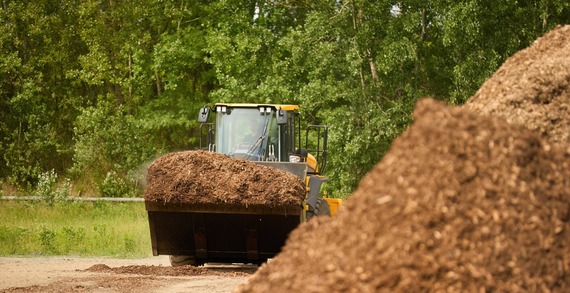 We’re exploring the possibility of producing biochar - a charcoal-like material made by heating organic material, such as wood and fallen leaves, in a low oxygen environment.
Our feasibility study will assess whether a West Sussex based production plant could deliver environmental benefits in a practical and financially viable way.
Energy produced from biochar provides an environmentally friendly source of power and heat and is a highly effective, long-term way of capturing and storing carbon.
Biochar is also extremely useful for agriculture, horticulture and other industries as it helps soil retain water and, when used in filtration, can remove some contaminants from water.
If plans go ahead, they could form an important part of our work towards the County Council becoming carbon neutral and climate resilient by 2030.
 We’ve joined UK100, a cross-party network of councils across the UK working together to tackle climate change and build healthier, more resilient communities.
Through UK100, we’ll be able to share what’s working in West Sussex, learn from other councils and access training and opportunities to develop joint projects.
We’ll also work with other members to make the case to government for the powers and funding councils need to take climate action locally.
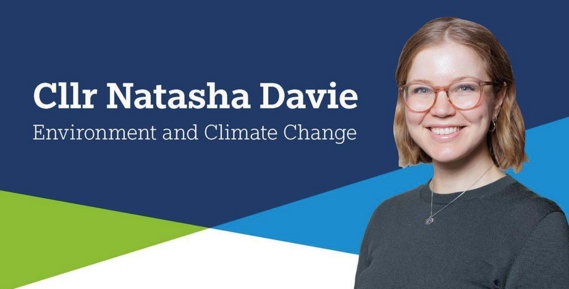
Councillor Natasha Davie, the county council’s Cabinet Member for Environment and Climate Change, said:
“West Sussex is proud to join UK100. By working with other leaders, we can share what works, strengthen our efforts to develop clean energy, protect our natural environment and build a resilient, green economy for the people of West Sussex.”
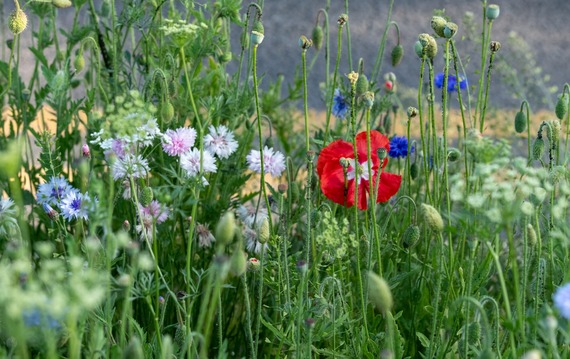 We’ve published our latest report on progress towards our Climate Change Strategy goal of becoming a carbon neutral and climate resilient organisation by 2030. The new report describes what we achieved across a wide range of programme areas during the period from April 2025 to March 2026.
Over the year, we continued to reduce operational carbon emissions while improving resilience to climate change impacts.
For example, we began transitioning our purchased energy to a renewable tariff, trialled hydrotreated vegetable oil as an low-carbon alternative to diesel in selected fleet vehicles, and completed the conversion of traffic signals across the county to LED.
At the same time, we completed development of the Local Nature Recovery Strategy for West Sussex and invested in nature-based solutions to alleviate flooding.
 With our supply chains accounting for up to 90% of our carbon footprint, the way we buy goods, works and services can make a real difference to our emissions and the local environment.
Building on our Social Value Policy, the new Sustainable Procurement Policy puts sustainability at the heart of how we plan, award and manage contracts. It starts with deciding what we need and how services should be designed, continues through early conversations with suppliers and the tender process, and through the contract term until it ends.
The new Sustainable Procurement Policy delivers on a commitment in our Climate Action and Adaptation Plan to make sustainability part of how we buy goods, works and services.
We’ll build sustainability into how we design services and contracts, and work with suppliers and partners to cut emissions, protect biodiversity and deliver wider benefits for West Sussex communities.
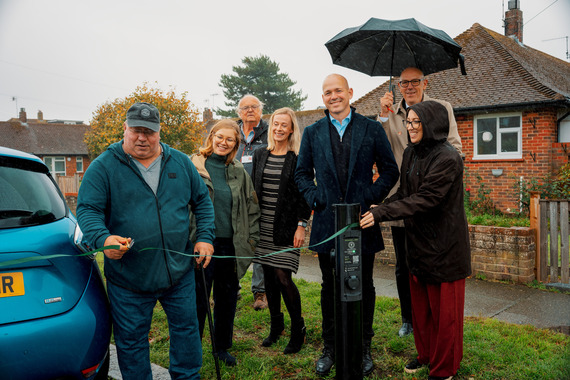 We've reached a major milestone in the expansion of our public electric vehicle (EV) charging network, with 1,030 live charging sockets now available across the county.
Since installations began in 2022, the network has recorded around 77,000 charging sessions and has been used by approximately 14,000 people.
The network is helping to make EV charging more accessible, particularly for residents without off-street parking, and supports our wider work to provide the infrastructure needed for cleaner transport choices.
Further expansion is being supported through the Government-funded Local Electric Vehicle Infrastructure (LEVI) programme.
Picture shows a local resident with councillors and officers from the County Council, Adur District Council and contractor Connected Kerb.

- Eligible organisations can apply for a grant of between £50,000 and £100,000 for capital expenditure as part of our new £725,000 Nature Recovery Fund to support projects that help local communities and wildlife adapt to climate change.
- County council staff who work in Highways, Transport and Planning have achieved Gold Carbon Literate Organisation status, a significant milestone that recognises their commitment to climate action and carbon reduction.
- It was Clean Air Night this week, and we are sharing information from DEFRA UK Air for people who have open fires or an indoor stove. Simple steps such as making sure you check it regularly, get it swept by a professional, and feed it the right fuels, can benefit the environment, the community and your health. Read more on DEFRA’s Burn Better, Breathe Better advice pages. You can also sign up for Extreme Weather and Air Quality Alerts to hear when outdoor air pollution levels are high near you.
- We continue to work with operators to deliver improvements to the county’s bus network through our Bus Service Improvement Plan (BSIP), generating strong passenger numbers and positive public satisfaction with local bus services. The National Highways and Transport Network Satisfaction Survey 2024/25 found that West Sussex scored above the national average across all public transport measures. The findings come as bus travel in West Sussex reached its highest recorded journeys among adult and child fare paying passengers since comparable records began in 2000.
- We have allocated £150,000 of funding for a programme that will encourage children to walk, wheel or cycle to and from school. The project aims to develop active travel habits, improve their health, wellbeing and mental focus, increase road safety awareness, and improve air quality around schools.
 Find out here what actions you can take locally to tackle climate change.
If you have any questions, or want to share local climate action stories, email us at climatechange@westsussex.gov.uk.
 If you know someone who would like this newsletter forward it to them so they can sign up here.

|