Prevention in Practice
Tuesday 18 November 2025
This week is Safeguarding Adults Week. During this week, we'll be sharing daily bulletins with you, related to the Ann Craft Trust themes.
In today’s bulletin we’re exploring the importance of safer recruitment practices in the prevention of abuse and neglect, as well as what it means to work in a ‘closed culture’ and the dangers of such an environment.
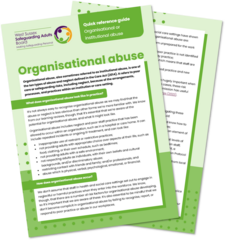
In June 2025, we published our provider learning review following an investigation into reports of organisational abuse and neglect across a large provider of residential and nursing care in West Sussex.
Following this review, the Board produced guidance for staff to raise awareness of organisational abuse and what it means to work in a 'closed culture'. The following information has been taken from that quick reference guide:
What is organisational abuse?
Organisational abuse, also sometimes referred to as institutional abuse, is one of the ten types of abuse and neglect defined in the Care Act (2014). It refers to poor care or safeguarding risks, including neglect, because of the arrangements, processes, and practices within an institution or care setting. It can include repeated incidents or ongoing ill-treatment, and can look like:
- inappropriate use of restraint or restrictive practices;
- not providing adults with appropriate choice over aspects of their life;
- not providing adults with a safe environment;
- not respecting adults as individuals;
- restricting contact with friends and family; and/or professionals, and
- abuse which is physical, verbal, psychological, emotional, or financial.
How does it occur?
Inquiries into organisational abuse in health and social care settings have shown that the main risk factors for the development of organisational abuse are:
- a lack of adequate training for staff;
- a lack of supervision for staff, leading to poor practice;
- insufficient management oversight and support;
- failure to share and embed learning in relation to good practice.
In some cases, these risk factors can indicate a ‘closed culture’. The Care Quality Commission has useful information about identifying and responding to closed cultures (2022).
How can we mitigate against these risks?
Fostering an open and supportive workplace culture is key to mitigating these identified risk factors for organisational abuse. Organisations should:
- ensure that all staff are appropriately trained for their role;
- have robust supervision processes for staff;
- provide opportunities for constructive feedback to be shared;
- ensure that their staff know how to escalate concerns;
- have a strategy for sharing sector improvements.
|

Whistleblowing is the raising of a concern, either within the workplace or externally, about a danger, risk, malpractice or wrongdoing, which affects others.
Whistleblowers can provide an additional safeguard for patients or service users, where organisations are failing to act on concerns. Most organisations providing services to vulnerable people are required to have a whistleblowing policy and procedures.
A whistleblowing system essentially allows staff to bypass internal systems if they feel that that management practice or conduct is not safe or appropriate, or when they don’t feel able to raise a concern about a colleague’s practice through usual processes. This could include situations where a staff member feels that organisational abuse is taking place.
Take some time to find and familiarise yourself with your organisation's whistleblowing policy. If you have any questions about the process, discuss these with your line manager or safeguarding lead.
|

The Ann Craft Trust has a wealth of information about safer recruitment practices.
Whilst a lot of their information is aimed at sports organisations and groups, the underlying messages are useful for all. Amongst their Safer Recruitment resources you will find information about staff inductions, job descriptions, and information about the Disclosure and Barring Service (DBS).
Visit the Safer Recruitment resources on their website.
|
|