 

As we progress through the second half term of this academic year, I continue to see the positive impact of the work that takes place in educational settings each day. This edition of Education Matters allows us to celebrate our community’s success in providing positive outcomes and experiences for all learners in West Sussex, with a particular focus on children and young people with Special Educational Needs and Disabilities (SEND).
This SEND and Inclusion focused edition will explore the excellent work of colleagues, and will provide an opportunity for celebration and reflection. The edition will broaden our understanding of SEND and Inclusion, allowing us to further improve the ways in which we engage with our children, young people and their families. We will hear about the work that colleagues are doing to improve connections with parent carers at Hassocks Infant School and The Windmills Junior School. We will also learn more about Inclusive Classrooms, as we follow St Andrew’s Primary School’s successful journey with flexible seating. We will celebrate positive outcomes for children and young people with Special Educational Needs, and we will explore The Meads Primary School’s implementation of a Therapeutic Thinking framework.
I trust that this issue will provide you with an interesting insight into the fantastic work being done by our SEND and Inclusion teams, as well as by colleagues in West Sussex’s educational settings. I hope that you will join me in looking forward to the half term ahead, with all the challenges and successes that it will bring.
Best Wishes,
Steve Nyakatawa, Assistant Director Education and Skills
|
 |
|
Leadership 360
The School Effectiveness Team are delighted to be able to share with you Leadership 360: a monthly publication bringing you think pieces, commentary and research articles. This edition focuses on SEND and Inclusion.
To view all editions, please visit our WSSfS Leadership pages.
|

The positive impact of working with parent carers - Hassocks Infant School and The Windmills Junior School
Hassocks Infant and Windmills Junior Schools are part of the Hassocks locality Autism in Schools Project. Here the two SENCOs reflect on the positive impact of working with, and supporting, their parent carers.
The schools set up their ‘Chance to Chat’ sessions with support from the West Sussex Parent Carer Forum offering a mix of information sessions and informal sessions to allow for peer to peer support as well as feedback to the two schools on their concerns and successes.
“The coffee mornings are proving really useful for SEND parents of Hassocks Infant School. The number of parents is growing, and our first session of the year included parents of reception children who had only been part of the school community for two weeks.
The session on The Graduated Approach and the OAIP, presented by Jane Crawford from the Autism in Schools Project and Clare Eeles from the Parent Carer Forum was very helpful for parents at the beginning of their SEN journey. Many parents were following the slide handouts during the presentation and making notes of where their child sits within the graduated approach. At an update meeting a week later, a parent brought the slide handout with her to refer to as we talked. She had pinpointed where her child was in the assess, plan, do, review cycle and was pleased that I was asking her permission to discuss her child at a CARM (Consultation and Review Meeting), as this was the next step that she had identified. The presentation was also emailed to SEND parents who were unable to attend the coffee morning.
Our final session of last school year covered information and strategies to support transition. This was popular with parents of Hassocks Infant School, as the vast majority of our pupils move onto The Windmills Junior School at the end of Year 2. The morning gave parents the chance to get to know Helen (SENCo and AHT), chat about their experiences if they wished and spend more time at their child’s new school. They were able to listen to the experiences of parents who had already supported their child through this transition and ask any questions that they had.”
Helen added “I agree with all Sara has shared here and would just add that our parent carers have commented positively about the community this is creating, including seeing other friendly faces on the gates and sharing concerns in a safe space”.
At the first Chance to Chat of this academic year which focused on the graduated approach parent carers gave the following feedback:
"Thank you for an incredibly interesting and informative presentation".
"I have more knowledge and understanding of neurodiversity".
"It's just nice to be in a room with likeminded parents".
|
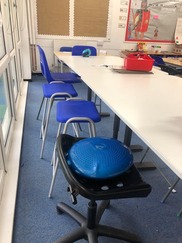
Flexible seating leads to inclusive classrooms
Lizzie Cooper, SENDCo at St Andrew’s Primary in Crawley, has spent the last year reshaping the learning environment for all her pupils by introducing a variety of seating choices and adaptations across the school. They have seen fantastic results in the participation, engagement, and regulation of children both with SEND and those without.
Find out about what led to this change and how it has become such a success.
|

Schools' Voice - The Meads Primary School's journey with Therapeutic Thinking
The Meads Primary School is located on the southern edge of East Grinstead, and has places for 320 children. Currently 13.5 % of children are eligible for pupil premium funding, 14.3% are on the SEND register and 13.8 % speak English as an additional language.
Therapeutic Thinking has become an integral part of The Meads Primary School’s community. Parents and carers, pupils, staff, and Governors have all been adopting a new approach to children’s personal development, which encourages them to regularly think and talk about themselves and their feelings. Therapeutic thinking has taken The Meads on a holistic journey, from the introduction of an emotions word wall to revising the school’s Behaviour and Wellbeing Policy.
In this article, the Head Teacher, Nicole Essex, discussed the school’s journey so far with the Therapeutic Thinking approach, having attended the 3-day training delivered by Angela Wadham in 2020.
|

Celebrating positive outcomes in a local setting
Child J has an autism diagnosis, is doing very well academically, is articulate, knowledgeable, and appears to be managing well in school. J’s parents communicated that he was experiencing frequent emotional dysregulation at home, and it became apparent that J was masking during the school day.
When asked by adults in school if he was OK, needed support or needed a break, he would always respond that he was ‘fine’, and would always politely decline any offer of support or adjustments to the school day.
In this article, find out about the successful changes that the setting staff have made, which have contributed to a positive outcome for Child J.
|


West Sussex Services for Schools has training and events, resources, and updates about SEND and Inclusion. For colleagues in educational settings, who wish to find out more about how they can further improve their SEND and Inclusion provision, WSSfS has lots of helpful resources, including:
This edition's Schools' Voice section was about Therapeutic Thinking, and the benefits that this framework can have for settings. Therapeutic Thinking training and events help to broaden colleagues' understanding of the key concepts, and how to implement these in their schools. If your school is yet to start its Therapeutic Thinking training, the next course is commences in January and places can be booked here.
Once training has been completed, colleagues can join the Therapeutic Thinking Network meetings, which are available to book through WSSfS:
These meetings are opportunities for settings to come together and share ideas and experiences, so colleagues can learn more about what has worked for others. They have been immensely helpful in the past, providing space for reflection and progression.
|
Feedback
To provide feedback on the content of Education Matters or to find out more about
any of the included topics, please email educationmatters@westsussex.gov.uk.

|