|
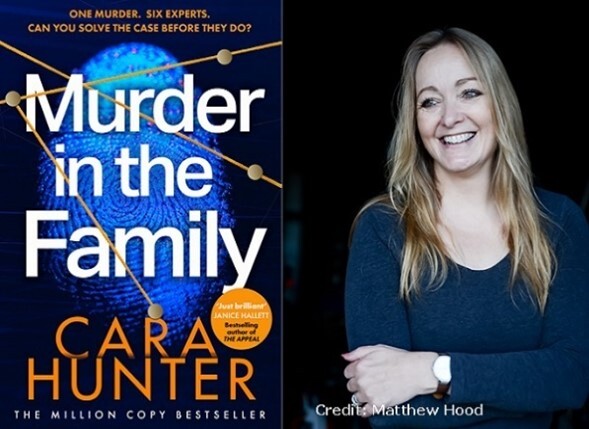
We'll be welcoming million-copy bestselling author Cara Hunter to Chichester Library in July to talk about her thrilling new stand-alone crime novel Murder in the Family.
Book your tickets now.
Can't wait until July? Read on as Cara answers our six questions...
What was your first job?
I suppose you’d have to say my Saturday job! It was in an old-fashioned department store called Lytton’s, in Ruislip, where I was brought up. It was one of the last independent family businesses of its kind and it’s long gone now. Its windows were a real feature on the High Street – there were the ones along the front and then you’d walk into a sort of outer lobby area where there were even more windows before you actually got into the shop.
I started in the Accessories department – women’s hats, scarves, jewellery, that sort of thing. I remember the beautiful old wooden counters with their glass-fronted drawers, and the big cash registers with keys like a typewriter that made a massive ‘bing’ when you put a sale through. It was all analogue, of course, so you had to add everything up yourself – my mental arithmetic has never been better!
After that I moved into Fashion, which was the flagship department so I suppose it was a promotion. I learned how to iron shirts and blouses properly (the head sales-lady was a very exacting taskmaster) but the thing I remember most was the fact that if a customer wanted to buy underwear they had to ask, as we kept it behind the counter like a dirty secret!
Which is your favourite fairy tale?
I’ve always had long hair and I actually played Rapunzel when I was at primary school, so that’s always been close to my heart. But in terms of the power of narrative, I was always drawn to the darker stories, like The Snow Queen or The Little Mermaid, and I still enjoy modern reworkings that draw on the underside of fairy stories, like the 1984 film The Company of Wolves. Some of the Grimm and Hans Christian Andersen ones haunted me as a child – I remember having terrible nightmares about The Girl Who Trod on the Loaf. One of my recent non-fiction reads was The Fairy Tellers: A Journey into the Secret History of Fairy Tales by Nicholas Jubber, which is a fascinating exploration of how old folk-tales evolved into the fairy stories we’re all now familiar with.
Which author has inspired you most?
In general, Tolkien. Like so many people, I first read The Lord of the Rings when I was around 12 – it’s such an impressionable age, things you read and love then really stay with you. It was Tolkien who first opened my eyes to what you could do with words. I read Humphrey Carpenter’s biography of him sometime later and there was a lovely anecdote in it about Tolkien writing a story as a little boy and his mother telling him it couldn’t be a ‘green great dragon’, it had to be a ‘great green dragon’. He was mesmerised by language ever after, and reading his work had the same effect on me. He also inspired me to apply to Oxford University (where he taught, of course), which changed my life.
In terms of what I do now and writing crime, the person who most inspired me was Joan Smith, now the Sunday Times crime reviewer. I absolutely adored her Loretta Lawson books and still recommend them, all these years later. I remember thinking that this was exactly the type of book I would love to write. I met her for the first time about ten years ago and had a total fan-girl moment! She’s since become a dear friend, but sadly hasn’t written any more Loretta books (though I do keep asking…).
Which fictional character would you most like to spend time with – and why?
I suppose it would be a cheat to say Adam Fawley? I’m sure he’d be great company...
But seriously I suppose if you want to spend time with someone it’s either because they’re fun to be with or they can teach you something. So for the latter it would maybe be Gandalf (that’s for the 12-year-old me) or perhaps Miss Marple – she’d definitely be a useful adviser for the grown-up crime-writing me. As for entertainment, I think it would have to be Elizabeth Bennet – I bet a lot of people choose her!
Who would you like to play you in a film of your life?
Oh lord, that’s a humdinger of a question! How to answer – be realistic or just indulge in a fantasy? If it’s the latter I’d go for Cate Blanchett – an absolutely extraordinary actor and a mean hand at an English accent but way, way too beautiful to ever be me. But I suppose we can all dream!
What are you reading now?
Not very much, as I’m writing again (the seventh Fawley book, due out next year), and like many other authors I find it hard to read fiction when I’m trying to do the same thing myself. And the better the book – the stronger the narrative voice – the worse it is. Hence I tend to stay with non-fiction at times like these. My most recent was Otherlands by Thomas Halliday. Not something I’d ever normally choose, but I picked it up off the table in Daunts and it proved to be an utter revelation – science written by a poet. Compulsive, magical and unforgettable. I’m recommending it to everyone.
The shortlist of six titles has been announced for this year's Women's Prize for Fiction, as follows:
The winner will be announced on Wednesday 14 June. Please be aware that these titles may now become heavily requested, making them unavailable for reading groups.
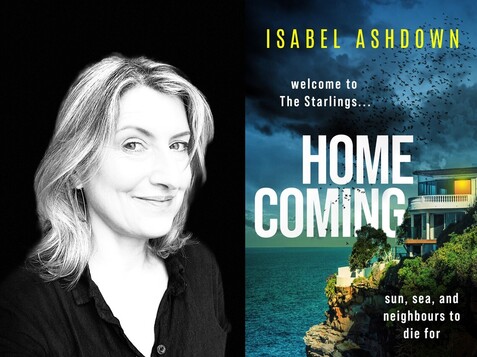
June marks the publication of Isabel Ashdown’s ninth novel, Homecoming. Her new book tells the story of a gated community in Dorset. Seemingly one of the county’s safest locations but there’s a dark secret waiting to be uncovered.
Isabel explains, 'What's in a name'...
Our names are important. In most cases, they’re with us from birth, giving us a deep sense of identity and belonging, often steeped in cultural, familial and historical significance. Names can make us stand out – or hide in plain sight – but regardless, they mean a great deal to us, in terms of who we think we are. Growing up in the 1970s and 80s, I was the only Isabel I knew – the name was a rarity, as was my affectionate abbreviation, Issie. But by the time my own daughter was born in the late 90s, Isabel, Isobel, Isabelle and Isabella had all earned a place in the UK’s official Top 100 baby girl names. I’ll admit, I felt a little aggrieved; I was the original Isabel, surely, and now I couldn’t walk around the supermarket without some other mother calling out for some other ‘Issie!’ and stopping me in my tracks.
In my writing, I invest a lot of thought in the names of my characters, drawing on a mixture of instinct, research, and happy accident to provide me with my cast of players. On my desk, I keep a battered and beloved charity shop edition of the Penguin Book of Surnames, to refer to whenever I uncover a new character in need of an identity. I’ll open the book to a random page, and as the directory also gives the brief origins for each entry, I’m often able to find a surname that somehow speaks to my imagined character’s personality. For example, in Homecoming, I have a Detective Inspector Trelawney, whose surname is said by some to mean ‘the open town near the water’, which felt like a serendipitous discovery for a story set in a coastal west country town.
Place names, too, play a huge role in setting the tone of a piece. Think of all the famous fictional locations we recall with ease, almost as clearly as though we’d visited them ourselves: Wuthering Heights; Narnia; Manderlay; Castle Rock; Gotham City; Hogwarts; the list goes on … Of course, it is not just the name we remember, but the atmosphere of these imagined places, the sense and depth of their ‘realness’ in relation to the characters we are yoked to as the plot progresses. In Homecoming, the story takes place in a converted gothic sanitorium that has previously been both a Victorian workhouse and a mother and baby home. The building has been newly renovated into luxury homes for the comfortable middle classes yet the secrets of its past remain, buried deep in the brickwork and roosting in the shadowy spaces overhead. As I wrote, I discovered that like the secrets, a new generation of starlings had taken up residence in the roof space of the central clock tower and quickly I realised that, for this location, this genteel gated environment suffocating under the weight of the past – there was only one possible name: The Starlings.
Discover Homecoming (published by Orion), and come to hear Isabel chat about her career in writing at our event as part of Worthing Festival.
Tickets are £3.00 and can be purchased from Worthing Library.
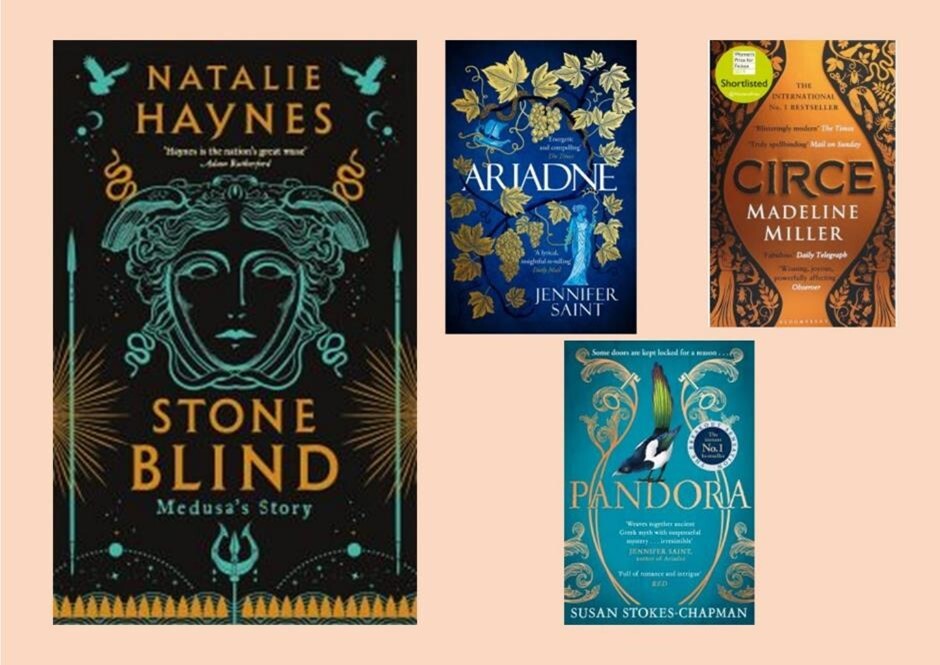
We’re sure that many of you will be keen to read Stone Blind by Natalie Haynes with your groups, but as it was longlisted for the Women’s Prize and isn’t yet available in paperback, it may be a while before we can supply this title. While you wait, why not try:
-
Ariadne by Jennifer Saint: The story of the sisters of Crete, Ariadne and Phaedra, whose decision to help Theseus leads them on diverging paths. (Saint’s follow up novel Elektra is also available.)
-
Circe by Madeline Miller: Arguably, this is the book that started the new trend of looking at the Greek Myths through the eyes of the female protagonists and the richest of the re-tellings to date.
-
Pandora by Susan Stokes-Chapman: This novel, inspired by the myth, is a different style of retelling – taking the themes of the original and updating the setting to London 1799…
National Crime Reading Month is an initiative developed and run by the Crime Writers’ Association, this year in collaboration with The Reading Agency, which aims to bring new books to existing readers and new readers to the world’s most popular and best-selling genre.
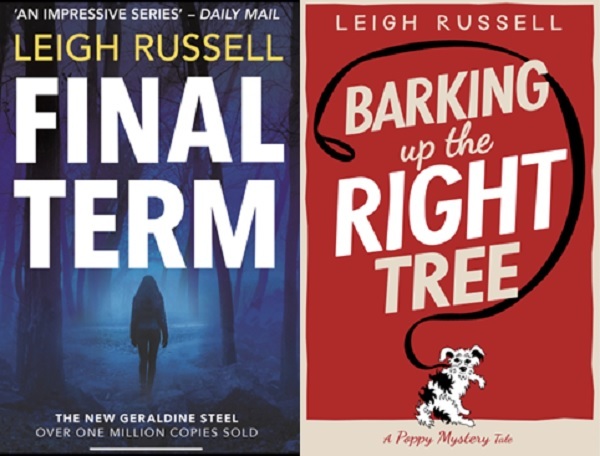
As part of the celebration, we're thrilled that crime writer Leigh Russell will be joining us at Bognor Regis Library to talk about her books and writing.
Leigh writes the number one bestselling Geraldine Steel series which has sold 1.5 million books in the UK alone and has been shortlisted for several major awards.
In addition to her detective series, Leigh writes the Poppy Mystery Tales featuring a lovable rescue puppy.
Leigh is Chair of Judges for the Crime Writers' Association Debut Dagger Award, and a Fellow of the Royal Literary Fund.
Wednesday 7 June, 6.30pm
Tickets £3.00, available from Bognor Regis Library.
We are pleased to announce that BorrowBox, the user-friendly library app that allows you to enjoy eAudiobooks on the go, is now available to all West Sussex Library Service users.
With a diverse collection of eAudiobooks at your fingertips, BorrowBox ensures you’ll never be without something great to listen to.
Best of all, it’s completely free with your library card!

|