 Welcome to the December edition of our Environment and Climate Change eNewsletter.
If you think someone you know would enjoy receiving this enewsletter, please forward them a copy and encourage them to subscribe here.

Last month COP26 concluded with all countries agreeing the Glasgow Climate Pact, to keep a temperature rise of 1.5 Celsius alive and finalise the outstanding elements of the Paris Agreement. In addition, negotiations ended with consensus on urgently accelerating climate action. The Glasgow Climate Pact, combined with increased ambition and action from countries, means that 1.5C remains in sight and scales up action on dealing with climate impacts. Nevertheless, the pact will only be delivered with concerted and immediate global efforts.
Reflecting on the task ahead, COP26 President Alok Sharma said: “We can now say with credibility that we have kept 1.5 degrees alive. But, its pulse is weak and it will only survive if we keep our promises and translate commitments into rapid action."
The Glasgow Climate Pact captures many parties’ wishes to fully embed science in the decision-making process. It recognises the enormous importance of the IPCC's latest report. The Pact frames action in terms of the science, demonstrating that COP26 is responding to what scientists say needs to happen to keep 1.5C in reach.
The text includes ‘phase-down of unabated coal power’ and ‘inefficient fossil fuel subsidies’, as well as ‘mid-century net zero’. This language has never been included in UN text before. Parties are expected to revisit their 2030 emission reduction targets in 2022 and, where necessary, strengthen them.
There is an enormous amount of work needed to turn commitments into global action. In April 2019, the County Council acknowledged the threat of climate change and passed a motion pledging to reach net zero carbon emissions by 2030. In July 2020, we published our Climate Change Strategy 2020-2030 and Delivery Plan, to provide a framework to shape and influence every part of our business. More recently, we've published our updated 2020/2021 Climate Change Report to summarise our progress so far.
|

With winter here and energy prices rising, it’s an excellent time to get on top of your energy bills.
Reducing the amount of gas and electricity you use is one of the most effective ways of putting money back into your pocket and doing your bit to combat climate change.
Here are some simple tips to get you started:
Make sure your bills are accurate
Send regular meter readings to your energy supplier to ensure that you only pay for the gas and electricity you’ve used rather than an energy company estimate.
A Smart Meter automatically sends your meter readings to your supplier, so you don’t have to. It also can help you keep track of energy use and spending. This Which? website has a useful guide to Smart Meters.
Heating your home
More than half of energy bills in the average home goes on heating and hot water. Using thermostats on radiators means you can switch off heating in any unused rooms. Read more on the different ways you can control your heating system to save money and reduce your carbon footprint.
And, of course, heating your home is only part of the picture. Keeping the heat in and stopping draughts will also save energy and cut costs. Read this introduction to insulating your home from the Energy Saving Trust.
Lighting
Lighting accounts for 15% of energy consumption in the average UK home, which is why there’s scope to make small, inexpensive changes that will reduce your bills and carbon footprint in the long run.
In addition to switching lights off when you are not in a room, replacing bulbs with energy-efficient LED ones will help to reduce your bills and your carbon footprint.
The Energy Saving Trust has a good overview of home lighting options and things to consider when changing light fittings and bulbs.
Get help if you need it
Help is available for vulnerable households struggling with energy costs.
The West Sussex Affordable Energy website has details of home energy advisors, heating and insulation grants and other supports within your district or borough council area.
The Citizens Advice West Sussex Energy Advice Service can provide details on local and national financial support, dealing with energy debt and how to make your home more energy efficient.
|

As we dive into the festive period lookout for updates from the West Sussex Recycles team. They'll be letting you know about our tree recycling collections, how to reduce food waste and recycling wrapping paper. Make sure you follow @WSRecycles on Twitter and @WestSussexRecycles on Facebook and sign up to receive their newsletter.
This WWF site is packed with Top Tips for a Sustainable Christmas. There is something for everyone to enjoy, from a green gift guide and animal adoption schemes; to packaging and wrapping considerations and ways to reduce food waste.
|
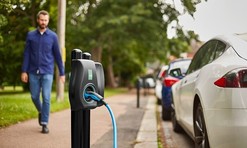
During COP26, we announced the UK’s largest electric vehicle (EV) chargepoint deployment by a local authority, providing a blueprint for other local authorities to deliver affordable, reliable, and accessible chargepoints in their thousands. This will help the 40% of drivers nationally without off-street parking to go electric.
According to research by energy watchdog Ofgem, one in four UK households intend to buy an electric car in the next five years, as the ban on the sale of new petrol and diesel vehicles approaches in 2030. However, there is currently only one public-access on-street EV chargepoint for every 52 EVs on UK roads. As a result, those without off-street parking make up as few as 9% of EV drivers today.
Run in partnership with district and borough councils in West Sussex, thousands of chargepoints will be installed on streets, in public sector car parks and community facilities across the county within the next ten years.
UK-based Connected Kerb is fully funding the project and will also manage and maintain the chargepoints on an ongoing basis. The company has extensive experience working with local authorities and public sector organisations.
This development is just our first step in delivering our EV Strategy set out in December 2019.
To let us know where you would like chargepoints to be located, use this online form.
Read the full EV chargepoint roll-out in West Sussex press release.
|

It’s beginning to look a lot like Christmas. If you’re looking for gift ideas, check out the Experience West Sussex website.
Their Shop Sussex pages have plenty of inspiration, from spa breaks and West Sussex sparkling wine, to gift vouchers and tickets to local attractions. And best of all, by shopping local, you’re supporting local businesses.
For those living in the Chichester and Horsham areas, please do visit these links for more details of local initiatives this year. Remember, by buying local you are helping small companies survive and continue trading in these difficult times.
|
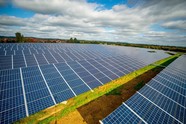
As our Tangmere and Westhampnett solar farms reach their sixth and third birthdays respectively, our performance tracking has revealed how our investment in clean energy is bearing fruit.
The total 12,520 MWhs of clean electricity generated annually is enough to power more than 4,300 average homes for a year. Compared to generating this amount of electricity from non-renewable sources, such as fossil fuels, the solar farms prevented the release of almost 3,000 tonnes of carbon into the atmosphere. This is the equivalent of taking nearly 1,700 average UK cars off the road for a whole year.
In addition to our solar farms, we have been quick to seize on developments in energy storage by installing batteries at Westhampnett solar farm. The 4MW installation can store surplus energy and release it to the national grid at times of peak demand and help us respond to fluctuations in energy supply and demand.
We are also developing a larger 12MW installation on a former waste site at Halewick Lane, Sompting. We are working to install battery systems in some schools and corporate buildings that already have fitted solar panels. The systems will store surplus clean energy generated by the solar panels to be used to power the building when needed.
During 2017 and 2018 we installed solar panels on around 80 schools, these systems have a total combined generation capacity equivalent to the Tangmere solar farm.
Read the full Clean energy press release for further details.
|

Small and Medium-sized Enterprises (SMEs) make up around 90% of global business; and in West Sussex 99.6% of our county’s businesses are SMEs (with fewer than 250 employees). To date, the majority of climate action support initiatives have been aimed exclusively at big business.
We are beginning to see this change, with more support emerging and wider recognition that all businesses, no matter their size, have a vital role in finding and implementing climate solutions. What’s more, smaller businesses can see many benefits from curbing emissions, including building resilience and gaining a competitive edge.
The Green Growth Platform in Brighton provides regular workshops and grant support to West Sussex-based SMEs looking to better their energy efficiency or grow their businesses through green solutions. On 15 December they are running a virtual ‘Business Model Canvas Workshop’ for any SME leader who wants to take steps toward the development of clean, green products, services or processes.
The SME Climate Hub has launched a new framework to help businesses calculate and reduce their climate impacts, and make an action plan relevant to their scale and sector.
|
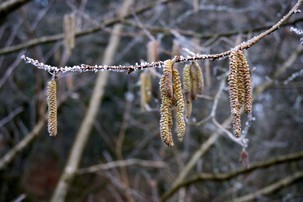
Nature on verges isn't just about wildflowers. Overwintering pollinators make use of verges all year round.
Most butterfly species enter a dormant phase over winter, as either an egg, larva, pupa or adult insect, depending on their species. They often shelter under bark or dried leaves on verges. Some bees hibernate in hollow stems or ornamental grasses, while others burrow into the ground or make use of man-made bee hotels.
All of this is happening on our roadside verges, and in residential gardens across West Sussex.
You could create leaf and twig piles for bees to use as shelter this winter or let fallen leaves stay where they drop and avoid disturbing them from autumn until spring.
Ivy can also be of huge help to pollinators in winter, to give shelter from heavy rain and provide a late nectar source for species that are still foraging for food.
|

Trees go dormant to survive winter conditions, cold temperatures, and lack of sunlight. It's their version of hibernation. Cooler temperatures and shorter days help trees to enter a state of dormancy, which means that normal physical functions are suspended or slowed down for a period of time.
They are still alive, but don't use energy to grow and they perform very few functions, although there can be a lot of activity in buds, twigs and to a lesser extent in roots.
There are three stages of dormancy:
1. Pre-dormancy is like a light sleep cycle when trees can still respond to stimuli and resume growth.
2. True dormancy is a deep sleep when trees cannot ‘wake up’. They will have already formed terminal buds and dropped their leaves if they are deciduous.
3. Post-dormancy is a bit like waking up on a Monday morning and not wanting to get up! Trees push water back into their shoots, but growth is unlikely.
As our climate changes, warmer winters may compromise dormancy release. To transition from true dormancy, most trees need a chilling period. Without this, a tree's future growth quality can be directly affected.
See Nature’s Calendar for more information on how our changing climate is affecting wildlife.
|

Public consultations
- Since April 2021 a pilot booking system has been in operation at six of the eleven Recycling Centres in West Sussex. We have now launched a public consultation to seek views on whether Book to Recycle scheme should be made permanent at selected Recycling Centres. Share your views here before the consultation closes on Tuesday 21 December 2021.
- The Environment Agency is consulting on both its Draft Flood Risk Management Plans (FRMPs) and River Basin Management Plans (RBMPs) up until 21 January and 22 April 2022 respectively. The consultations cover a new set of plans for the period from 2021 to 2027 and arose after Flood Risk Areas in Worthing and Crawley, were identified as at risk from nationally significant flooding.
Other
-
12 Days Wild is the Sussex Wildlife Trust’s mini Christmas nature challenge, encouraging you to do one wild thing a day. It starts on 25 December and runs up until 5 January 2022.
|
|
Have you enjoyed receiving this newsletter?
We hope you've enjoyed receiving our Environment and Climate Change eNewsletter.
If you think someone else would like to start receiving a copy too, please forward them this email and encourage them to sign up here.
|
|
 |

|